I was sitting in my therapist’s office yesterday, quiet and subdued, while we discussed the challenge of recovering from repeated episodes of depression. I had explained that sometimes I take solace in the knowledge that the episodes eventually end, but other times, I despair that depression will inevitably return. In trying to ask me where I sat on the continuum that day, my therapist posed an interesting rhetorical question.
How do you measure hope?
Neither of us answered it, but I found myself pondering it as I left. We measure things because it helps us put them into the context of the world around us. But how do you measure a subjective thing like hope? Can you weigh it? Stand it up against your kitchen doorframe and mark its growth as the years go by? Or maybe you measure it by volume- how much space it takes up in your life; in your goals; in your routines. If you could measure hope in decibels, would yours be louder than your doubt?
For now, I choose to measure hope in binary terms. Hope is hope, no matter how small or dim. If your hope is small, feed it with the belief that the better times are worth it.
There’s nothing better than a cozy evening spent snuggled up with your dog or cat, right? Pets come with lots of responsibilities, but also with plenty of benefits for our health. I know how it weighs out for me- strongly positive. My dog has been an enormous help in my recovery from depression, and she also helps me regulate my nervous system when Sensory Processing Disorder gets in the way. But what does science say about pets and mental health?
Animal Assisted Therapy
I’m particularly interested in how pet ownership affects mental health and wellbeing, but perhaps it’s best to start with the research on therapeutic interventions. I’m guessing that it’s much easier to study the effects of human-animal interactions in the context of short visits than in the context of pet ownership for a few reasons.
It’s more difficult to determine causality in cases of pet ownership. Are people with pets healthier, or are healthier people more likely to have pets?
Many pet ownership studies rely on participants’ ability to report results over a long period of time, as opposed to short AAT sessions.
AAT is implemented and monitored by professionals who keep detailed records.
Before I even read any articles, I was expecting to find that AAT is backed by a sizeable amount of evidence supporting the link between pets and mental health. After all, I’d seen those news stories about unconventional Emotional Support Animals, and those aren’t necessarily trained to perform a therapeutic role.
A 2017 review compiled data from 18 studies of AAT. In 15 of those studies, at least one positive effect was found, although the authors point out that most of the studies found no significant effect on treatment outcome. Overall, the review suggests that AAT, particularly dog assisted therapy, provides mild to moderate effects. Not bad, given how many variables are unavoidable when it comes to animal interactions.
So, if AAT is mildly or moderately effective in short “doses”, how does near-constant interaction with animals affect us? I’m wary of extrapolating too far because pet ownership is certainly not just a scaling-up of petting a therapy dog at your university’s library during finals. There’s a lot more to it; perhaps the responsibility, stress and frustration when a pet misbehaves, and of course, the emotional pain of losing a beloved companion outweigh the benefits of interacting with animals.
My Roommate is a Quadruped
Did y’all see that Reddit thread about how weird it would sound if we called our pets “roommates”?
My roommate ate every Lactaid pill out of my mother’s purse and left all the wrappers on the floor. The other day, I walked into the kitchen to find my roommate standing on the table, eating jam right out of the jar. I know someone whose roommate ate crayons and then pooped rainbows for a week.
Pet owners share their lives with their pets; not just their time and energy, but their homes, too. Many people consider their pet as part of their family, and I can see why (and not just because I’m one of those people). Anecdotally, I can understand why pets and mental health benefits are often linked in our minds.
Social Support
A qualitative study of people with mental health conditions, conducted in 2016, had participants map out their social support networks in three concentric circles, the innermost circle being the most important. 25 of the 54 participants were pet owners, and the majority of them placed their pets in the innermost circle. The researchers identified several common ways in which participants reported benefits from owning pets.
Establishing routines
Distraction from symptoms (e.g. hallucinations, suicidal ideation)
Sense of certainty that pets would reliably provide support
Caring for pets gave participants a sense of meaning
Reducing the stigma of mental illness through pets’ unconditional acceptance of owners
This meme will one day be horribly outdated, but that day is not today.
Another study with a similar design had me grinning from ear to ear- some of the transcripts of participants talking about their pets are delightful. Although this study focused more on chronic physical illnesses, I noticed some relevant parallels. The authors describe the apparent infantilization of pets and hypothesize that it provides a sense of reciprocity that chronic illness sufferers may not have in their human relationships. Those with chronic illness- physical or mental- often report feeling like a burden on others. Doting on a pet, it seems, alleviates some of those feelings and makes the pet owner feel needed.
For people with Sensory Processing Disorder, pets can provide a myriad of soothing sensory benefits. They offer tactile feedback in the form of fur, feathers, wool, etc., and the extra snuggly ones can provide deep pressure (depending on how heavy they are). Indirectly, pets provide proprioceptive and vestibular input simply by requiring interaction- walking, feeding, bathing, and training them. Pets tend to have less complex, more predictable social cues, which may make them less stressful to interact with than humans, especially for people who are easily overwhelmed.
Some of the Drawbacks
On the other hand, pets are their own entities with their own agendas. They don’t always do what we want them to. For instance, my dog barking at me while I try to drink my coffee in the morning is definitely NOT soothing. There are distinct disadvantages to owning a pet when you’re affected by SPD and/or mental illness. They can be messy and loud (unless you like those things- then add that to the advantages list), and sometimes they get in your personal space when you don’t want to be touched.
The Intersection of Pets and Mental Health for Me
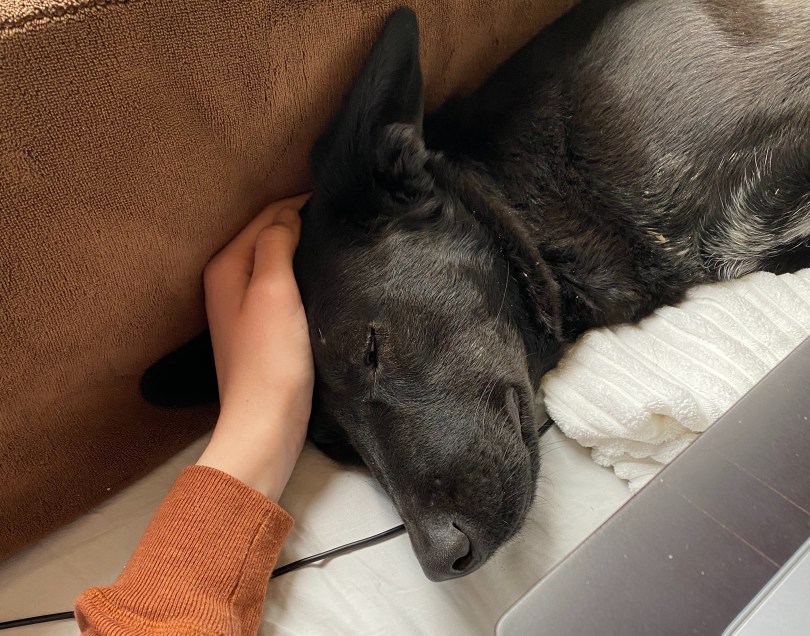
Despite the frustrations and occasional discomfort, I’ve found pet ownership to be immensely helpful and rewarding. My dog reminds me to get outside and walk, to look up from my computer every once in a while (she’s being quiet…too quiet), and to enjoy all the little pleasures- long naps, eating with gusto, and rolling in smelly things.
The sun has left us for a few rotations, only peeking out from behind the clouds in short intervals. It smiles down on us weakly, filtered through miles of gauzy cotton. How did I manage a more northern latitude? Just a day or two of relative darkness is enough to upset my balance.
Maybe I’m searching for explanations that don’t exist. To excuse my mood as simply a mirror for what’s outside. It seems impossible that such a minute change could affect me so drastically, and yet when I embark on my morning walk, the slow, chemical drip of melatonin invariably calls me back to bed. So, I hunker down, and I wait for February’s grip to loosen. Love, Your Brain
Sometimes I run because it’s when I feel strongest. I run because I love the feeling of my muscles working beneath my skin, my breath matched to my stride. Breathe in for three steps, breathe out for three steps. I love the sense of accomplishment, knowing that my body can carry me further than I think it can. Sometimes I run because it gives me joy. The simple pleasure of the wind in my hair and the sun on my face, moving with a body I’m thankful for. My body is a canvas for my mental state; when I’m well, I run for the joy of it. When I’m unwell, I run because it’s just another way to hurt myself. I run because at mile three I’m still thinking about cutting, but by mile five my brain is numb. Breathe in for three steps. Breathe out for three steps. I run because maybe if I can push my body to obey me, my brain might follow suit. I run because to be exhausted is to be empty, and where could my depression have gone except to have been left behind on the path? Expelled by my lungs, my racing heart, my wrung-out muscles. I run because it makes me feel good, and because sometimes, it makes me feel nothing at all.
A couple of years ago, my psych nurse suggested we send some of my cheek cells to a lab for genetic testing. I was severely depressed and hadn’t had much success with the antidepressants I’d tried. With a significant family history of depression and other mental health issues, it seemed likely that there was a genetic component for me.
My psych nurse told me that for some people, a genetic abnormality affects the activity of a particular enzyme that’s implicated in psychiatric conditions (and many other illnesses). People with this mutation can be helped by taking what’s essentially a supplement (I believe she even said it was “like a vitamin”), l-methylfolate. By taking the product of this hindered metabolic process in pill form, it fills in the gaps that your faulty enzymes have left behind. Because it was a rather serious situation, we decided that we may as well add this supplement to see if it helped. I told her I’d think about the genetic testing.
A couple of weeks later, we revisited the idea. The l-methylfolate seemed to be helping a little, but not dramatically. I had figured that the testing would be unnecessary; if the l-methylfolate helped, we’d know I was a mutant. If it didn’t, we’d move on to something else. It wasn’t that cut and dry.
Why the reluctance, you ask?
Perhaps there was a little anxiety about what I might find out about myself, but I suppose that’s a topic for my therapist. Mostly, I was skeptical. Genetic research has advanced tremendously, but the mechanistic aspects of mental illnesses are still rather poorly understood. Could a DNA profile really tell me why I was depressed?
Well, I’ll spoil the ending for you and say “Yes. Kind of.” Curiosity won out, and I agreed to part with some of my genetic material in the name of science and not wanting to be depressed forever. The results, pared down to what’s important for clinicians and patients to understand, were interesting- and rather ambiguous.
The science behind MTHFR mutations
The gene in question is called methylenetetrahydrofolate reductase (MTHFR). Our genes code for proteins, and enzymes like MTHFR are one type of protein. MTHFR is involved in something called one-carbon metabolism, which has effects on the production of neurotransmitters.
First, some genetics background
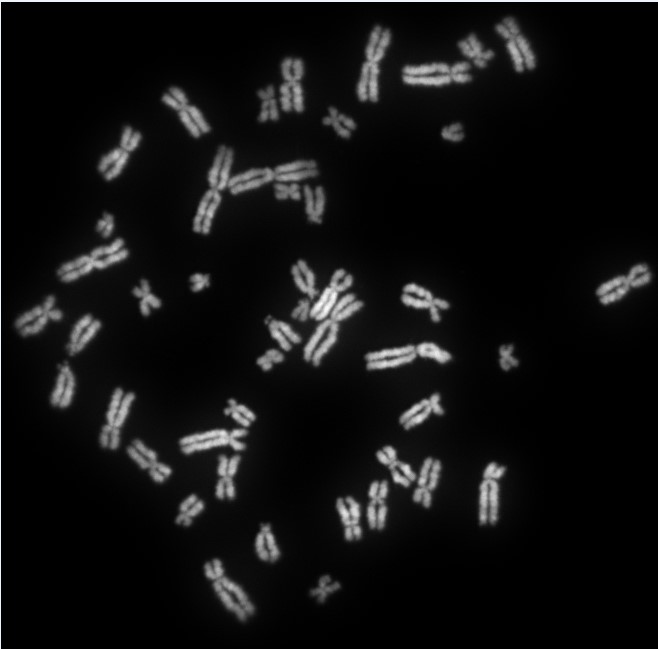
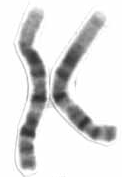
Harken back to your high school or college biology class; remember alleles? A gene and an allele are not exactly the same thing. A gene is essentially a small segment of a chromosome. The DNA sequence of a gene codes for a specific sequence of amino acids, which comprise proteins. An allele, however, is a variation of a gene. For each gene, you got one allele from your mom and one from your dad. I received a combination of normal and mutated MTHFR genes. Mutation is how variation occurs, and the process itself is neither good nor bad; it just is. Some mutations are adaptive, some are neutral, and some are deleterious.
Two MTHFR mutations
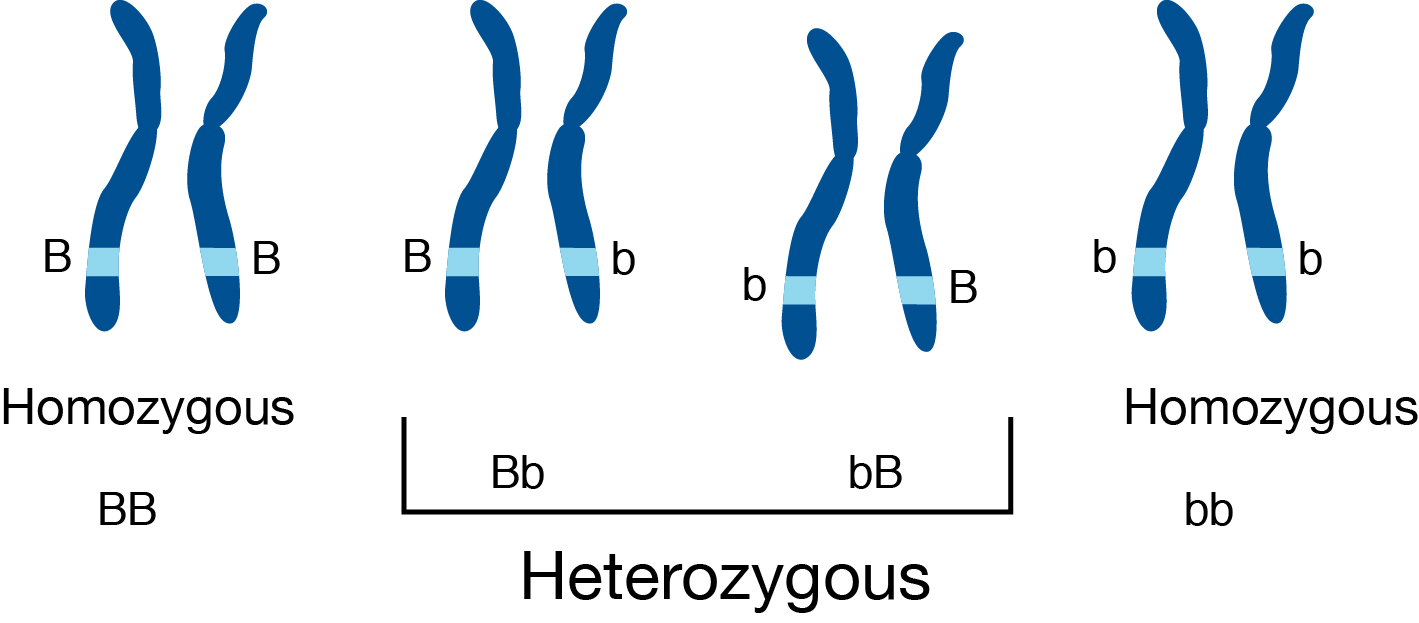
There are two main mutations on the same allele that seem to affect this enzyme’s activity. As usual, the names are cryptic; they’re called C677T and A1298C. The numbers and letters refer to where in the allele one nucleotide (or one “digit” in the DNA code) has been changed to another, and the substitution that’s taken place. In general genetics contexts, heterozygotes have different alleles from mom and dad, while homozygotes have identical alleles.
In the context of mutation research, there is typically one genotype that is referred to as “wild type,” meaning it contains no mutations and has full function. In this case, imagine the big “B” homozygous chromosome in the image above as the “wild type” and the little “b” as the mutation in question. The letters in examples like this are simply ways to represent alleles in a theoretical framework. The order of the letters is written out because, without further research, it’s difficult to tell which parent the mutation came from.
To bring it around to MTHFR, I’m a heterozygote for both of the main mutations (this is called “compound heterozygosity”). My genotype for C677T is C/T. The C (cytosine) is the nucleotide in the normal allele and the T (thymine) is the substituted nucleotide in my mutated version. I got the C from one parent and the T from the other. I’m also a heterozygote when it comes to the A1298C mutation. My genotype is A/C, where the A (adenosine) is the normal one and the C is the mutant.
The problem lies in the metabolism of a key metabolic precursor: a biologically-active form of folate. The product of this reaction is 5-tetrahydrofolate, which provides a methyl group for epigenetic regulation. In other words, when MTHFR is mutated, the system that controls gene expression and, ultimately, neurotransmitter production, is affected by a lack of this enzyme’s product because the enzyme’s function is reduced. This is the gap that the supplement I take fills in.
Enzyme activity
Meta-analyses suggest that C677T homozygous mutants (they have two mutated copies) have a 75% reduction in MTHFR activity, and A1298C homozygous mutants have a 39% reduction in enzyme activity. Heterozygotes for each mutation have less severe reductions in activity, but if you’re a compound heterozygote (like me), that results in a 52% reduction. So, I have slightly less than half the enzymatic activity for MTHFR than a normal, non-mutant.
MTHFR and depression
That all seems pretty straightforward, but take a look at the plethora of studies that exist on the internet, and you’ll see why I was cautious. Some have found significant relationships between MTHFR polymorphisms and psychiatric conditions, and yet others haven’t. There are some studies that say that there is no difference between mutant and control subjects when it comes to depression. Others suggest that carrying a mutated MTHFR allele predicts depression when the person is exposed to childhood trauma.
The consensus seems to be that more research is needed, although increasingly, there does seem to be a relationship between MTHFR and depression.
For me, I’m content to believe that at least some of my struggles can be traced back to MTHFR. The supplement does seem to make my antidepressants more effective. Plus, that’s not all that my genetic report showed. I also have a weird serotonin transporter that makes SSRIs less effective and increases my cortisol release in response to stress. I’m glad I did the test, at the very least because it helped me to accept my disorder as valid and offered insights into my mental health..
The future of mental health treatment
Is this a sure-fire way to treat mental illness? I’d say not yet, but it’s certainly valuable. Personalized medicine seems to be a buzzword floating around these days, and the implications of genetic research for how we approach mental illness are fascinating. Maybe when the relationships between genes and mental illness are elucidated a little more clearly, we can finally kick the stigma and misconceptions out the door. One can hope, at least.
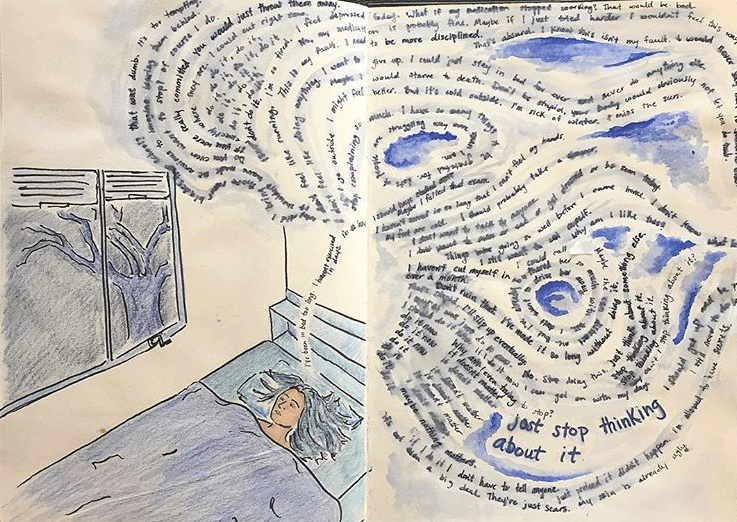
Carrying depression around only gets heavier. Like you were forced to sign a contract whose small print stipulates that not only will this weight of sadness and hopelessness sit on you for long periods of time, but it will also collect small, dense secrets. Pretty soon, you’re like a one-man band of mental illness and dark thoughts you’ve never uttered out loud. My band only plays a cacophonous combination of doubt, worry, and despair, and only inside my own head. I like to think that I’ve made a lot of progress in being able to talk about my feelings, but maybe that’s just on a superficial level. The really dark stuff is still jangling away in my one-man band.
The thing about constant noise is, you start to tune it out. You carry on with your life, compensating for the mental energy being drained away. And then suddenly, one of those dark thoughts crashes into your head. For instance, today I remembered that I have bottles of pills hoarded under my bathroom sink. They’re all failed antidepressants; they either didn’t work for me or I was allergic to them. I kept them all “just in case” and although I’m doing better, I’m still afraid to get rid of them. I’ve also kept the razor blade I used to use, tucked away in a sewing kit. That kit has been through hell; the thimble is rusted and my dog chewed through the case, but I never threw it away. Months after the last time I hurt myself, I sometimes pull it out and just hold it.
I guess I’ve kept these things because, deep down, I don’t believe I’ll ever be free from depression. Perhaps that’s the worst component of my one-man band. Or maybe, it’s the string that holds the entire monstrous instrument together.
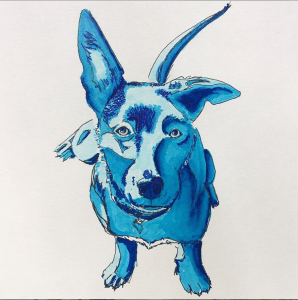
When I brought Stella home from the shelter, she was skittish and timid. It must have been such an abrupt transition for her; she has an address and a phone number hanging from her collar, and just like that, she has a home. I hope that she grows even more confident in her new life here, but it strikes me that what I’m asking of her is difficult for me to do as well. Every day, I try to teach her and guide her. I set boundaries and offer affection. I want her to feel secure as a part of my pack, and I want her to trust me.
And yet, sometimes when I look at her, I feel as though I’ve made a terrible mistake. At first, it was hard to pinpoint why, but I think it’s because she makes the door that is suicide close a little more. I’m feeling a lot better these days, but it’s reassuring to have my plan as an option. I simply don’t trust that this improvement in my depression will last. That’s not to say that the other sources and objects of love in my life aren’t enough to keep me here. They are why I’m alive right now, after all. But welcoming another creature into my heart only ties me more securely to life. She deserves happiness and security as much as I do. How can I ask her to trust that I’ll be there for her when I don’t even trust that I’ll be here for her whole life? I like to keep my options open, and it’s terrifying to willingly let one go. So I try to focus on the wonderful parts of having a new friend.
Her personality comes out more and more each day, and each night, she sleeps a little closer to me. She loves belly rubs more than anything else, and will fall asleep on her back, legs askew. She’s afraid of lots of things, but she’ll walk toward them if you go with her. She wags her tail in a wide arc that’s more than 180 degrees, and the sound of her paws on the floor makes me smile every time. Sometimes at night, her round, puppy tummy goes up and down in time with the crickets, and I wonder if she likes the rhythm or if she and the crickets share a wild, natural pacemaker. And then her breathing breaks, and she sighs deeply, content to lie next to her human.
I think we both need time to build trust in order to get to where we want to be. I’m willing to wait.



 Love, Your Brain