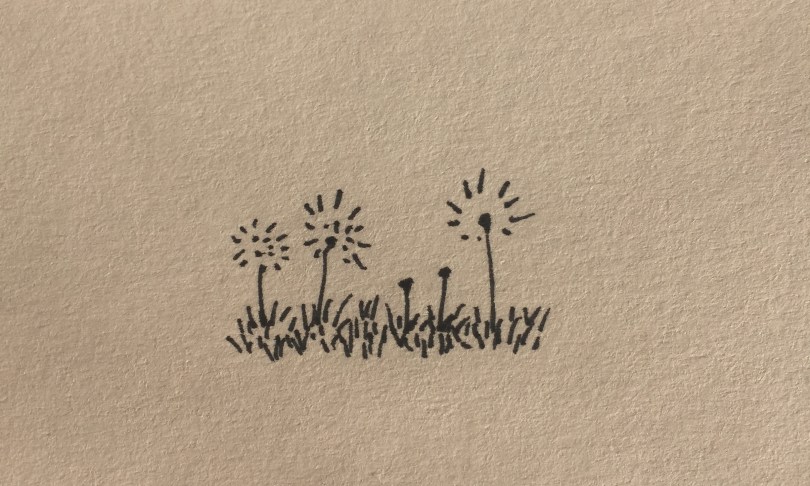
ink drawing of dandelion seed heads growing in grass

Observations From the Garden

I got up at 6 and walked through my routine because that’s what I always do, depressed or not. I fed the dog, made the coffee, poured a bowl of cereal, and then stared into it while the dog did her rounds in the yard. But by 8, I was beginning to wonder why I ever got up in the first place. So, back to bed with the window open and my blankets pulled up to my chin.

Lately, depression has overtaken my days with sleep and restless boredom. What time is it? Doesn’t matter; every day feels like a week. At night, the anxiety comes. I feel like I’m crawling out of my skin. Or like I want to reach inside my chest and pull out my lungs, let them spin out the twist in my trachea. Maybe then I could breathe.

To pass the time when the sun is up, I move between sleep and hobbies. Sitting outside in the backyard, my sketchpad page is still blank. Pen or pencil? I pick up the pen but am unable to draw more than a few dandelions from the scene I’m observing. A flock of house finches has found our backyard – it’s more dandelions than grass, and they’ve all gone to seed. The birds are foraging, bobbing their heads and moving among the unmown grass. One finch struts up to a tall dandelion, and, with an almost imperceptible flutter, attempts to perch on its vertical stem. The dandelion head begins to bow to the ground, and the finch rides the bending stem to meet the grass. Foot firmly planted to hold the flower down, the finch returns to bobbing and pecking.

There’s a sound behind me, and I turn to see a five-foot garter snake glide through the raspberry bushes, following a taste in the air. A busy robin chatters while it gathers last year’s grape leaves for nesting material. Stella digs a layer out of the hollow she’s claimed as hers, then situates herself in the cool dirt she’s uncovered. A hummingbird trill draws near, then it whizzes by on its frenetic journey. Everything around me moves, yet I feel like I’m in stasis. Animals and plants follow their daily rhythms, foraging, hunting, racing the sun to get enough calories, and I feel disrupted – out of sync.

I don’t know how to fix it. Usually, I keep up with my treatments — meds, therapy, ketamine — and simply wait for it to pass. I use what coping mechanisms I can—preferably the good ones, and let the turning of the Earth carry me from one day to the next. This time, I can’t help but feel the uncertainty of the time we’re living in. The disruption is not just to my mind, but to the world. When will this sense of weightlessness, of falling through empty space be soothed? When can we once again feel the ground beneath our feet, knowing by its predictability that it is moving us inexorably from today to tomorrow?
Connecting During the Pandemic

As a highly introverted person, I didn’t expect social distancing to have much of an effect on my mental health. After all, I don’t get out much to begin with. But what I’m finding, and what I’m hearing from others, is that the few social interactions we introverts had prior to pandemic life were more important than we realized.

I’m starting to really feel cooped up. I miss my library, my dog park, volunteering with other humans, and not sucking air through a mask while I run. My world, small as it was, has shrunk. But perhaps more than the social isolation, it’s the uncertainty about when it will end. Before, I might have chosen to stay in, but it was a choice. Now, this strange, lonely way of life stretches on indefinitely. I’m feeling restless, anxious, and sad. I sometimes joke that I’d like to go live on a mountain by myself, and while I’ve always known that wouldn’t actually be good for me, it still sounds tempting. But now, the social interaction that used to threaten to overwhelm me is in short supply, and I’m finding myself a little bit lost.

Luckily, we have options for connecting with others from a distance. I’ve been enjoying video calls with friends, yelling across the fence to my neighbors in their backyard, and texting extended family members. We have social media, phone calls, blog posts, any number of ways to get in touch with people who are far away. Even when digital methods fail, there are still connections to be made at home, and creativity goes a long way.

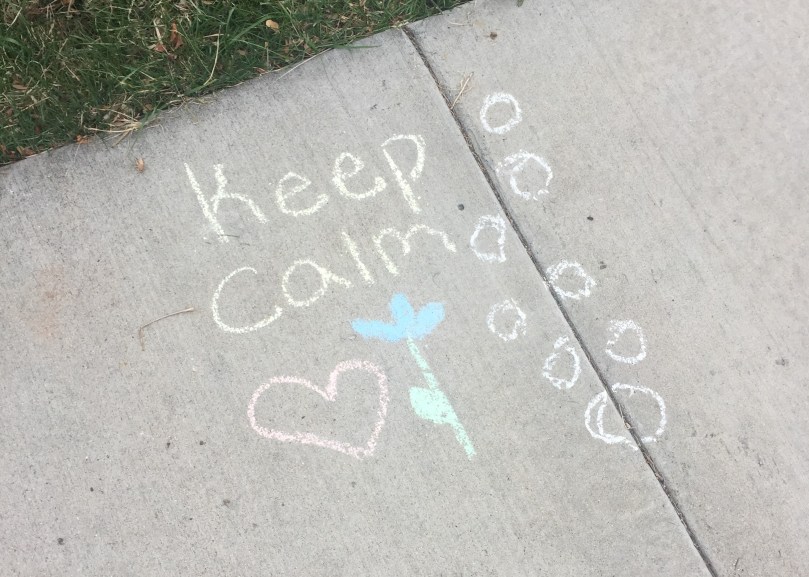
Towards the beginning of the pandemic’s reach in the U.S., when schools were closing and people started staying home from work, some kids in my neighborhood took it upon themselves to spread some positivity. I stepped out the door with Stella’s leash in hand and headed down the sidewalk for a quick walk around the block. At my mailbox, there was a message written on the sidewalk in chalk. It said “keep calm” and had a pink heart and a blue flower next to it. It made me smile and, frankly, gave me some warm fuzzies. All the way around the block, there were short messages encouraging everyone to stay safe and some adorable drawings of flowers and butterflies. It was a great reminder that we are all feeling the stress of the pandemic in our own ways and in our own homes, but we can still find ways to connect.

keep-calm-written-in-sidewalk-chalk-with-pink-heart-and-blue-flower

My MTHFR Gene is a Problem. Again.

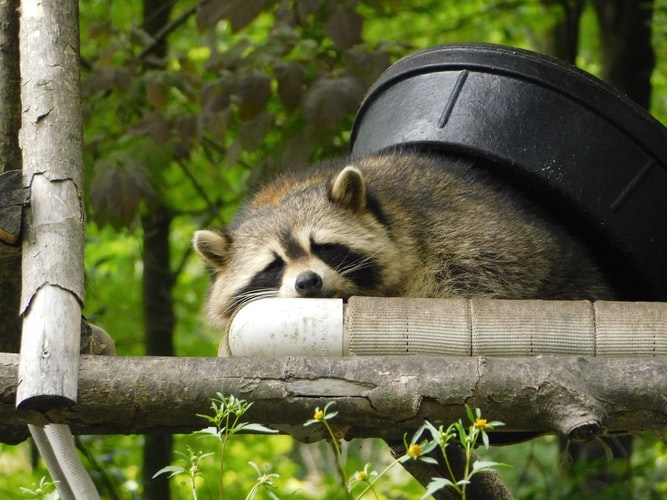
You would think I had learned my lesson. Refilling my medicines is not something I find easy to do if a phone call is involved. I waited until the very end of my supply to refill my Deplin, and now, because of shipping delays, I’ve been without for several days. Deplin contains l-methylfolate, which fills a metabolic gap caused by a mutation in the MTHFR gene. Essentially, it helps my antidepressant work. Not taking my Deplin is what pushed my suicidality to new lows last year when I was hospitalized. It seems like I can feel my brain slowing down. I sleep all day like I’m hibernating in reverse by starting in spring. There is nothing to get me up except the dog, who stands by my bed and huffs at me, threatening to wake me with a full bark if I do not move. I accomplish the necessary and return to bed, already sinking into sleep. The occasional diversion brings some welcome entertainment, but it’s just a momentary distraction.

tired raccoon lying on platform with black container on its back and foliage in background
Me. It’s me. (Unsplash user @successfullycanadian)

I took some time off of work when my grandfather passed away last week, but then I decided it would be more helpful to have something to do. So, I went back to work (which I thankfully do from home under normal circumstances) on Monday. Unfortunately, it’s shaping up to be a slow week, anyway. I suppose I should turn to hobbies to fill my time. I’m partway through a drawing that I promised to someone, but like many of us judging ourselves for not utilizing all of this time to finish household projects or write a sonnet or whatever we think we should be doing, motivation eludes me.

My shipment of Deplin is finally at my local post office and should be delivered by the end of the day today. It couldn’t come too soon. I plan to rip it open right there at the mailbox and throw one down the hatch. Well, okay, maybe I’ll go inside for a glass of water.

Blowing Bubbles with My Dog

Recent events have me, like many of us, feeling untethered. I was making good progress on my depression. I was getting out more, volunteering, talking to people at the dog park, all things I can’t do right now. It’s an additional element of the pandemic that sprinkles more discouragement on top of the physical and financial fears that so many are facing globally. So, while I don’t feel like I’m making much progress, I’m proud to say that Stella has come a long way.

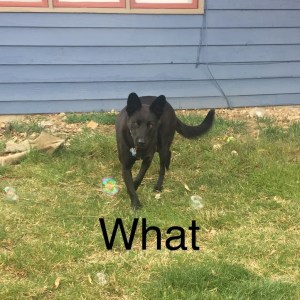
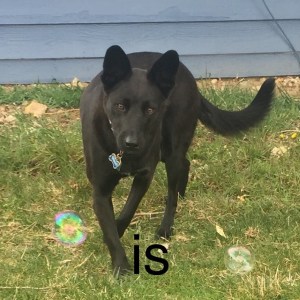
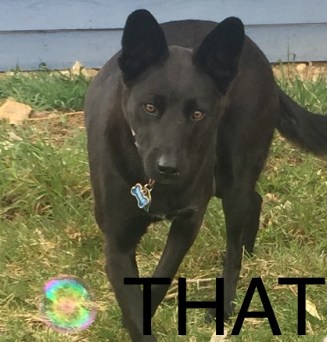
When I adopted her, Stella had a LOT of fears. Bags of potting soil, kites, people wearing big hats, bicycles, snowmen, car rides, piles of rocks, the list goes on. For the most part, she’s faced them all. The neighbor’s animatronic Halloween decorations were just too much for her and we had to cross the street, but those are meant to be scary, after all. She tends to be afraid of things that look unusual (to her) or regular things that are in unexpected places. But as long as I put on an air of confidence and stroll up to the scary thing, she can pluck up the courage to approach and give it a good sniff. Our most recent endeavor has been… bubbles.

S1S2


S3

At first, she was uneasy. She backed away from them and skirted around their path to get away. Then, she crept up to one that had landed on the ground without popping. She leeeeaned in close, and- pop! Her head flinched back and I could almost see the gears turning as she tried to comprehend where it had gone.

A few more bubble-blowing sessions and we have successfully conquered her fear.

She is now completely indifferent to bubbles. No joy or delight whatsoever. She can be so playful when it comes to other games, but she just doesn’t care at all when it comes to bubbles. They’re almost an annoyance to her, popping on her fur while she’s guarding the backyard. I mean c’mon, bubbles are the most frivolous, fun thing ever! Ah well, I’d call that at least halfway successful.


Sensory Ramblings About Building a Fire

One day it’s 70 degrees, and the next there’s freezing rain and heavy snow. February in Colorado is a strange creature. After a day of low light and cold fingers, I clomped down the stairs to the back door, Stella in tow. She stood on the stairs to the deck and watched me as I chose logs from the woodpile underneath her. That’s by far my least favorite part of building a fire; I always inspect each piece carefully for spiders before I put it in the crook of my elbow. It’s probably too cold for them to be at the top of the pile, but as seeing black widow spiders was not unheard of in the house where I grew up, it’s my preference to be a choosy wood-carrier.

Building a fire is a skill that I learned as a child. We heated our house with a wood stove, and my formative winters were spent helping my parents keep the fire burning and the cold at bay. Now, when the snow is falling and I have nowhere to be, my first inclination is to get a fire going and then park myself in front of it with a book and a blanket. On this day, I brought two armfuls of wood upstairs and then searched the recycling for some newspaper or junk mail to burn. Then I grabbed some matches and plopped down in front of the fireplace.

From an occupational standpoint, building a fire is a fairly complex task, and it offers a lot of sensory input. You have to be able to tell which logs are dry, which ones have dangerous spiders on them, and then carry them safely to the fireplace without tripping over the dog. I know what kinds of materials are good for getting the blaze going, and which kinds are good for maintaining it. Arranging all of those materials in a way that lets enough oxygen in is a skill that takes practice, and you need to be able to look at your materials and imagine the best arrangement. This is a praxis-heavy task. Fortunately for my coziness goals, I’ve had plenty of practice. Building a fire is also a task that requires a lot of sensory discrimination; you have to use your eyes and ears to determine when and where it’s safe to put your hands near the flames. Even lighting a match is tricky if you can’t tell how much pressure to use. I remember being horrified as a kid, watching my dad place new logs in the fireplace, convinced he would catch on fire as he stuck his hand over the flames. Now, I know that he simply had a good sense of the heat and sparks.

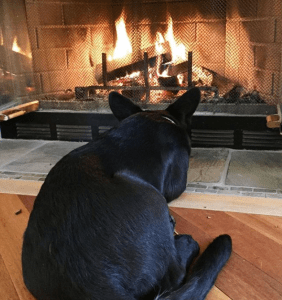
I love sitting in front of a fire in winter. It feels cozy and warm, and it gives me the sense that there’s nowhere else I need to be. There’s the sound, the flickering light, the heat, and all the other parts of being inside by the fire, like hot chocolate and pajamas. Sitting in front of a fire evokes a feeling of security in me, even if I’m already safely indoors. Many people believe that the discovery of fire and how to control it marked an acceleration in human evolution because it offered a new abundance of calories and nutrients from more easily digestible, cooked foods. It may also have served to bring communities together, strengthening bonds and changing the dynamics of an already social genus. Perhaps my brain recognizes this ancient connection and knows that family is nearby and predators will stay away. At the very least, there’s gentle crackling and a nice, orange glow that puts me at ease. Plus, my domesticated canine, who also evolved around fires, likes to rip up the paper and small kindling while I’m getting it started, and that’s always fun to watch. She’s such a good helper.

Stella fire

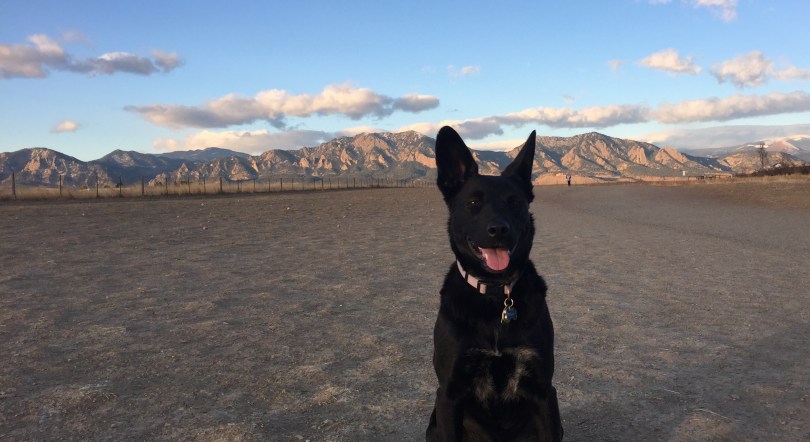
black-dog-with-pointy-ears-sitting-near-mountains

How Running Helps My Mental Health

I really wish that my dog, Stella, was a good running buddy, but she’s just not. First of all, she refuses to do the entire 3.5-mile loop that I run. She’ll reach a point where she turns around and sits on the path, facing back the way we came. I’m jogging in place, pulling on the leash and cajoling her into moving, to no avail. If I start to really put my weight into her harness, she’ll lie down so that her center of gravity is low and I can’t tip her towards me. She then begins her slow army crawl towards home, belly in the dirt. She looks so pitiful that I often give in.

Keep in mind that Stella is a healthy, almost 2-year old cattle dog mix who sprints in giant circles in the dog park and wrestles for an hour every day. She’s not out of shape. She’s not opposed to running in the park. She’s just not interested in running with me. Not to mention that she’s compelled to investigate every smell we run by, so I’m constantly tugging her along or getting my shoulder yanked so that she can traipse into the grass. It’s ok– if I were a dog, I’d rather explore with my nose, too. Jogging is boring compared to 300 million olfactory receptors.

Suffice it to say, Stella is not a good running buddy. Maybe when she’s a little more grown-up she’ll like it more, but I’m not holding my breath. It would be nice to have the motivation of having a dog to run with, but I’m actually pretty well into a running habit these days. On days when I’m not feeling it, I do the regular loop. Frequently, I add more distance with the other paths on the mesa, and sometimes I even do the loop twice!

Every time I take an extended break from running and then start it up again, I find that it’s easier to regain my endurance. I’m always worried that I won’t be able to get back to the part where it’s enjoyable, but I’ve found that part at the beginning where you’re lifting cement shoes off the trail and breathing through a straw to be much shorter than I remember. Once my body readjusts to the requirements of running, I’m always happy that I did it. I notice that running helps my mental health in more ways than just the release of those precious endorphins. It also gives me a routine to plan my day around and something to look forward to. When I get home from a run, I often feel grounded and capable, and noticing my tired muscles is an exercise in mindfulness. Plus, there’s the simple fact that I’m not looking at a screen while I’m outside, running.

I really enjoy the sense of accomplishment that it brings me, although I have to be careful not to connect this too tightly to distance. Otherwise, I find myself disappointed if I don’t run as far or farther than my current limit. (Curse you, perfectionism!) It’s much better to feel accomplished for the act of running itself; I got out of the house, breathed some fresh air, and got my heart rate up. That’s all that matters.

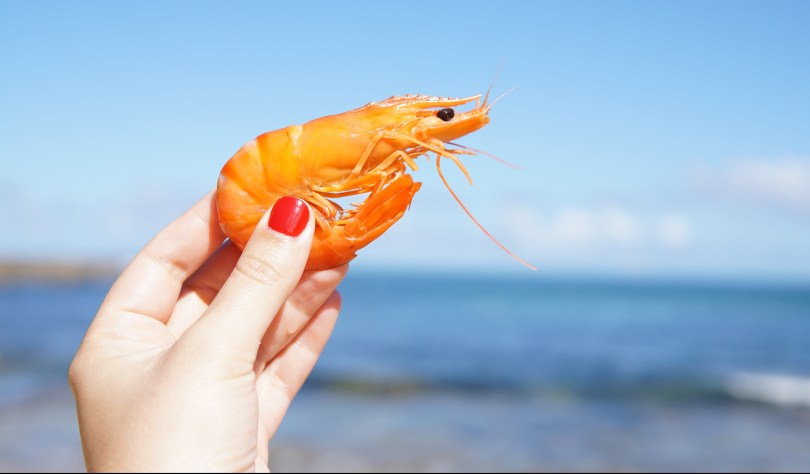
A hand with red nail polish holding a live shrimp in the air by the ocean

A Tower of Shrimp and Absurdity in IV Ketamine Therapy: The Ketamine Chronicles (Part 13)

Having IV ketamine therapy for treatment-resistant depression is always a fascinating experience. This edition of The Ketamine Chronicles features a crime scene, a tower of shrimp, and a painting of a carnivorous giraffe. Folks, I couldn’t make this stuff up if I tried.

I remember feeling the ketamine almost immediately, and I closed my eyes as I lost track of my limbs. The music I was listening to was a lively classical piece, and my mind created intersecting lines to the notes that formed long evolutionary trees. There were noises around me that distracted me at first; something that sounded like hammering from the floor above us, then quiet conversation in the room, and a door opening and closing. Soon, though, the ketamine pulled me away, and I wasn’t concerned with anything outside my mind.

Absurdity in Ketamine Therapy Imagery

Silhouettes of a human face and a bull in profile, carefully stretched-out tape measures arranged in rows, and thousands of old family photos being sent on a conveyor belt to be turned into decorative pebbles were just some of the odd things I saw this time.

The Crime Scene

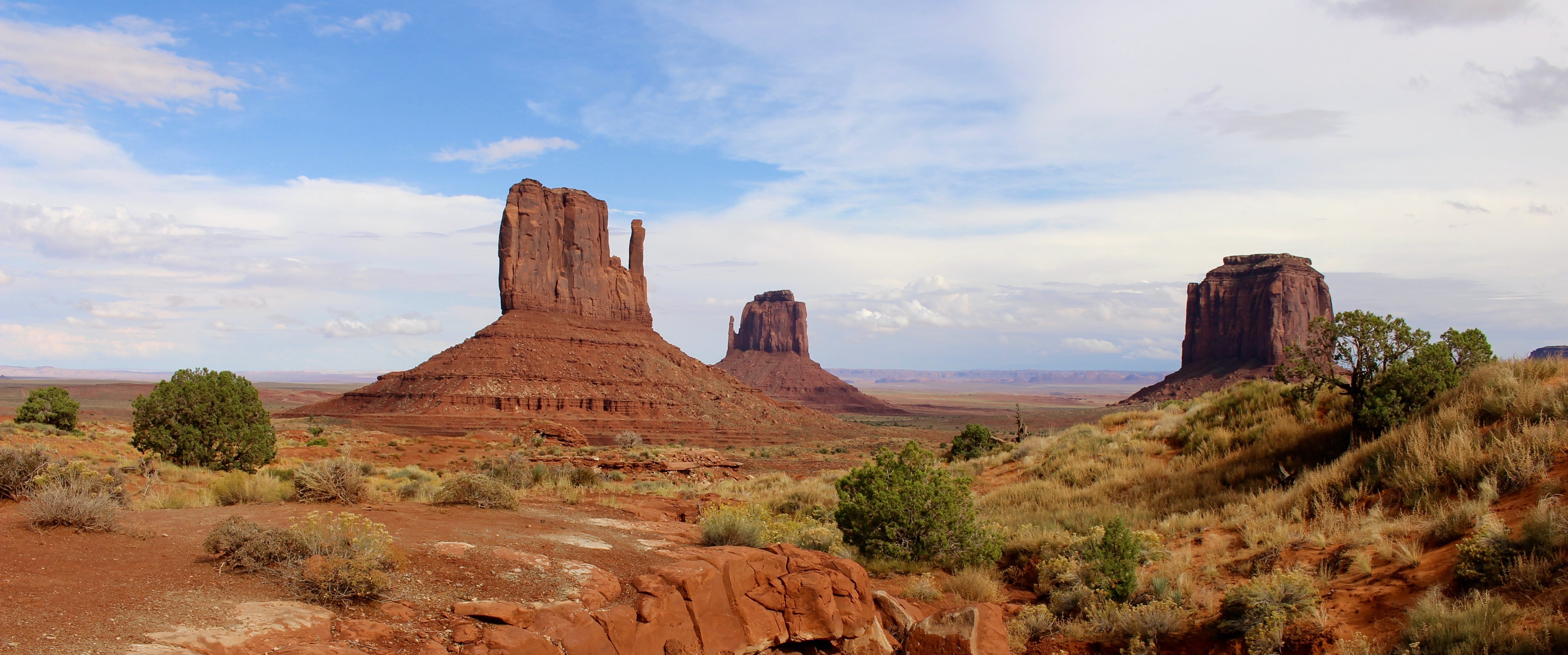
The crime scene was set in an arid landscape. There were shrubby bushes and reddish-brown caked dirt as far as the eye could see. Two or three people stood around a small body of water – what seemed like the only one for miles and miles. I got the sense that they were pondering something, as a detective would do when a puzzling scene presents itself. As I tried to read more of the scenario, my perspective began to shift. I zoomed out smoothly but quickly, like I had scrolled down on Google Maps with intention. Perhaps I’ve been watching too many police procedurals and true crime shows lately.

A desert landscape with red rock outcroppings and shrubs.
Photo by Agnieszka Mordaunt on Unsplash

A Tower of Shrimp

The shrimp tower stretched higher and higher, eventually reaching the edge of the atmosphere. The singular shrimp at the very top swayed back and forth, pondering the shrimps holding it aloft and balancing in the wind. Each shrimp interlocked with the shrimp around it, like that barrel of monkeys in Toy Story. I don’t know if you know this, but the sensation of perching on top of a stack of shrimps that stretches all the way to the edge of the atmosphere produces some stomach-dropping vertigo. If you’ve ever read the Dr. Seuss Book, Yertle the Turtle, the shrimp tower may remind you of that. Instead of an incredibly arrogant shrimp forcing the others to form the tower so that it could sit at the top, this was the reverse. The top shrimp wasn’t entirely sure how it got there and was not very comfortable with it.

Mixing of Identity and Observation During Ketamine Therapy for Depression

There are some interesting parts of my IV ketamine treatments that seem to blend my identity with strange scenarios and characters. For instance, how did I know that the shrimp at the top of the tower didn’t know how it got there? Was I the shrimp? Similarly, the funeral scene in the seventh part of The Ketamine Chronicles also evoked a sudden understanding. I was watching the scene, but when the coffin was set down, I felt like I was being pressed into the ground. Was I watching, or was I in the coffin?

Carnivorous Giraffe

The day before this IV ketamine infusion, my aunt and I did one of those paint-n-sip classes. The painting to emulate was a cute, cartoonish giraffe with multi-colored spots. We noticed that there were two kids in the back who had really taken their paintings to the next level. Their giraffes had blood-red eyes, thick, metal earrings, and gaping smiles filled with pointed teeth. One also had thick blue stripes rather than spots, but that’s neither here nor there. We got a big kick out of these kids’ creativity and confidence to go off-book.

Now, imagine that painting in the style of a ten-year-old’s artistic skills, and then imagine how taken aback I was when a dark silhouette in my ketamine dream revealed itself to have that giraffe’s face. It was both unsettling and hilarious at the same time.

A Mildly Creepy Scene

After the carnivorous giraffe, my brain may have opened the door to where the creepy images are held. I remember seeing dark forms standing over me, laughing. Thankfully, something in the room beeped, and I reoriented myself to my surroundings. That was probably the most disturbing thing I’ve experienced during IV ketamine therapy so far, and even that was not bad. I knew that it was creepy but didn’t feel especially scared.

Most of the time while I get ketamine infusions for my depression, I just see bizarre scenes like the tower of shrimp, marvel at how much my teeth feel like stale marshmallows, and wonder if I’m slowly tilting in one direction or another.

If you’d like to read more about my experience with ketamine for depression, start from the beginning of The Ketamine Chronicles or visit the archives. Click here for mobile-optimized archives of The Ketamine Chronicles.