A yellow/orange candle burning in darkness

When the Power Goes Out: The Ketamine Chronicles (Part 5)

Today was scheduled to be the last of my six infusions of ketamine for treatment-resistant depression. My area has been preparing for a three-day series of snowstorms, each predicted to bring several inches of snow, but we braved the roads with the rest of the Monday crowd. Wet, heavy snow from the night before covered the ground, and although plows came through early in the morning, people drove cautiously, and a long line of cars backed up into the city.

The Schedule of IV Ketamine for Depression

Seeing as today was my sixth ketamine infusion, my doctor and I discussed the course of treatments and how we want the next steps to progress. (If you’re just joining us, feel free to start at the beginning of this series about my experience with IV ketamine infusions for treatment-resistant depression.) I started to respond slowly after two or three infusions, so my total benefit has so far been moderate. The “usual” (everyone is so different, and protocols are changing all the time) way this clinic operates is to do six initial infusions within two to three weeks, followed by a maintenance infusion two weeks after the last of the initial series. If those two weeks go well and the patient doesn’t notice any decline before the maintenance infusion, the next one is scheduled for three weeks out, and so on.

If we wait two weeks before my next infusion, given that I’ve had a moderate response and rather late, there is some risk that I might lose momentum and need more ketamine infusions to make up for the lost progress. Therefore, we’ve decided to extend the initial series to eight infusions. With that decided, we began ketamine infusion number six.

Higher Doses of Ketamine

I opted to increase the dose incrementally as we went from infusion to infusion, so this one was the highest dose yet. In retrospect, I think it was too much. I was deeply relaxed, but less able to distinguish between reality and drug-induced visions. I remember very little of what I saw, and the longer it’s been since the infusion, the less I remember. I felt oddly trapped in it, but not in a particularly scary way. I was just very far away from the real world.

A Power Outage

I remember thinking about the weather; I saw fine snow like powdered sugar on the road, swirling and leaping in the wind. I remember feeling that my throat was dry and telling each muscle to contract as I swallowed in slow motion. At some point (I later learned it was towards the end), sudden darkness and a distinct silence descended on us. It forcefully pulled my attention back to the room. I opened my eyes–Were they my real eyes? Yes. Yes, I think so— and saw movement through the open door. Hushed voices and flashes of light punctuated the heavy darkness. I wasn’t sure if anyone was with me, but then my doctor hurried in and spoke to my nurse, who was still sitting beside me.

An arm extending out of darkness into a beam of light.
Photo by Cherry Laithang on Unsplash

Their words were too fast for me to grasp, but I heard something about batteries. I attempted to turn and look at the voices, and my nurse reassured me. “The power went out, but everything’s OK.” With this knowledge, I closed my eyes again and sank back into the inner darkness. A strong beam of light landed on my face sometimes, and I deduced that that was the nurse aiming a flashlight in my direction to check on me. I heard the series of beeps that meant my infusion was over. I cracked my eyes open and noticed human forms enter the waiting room. They, too, had flashlights and talked in that low tone used only when sudden darkness arrives. My nurse closed the door.

A Possible Headache

It was harder to come out of it than it usually is, and my sense of time was even more skewed than normal. This might have been because of the higher dose of ketamine or the lack of overhead lighting. I imagine it was a bit of both. I feel exceptionally tired this time, and I think I’m developing a small headache. It seemed likely that the migraine I got after my first infusion was because of stress, but if this one turns out to be similar, I wonder if the higher dose of ketamine was too much for me and mimicked the first dose that was so jarring. If this is the case, it is very rare; ketamine is actually used to treat migraines, so if you’re considering ketamine for depression, don’t worry too much about headaches.

As I have more and more infusions, I’m finding that it’s harder to remember what they’re like. You know that feeling you have when something triggers a memory, but you’re not sure if it was real or a dream? I’m having that experience much more frequently, and I think it’s because the things I think about or see during a ketamine infusion feel so dream-like. There have been times when I can’t tell if I’ve told someone something, dreamed that I did, or thought about it during a ketamine infusion. It all blends together.

Here’s hoping these next two help boost my momentum to a better place, and that the power stays on.

A temperate forest with a large waterfall and misty fog overhead.

Depression is a Sinkhole: The Ketamine Chronicles (Part 4)

When I was looking for information about ketamine infusions for treatment-resistant depression, I didn’t find a lot of descriptions of what a ketamine infusion actually feels like. My internet forays left me with the impression that it would be like what I experienced in my second infusion– that feeling of being so relaxed that you’re near sleep and aren’t aware of your physical body. What I read online certainly didn’t prepare me for my first infusion, which was extremely bizarre and hallucinogenic, nor did it reassure me that the right dose of ketamine for me would produce a different experience entirely.

Comparing IV Ketamine Infusions for Depression

My third ketamine infusion happened last week. I had persistent nausea after the first one, so we lowered my dose for the second infusion. Not seeing any improvement, this time we increased the dose of ketamine and doubled up on some nausea medications. I was given five milligrams more than my initial dose, so my doctor assured me that if it was too intense, it would be okay to tell him and he’d either slow it down or give me a gentle sedative to make it less overwhelming. Writing about this today, only four days later, I’m already struggling to remember what it felt like. It was absolutely less intense than the first infusion, but it was more intense than the second one.

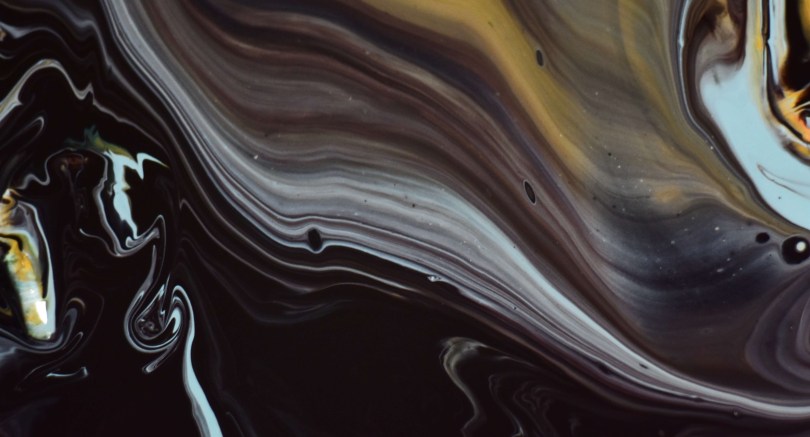
Where the second ketamine infusion was pretty boring from a descriptive standpoint, the third had slightly more of a visual component. I remember watching organic shapes fill my mind, colored in blues, browns, and oranges. Lots of small circles packed into varying levels and areas. Then, thin lines with colors in between resembled layers of sediment, flowing out of sight.

The Commonalities Between Ketamine Infusions

One common experiential thread between all of the ketamine infusions I’ve had is the altered sense of time. I get sucked into my brain and completely lose connection with anything identifying time, then am shocked (as shocked as a partially-anesthetized person can be) when I’m told that much more time has passed than I think. Or, the opposite happens and it seems that time moves incredibly slowly. It’s oddly freeing to accept that for roughly 45 Earth minutes, I have no choice but to abandon all concern for time. I’ve checked out of humanity’s need to measure minutes; talk to me when I return to my bipedal meat suit.

Coming out of it is also a similar feeling each time, which is unfortunate because it’s not super pleasant. It’s not terrible, either, but it does leave me feeling vaguely unbalanced and zonked out pretty much until I get the chance to sleep it off. This was difficult for my third ketamine infusion because I was traveling later that day. I shuffled through security with the rest of my bleary-eyed fellow travelers, then felt eternal gratitude when, after the flight, my mom led us to the car pick-up area and even engaged our talkative Uber driver in conversation at almost midnight. I was ready to curl up in the fetal position on the vacated shoeshine stand and give in to blissful sleep.

The Fourth Ketamine Infusion

I returned home and yesterday, I had my fourth ketamine infusion. I tolerated the last dose and feel, possibly, a tiny bit less depressed. It’s unclear. In any case, we decided to increase it again in the hopes that we just haven’t hit the right number yet for my depression symptoms. Like always, I twiddled my thumbs a little before I started to feel it. I vaguely remember asking the nurse if this ever gets boring for her, as she sits quietly next to me and makes notes on her clipboard. She said something like “No, everyone reacts differently. I don’t get bored.”

To which I replied, “Oh, good, I’m gl a d  i’m n o t bor i ng  y o o o u u,” and promptly left this dimension.

As I described it to my doctor at the end, this ketamine infusion felt like a combination of the first and second infusions– both somewhat visually engaging and also relaxing. The very first sensation after leaving my nurse sitting next to me was of sinking into inky blackness. Normally, that would sound terrifying, but this was very soothing. At first, all I saw was black behind my eyelids. I began to think that I should think of something to think about. This was more difficult than I expected, because every time I had an idea, it floated away. My mind seemed to have its own plan for yesterday’s infusion. Much like with time, I’m learning that trying to control anything during a ketamine infusion is futile.

Depression is a Sinkhole

Despite trying to think about my dog, I saw landscapes. Many moving landscapes empty of people, buildings, or animals. I saw a desert with packed, cracked sand. I saw a beach with gravel and sand underwater with volcanic stones bobbing and rolling. I saw a forest, and when I began to think about depression, I saw a great sinkhole open up. It swallowed pine trees and boulders, sucking everything closer. It was like pulling on a tablecloth, everything dragged inexorably towards the central force.

The landscapes were beautiful, and unlike looking at photos of nature, these felt real, like they were part of me. I felt connected to them, and I was glad, then, that time was moving slowly (it had only been ten minutes- I thought it had been 30). Occasionally, something would tug at my awareness, and I’d come back to my body.

Body Awareness on IV Ketamine for Depression

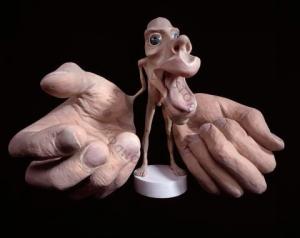
humanoid statue with large hands and head

The blood pressure cuff would suddenly tighten, reminding me that I did indeed have an arm. I was reminded of the cortical homunculus concept (a humanoid figure with body parts proportional to the density of nerves dedicated to sensing and moving those parts), as my hands felt very large and very close to my face, although I knew they were resting in my lap.

The position of my body in space, which I generally have trouble detecting because of Sensory Processing Disorder, was also a strange experience. I could have sworn I was upsidedown, but somewhere in my mind, I knew that was absurd. Several times, I was captivated by the feeling that my eyes were open, even though they were definitely closed. I remember thinking that maybe this is what people mean when they describe a third eye; my body’s eyes were closed firmly, and yet it felt for all the world like I was looking around.

The whole experience of my fourth ketamine infusion for depression felt rather profound, although I couldn’t tell you why. Maybe that’s a good sign? I’m doing my best not to feel discouraged, and to continue on with detached curiosity and a tiny bit of optimism.

An arrangement of tan plants with a fern and a dried cluster of white flowers on a light background.

Detached Curiosity with IV Ketamine Therapy: The Ketamine Chronicles (Part 3)

The days following my first IV ketamine treatment for depression were filled with anxious self-awareness (Am I feeling better yet? Is the ketamine working?) I’m pretty sure the answer to the first question was “no,” but it’s hard to say. Suffice it to say, nothing dramatic happened for me as a result of my first ketamine infusion.

In an attempt to not get my hopes up nor be overly pessimistic, I’ve decided that my approach will be one of detached curiosity. I’m going to see the entire thing- the feelings leading up to an IV ketamine treatment, the experience of the ketamine therapy itself, and the potential changes that result- as if I weren’t invested in the outcome. It’s just a fascinating experiment on my own brain. At least, that’s what I’m aiming for.

Adjusting My Ketamine Treatment for Depression

The first ketamine infusion was so bizarre that I was trying to prepare myself for anything. In fact, I was already faced with an opportunity to maintain detached curiosity. I had some adjustments planned for the second infusion, and I wondered what effect they would have on the overall experience. Instead of over-ear headphones, I brought regular earbuds in the hope that they would eliminate the overwhelming sound of my heartbeat that noise-canceling headphones created. I also decided that I would put my head back against the headrest at the beginning of the infusion so that future me wouldn’t have to consider whether giving my neck a rest was worth ripping the fabric of space-time.

As it turns out, the first ketamine treatment session is often the most strange. Subsequent infusions give people something of a tolerance to the trippy effects of the medicine. My doctor suggested that we reduce the dose a little and add a second nausea medication. So, the reduced dose, increased sleepiness from the nausea med, and improved tolerance to ketamine made my second ketamine treatment positively… relaxing. I might have even fallen asleep.

A reflection of a tree with small berries on gently moving water
Photo by Tim Johnson on Unsplash

When I got there, things were a little busier than at my first appointment. I was introduced to the nurse, who is only in on certain days, and invited into the second room (across the hall from the one I was in last time, mysteriously labeled “Staff Pool and Spa”). The nurse got my IV in, set up the EKG leads, and took an initial blood pressure reading. I then had time to talk to my doctor about the plan of action. I had a tenacious migraine after the first infusion, which he said is rare, but happens sometimes. He suggested we try an anti-inflammatory medicine to prevent another headache, but I wanted to go without. I sometimes get tension headaches that morph into migraines when I’m extremely stressed and anxious, and that’s exactly what this one felt like. I felt much more comfortable with the process the second time around, so I was pretty confident that if stress is what caused my headache, I wouldn’t get one this time.

Getting More Comfortable with Ketamine Treatment for Depression

The nurse came back in and got things started, and I did my best to relax. I put my head back against the headrest, started some soft instrumental music in one earbud, and closed my eyes. The ketamine felt much more subtle this time, which I imagine is a result of both my body becoming accustomed to it as well as the reduced dose. It didn’t hit me as suddenly, but I found myself realizing that I had stopped paying attention to the room around me. I had a thought, and before I forgot, I turned to the nurse and said, “What is this room labeled?” She looked at me blankly, perhaps thinking that I was already too high to articulate logical thoughts. I quickly clarified, “Y’know, the other room is ‘Staff Pool and Spa.’ So what’s this room?” Understanding washed over her face, and she laughed and said she didn’t know. She got up to peek around the outside of the door and came back with the disappointing answer of “nothing.” We mused that this room should have a funny name, too. Someone floated an idea, but by that point, I was really sinking into a ketamine haze and don’t remember what it was.

The nurse sat next to me, taking notes, and the machine beeped softly just behind me. My mother sat in the corner, typing on her laptop. I gently floated in half-perceived consciousness. I waited for the images to begin, but all I saw were the backs of my eyelids. Black and pale yellow shapes inflated and pushed against one another; they were more distinct than what I normally see when I close my eyes, but it definitely felt like the same process of retinal neurons misfiring. I was a little on edge, waiting for weird images to creep in, but once I realized that wasn’t going to happen, I tried to just let go and float. I put the other earbud in (groping for my ear with numb fingers) and settled back.

Attempting Mindfulness During IV Ketamine Therapy

Large chunks of time were punctuated by movement in the room. I heard my mom close her laptop and take out her knitting. The metallic needles clinked together softly. The nurse put her hand on mine and told me to take a deep breath, in through my nose and out through my mouth. Apparently, I had forgotten to breathe and my blood oxygen level dropped. At some point, the doctor cracked the door open and I heard him whisper to the nurse that I should keep my eyes closed so as to minimize nausea. Later, the nurse and the doctor switched. I noticed the differences in how they walked, sat down, and how much noise they made while taking notes and shifting around. I kept my eyes closed the entire time. My usual discomfort in having my eyes closed around other people and activity was suppressed by the ketamine; I was paying attention when something happened, but I was content to only listen.

Having Patience with Ketamine for Depression

When the ketamine infusion was done, it seemed like it took less time for me to return to normal. The additional nausea medicine worked wonders, although I did feel more sedated. I’m happy to report that I did not get a headache following the infusion. However, I’m not happy to report that I’m not happy. Definitely still depressed. I’m trying really hard to not get discouraged, as I’m only 1/3 of the way through the initial series. I won’t lie, though, it’s tough to not be disappointed.

Reminder to myself: detached curiosity.

Abstract artwork with brown, tan, and black colors swirled together in layers.

It’s a Trip: The Ketamine Chronicles (Part 2)

I learned a lot about what to expect from my first IV ketamine treatment for depression when my doctor asked if I had ever tried any hallucinogenic drugs. My response was “no,” and my experience was about as trippy as I could expect from that lead up.

My First Ketamine Treatment for Depression was Bizarre

I’m writing this from my bed at 8:20 pm, the evening after my first ketamine infusion. I do have work to be doing, and I tried that for a while, but I figured, “Hey, I spent 45 minutes today coming to terms with the fact that I was just a floating head who no longer had a body, then blessedly reunited with my limbs over the course of 20 nauseating minutes, only to come home and do work? I don’t think so.” So, in an effort to empty my brain, here are my first impressions, unexpected experiences, and mundane realizations of today.

The door to the room I was in was labeled “Staff Pool and Spa,” and I’m not at all sure what to make of that. My doctor seems to have a good sense of humor. I did wonder what the other room was labeled, but was too focused on not letting my baby giraffe legs buckle on the way out. I’ll report back.

If you missed Part 1 of The Ketamine Chronicles, I’m getting a series of six infusions of ketamine for treatment-resistant depression. I was afraid of this for a couple of reasons, one being the uncertainty of what the ketamine treatment itself would be like. I wish that I could give some kind of concrete answer to that question for anyone with the same anxiety. There are commonalities, I’m sure, but there’s no way anyone else could see the exact same quilted rocket launching into outer space that I did. Or, if for some reason you do, we should hang out sometime.

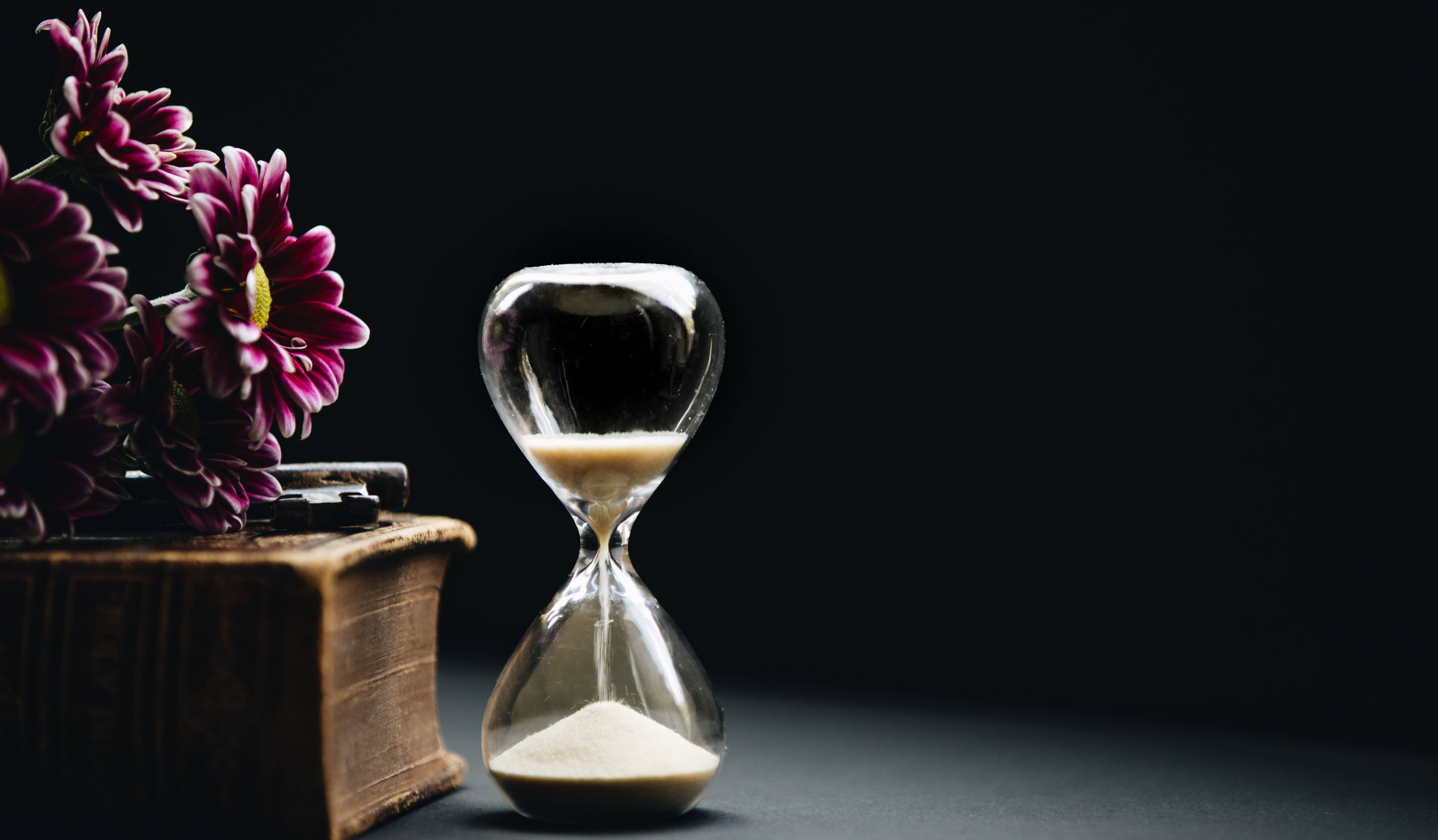
An hourglass with sand falling from one side to the other sitting next to an old book with purple flowers resting on top. Dramatic lighting with a dark background.
Photo by Nathan Dumlao on Unsplash

What Ketamine Treatment for Depression Feels Like

For me, the general feeling of an IV ketamine infusion is one of warmth, dissociation, and internal images. The first sensation I noticed was warmth, particularly in my arms and chest. It was quickly joined by the feeling that my limbs were all floating away from me. Looking around the room became extremely disorienting. It was like my brain could interpret whatever my eyes started on and where they stopped, but nothing in between.

Thinking and Speaking

For a while, I was pretty with it. My doctor asked me some questions to gauge how far gone I was, and I had no trouble answering them. I had to remember three words and repeat them back a few minutes later, and I had to count backwards from 100 by 7s (not very far). The comprehension and answering of these questions was no problem. What was weird was the sensation of talking itself. It was like there was no space between thinking and talking, so as soon as I had a thought that I had some intention to speak out loud, I heard it coming out of my mouth as if someone else had said it.

Losing Touch

After a while, I started to retreat from the room and into my mind. When I closed my eyes, I was unnerved by the sensation that my body and my head were very slowly spinning in opposite directions. So, I tried to keep my eyes open. Everything in the periphery of my vision faded out until I could only see what my eyes were focused on. But even then, my brain would pull me in, and although my eyes were open, I wasn’t seeing anything.

Perception of Sounds

I was listening to calm, instrumental music through over-ear headphones, but the music was dramatically overshadowed by the sound of my own heartbeat. This was somewhat distressing, so I took the headphones off. Without the headphones, the buzzing fluorescent lights held my attention. It began to sound like cicadas were all around us, and I was reminded of warm, spring evenings in Michigan. I closed my eyes.

Small, white daisy flowers in a field with tall grasses and gently sunlight.
Photo by Daiga Ellaby on Unsplash

Leaving My Body Behind

What I saw in my mind during the ketamine infusion is fading and jumbled, and I remember it in much the same way that I remember my dreams- just out of reach. I do know that the beginning was defined by knit and quilted geometric shapes moving and growing slowly. Dark purple colors against dark backgrounds, shapes like wheel cogs and tower spires. For some of it, I felt like my mind was falling (at this point I didn’t have a body), but not in a frightening way. Just a slow, gentle descent. Later on, I felt impossibly tall and constantly growing. I stretched through the atmosphere, into outer space. I soared past the moon and out beyond our solar system. I thought about telling someone but decided it might sound a little grandiose to describe my incredible, galactic height.

Time is Impossible to Follow

My sense of time was warping; when my doctor said it had been about 30 minutes, I felt like it had only been 10. After that, though, time seemed to move agonizingly slowly. When I heard “just a few more minutes” I was a little relieved, but soon began to wonder why my definition of “a few” and his definition seemed to be so wildly different. My mother was sitting across the room; why would they leave me here for another hour? Eventually, some beeping next to me indicated that things were ramping down. I slowly returned to my rapidly overheating body. I managed to say “very hot,” and the blanket was removed, along with my scarf. The room wobbled, my stomach turned, and I closed my eyes again.

The time it took to fully come out of the effects of the ketamine infusion was probably about 20 minutes, but again, I wasn’t the best timekeeper. Moving my head and eyes provoked the nausea, so I tried to stay completely stationary. We chatted about what it felt like, what kinds of things I saw, and what I thought about during the ketamine treatment. When I felt sturdy enough to bring my legs up to my chest, I put my head down on my knees and cried. I can’t say why – the anxiety beforehand, the nausea, the fear that it won’t work, maybe all of the above. It was an overwhelming experience, but I’m told that it gets easier.

Trusting the Process of IV Ketamine Therapy

I was hoping that I would sit down to write this and be able to say that I feel miraculously less depressed, but that isn’t the case. For some people, ketamine therapy for depression makes them feel better within hours of their first treatment. For others, it takes a few more infusions. And for still others, it doesn’t work at all. So, for now, all I can do is wait.

Until next time.

A black letterboard with white capital letters spelling "your life matters" with each word on a separate line

Ketamine Treatment for Depression: The Ketamine Chronicles (Part 1)

This is the beginning of a series of posts chronicling my experience with IV ketamine for depression. Starting something new, something very different from the numerous antidepressants I’ve gone through in the last few years is overwhelming. I’d like to document my experience as a way for me to process it through writing, as well as to provide a first-person account of what this might look like for others who are considering ketamine for depression. The use of ketamine to combat treatment-resistant depression is effective for many, many people. So, whether it works for me or not, I’ll try to use The Ketamine Chronicles to be as honest as possible.

Why Use IV Ketamine for Depression?

Several months ago, my psychiatric nurse practitioner suggested that I look into IV ketamine infusions as a potential new avenue in the search for something that will work against my treatment-resistant depression. Every antidepressant I’ve thrown at it has had little to no impact, and I’ve effectively become chronically suicidal. I said “ok, sure,” and then pretended that conversation had never happened. Weeks passed, then months passed, and as I got closer to the present and could no longer ignore my reality, ketamine seemed more and more like the next logical step. Nothing I’ve tried has given me much relief, and my depression has steadily worsened.

The silhouette of a person standing in a field in a thick fog.
Photo by Dimitar Donovsky on Unsplash

Luckily for me, my lovely mother is an avid Googler. By the time I was ready to go down the ketamine treatment path, she had bookmarked and downloaded every resource and testimonial in a three-page radius of a “depression ketamine” Google search. When I came home from a difficult appointment and told her that I’d decided to schedule a consultation at a clinic, she said, “Great. I’ll send you the website of the one near us that I think is best. You can start filling out their forms.”

As an aside, let me point out that my mom is so wonderful. She did hours of research and planning but respected my right to choose my treatments enough to wait for me to make the decision before piling it on. Thanks, Mom

How Does Ketamine Treat Depression?

OK, so what is ketamine for treatment-resistant depression? In brief, ketamine is an anesthetic that, when used in very low doses in a clinical setting, has been shown to dramatically improve symptoms in participants with treatment-resistant depression. Chronic depression that doesn’t respond to traditional antidepressants is associated with significant alterations in brain structure and function, as well as deficits in BDNF, a marker of neuroplasticity. Evidence suggests that ketamine facilitates the repair of those damaged areas by increasing the levels of BDNF.

Wrestling with Depression Treatment Decisions

At this point, my depression is severe, and it has been for a long time. I probably met the criteria for what would make me a candidate for IV ketamine treatments a long time ago. So, why did I wait so long to do this? For one thing, a ketamine infusion is a procedure, a word packed with health-anxiety overtones. For another, moving from antidepressant pills to a treatment administered by an anesthesiologist feels like a big deal. It forces me to confront the fact that my depression is really serious; if I don’t up my game from antidepressants, I could die. That’s scary. What’s even more scary is that for a long time, that’s exactly what I’ve wanted. I’ve had thoughts of suicide in varying degrees for years now, and at this point, the thought of dying doesn’t shock me at all.

Right now, despite having an appointment already booked for tomorrow, I’m on the fence. I know that it sounds absolutely bonkers that I would still be considering suicide, even when faced with a very promising treatment that I have access to. But, that’s depression. It’s an illness that you can’t reason your way out of because the illness itself affects the way that you think.

large-translucent-orbs-of-blue-and-purple-tones-on-dark-blurry-background
Photo by: Tomas Williams, @tomaswilliamsa on Unsplash

Finding Hope for Better Days

I have never known what it’s like to be a young adult without depression symptoms. When I think about the possibilities that life holds, my mind can only conjure up images tinted by depression. I can imagine having a job that I like, but my mental image of it includes the constant fatigue and loss of focus that my depression brings. “Feeling Better” no longer holds much meaning for me because I no longer remember what it feels like to Feel Better. So, when I think about how other treatments have affected me (minimally), it makes trying another one seem… not worth it. I can’t fathom what life would be like without depression, but then again, depression makes my imagination dull and limited.

In one more day, I’ll have had my first IV ketamine infusion for depression. I’m trying to keep an open mind, to admit that maybe life with fewer symptoms is better than I can imagine, and to allow myself to have a little bit of hope. Although I don’t have much faith, I’ll have to take a leap.

photo of desert ground with interlocking cracks and dry plants

I’m a (Self)-Control Freak

I’ve trained myself to be restrained whenever possible. I hold myself back when I don’t like something, and even my enthusiasm is tempered. People find me hard to read, and I don’t open up immediately, a little later, or even a bit after that. It takes a while.

Some of this is surely a product of my Sensory Processing Disorder. The world is abrasive to my nervous system; it’s loud, fast, bright, and unpredictable. So, to avoid standing out, I bury my reactions. I’ve developed excellent self-control. Of course, this has repercussions for me when I go home in a haze and need to do a lot of nothing for a while. Hiding how I feel about outside stimuli often protects me from two of the things I dislike the most: interrupting people and being the center of attention. Sometimes, enduring the feeling of people crowding around me is more bearable than attracting attention by elbowing my way to the door on legs that don’t feel like mine.

I have a fear of not being in control of myself. I find nearly every environment to be full of stimuli that are “too much” for me. Even my internal body sensations are problematic. My brain doesn’t always know exactly where in space my body is located or how things are moving around me. All of this feels very much out of my control, so I cling to my self-control for safety. However, I think my self-control has expanded past its allotted jurisdiction, and it’s time to address it.

My need to be in control of my reactions has seeped into my sense of what is my responsibility and what is not. It’s easy for us to think we’re responsible for others; we come to think that their feelings, their setbacks, and their decisions are on our shoulders. What any good friend would tell is you that you aren’t. You’re not responsible for how other people move through the world. We make our own choices, manage our own feelings, and deal with change on our own terms.

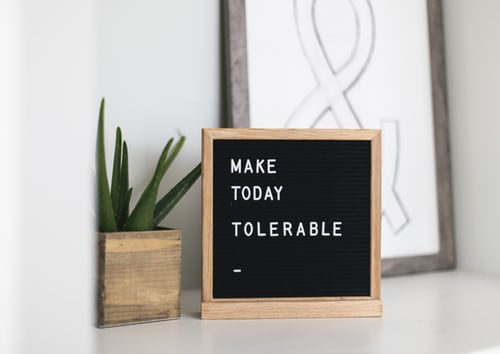
small black sign with white letters reading make today tolerable with succulent in wooden container next to sign

My particular misplaced sense of responsibility lies in how I think about my depression. I have always had a nagging (or roaring) sense that my depression is my fault. If I could just do more, or try harder, maybe I could fix myself. I’ve recently been faced with a treatment option that forces me to confront the fact that I have treatment-resistant depression, and that it’s not my fault. Seeing my severe depression as an illness that is out of my direct control is terrifying. It’s simply more comfortable for me to think that I’m just not doing a very good job at solving a problem that can be solved with enough effort.

And that’s how I realized that I’m a (self)-control freak.

actually would rather believe that I’m a failure than that I drew the short mental health straw. At the same time, it’s freeing to view my depression as something that has happened to me rather than something I caused. It takes some of the burden off of me, but it also takes some of the control away from me. Brains are weird, and sometimes they have a mind (har har) of their own. Sudden relapses, triggers, and even seemingly spontaneous ends to episodes are not entirely understood. It’s scary to think that after all of this- the numerous medications, the hospitalization, the group therapy, the individual therapy, the occupational therapy– my brain has stubbornly remained depressed.

If I’m going to get better, I need to stop blaming myself. I need to accept that some things are out of my control and that I don’t need to hold myself entirely accountable for my symptoms. I’ve learned a lot about healthy coping mechanisms in my years of therapy, and although right now I feel too debilitated to put them into useful practice, I hope that a new approach might relieve my symptoms enough to let me begin to heal on my own, the way I like to do it: with hard work.


The term “control freak” has plenty of negative connotations, and it can be hurtful to people who struggle to trust others or to let go of perceptions about the “right” way to do something. This post is in no way a jab at others, only at myself. The title is meant to be humorous, to poke fun at a coping mechanism that holds me back. I’m a self-described self-control freak, and as the term does not bother me, I hope that it doesn’t come across as insensitive.

Several Bad Weeks

You’d think that bad weeks would push me to write- to channel my too-full brain into words on a page. But no, bad weeks leave me unable to open my laptop and string words into sentences that express how I feel. Describing my symptoms feels repetitive, like I have nothing new to say. And maybe after four years of severe depression, I don’t. This is a symptom; I don’t want to write, and I don’t want to think.

Lately, I’ve been feeling suicidal, almost like how I felt before my hospitalization. After weeks of bad days, I finally had a good day. I got things done, I said “yes” to invitations out, and I had a microscopic feeling of hope. Then, like I knew it would, it ended. I woke up with the same depression I had two days before.

It’s taken me two weeks to write this much. It’s only 300 words, but I have to come back again and again to chip away at it. I feel disorganized in my thoughts, and if I had the spark to edit this, I would. I haven’t posted in a while because I feel the need to end each post on as hopeful a note as possible, and I don’t think I can muster that right now. Is it better to say nothing in order to preserve a positive message, or abandon optimism to illustrate real life with depression? I’ll strike it somewhere in the middle.

Sometimes you have bad weeks, and sometimes there are many, one after another. I’ve been told, and have experienced in the past, that if you keep going, good days will fall into place. At first, they’re few and far between, but then they start multiplying. I’m not there yet. I don’t see many good days, and I feel far from optimism. But it’s possible that I’ll get there.

Update: It took me so long to finish this post that I’m now feeling better enough to continue blogging. However, I thought it important to post this anyway.