green-mug-with-steam-rising-sitting-on-side-table-with-rumpled-sheets-on-bed-in-background

Taking Stock of My Life with Depression

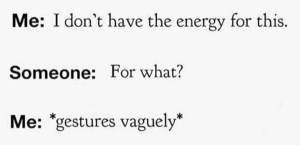
text about not having energy for anything
Not my meme. Not sure whose.

In my experience, severe depression creates a kind of tunnel vision whereby the non-essential tasks of life get shuffled to the edges and only the act of surviving can be focused on. It’s not that you don’t know what’s on the edges, you just don’t have the energy to expand your field of view and look directly at them. I’m in an increasingly healthy place right now, and I’m taking stock of the state of my life with depression. I always knew that I was “falling behind” in my self-imposed timeline. In fact, I’m acutely aware of how much time has passed without me accomplishing the milestones and achievements someone my age is expected to be doing. My life looks very little like what I hoped it would by this point, a fact that is heavy with self-judgment and regret.

I still struggle to believe that depression happened to me. That it wasn’t poor planning, laziness, or a lack of ambition that kept me from moving forward, but an illness. I think that there are two helpful ways of looking at this. In one, the state of my life is a result of severe depression, a disorder that has kept me from functioning at the level I used to. This view helps stop me from blaming myself for every perceived inadequacy and from expecting too much from myself too soon; I do, after all, still have a serious mental illness that requires daily management.

On the other hand, I try to consider the state of my life to be in spite of severe depression. I didn’t do nothing while horribly depressed, I fought for my life. I studied and graduated, I worked part-time, and I adopted a dog. I went to therapy and tried medications and pushed myself to do things when I just wanted to sleep. Most importantly, my life – even as a life with depression – has continued. The things that I consider important for young adults to do or have mean nothing if there is no life to be led.

If you’re struggling right now, give yourself some credit for the courage and persistence it takes for you to show up for yourself every day. There is no timeline.

A woman wearing a black one-piece swimsuit floating in dark water with her knees bent and her arms outstretched to the sides

Underwater: The Ketamine Chronicles (Part 12)

Breaking through the thin boundary between water and air is easy, but the farther down you are, the harder it is to swim to the surface. Higher doses during IV ketamine infusions for depression make me feel like I’m sinking beneath vast volumes of water, and the barrier between my mind and the outside world is very far away.

I don’t remember much from this IV ketamine infusion, which I have every few weeks as a treatment for my severe, treatment-resistant depression. I remember sitting in the chair and closing my eyes. Then, a minute later, the machine beeped and the nurse reached over to me. She fiddled with the IV, smiled wryly, then said, “We have to have the clamp open.”

“That helps,” I replied with a smile.

After that, I remember very little. I was listening to classical music in my earbuds, which seems to create (for me) more memorable images than meditation music, but apparently not memorable enough to outweigh the sack of bricks that hit me when the ketamine kicked in. I do remember bursts of thin lines that became ripples on water, and finger painting a nature scene with varying shades of pink. I remember a crocodile, a puffy dress, and watching my inner set of eyelids close to darkness.

It always takes some work for me to come back to the room when a ketamine infusion is over. This time, I kept thinking that people were waiting on me to come out of it, so I thought I should hurry up and return to my body. But, when I dragged my real eyelids open and looked around, somebody said, “Just a couple more minutes.” Oh. That’s why it was so hard to pull myself back. It wasn’t even over yet.

Slow to Return to My Body and Mind

At lower doses of ketamine treatments, I generally feel normal within 30 minutes of the infusion ending, if a little tired. This time, though, it’s all a blur. I remember the rest of the day in jumbled snapshots. Returning to the room around me and talking to Sarah, who mysteriously took the place of the nurse at some point; telling Dr. G that I didn’t remember what I saw; pushing the footrest down with my heels, then walking to the car with my mom. Two kids sprinted past us, almost colliding– wait– was that before the infusion or after? That was before. When I woke up on my bed hours later, I was mildly unsettled that I could remember so little of the day. I know that I wouldn’t have said that I felt weird in the moment, but my memory of it all is so broken that I clearly was pretty impaired.

Four or five hours after getting home, I pushed myself out of bed and tottered to the kitchen for some food. When I turned or bent, mild vertigo briefly grabbed me. A can of soup and a clementine later, I pulled out my laptop to jot down some notes about the infusion, only to sit, stumped by my lack of memory. Listening to the music I chose over again prompted flashes of scenes and images, but I still have the sense that there are some rich plots that I’m missing. It’s like when you know you had a bizarre dream, but you just can’t quite remember what it was about. Ah, well. It’s entertaining to remember my ketamine dreams, but the important part is that it’s getting to work in my noggin to treat my depression as we speak.

If you’d like to read more about my experience with ketamine for depression, start from the beginning of The Ketamine Chronicles or visit the archives. Click here for mobile-optimized archives of The Ketamine Chronicles.

The Sensory Meditation of Flow

When you’re reading a good book, playing a familiar song on your instrument, doing a word search or a jigsaw puzzle, or any number of absorbing activities, you might be experiencing flow.

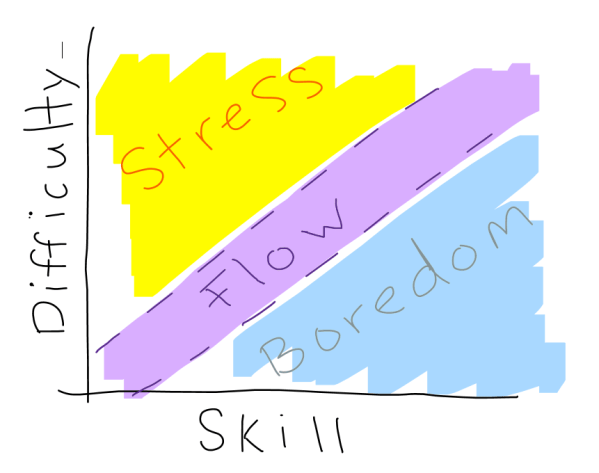
A while back, my occupational therapist explained the concept like this:Flow

If the difficulty of whatever you’re doing is too high and you haven’t spent very long doing it (aka: have a low level of skill), you’re likely to be above the “flow” line and feeling stressed.

If the difficulty is low and you just started, you’re probably pretty close to flow from the start. The longer you do it, though, the more skilled you get and the more bored you become.

This is probably pretty intuitive to most people. To stay close to flow, you need to adjust the difficulty level to match your skill. Otherwise, you get either overwhelmed or bored. Everyone has unique sensory needs, so your nervous system might react differently to inputs that create a perfect state of flow for another person. For instance, my ability to follow a cardio dance video is atrocious, but someone with awesome praxis skills might think it’s exactly right for them.

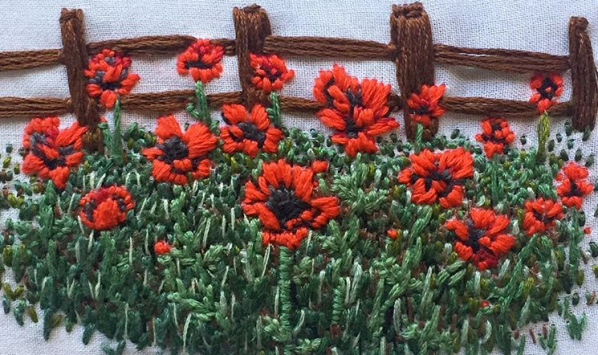
Currently, my favorite leisure activity is embroidery.

embroidery-of-wooden-fence-and-red-poppies

I started out with those pre-packaged kits that have the image inked onto the fabric, like a paint-by-numbers but for stitches. That was great because I didn’t know what I was doing, but as I learned and got more comfortable with it, those kits became a little boring. Now, I make it up as I go, so it takes some focus and creativity but it’s also repetitive and relaxing.

If, like me, you have trouble with sensory discrimination and often don’t know what you’re feeling or what qualities of something you do or don’t like, finding an activity at the right difficulty to produce flow might be tricky. Trial and error is always a good way to approach this. Give the “trial” enough time that you’re able to decide whether you like it or not, and why. When you do find something that gets you to a state of flow, don’t forget to up the difficulty on occasion. The challenge is what makes it interesting!

envelope labeled 2020 with golden streamers and small potted plant

My Mental Health Resolutions

In December, I gave myself four goals to test before the new year rolled around. I wanted to give myself a chance to work on some (mainly) mental health resolutions without the pressure of an entire year ahead. It wasn’t wildly successful, but it wasn’t a flop, either.

These were my goals:

  1. Keep running, be able to go five miles somewhat comfortably: Done!
  2. Reestablish skincare routine: Sort of done! Currently on track, but it wasn’t a straight line.
  3. Start volunteering: Sort of done! I’m signed up to start in January.
  4. Begin relearning German: Not at all done! Yeah, nope. Didn’t even start.

Even though I didn’t check all the boxes, it felt pretty good to have a list of actionable goals. My overarching goal with all of them (except maybe relearning German) was to improve or support my mental health. In that, I think I succeeded! It was motivating to remember that I only had one month to make progress on my goals, which helped me not get complacent and stuck in bed with depression. As with any vague intention like “improve my mental health,” setting out some well-defined steps is vital. I needed to know where to start and how to do it.

2019 was really, really hard. I plummeted even further into the pit of depression than ever before and ended up hospitalized. I continued on my quest to find medications that work for me, and most of the time, I felt entirely discouraged and worthless. But, I kept going. I kept myself alive, and that was a huge accomplishment. Now, with the assistance of moderately helpful medications and much more helpful IV ketamine infusions, I feel like I’m inching my way out of my blanket burrito of sadness. To continue that progress, I’m aiming to carry on my mental health resolutions from December into the new year.

Wishing everyone a Happy New Year’s Eve and a wonderful year ahead.

Claude Monet: The Truth of Nature

Two weeks ago, while trapped in the ill-fitting, damp denim jacket of depression, I slipped into the airy expanse of the Denver Art Museum. We were there to see a once-in-a-lifetime exhibit that is visiting nowhere else in the U.S. besides Denver. It’s called Claude Monet: The Truth of Nature. While an art exhibit is not enough to cure my mental malaise, it certainly helped.

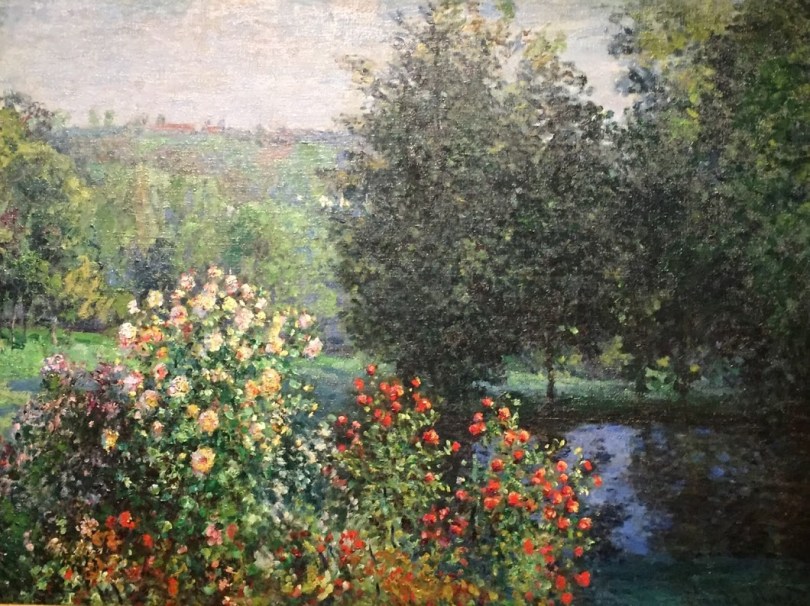
Monet’s art is just up my alley: nuanced, filled with light, and nature-focused. I could not choose a favorite if I tried. To some extent, each room was dedicated to a particular time period in Monet’s life. There were some parts that compared paintings of the same subject done at different times, but for the most part, the chronological organization helped show the progression of his style from something close to realism into distinctive impressionism. We saw the poplar trees, the haystacks, the waterlilies, and so much more. We saw the ice of the frozen Seine and the roses of his beloved garden. We saw the paintings up close, inspecting the details and sudden colors, and we saw them from far away, brushstrokes blending into a strikingly clear image.

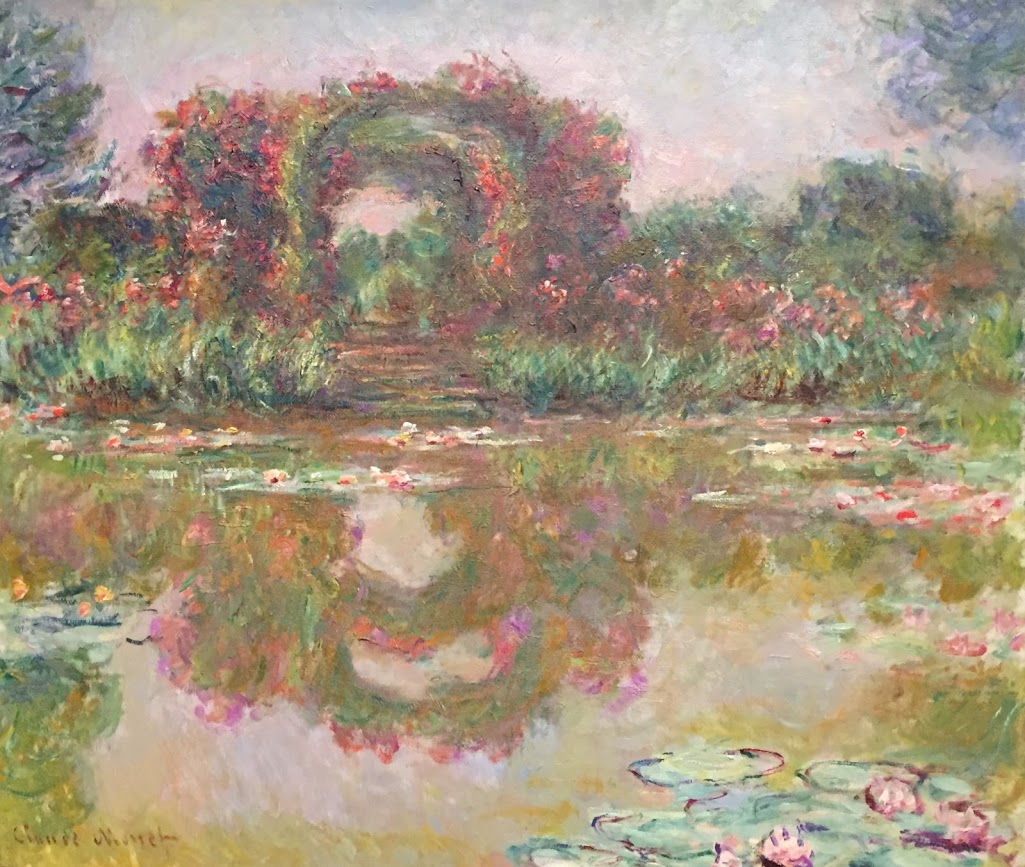
monet roses

I was particularly taken with his ability to render water and reflections. At mid-distance, there is an overwhelming illusion of depth in the water he painted. It’s like you could just dive right in. Upon closer inspection, I marveled at the sheer number of colors and shades he used to achieve that effect, and the shapes that brought the water together. From a distance, I lost sight of the intricacies but was captivated by the image as a whole.

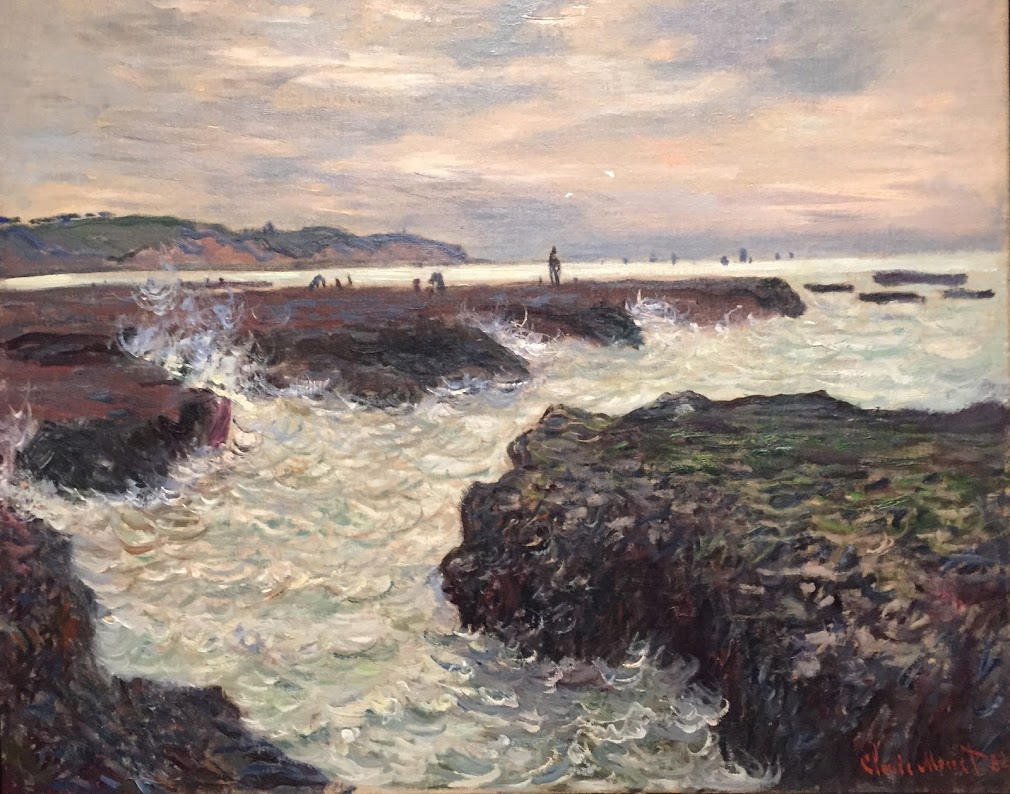
Monet was driven by a desire to capture specific moments in time, and to represent them as true to nature’s beauty as possible. Part of that beauty is how it looks, but part of it is how being in nature makes you feel. Monet’s art is about how afternoon light is different from morning light, and how the same scene makes you feel at different times. It’s about atmosphere: how ripples in water convey emotion, how cliff faces can be sinister, and how perspective changes everything.

waves

While in the exhibit, I overheard a mother and her young daughter discussing a painting. The daughter asked if there was glass covering it, to which her mother replied “No,” there wasn’t.

“Then why is it shining?”

“That’s just his painting.”


It was tiring but well worth it. I’m thankful that I got to immerse myself in this exhibit, and that my brain allowed me to enjoy Monet’s shining paintings.

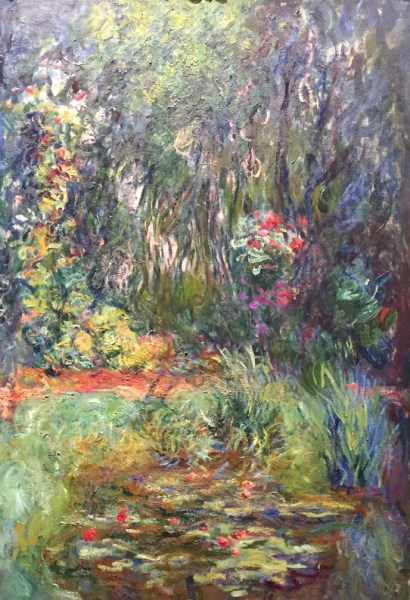
lilypad


person-extending-hands-with-open-palms-in-stop-gesture-as-contamination-ocd-concept-in-black-and-white

An Encounter with Contamination OCD

I haven’t been consumed by OCD in several years, something I’m immensely grateful for. That particular kind of mental torture is truly awful and not something I would wish on anyone. One of the subsets of OCD that I had was contamination OCD. My body and belongings had to be whatever my disorder deemed to be “clean,” or else some unnamed disaster would occur. There were often no actual illnesses I was afraid I might contract – I was just terrified of potential contamination by unknown germs/viruses/entities.

The Endless Compulsions

Beyond the fear, maybe the worst part of contamination OCD was how time-consuming it was. If something was “dirty” and it touched something “clean,” or if I touched the dirty item and then the clean item, they were both dirty. I spent a lot of time planning out sequences of actions that would combine touching dirty items because otherwise, I would spend half the time washing my hands raw so as to not contaminate anything else. My hands were always painful. I scrubbed them under hot water until I’d stripped them of any moisture barrier. Any movement cracked and split the skin open, which, ironically, made my bleeding hands perfect entry points for bacteria and viruses. But, OCD is not swayed by reason and rationality. It creates doubt that can’t be rooted out with reassuring facts.

Contamination OCD After Recovery

For the most part, I don’t deal with OCD anymore, contamination OCD or otherwise. My day-to-day life is not consumed by it like it was before, but every once in a while, I encounter something that stirs those obsessions up. My perfectionism around self-harm is one, and tapeworms appear to be another.

Unexpected OCD Triggers

I’m not squeamish, despite what you might think after learning of my past with contamination OCD. Again, OCD is not rational. Parasites are fascinating and don’t bother me from afar, but when I found a tapeworm segment in my dog’s stool, I felt the familiar stomach twisting of contamination OCD.

Once the initial shock passed, I found myself thinking about all of the things I would have to clean. First and foremost, the hand that held the poo bag. I must not touch anything between there and home, not even to put my hand in my pocket. The bed in her crate would need to be washed, and all of my sheets and blankets because she often snoozes on my bed. Should I wash her leash and harness? Perhaps I should stop petting her– would that be going too far? On second thought, that would be impossible. I’ll just wash my hands every time I touch her. So, like, 80 billion times per day.

OCD is Irrational

Keep in mind that the most common species of tapeworm is passed to humans only when you ingest a flea that carries the tapeworm eggs. Not likely. There is also a species of tapeworm that can be passed from dog to human through ingested feces on unwashed hands, but it’s not common in the U.S., and I’m a frequent hand-washer as it is. In other words, it’s very unlikely that I would get tapeworms from Stella.

I Fell into Old Patterns

That night, I lay in bed, Stella at my feet, and tried to control my rising panic. The vet was closed for the holidays, so I had left a message. Having no idea when they would return my call, I did what any smartphone-wielding person would do; I looked it up. Unfortunately, Google played the role of the reassuring-but-clueless friend who says something terrifying right at the very end of the conversation.

“Oh, it’s very uncommon for people to get them? OH, you might not show signs until years after ingestion?!”

Not gonna lie, my concern for Stella was overshadowed by my selfish, irrational fear for myself. The thought of something living inside me usually doesn’t bother me. After all, we are made up of more bacterial cells than human cells. Maybe it’s an evolutionary adaptation to be totally wigged out at the thought of parasites taking up room in your gut.

Facing Contamination OCD with Exposures

The good news is, I realized that I was obsessing about this right before I returned to the scariest thought of them all: “What if I already have tapeworms?” This is good news because it really kicked me into the best way to face OCD thoughts, which is to say, “Yeah, and?”

In the dark in more ways than one, with my tapeworm-host dog not three feet from me, I had to say, “Maybe I do have tapeworms. What am I gonna do about it right now?” Just sitting with the uncertainty brings you to the stunning realization that there is absolutely nothing productive about rumination. So, with a little more deliberate relaxation, my hypothetical tapeworms and I went to sleep. Well, maybe not the tapeworms. Do tapeworms sleep?

Living with Uncertainty

I still don’t know if I have tapeworms, and it’s honestly probably something that I’ll worry about off and on for a while. I do know that I’m much better at squashing obsessions than I used to be, maybe because I know it’s something I’m prone to and can catch it early on. Stella is on a deworming medicine and continues to behave like a dog. That is to say, eats anything and everything with gusto and drinks water out of the Christmas tree stand when nobody’s looking.

A male lion stretching in the downward dog pose in a field of tall grass

Backyard Lion: The Ketamine Chronicles (Part 11)

I awoke to darkness. And barking. Whipping the blanket off of me, I thought what I always think in this situation, which is: Stella, don’t wake the neighbors up! And then I thought:

Wait a minute, I didn’t let her out this morning, followed by, wAiT a minute, IS it morning? 

It was not. It was 5:30 P.M., the same day as my latest ketamine infusion. I napped hard after this infusion, which was a higher dose than normal. I went in earlier than scheduled because a change in my birth control threw things out of whack (see Part 10 of The Ketamine Chronicles) and my depression made an appearance sooner than we had hoped. This ketamine infusion was longer and felt pretty different compared to my normal dose. I still saw vivid images and scenes, but they felt more immersive, somehow. They were more like realistic, sometimes-lucid dreams rather than IMAX movies.

There always seems to be a lot of water in my ketamine imagery, but this one was especially saturated (pun intended). I remember a lot of ocean waves, people walking on mostly-empty beaches, and the gentle rocking of the tide. It’s odd to have a relaxing experience of being on water. One aspect of my sensory processing disorder means I get motion sickness so easily that escalators can set it off, so I usually dislike any tilting or bobbing motions. The movement of water during this ketamine infusion, however, was very calming. At one point, I was on a boat where I watched water come up through a square hole in the deck, then recede, then repeat. At a different time, I saw foamy waves that I could stop at will, perfect dollops of whipped-cream water, frozen in place.

There were several dream-like plots this time, but I only remember one.

Why is This in My Brain?

This is the “We Bought a Zoo” bootleg knockoff of ketamine dreams. In the actual movie, Matt Damon plays a recently widowed father who purchases a defunct zoo and moves in with his children. They have to earn the trust of the animals and the people who work there in order to save the zoo and reconnect with each other. It’s heartwarming, at times dramatic, and funny. The bootleg ketamine version was like putting the whole script through several layers of Google Translate and getting rid of 90% of the characters.

In a mundane twist of fantasy, my ketamine protagonist buys a house. He moves in, but later learns that there’s a lion living in the backyard (seems like something the inspection should have caught, but oh, well). At first, he throws food into the far corner of the yard to keep it away. Over time, though, he and the lion start to trust each other, eventually becoming friends. The man even goes so far as to buy a puppy for the lion to bond with (à la cheetahs with emotional support dogs). This seems like a supremely bad idea, as the lion is already fully grown, but the protagonist is confident.

(Un)fortunately, I will never know how that turned out because I either “woke up” or simply moved on to some other surreal, mental drama. By “woke up” I mean that some change around me brought my attention back to the real world, not that I opened my eyes and was back to normal. What pulled me back may have been movement in the room, a new song in my earbuds, or the sudden realization that I wasn’t actually in a bizarre plot about a backyard lion (which is, of course, horribly cruel and irresponsible).

Illusions of Ketamine Infusions

I prefer to not wear an eye mask during ketamine infusions, just because I like to have the option to open my eyes, and I’m not a fan of having stuff on my face. However, there are times when I think an eye mask would come in handy. You know that feeling when you’re falling asleep on an airplane and you keep waking up because you feel like your mouth might be open? That’s the kind of sensation I get during ketamine infusions, except instead of my mouth, it’s my eyes. They’re not actually open during ketamine infusions, it’s just that the feeling of “seeing” in my mind is so realistic that sometimes I can’t tell. I used to sleep with my eyes a little bit open, and apparently, it was really creepy. I’d like to spare the occupants of the room my unsettling zombie eyes.

Lately, I have been dreading the morning. Stella’s enthusiasm and relentless needling get me out of the house to tire her out, but depression has made it a slog. I’m hoping that this ketamine treatment will bump me back into feeling good about the day ahead.

Note: this blog recently hit 100 subscribers! Thank you all for reading my ramblings and thoughts about depression and mental health. Just before the new year, too! I hope you’ll stick around in 2020. 

If you’d like to read more about my experience with ketamine for depression, start from the beginning of The Ketamine Chronicles or visit the archives. Click here for mobile-optimized archives of The Ketamine Chronicles.