photo-of-open-day-planner-with-pencil-on-top-and-cup-of-coffee-nearby

The Weekly Plan: Structure and Expectations

I recently wrote a post about SPD and dyspraxia, in which I mentioned using a weekly plan to help me deal with uncertainty and change. In all honesty, I haven’t used my weekly plan in a while, so I’m hoping that reflecting on what worked for me and what didn’t might encourage me to get back into it.

How to Make a Weekly Plan

There really isn’t one right way to make a weekly plan. I like to create mine with an hourly-organized template so that I can schedule each part of my day. It helps me stay on track and prevent procrastination. Sometimes I take more of a loose, overarching goal approach where I identify a couple of tasks per day or week that I want to accomplish, and then fit those in around my normal routine.

I’ve tried a paper planner and a digital notes app, and I’d say I prefer the digital method; I can refer to it anytime because, like a typical millennial, I’m never far from my phone. It’s also easy to alter by replacing items or copy and pasting them to another day/list. The digital method also appeals to me because replacing tasks leaves no evidence of the previous one, as with paper and pen, which brings me to another point:

Pitfalls

I had to dedicate several weeks to trial and error when starting my weekly plans as part of my occupational therapy. I tend to avoid making choices as much as is humanly possible (thanks, sensory discrimination challenges), so when I’m faced with a decision like “digital or paper?” I won’t know which one I prefer until I try both and compare them.

Rigidity

Here, we come back to the “digital changes leave no trace”. This is a relic of my own high expectations for myself and my reluctance to change plans. I found that erasing (or worse- crossing out) tasks in my weekly plan when I couldn’t complete them brought on a sense of guilt and failure. Nevermind that imposed the plan in the first place and may have bitten off more than I could chew. Once it’s in the plan, I have to do it, right? Nope- moving things around and postponing some tasks is often necessary. Something takes longer than you anticipated, an unexpected problem arises, or you’re really just not up for tackling a particular task that day. I think eventually, I’ll get better at finding the balance of flexibility and rigidity, but until then, a digital format works best for me. That way, I don’t have to see the faint outlines of my overly ambitious, past plans.

Too Much Detail

Honestly, this is still something I struggle with. It’s tricky to know how much is reasonable to plan into one day, especially because, as with the previous section, sometimes things come up and you’ve got to shift gears. When I started figuring out my weekly plans, I started seeing improvements in my productivity, and consequently, my mood. Riding the wave of that success, I was perhaps a bit overzealous in my weekly planning and crammed as much detail as possible into each day. Every hour was occupied by some task, either work-related or relaxation-related. (You can imagine that that approach wasn’t very conducive to relaxation.) Ultimately, too much detail would lead me to fall “behind” on my plan, start to feel discouraged, and sometimes just give up on the day altogether. Now, I like to leave a buffer zone around work tasks and intentionally leave at least a couple of hours empty to take care of little chores or just sit around and do nothing.

My Ideal Plan with Sensory Processing Disorder

I think that anyone can benefit from a weekly plan; even if you try it and decide it’s not for you, you’ll likely learn something about yourself in the process.

I’m over-responsive to a lot of stimuli, and I have some issues with discriminating sensory information, so I do best with predictability. Routine is how I function best, and spur-of-the-moment action makes me anxious. For me, my ideal weekly plan is one that looks pretty similar to the previous week’s. Whether I write it out or keep it in my head, my day-to-day routine is remarkably consistent; and that’s how I like it. For someone who seeks more stimulation, this might be incredibly dull, so it’s certainly not for everyone. I keep most of what I do every day the same, and then sprinkle in equal amounts of fun and dreaded tasks. Going to the dentist on Tuesday? Make Wednesday a library day. Need to go grocery shopping? Pick up a treat as a reward. When things start to get a little too consistent, I go back to the drawing board and make an effort to incorporate new activities.

Extra Tips

  1. Keep a running to-do list for when you’re at a loss for what to do.
  2. Pick a day of the week to sit down and plan the next one.
  3. Break large tasks down into smaller chunks to be accomplished over time.
  4. Don’t take it too seriously- it’s a tool, not a rule.

College and SPD: 3 Things I Wish I Knew

I’ve known that I’m sensitive my entire life. I don’t like crowds, loud noises, getting splashed in the pool, or rollercoasters, and although I technically knew that I had Sensory Processing Disorder, that fact clung to the periphery of my awareness until I was nearing my college graduation. For the majority of my time at university, I questioned my worth, my intelligence, and my capabilities. Had I gone into college prepared with knowledge about my disorder and the intention to remember my sensory differences, I think my experience would have been much more positive.

But, here we are, and shoulda, coulda, wouldas won’t change the past. But they might change your future, so I thought I’d expand upon what I wish I knew about college and SPD.

1. I Got In For a Reason

I can’t tell you how much time I wasted worrying about my perceived inadequacy and comparing myself to my peers. So. Much. Time. And where did it get me? Countless sleepless nights and a heck of a lot of cortisol. When the other freshmen complained about the workload and said that they “breezed through high school”, what I thought was geez, I had to work really hard in high school. That must mean I’m not smart enough to be here. What I should have thought was: I worked really hard in high school and developed valuable time-management skills and study techniques. 

In hindsight, I probably felt I needed to put a lot of effort into my high school classes because planning and abstract thought are not my strong suits (read: math is hard for me). I often felt behind my peers because I learn best when I have quiet time to digest new information on my own; doing homework was usually when concepts started to make sense, but I was often utterly lost in class.

So, the bottom line is: I wish I knew that my learning style has more to do with sensory processing and less to do with my intelligence.

2. Everyone’s College Experience is Different

I’m an early-to-bed, early-to-rise type. This doesn’t tend to mesh well with the party lifestyle many people associate with college. I also really like oatmeal raisin cookies and think they’re vastly underappreciated. (Read: I’m actually an old person in a young person’s body.) My point is, I spent a lot of time feeling like I was missing out on all the things I knew I wouldn’t like, just because it seemed like I should.

A sub-category of this section is that finding a space that fits your needs in terms of community, interests, and activities is definitely possible and makes a huge difference in creating a sense of belonging. I went to an enormous university, and I was worried that it would be hard to make friends. So, I lived in a small, all-female dorm for three of my four years there. That turned out to be the best part of my college experience. I made life-long friendships and I immediately felt welcomed and accepted.

3. Focus on Yourself

In some ways, I did do this; I went to office hours, I prioritized classwork, I took the maximum number of credits a few times in order to fit in two majors. In other words, I focused on my academic goals, pretty much to the exclusion of all else. I didn’t start seeing a therapist until my senior year, and I failed to advocate for myself when it came to things like roommate disagreements and class accommodations.

When you’re in college, it’s important to remember that it’s your education. It’s a privilege many people don’t have, so get the most out of it while you can. That being said, your education won’t be much good to you or anyone else if you’re unable to use it after graduating. Taking care of yourself should be your first priority.

deer
Gotta love Nichol’s Arboretum and its weirdly habituated deer.

There are some aspects of college life that are unavoidable. For example- I don’t like crowds, and going to a big school meant that I was bound to encounter crowded walkways several times a day. When I had roommates, I realized that there weren’t many places on campus where I could be truly alone. Being surrounded by people at all times was exhausting, so I went on long walks to the arboretum near campus. I even started timing it so that I wouldn’t be leaving or returning when classes let out and the sidewalks were jammed with students.


There are a ton of other things related to Sensory Processing Disorder that I wish I knew or that I discovered a little late in my college career. Before I’m out of college for too long and forget them, I figured I’d share a few of them here. If coursework and time management, navigating campus, creating your ideal dorm room, or anything else SPD and college life-related is something you’d like to read more about, let me know.


Dyspraxia, SPD, and Change

If you’ve ever spent time around small children, you might be familiar with the sneaky tactic that is framing decisions with acceptable options. Asking a toddler if they want three pieces of broccoli or four somehow bypasses the part where they say they want cake, instead. For as long as I can remember, my mother has given me options from which to choose, but not because she was trying to shepherd me towards a healthy decision. It’s more because if she didn’t do that, we’d likely still be waiting for me to decide what to eat on my fifth birthday. I’m twenty-two. Dyspraxia as a symptom of SPD is and has been a roadblock for me for a long time.

What is Dyspraxia?

Dyspraxia falls under the Sensory-Based Motor Disorder subtype of Sensory Processing Disorder. People with SPD often have a combination of affected sensory systems that lead to symptoms in one or more SPD subtypes. The STAR Institute for Sensory Processing Disorder sums it up this way:

“Individuals with Dyspraxia have trouble processing sensory information properly, resulting in problems planning and carrying out new motor actions. They may have difficulty in forming a goal or idea, planning a sequence of actions or performing new motor tasks.”

A Few Tips for Dealing with Dyspraxia

As an adult with symptoms of dyspraxia, I notice that decision-making, in particular, is often difficult. Even small decisions, like which brand of cornbread mix to buy can leave me scratching my head in the baking aisle for way too long. Bigger decisions, like where to go to college resulted in a stressful, last-minute choice after months of deliberation. Here are a few of the ways I tackle everyday and not-so-everyday decisions.

  1. Make a list of the options: (my OT calls this a “menu”)
  2. Decide what you can handle at that moment: (Am I only considering something because other people expect me to?)
  3. Ask for support
  4. Take a break and come back to it
  5. Put it in perspective: (Is it crucial that I make the “right” choice? E.g. the cornbread dilemma)
  6. Plan ahead!

When I started occupational therapy, one of the things we worked on was creating a weekly plan. Since spontaneity is not my strong suit, planning in activities ahead of time makes it more likely that I’ll follow through. Now that I have an established routine, I don’t make a plan every week, but it’s a good fall-back option for when I’m in a rut. It’s also great for when big changes are happening; a new job, moving, even the holidays are well-known for disrupting routines and causing stress. With symptoms of dyspraxia, life changes can be completely overwhelming, so tackling decisions ahead of time can make coping so much easier.

Last, But Not Least

drawing-of-girl-looking-at-surreal-landscape-with-bees-surrounding-herMy final tip (one that I’m still working on, myself) is to be as patient and nonjudgmental about dyspraxia as possible. I still get frustrated with myself for being slow to make decisions or reluctant to try new things, but it helps to remind myself of why those things are difficult for me. It also allows me to more easily support myself before and after unavoidable, sudden changes. After all, routines are great, but life can be pretty unpredictable. Knowing how to handle disruptions is always a good skill to have, even if it is a work in progress.


close-up-of-denim-pants-with-button

SPD Confession: Sometimes I’m Not Sure If I’m Wearing Pants

In casual conversation, I once said to my mother, “You know how sometimes you just have to look down and make sure you’re fully clothed before you leave the house?” She responded with a blank expression, and that’s when I realized that most people can tell without looking whether or not they’re wearing pants. Yet another way in which Sensory Processing Disorder (SPD) affects strange parts of my life.

Several Small Mysteries, Solved

There are SO MANY things that make sense in the context of Sensory Processing Disorder that I had never considered before my recent re-education on SPD. Like how I cease to function when someone asks me more than one question at a time, or how I actually find elevators a little bit exhilarating. Once, a friend scared me when I had the hiccups, and I was totally overloaded and burst into tears. (I then promptly hiccuped again, so it was all for naught.) When yoga instructors suggest the class close their eyes in a pose, I scoff internally because I know that if I did that, I’d end up falling spectacularly and taking half the class down with me. I’m seriously incapacitated in the dark.

Not to mention the wide variety of school-related struggles that I had never connected to SPD before. It doesn’t help me in any practical way now to know that Socratic seminars were so torturous because I’m not great at praxis, but it does reassure me that the anxiety I felt had a definable cause. Give me a few hours to think and I’ll give you a detailed response, but put me a circle with my peers and expect me to formulate an opinion on something and share it immediately, otherwise, I lose points?! C’mon. That’s a recipe for a non-answer.

You’re an Adult: Now What?

I had the benefit of being diagnosed at a young age, so I had some inkling of the broad aspects of SPD. It is, however, very different to manage your disorder as an adult; you have a more complete understanding of societal expectations and your growing independence means that you must deal with a lot more on your own. I can imagine that for people receiving a diagnosis for the first time as an adult, it would be even more overwhelming to put all of their behaviors, quirks, and challenges into context. You can suddenly tie seemingly unrelated things together into a single explanation, and that can be extremely validating. But, it can also be a little bit intimidating. Armed with all this knowledge, you now have the power to make life 1,000 times easier for yourself, but that often requires an element of assertiveness. If you’ve been pushing yourself to endure things that drive you bananas and drain you of all life force because “everyone else can do it,” it’s really hard to change that habit. (And no, not everyone else can comfortably do it. Just for the record.)

Change can be tricky for everyone, but particularly if, like for me, dyspraxia makes dealing with uncertainty extra hard for you, it’s ok to take it slowly. It may be somewhat counterintuitive that advocating for yourself would be harder than continuing to do things that don’t work for your nervous system. Even though those things are uncomfortable or distressing, they’re likely also familiar. If you don’t know exactly what will happen if you change your routine or how other people will react, it might seem safer to just stick with what you do know.

If you’re in that boat, try to be patient with yourself. Ever so slowly, I’m getting better at saying “no” to things (and not feeling guilty about it). I’ve also learned that it’s totally worth it to speak up on car trips and explain that everyone will be much happier if I sit in the front seat so that I don’t get carsick and hyperventilate/blow chunks in the backseat. I rely a lot on what I see to help me discriminate sensory information, so yeah, sometimes I double-check that I’m wearing pants before I step outside. And that’s ok. With practice, it gets easier to advocate for yourself, and I think you’ll find that it’s worth it.

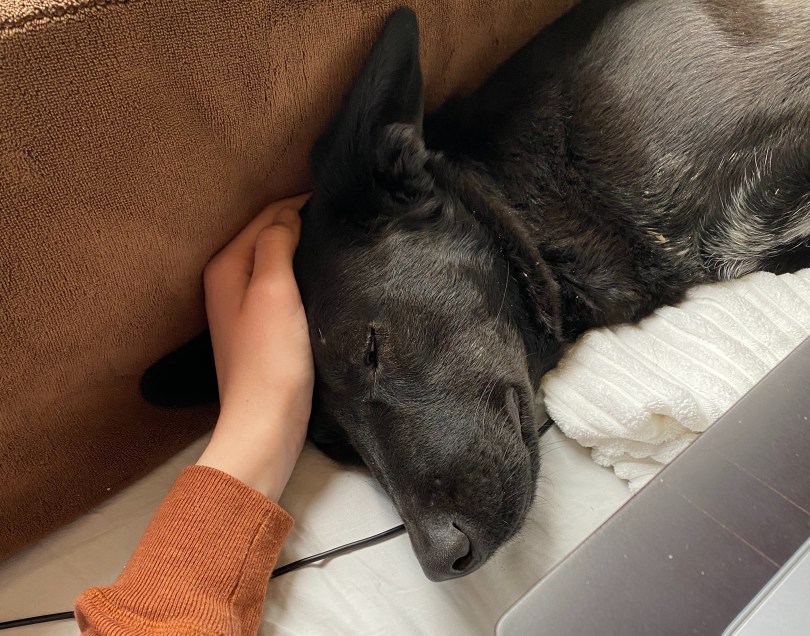
left-hand-on-head-of-sleeping-black-dog-with-pointy-ears

Creature Comforts: Pets and Mental Health

pets

There’s nothing better than a cozy evening spent snuggled up with your dog or cat, right? Pets come with lots of responsibilities, but also with plenty of benefits for our health. I know how it weighs out for me- strongly positive. My dog has been an enormous help in my recovery from depression, and she also helps me regulate my nervous system when Sensory Processing Disorder gets in the way. But what does science say about pets and mental health?

Animal Assisted Therapy

I’m particularly interested in how pet ownership affects mental health and wellbeing, but perhaps it’s best to start with the research on therapeutic interventions. I’m guessing that it’s much easier to study the effects of human-animal interactions in the context of short visits than in the context of pet ownership for a few reasons.

  1. It’s more difficult to determine causality in cases of pet ownership. Are people with pets healthier, or are healthier people more likely to have pets?
  2. Many pet ownership studies rely on participants’ ability to report results over a long period of time, as opposed to short AAT sessions.
  3. AAT is implemented and monitored by professionals who keep detailed records.

Before I even read any articles, I was expecting to find that AAT is backed by a sizeable amount of evidence supporting the link between pets and mental health. After all, I’d seen those news stories about unconventional Emotional Support Animals, and those aren’t necessarily trained to perform a therapeutic role.

A 2017 review compiled data from 18 studies of AAT. In 15 of those studies, at least one positive effect was found, although the authors point out that most of the studies found no significant effect on treatment outcome. Overall, the review suggests that AAT, particularly dog assisted therapy, provides mild to moderate effects. Not bad, given how many variables are unavoidable when it comes to animal interactions.

Therapy dogs have been successfully used as part of treatments for elderly Alzheimer’s patients as well as in promoting social interactions in a long-stay psychiatric population.

So, if AAT is mildly or moderately effective in short “doses”, how does near-constant interaction with animals affect us? I’m wary of extrapolating too far because pet ownership is certainly not just a scaling-up of petting a therapy dog at your university’s library during finals. There’s a lot more to it; perhaps the responsibility, stress and frustration when a pet misbehaves, and of course, the emotional pain of losing a beloved companion outweigh the benefits of interacting with animals.

My Roommate is a Quadruped

Did y’all see that Reddit thread about how weird it would sound if we called our pets “roommates”?

reddit

My roommate ate every Lactaid pill out of my mother’s purse and left all the wrappers on the floor. The other day, I walked into the kitchen to find my roommate standing on the table, eating jam right out of the jar. I know someone whose roommate ate crayons and then pooped rainbows for a week.

Pet owners share their lives with their pets; not just their time and energy, but their homes, too. Many people consider their pet as part of their family, and I can see why (and not just because I’m one of those people). Anecdotally, I can understand why pets and mental health benefits are often linked in our minds.

Social Support

A qualitative study of people with mental health conditions, conducted in 2016, had participants map out their social support networks in three concentric circles, the innermost circle being the most important. 25 of the 54 participants were pet owners, and the majority of them placed their pets in the innermost circle. The researchers identified several common ways in which participants reported benefits from owning pets.

  • Establishing routines
  • Distraction from symptoms (e.g. hallucinations, suicidal ideation)
  • Sense of certainty that pets would reliably provide support
  • Caring for pets gave participants a sense of meaning
  • Reducing the stigma of mental illness through pets’ unconditional acceptance of owners
E6093F94-D1C6-4B85-84C4-CEBC5DA7E52C
This meme will one day be horribly outdated, but that day is not today.

Another study with a similar design had me grinning from ear to ear- some of the transcripts of participants talking about their pets are delightful. Although this study focused more on chronic physical illnesses, I noticed some relevant parallels. The authors describe the apparent infantilization of pets and hypothesize that it provides a sense of reciprocity that chronic illness sufferers may not have in their human relationships. Those with chronic illness- physical or mental- often report feeling like a burden on others. Doting on a pet, it seems, alleviates some of those feelings and makes the pet owner feel needed.

Soothing or Stressful?

Everyone feels distressed from time to time. Petting an animal can help calm someone in distress by reducing blood pressure and reactions to mental stress. One study, hilariously called “Friends with Benefits: On the Positive Consequences of Pet Ownership,” experimentally found that pets were able to keep their owners from dwelling on negativity caused by social rejection.

For people with Sensory Processing Disorder, pets can provide a myriad of soothing sensory benefits. They offer tactile feedback in the form of fur, feathers, wool, etc., and the extra snuggly ones can provide deep pressure (depending on how heavy they are). Indirectly, pets provide proprioceptive and vestibular input simply by requiring interaction- walking, feeding, bathing, and training them. Pets tend to have less complex, more predictable social cues, which may make them less stressful to interact with than humans, especially for people who are easily overwhelmed.

Some of the Drawbacks

On the other hand, pets are their own entities with their own agendas. They don’t always do what we want them to. For instance, my dog barking at me while I try to drink my coffee in the morning is definitely NOT soothing. There are distinct disadvantages to owning a pet when you’re affected by SPD and/or mental illness. They can be messy and loud (unless you like those things- then add that to the advantages list), and sometimes they get in your personal space when you don’t want to be touched.

The Intersection of Pets and Mental Health for Me

Despite the frustrations and occasional discomfort, I’ve found pet ownership to be immensely helpful and rewarding. My dog reminds me to get outside and walk, to look up from my computer every once in a while (she’s being quiet…too quiet), and to enjoy all the little pleasures- long naps, eating with gusto, and rolling in smelly things.

Wait- not that last one. Don’t do that.

How Do You Feel? SPD and Sensory Discrimination

Several years ago, I awoke with a slight but sharp pain in my chest. I went about my day, doing my best to ignore it. I thought it was one of those random, passing pains that bodies get sometimes. But the next day, it was much worse. Every time I inhaled, stabbing pain shot through my chest. I also was developing severe pain down my left shoulder blade and around my ribs. I debated going to the doctor for three days; meanwhile, I couldn’t sleep unless I was sitting up, and moving at a pace slightly faster than your local library’s Wi-Fi left me in breathless tears. It turned out that I had pneumonia, which was strange because I hadn’t been sick beforehand, nor was I obviously sick in any way other than having debilitating chest pain.

When I reflect on that experience, my first thought is “why did I not go to the doctor right away?” I’m certainly not a fan of going to the doctor, and I don’t like to draw attention to myself, even from concerned family and friends. But neither of those reasons fully explain why I waited.

I didn’t go right away because I didn’t know if the pain I was experiencing warranted a trip to the doctor. I distinctly remember thinking “am I imagining this?” Let’s let that sink in. I couldn’t get out of bed without first psyching myself up for several failed attempts and some tears, and I wasn’t sure if I was just~~imagining~~it.

My brain is always a little confused about the information it’s receiving because I have trouble with sensory discrimination. When someone asks me “how do you feel”, nine times out of ten I’ll go “I dunno”–because I really don’t. Especially when it’s something new, I don’t know what the heck I’m feeling from outside or inside my body. So, when I mysteriously developed pneumonia, my thought process went a little like this:

Hmm. This hurts. I think my chest definitely hurts. Should I go to the doctor? They’re gonna ask me what it feels like. Is it burning, or stabbing? What’s the difference? Maybe it’s not that bad. How bad is bad? Wait, which came first- the chest pain or the shoulder pain? Are they even the same kind of pain? Maybe I’m imagining it- if I ignore it, it might go away. Good gravy, putting on socks is really hard. I’m probably fine, though.

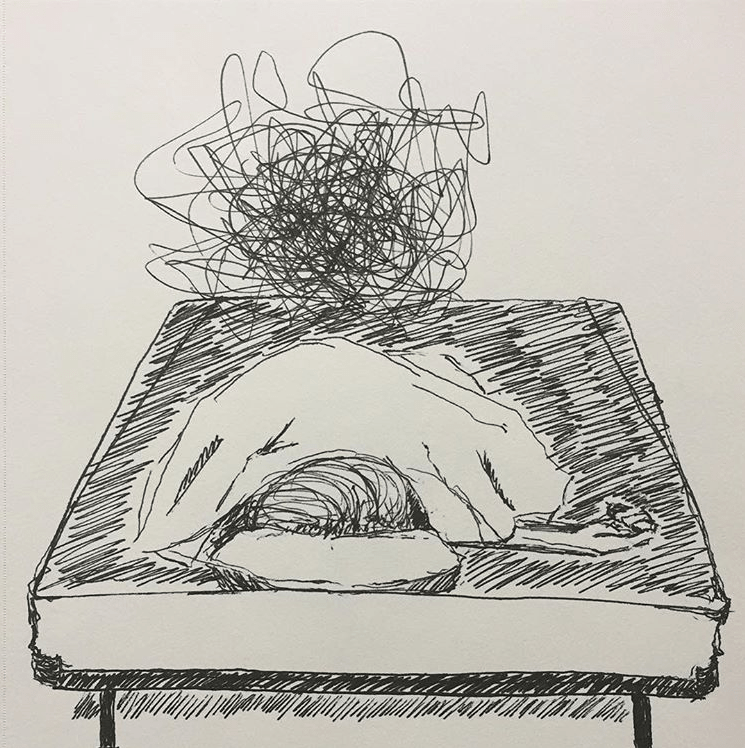
Because I know that sensory processing disorder (SPD) makes me sensitive to a lot of stimuli, this often leads me to understate how I feel, be it good or bad. I aim to be neutral in all aspects- I’m feeling sensations more intensely or in a mixed-up way, so it must be wrong, right? When you spend many years confused about how you feel, you get pretty good at hiding it. So, on the outside, I can appear relaxed and calm, but on the inside, I feel like that screaming bird meme. You know the one.

yellow-bird-with-beak-open-while-perched-on-branch-with-background-of-capital-letter-a
My nervous system 85% of the time

Anyway, do as I say, not as I do (did). The problem with approaching sensory discrimination this way is not just that you might neglect yourself when you have pneumonia, although that’s certainly not optimal. On an everyday level, taking this approach perpetuates the confusion and only makes things worse. It takes practice to start listening to your body, and it might take some serious courage to start advocating for yourself. I try to remember that the way I perceive things might be different from what other people feel, but that doesn’t mean it’s wrong.

Why I Sometimes Call Self-Care “Corporeal Maintenance”

Sometimes I wish someone would just roll me into the literal body shop and get me a self-care tune-up. Alas, it doesn’t work that way.

I’ve stopped using the term “self-care” to describe a lot of the things I do for myself. Hear me out, though. It’s not because there’s anything wrong with calling it self-care; it’s just that a lot of self-care tasks are not as flowery and gentle as the term implies. Sometimes you have to buckle up and make that phone call you’ve been avoiding so that your dentist doesn’t think you dropped off the face of the planet. (And so that you can get your teeth cleaned, I guess.)

I’ve found that reframing some self-care tasks as “corporeal maintenance” helps me tackle them with less procrastination. Something about approaching these tasks as simply maintenance and upkeep feels less daunting.
Here are some examples:

“Oh, my ‘check hydration tank’ light is on. Better go drink some water.”
Or
“Didn’t I just go grocery shopping, like…oh, yeah, I guess it’s been a while. I should probably get some fuel for this week.”

If I call it “self-care,” I’m likely to not do it – either because I don’t care, or because I don’t feel worthy of being cared for. But, if you want to keep driving to the things you do care about, you have to get the oil changed every once in a while.

There’s a lot of talk about self-care these days; some criticize it and some embrace it whole-heartedly. There tends to be an atmosphere of self-indulgence when we discuss it; as if every act of caring for ourselves is rooted in all-encompassing positivity. And yes, self-care can be self-indulgent and rooted in self-love. Those things are necessary. But self-care is also doing the things that aren’t very fun but are kind of non-negotiable when it comes to being healthy.

It may very well be the case that you do complete these tasks out of self-love, and I think that’s great. In fact, that seems like a wonderful goal to work towards. But if you’re not there yet, and calling those unpleasant/boring tasks “self-care” feels insincere, go ahead and call them something else. Whatever floats your goat.

Love, 

Your Brain