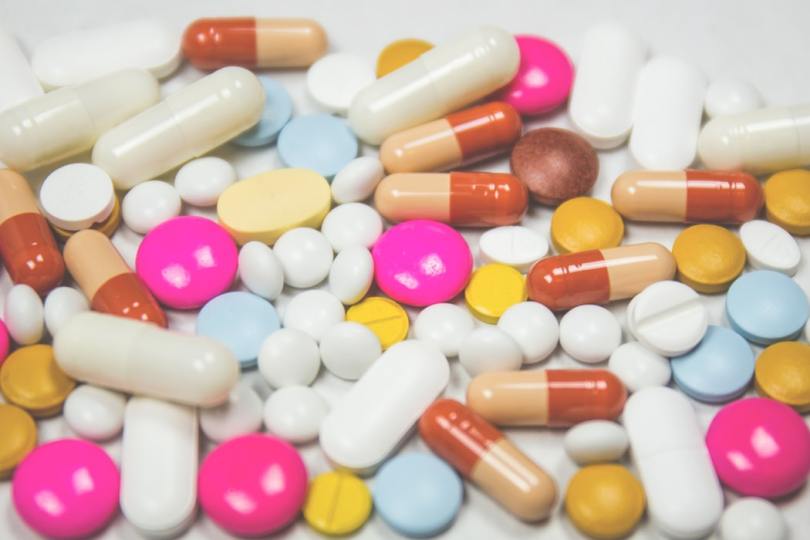
top-down-view-of-pill-bottle-with-tex-hold-tab-down-turn-with-arrows

Changing My Depression Medication

It’s come to my attention that my depression medication doesn’t seem to be doing much. IV ketamine infusions are also doing less than they used to, unless it’s the case they they’re doing just as much but my brain is kicking its level of stubbornness up a few notches. Who’s to say what the cause is? Maybe it’s just the curse of 2020.

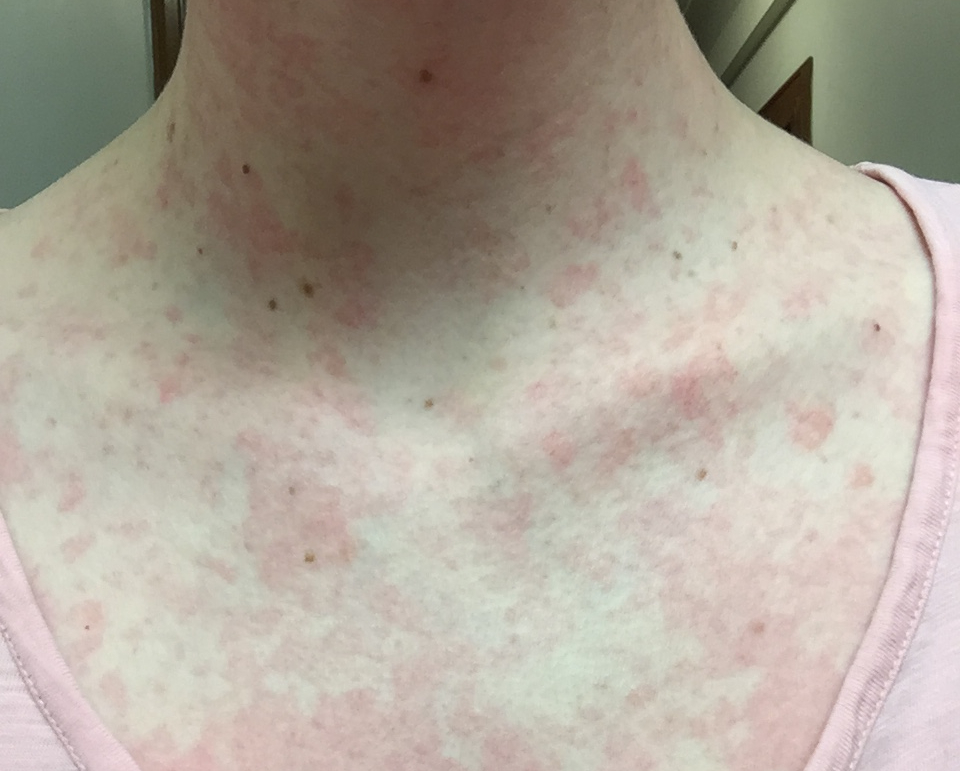
I got sidetracked. The point of this post is this: I’m about to start taking Wellbutrin, a medication that I tried a few years ago and really liked. I was only on it for about a week, though, because I promptly broke out in a blotchy rash that spread from my chest, up my neck, and all over my face.
close-up-of-woman's-collarbone-area-with-blotchy-red-rash
(the rash of 2018)

It seemed like a cruel joke played on me by the universe. The only oral antidepressant I’d ever tried that made a sudden, discernable difference in my depression is one that I’m allergic to.

Cut to now – I’m once again finding myself floundering in the soupy mashed potatoes of my depressed brain, looking for some way to change things. I’ve always carried a little bit of disappointment about my failed Wellbutrin trial, especially because I was taking the generic at the time. What if I wouldn’t have a reaction to the brand name version? Would it be stupid to try?

You know those prescription medication commercials that include a disclaimer like “Don’t take [name of drug] if you’re allergic to [name of drug],” and you’re like “Well, DUH?” I am now the person that those disclaimers target. To me, the risk of an allergic reaction is worth the potential benefit of taking Wellbutrin. I think it’s telling that when faced with the possibility of a rash, swelling, even anaphylaxis (unlikely), my reaction is “sign me up.”

I remember being so amazed at how motivated Wellbutrin made me feel. It was the only oral depression medication that’s ever given me that “I didn’t fully realize how depressed I was until I wasn’t” feeling. I was in my last semester of college when I took it. By that point, I had tried several medications and was struggling to get through the last few months before graduation. I was over the moon when I realized that Wellbutrin was working for me. It was SO much easier to get my work done and interact with people, even just for the few days that I was on it. When I got the rash, I stopped taking it abruptly, and the sudden changes did not do good things to my mental health. I had already been utterly overwhelmed by classwork and worn down by the near-constant suicidal thoughts that had plagued me for over a year. I canceled my trip home for spring break because I wanted to be alone, and I reluctantly started yet another combo of meds. I just remember the whole thing being bitterly disappointing. It was like Wellbutrin had swooped in, showed me how much easier everything could be, and then ditched me with the gift of an itchy, burning rash after just a few days.

So, I’ll take the chance of a rash if it means I might feel better. That said, if I let myself get too hopeful and the result is a letdown, I know I would feel incredibly defeated. I’m trying to temper my expectations. If I get a rash or if it doesn’t work, at least I’ll finally know for sure if it’s an option for me. I’ll write an update soon.


Categories

blurry-road-with-green-trees-showing-movement

It’s Been a Whole Month: Birthday, Anxiety, and Ketamine

I can’t believe it’s been a month since I last posted here. I have some in-progress posts that are languishing in my drafts folder, but none of them feel complete enough to be posted. So, to try to break through the stall in my writing, this is a rambling update that will have to be good enough for me.

Look at me, fighting perfectionism one disjointed blog post at a time.

Ketamine

I haven’t written about my most recent ketamine infusions because the propofol makes it harder to find anything about them to share. I think that going into it with the expectation that I won’t remember much makes it harder to grasp whatever snippets do remain. Having the intention to write about an infusion helps me pay attention to my experience; without it, the whole appointment just disappears from my memory in the hours following an infusion.

When I began my treatment with ketamine infusions, I was fascinated by the endless imagery that each infusion created. Every appointment held new associations and interesting scenes. But lately, they all feel the same. Of course, this is okay. The dose of ketamine that I receive would probably be too intense without the propofol, and I suppose I’d rather not remember much than have a terrifying trip. Still, there was something helpful about having something of the experience to hold onto.

I have the sense that I’m more able to remember things when I’m more present in the real world – like how you remember your dreams when you awaken in the middle of them. I wonder if the degree to which you’re aware of your surroundings during a ketamine infusion impacts its efficacy, if at all. Because if it’s not at all, I’d totally ask my doctor to poke me every 15 minutes and ask me what I’m thinking about so that he can write down whatever absurd, hilarious things I say. Although, my level of zonk is usually such that I probably wouldn’t answer.

Birthday

My birthday happened this month, and it caused a lot of anxiety about the future. It’s frustrating to be hindered by my own brain. I commonly hold myself to unrealistic expectations and judge myself harshly for not meeting them. I wanted a different path than the one I’m on now, and I’m having a hard time letting go of that vision. Not that I can’t eventually end up in the same place, but I didn’t see it progressing along such a challenging path. But that’s life, right? I’ve been trying to re-frame my birthday as just another marker of survival. If I can’t get myself to be pleased with my progress in the last year, I can at least be neutral.

Anxiety

Anxiety and depression often go together, and I’ve noticed a pattern in my mental health where I alternate between the two. As I start to come out of depression, the anxiety kicks in and I feel horrified by all of the time I “wasted”. I think about how far behind my expectations I am, and then I get a frantic sense of urgency to kick it into high gear. Unfortunately, I’m also easily overwhelmed and the prospect of “catching up” to my expectations triggers an avalanche of worries and insecurities. Ultimately, whether it’s depression or anxiety that is most immediately at hand, the result is still a barrier to my forward movement.

This flexible connection between depression and anxiety is not black and white. I wouldn’t say that I move completely out of depression and into anxiety – the Venn diagram has more overlap than that. My position within it just shifts into the middle so that I’m simultaneously slow, tired, and occasionally hopeless while also filling up with anxiety saturated with heavy judgement. Fun times.

At least the anxiety pushes me to do more than I otherwise would. I would rather be motivated by the reward of doing the thing rather than the fear of not doing the thing, but I also prefer being motivated at all over not at all (if that makes sense). I’ve been trying to run again, and have been somewhat successful in the last couple of weeks. The wildfire smoke in Colorado has intermittently lifted and returned, so I don’t always get clear air, but I figure the benefit to my mental health probably outweighs the damage.

landscape-photo-of-tall-grasses-near-road-going-towards-mountains-shrouded-in-wildfire-smoke

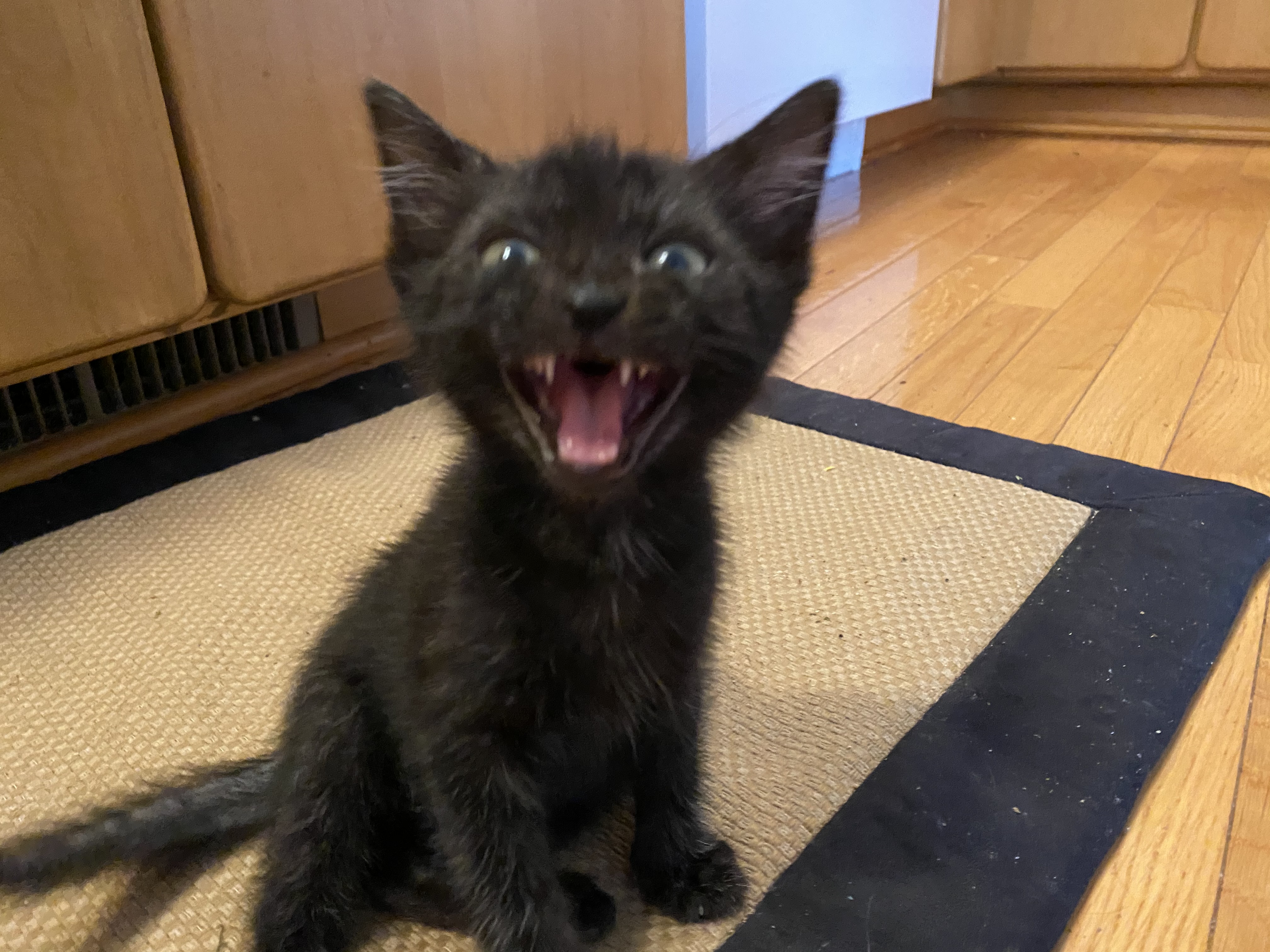
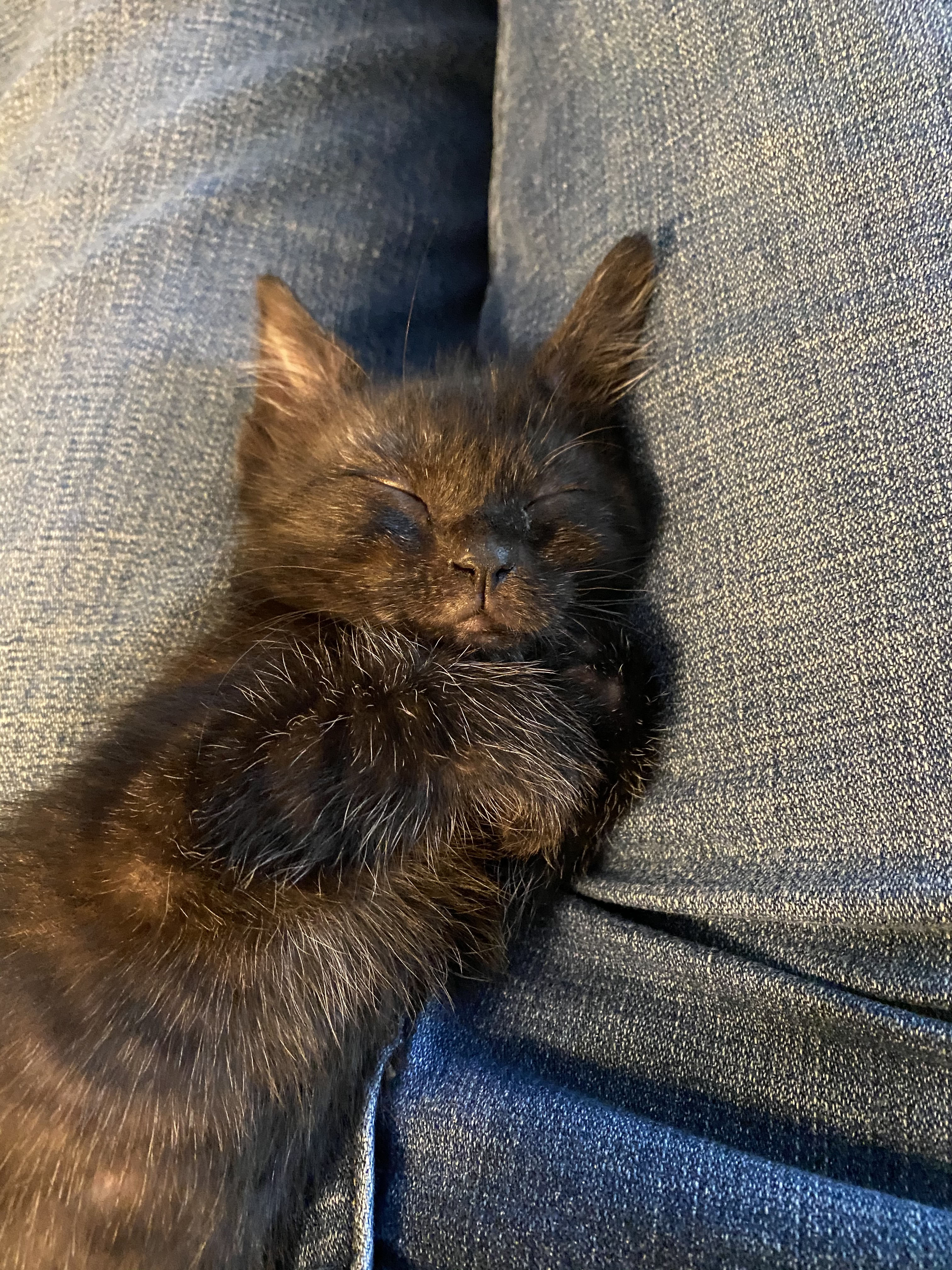
This is kind of a rambling post, but again, I can’t seem to write anything in this context that seems worthy of posting. So, this will have to do. In other news, this is not my kitten, but look at how cute she is.

My MTHFR Gene is a Problem. Again.

You would think I had learned my lesson. Refilling my medicines is not something I find easy to do if a phone call is involved. I waited until the very end of my supply to refill my Deplin, and now, because of shipping delays, I’ve been without for several days. Deplin contains l-methylfolate, which fills a metabolic gap caused by a mutation in the MTHFR gene. Essentially, it helps my antidepressant work. Not taking my Deplin is what pushed my suicidality to new lows last year when I was hospitalized. It seems like I can feel my brain slowing down. I sleep all day like I’m hibernating in reverse by starting in spring. There is nothing to get me up except the dog, who stands by my bed and huffs at me, threatening to wake me with a full bark if I do not move. I accomplish the necessary and return to bed, already sinking into sleep. The occasional diversion brings some welcome entertainment, but it’s just a momentary distraction.

tired raccoon lying on platform with black container on its back and foliage in background
Me. It’s me. (Unsplash user @successfullycanadian)

I took some time off of work when my grandfather passed away last week, but then I decided it would be more helpful to have something to do. So, I went back to work (which I thankfully do from home under normal circumstances) on Monday. Unfortunately, it’s shaping up to be a slow week, anyway. I suppose I should turn to hobbies to fill my time. I’m partway through a drawing that I promised to someone, but like many of us judging ourselves for not utilizing all of this time to finish household projects or write a sonnet or whatever we think we should be doing, motivation eludes me.

My shipment of Deplin is finally at my local post office and should be delivered by the end of the day today. It couldn’t come too soon. I plan to rip it open right there at the mailbox and throw one down the hatch. Well, okay, maybe I’ll go inside for a glass of water.

How Do I Love Thee? A Haiku About Meds

New bottle of pills

Contains capsules, not tablets

Let me count the ways


Three of my nighttime pills are tablets, and I like to take them all at once to minimize the horrible dissolving-pill taste as much as possible. One time, two went down but one got stuck to the back of my tongue and began to dissolve. It was like purifying the essence of every cruciferous vegetable and mixing them with charcoal, then pouring the horrific concoction down my throat. Immediately, my esophagus’s movement reversed direction and it took serious effort not to hurl right then and there. Instead, I had to force myself to chug water and think about anything but my poor tastebuds. To this day, the memory makes me shiver in horror.

And now, a change in the formulation of one of my meds means that I have received capsules instead of tablets. It’s the little things.

envelope labeled 2020 with golden streamers and small potted plant

My Mental Health Resolutions

In December, I gave myself four goals to test before the new year rolled around. I wanted to give myself a chance to work on some (mainly) mental health resolutions without the pressure of an entire year ahead. It wasn’t wildly successful, but it wasn’t a flop, either.

These were my goals:

  1. Keep running, be able to go five miles somewhat comfortably: Done!
  2. Reestablish skincare routine: Sort of done! Currently on track, but it wasn’t a straight line.
  3. Start volunteering: Sort of done! I’m signed up to start in January.
  4. Begin relearning German: Not at all done! Yeah, nope. Didn’t even start.

Even though I didn’t check all the boxes, it felt pretty good to have a list of actionable goals. My overarching goal with all of them (except maybe relearning German) was to improve or support my mental health. In that, I think I succeeded! It was motivating to remember that I only had one month to make progress on my goals, which helped me not get complacent and stuck in bed with depression. As with any vague intention like “improve my mental health,” setting out some well-defined steps is vital. I needed to know where to start and how to do it.

2019 was really, really hard. I plummeted even further into the pit of depression than ever before and ended up hospitalized. I continued on my quest to find medications that work for me, and most of the time, I felt entirely discouraged and worthless. But, I kept going. I kept myself alive, and that was a huge accomplishment. Now, with the assistance of moderately helpful medications and much more helpful IV ketamine infusions, I feel like I’m inching my way out of my blanket burrito of sadness. To continue that progress, I’m aiming to carry on my mental health resolutions from December into the new year.

Wishing everyone a Happy New Year’s Eve and a wonderful year ahead.

Week 23 of Working on Us: Medications

Working on Us is a wonderful series over on Beckie’s Mental Mess, where each week has a new prompt meant to get people talking about mental health topics. Check out the original prompt for week 23 and click around to find participants of previous weeks’ topics!

mental health matters

When you first were diagnosed with your mental illness/disorder, did it take a while to get used to your medications that were prescribed to you?  If you answer the question, (YES), How did you feel initially?

It took me a while to get used to the idea of taking medications for my depression, but the first antidepressant I tried had very little effect on me. So, from a physiological perspective, no- nothing wild happened at first. But from a psychological perspective, it definitely took me a while to get used to it. I was a college student when I sought psychiatric help, and I had all kinds of negative beliefs about what it meant for me to be taking medication. It took me a while to accept that I was depressed, instead believing that I was simply not working hard enough. I even believed for a while that I was taking resources away from other students who really needed them by going to my appointments at the student health center. That’s a sad memory.

Depending on how long you have been on medication, how many times do you think it has been adjusted to make you feel stable?

Gosh, I don’t know. Dozens? Counting each medication I’ve tried, there’s been a lot of adjusting. Ketamine infusions have been the most effective treatment for me, but I still take my medications to keep me stable.

Have you ever had a bad reaction to medication?

Twice.

A couple of years ago, I started taking Wellbutrin and almost immediately felt my depression improve. Unfortunately, I also almost immediately had an allergic reaction and had to stop taking it. I developed an intensely itchy, blotchy rash on my chest that spread to my face, back, stomach, and eventually started to cover my arms.

Somewhat recently, I tried adding Abilify to my other medications. I didn’t notice any improvement to my mood, and it made me incredibly shaky. Going down stairs started to feel a little dangerous because my legs were like jelly!

Have you ever suffered withdrawals from a certain type of medication, and if so… What type was it?

No, I was worried about coming off of Effexor because I had heard it could be difficult, but I didn’t have any withdrawals from that or any other med I’ve stopped.

Do you work closely with your doctor in regards to your medication intake?  (In other words, do you have a good relationship with your doctor?)

Yes! Finding a provider I really like has helped enormously. I had such a hard time speaking openly about my symptoms with doctors, so the first year or so of my medication treatment was tough. Once I switched providers and found someone who helped me be honest and upfront, medications have been much less intimidating.

Since your diagnosis, have you ever tried to not take medication and see if you can handle your symptoms of mental illness/disorders on your own?  If so, how did that work out for you?

Nope. I recently tried to decrease my lithium dose and didn’t get the outcome I wanted. I think I’ll be leaving my meds alone for a while.

Tell us briefly how medication has affected your life?

While medications haven’t helped me nearly enough that I would consider myself fully functioning, they have helped me way more than I could do on my own with talk therapy. That is, they haven’t been wildly successful in treating my depression, but they have saved my life and continue to allow me to live with my symptoms and find other treatments.

white bell-shaped flowers pointed down during dusk light

Setbacks in Depression Recovery

Lately, I’ve been excited to begin going in the other direction with medications as part of my depression recovery- reducing rather than adding. Through years of treatment, it seemed like I was always either increasing a medication or trying a new one. I never got much relief from antidepressants (except the one it turns out I’m allergic to), and lithium, the mood stabilizer that has probably saved my life, comes with the risk of kidney damage if the levels of it in your blood creep too high. I still take an antidepressant, two mood stabilizers, and Deplin (because I’m a mutant). These drugs help me function, and although they don’t kick my depression completely out the door, they are important.

I have a love/hate relationship with lithium. It dramatically reduces my suicidal thoughts, and that’s amazing. If I were to describe how it felt when I was at my highest dose of lithium: it’s like you’ve been gritting your teeth for years, and then all of a sudden you realize you’ve stopped. All of that pressure, the wear on your teeth every single day as you work your jaw muscles without cease, suddenly vanished. Like the peace you feel when static background noise shuts off, and you’re left in silence. When I got to a high dose of lithium, I was floored when I realized that I hadn’t thought about suicide all day. In fact, lithium makes it a little bit difficult for me to think about suicide in the same way I do without it. Focusing my thoughts on the idea feels a bit like trying to push the same poles of two magnets together. But when I had to reduce my dose because of the risk of lithium toxicity, the suicidal thoughts started to come back. Not to the degree that they once were, but it was clear that the change in my lithium dose was to blame. Still, I’ve enjoyed a lesser degree of suicidality than I experienced without lithium.

Lithium restrains my thoughts from straying into suicidal ideation, but it comes with some unpleasant costs. Because it’s processed through your kidneys, it has a tendency to make people thirsty. If I go too long without water, I feel like I’m shriveling up like a dry sponge. It also makes me feel absolutely exhausted, napping excessively (even more than I normally do when I’m depressed). So although it does some wonderful things for me, I’ve always hoped that I wouldn’t need it forever.

Overall, I’ve been enjoying a recent improvement in my mental health. This is because of IV ketamine infusions, which treat, among other conditions, treatment-resistant depression. When I started to feel better and my depression recovery seemed to be on track, the spark of hope that I might someday be able to come off some of my medications began to grow. I was excited- why stay on meds that are only half-working if you have something better?

I talked to my psychiatric nurse practitioner about reducing my lithium dose by about a third. Within a week, the consequences of reducing my dose were becoming clear. I started to feel less interested in things again, tearful, and guilty about my depression. The slip was minor; I wasn’t feeling much worse, but it was compounded by my thoughts about the situation. I was looking forward to reducing my medications so much that when it went badly, I let disappointment carry me into catastrophizing. I thought that I’d never be able to leave lithium behind me, and would always rely on it to keep me safe from myself.

I quickly went back to my previous dose and waited for my symptoms to subside. Honestly, if it turns out that I do need it forever, that would be okay. There’s nothing wrong with needing medication. For now, though, I’ll tell myself that I was just too hasty, and try again someday soon.

It’s tempting to beat myself up for “losing progress,” but that’s all just part of life. When I feel trampled by my mental illness, I try to reframe the “progress” I think about as being more about the time you spend living and the things you learn along the way than about the state of your mood. Progress is existing each day and surrounding yourself with ideas and actions that keep you going. You’re living along the course of your own life- whatever that might be- and that’s progress.