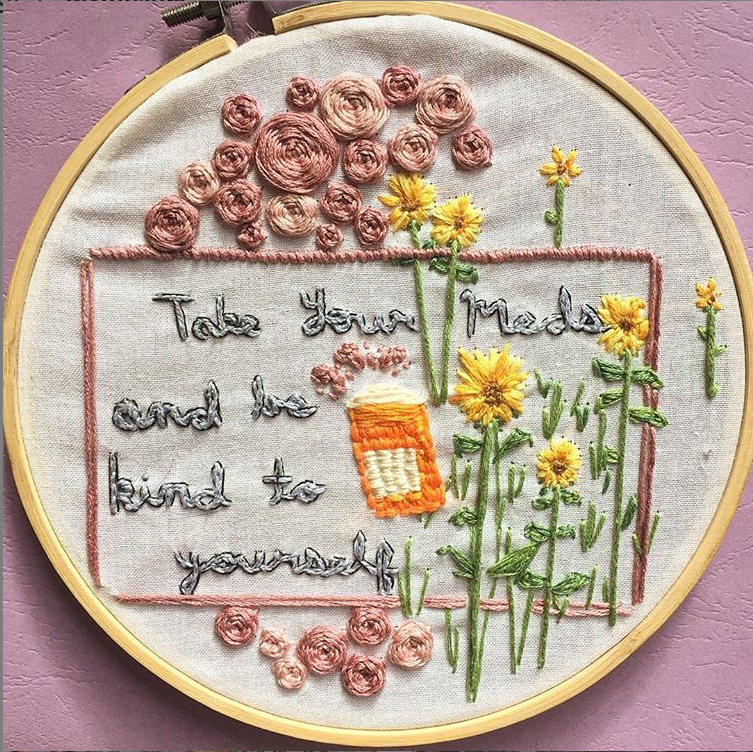
Medicine

medicineIt’s nothing to be ashamed of I tell myself twice daily. What day is it? They all blend together. I open the third compartment, pour the pills into my palm, wait for a moment. Maybe this day will be the day. Maybe if I give the medicine a moment of silence; infuse it with my desperation before I let it fall down the dark well of my esophagus.

How many have I tried? Not enough that all hope is lost. How many have I tried? Enough that they call it “treatment resistant” depression. I call it drowning by degrees. Later, I open the third compartment, pour the pills into my palm, and wait a moment.

It’s nothing to be ashamed of.

Love,

Your brain

green-vine-climbing-white-wall

How I Learned to Advocate for Myself

I’ve been enjoying all of the content online for Mental Health Awareness Month, and I thought I’d contribute my own story. Here’s my own experience of why advocating for yourself is important.

I have severe psoriasis, an autoimmune skin condition that makes itchy, flaky plaques where my skin cells regenerate too quickly. During my recent hospitalization (for severe depression), I let my doctors know about this in a brief, it’s-not-that-relevant-but-you-asked kind of way. When the psychiatrist asked if I had any physical conditions, I informed him of my psoriasis.

A few days later, I was meeting with my social worker to discuss my treatment plan. Under “diagnoses,” Major Depressive Disorder and psychosis were listed. Before I even said anything, my social worker quickly brushed it off and said, “Don’t worry too much about the psychosis- it might just be that you were confused when you came in.”

Now, I’m the kind of person who will eat the wrong food at a restaurant rather than speak up and point out a mistake. I’m the kind of person who willingly takes the middle seat on an airplane because my neighbor explains that she has to pee a lot. Seriously. I am not assertive.

However, diagnoses are a whole ‘nother bucket of fish. When I saw that on my treatment plan and heard my social worker minimize it, I made it clear that I was confused by it and wrote my concern in the questions portion of the form. The next time I saw the psychiatrist, I steeled myself in preparation to ask about the mysterious psychosis that I definitely didn’t have. Before I could bring it up, he sat down, sighed, and said, “It turns out that they couldn’t read my handwriting and thought I wrote ‘psychosis’ when really, I wrote ‘psoriasis.’ It’s all fixed, now.”

I laughed about it at visiting hour that night and for many nights after. Really, we’re still laughing about it. We’re getting some serious mileage out of that one.

The important thing is that I spoke up for myself and that it got remedied. I almost had an incorrect diagnosis which could have caused more confusion down the line. So, speak up! If something doesn’t look right or feel right, let your doctor know. They’re people too, and sometimes mistakes happen.

Also, handwriting is more important than you might think.

prairie-with-blue-sky-and-clouds

What I Gained in Partial Hospitalization

Two or three days into my partial hospitalization program, it became clear to me that my peers were seeing positive results. At check-in, those closest to leaving would report feeling “good”, or “light”- two sensations that are unfamiliar to my depressed brain. I was glad that they were feeling better, and initially, it gave me a glimmer of hope for myself.

As the days passed, that hope dimmed; I wasn’t feeling much better at all. In fact, as my last day approached, I started feeling lower and lower. My thoughts about self-harm came back in full force, and when I tried to use the skills we’d been taught to combat them, I was unsuccessful. Morning check-in was even more excruciating than usual because I had to admit that I wasn’t doing well. The people who had come before me had felt better, so what was I doing wrong?

For one thing, I wasn’t doing anything “wrong”. The psychiatrist and both therapists for the program all agreed that the root cause of my depression is chemical. This doesn’t mean that coping skills are useless. They can help keep me safe and offer healthier alternatives to my go-to, maladaptive coping mechanisms. Over time, I can retrain my brain to help me get out of negative thought patterns or habits. However, coping skills are unlikely to do much to address the causative problem.

Secondly, there is no right pace for recovery. Comparing myself to others was only making me feel worse. That said, it’s only natural that we look to others to find out what to expect when we’re in an unfamiliar situation. I wish I had been able to temper my expectations when comparing myself to others in partial hospitalization.

Just because I didn’t leave partial walking on air doesn’t mean I “failed”. I still got a lot out of the experience.


Connection

Similar to my experience of being an inpatient at a mental hospital, one of the most valuable takeaways for me was the sense of connection I had with other patients. Hearing about other people’s perspectives on a shared experience helped me gain insight into my own thoughts and behaviors. Plus, it feels good to talk to people who understand your suffering and can empathize. I definitely came away from the ten-day program feeling less alone.

A sense of my own value

The first few days of my participation in the PHP, I was there for my family. I was there because other people wanted me to be, and I was willing to commit my time to a program like that in order to ease my family’s fears. A few days ago, though, I realized that I felt more like I was there for myself. It was a subtle shift, but it feels like a big step.

Acceptance

Throughout my inpatient hospitalization and partial hospitalization, I had several moments that stopped me in my tracks. The fact that I was at that level of care for my mental illness seemed surreal, and I couldn’t wrap my mind around the situation. I think that I have a better grasp on my symptoms and what I need to do to keep them under control. I also have a sense of acceptance that once I feel better, I’ll still need to manage my illness; I won’t be able to push returning symptoms under the rug. That’s how I ended up in the hospital.

Greater understanding of my patterns and behaviors

While the skills I learned may not address the root of my depression, they certainly help me shift my behavior towards healthy responses and actions. Perhaps the biggest behavioral takeaway for me is greater awareness of how I withdraw, isolate, and avoid addressing the issue of my depression with my loved ones.

Patience

No, I didn’t leave partial hospitalization feeling like my peers who had left before me. Everyone goes at their own pace, and everyone has unique circumstances and factors involved in their symptoms. All we can do is go day by day.

My Secret Fear about Depression

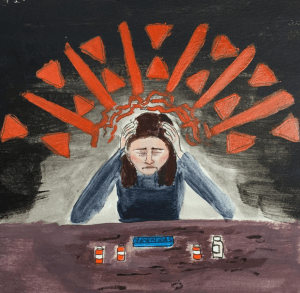
I have a secret fear that maybe this is what life is like for everyone. Maybe I’m expecting too much. Maybe other people can cope with life’s stressors better than I can. Maybe I should try harder. Maybe my depression is fake.

Spoiler alert: it’s not.

Part of what makes depression so terrible is that, by its very nature, it keeps you from getting help. It tells you you’re worthless, it makes you ashamed, and it robs you of motivation and energy. My depression tells me that I’m ungrateful and burdensome and that I should keep quiet about the things I’m struggling with. Well, y’know what? I’m sick of taking orders from The Lump.

I’m going to PHP group therapy, individual therapy, and I’m talking to my family and friends about my illness. I’ve even told a few acquaintances about my hospitalization. And, guess what? Everyone has responded with compassion and support. Not one person has said “You’re faking it. Just stop being sad.” The only time I ever hear that phrase is when it’s inside my own mind.

It’s time I show myself a little of the understanding and reassurance I receive from others. After all, I have a biochemical imbalance in my brain. It’s not my fault.

Mindfulness and Emotions

If you’ve been keeping up with my posts lately, you know that I’ve been having a rough time of things. I’m waiting for my new medication to kick in and doing my best to implement skills I’m learning in partial hospitalization. Whether it’s the meds, the skills, or just the ebb and flow of emotion, I’m finding myself…feeling….feelings. Wild, right?! The numbness is retreating and being replaced with actual emotions. Which, is good. I think. I’m no longer feeling crushing sadness through a thick haze of nothingness; I’m feeling crushing sadness in a pure, unadulterated manner. But, that’s okay- because it passes. I’m trying to work on my mindfulness skills. The sadness checks in, I sit with it and do my best not to catastrophize that it will stay forever, then my dog does something funny and amusement bumps the sadness out of the way.

Later, I’m outside, enjoying the sunshine when sadness saunters up again and says “Hey. Really sucks that you missed out on all of this pleasantness when you were in bed for days on end, doesn’t it?” Yeah. Yeah, it does. Thanks for that reminder, brain. So then I’m sad about being sad. I’m meta sad. Immediately, worry and despair pop in to let me know that a moment of enjoyment doesn’t fix everything and that I still have a long way to go. Oops, now I’m crying, and maybe I’ve ruined the moment entirely. Quick, focus on the sunshine! Focus. On the. Dandelions! 

Forcing yourself to be mindful is kind of the opposite of mindfulness. Clearly, I have some work to do, which is why this weekend I’m trying to embrace the “non-judgmental” part of mindfulness. Emotions are healthy, and although I’m still feeling more negative ones than I’d like to, it’s ok that they’re there. When I start to feel sad about the past or anxious about the future, the best way to not get trapped in it is to just notice it and then redirect my thoughts. The weather is beautiful, I’m fortunate in more ways than I can count, and it’s ok to take time to heal.

On Being Vulnerable

They thanked me for my vulnerability, but it spilled out by accident, like beads of condensed sadness crammed into a too-small vessel. A wave comes, and while I sit among this circle of strangers, I cry. Nine sad faces avert their eyes. Is this circle a liferaft or a sinkhole?

In the distance, we see life as it should be- a mental ecosystem in balance. For six hours each day, we hover on the edges of the ring, tossing insecurities, worries, and vulnerabilities into the middle. We wait to see if they sink, but often, they float back to us. At three P.M., we depart; a snippet of normal routine, just long enough for our symptoms to impair us under the cover of darkness, then it’s back to the circle again. Soon, each of us will leave and swim to shore, but for now, we are lost at sea. All we can do is embrace our vulnerability and let it carry us towards one another.


Last week, I was discharged from an 11 day stay in a psychiatric hospital. This week, I spent six hours every day in a partial hospitalization program. Since being admitted almost three weeks ago, I’ve received more messages of concern and support than I know how to process, and that’s a little bit scary.

A part of me is resistant to receiving so much love because it means that all of these people know about a part of my life that contains a good deal of shame. My instinct is to politely accept the well-wishes and then quietly close the door and never discuss it again. Unfortunately, being independent to a fault can get you in trouble. It can make you more likely to wait too long to ask for help, at which point, the situation has snowballed out of control and it’s a crisis. So, reach out to your loved ones. Ask for help and offer help. Being vulnerable is how we connect.

embroidery-hoop-with-words-take-your-meds-and-be-kind-to-yourself-with-flowers-and-pill-bottle

11 Days Hospitalized for Depression

I spent a week and a half hospitalized for depression as an inpatient at a behavioral health hospital, and all I got was a lot of decaf, terrible antiperspirant, and ungroomed eyebrows (dangerously close to being “eyebrow”). Oh, and a will to live.

When I ran out of methylfolate, my mutant brain began to rebel. All of the work I had done to pull myself out of the dark pit of depression flew out the window as my symptoms came roaring back. I was tired of living with the darkness, the fatigue, the brain fog, and the sadness of depression. And, because it seemed that there was no other way to live, I was tired of living. I fell into the old habits of isolating, harming myself, and outwardly presenting as if everything were fine.

When you stuff everything down, at some point you run out of space. My tipping point came during my weekly therapy session. After describing the hopelessness and elaborating on the details of my thoughts about suicide, my therapist convinced me to go to the hospital. Once I had been assessed, I was given the choice (that wasn’t really a choice) to either sign myself in voluntarily or be put on a 72-hour hold. I signed myself in.

The unit I was on is designed to be a crisis stabilization unit. There’s no one-on-one therapy, visiting hours are actually a singular visiting hour each day, and the items you’re allowed to have are extremely limited. Patients are expected to be in group therapy, meeting with a doctor or social worker, or working on an alternate activity like journaling. You are locked out of your bedroom for most of the day, so your options for privacy are slim to none. You and your roommate must sleep with the door open, as nurses walk around all night long doing “checks,” where they mark down your whereabouts and what you’re doing on their clipboard paperwork. Not to mention your bed is hard and noisy, and your pillow feels like a sack of uncooked rice. It was a difficult environment to be in for 11 days, to say the least.

Being hospitalized for depression is not easy, but the good news is, it works. I switched medications, and while it’s too soon to say whether it’s a good fit for me, being kept in a safe place surrounded by people who understood what I was going through went a long way towards getting me back on my feet. The groups tended to cover topics that were familiar to me, so not much of the information was new. That being said, hearing other patients’ perspectives and experiences was what made my stay helpful.

I stayed for several days longer than the average at that hospital. The staff wanted to see more improvement than I was making, and I wanted to avoid triggering a 72-hour hold by declaring that I was checking out against medical advice. This resulted in my estimated discharge date being pushed out a day or two at a time while my frustration levels grew. Eventually, I agreed to do a partial hospitalization program at a different facility near where I live. This was enough to convince the staff that I was safe to go home. Today, I start the process of doing a PHP. I feel much better than I did when I was admitted to the hospital. I know that shifting back into my normal routines will be a tricky transition and that a week and a half in a hospital doesn’t fix everything. But, it’s a start.

And now, the real work begins.