An open laptop with the screen angled down and a bright swirl of colors being displayed against a dark background

How Sensory Processing Disorder Can Make Screens Unbearable

Twice this week, I surpassed my daily limit of 5 consecutive hours of high-focus screen time. This limit is one imposed by Sensory Processing Disorder, and if I carry on without adjusting my environment and practices, there are unpleasant consequences. These include nausea, vertigo, and intense anxiety bordering on sudden panic.

Visual Stimuli and Sensory Processing Disorder

My job as an editor is done entirely on the computer, and it’s very detail-oriented work. I have to focus intently on the screen in order to catch typos and fix grammar and punctuation mistakes. I also have to do a lot of tab switching and scrolling up and down as I add words and change headers. Some sensory stimuli, like bright lights and visual movement, bother me more than they might bother someone who doesn’t have Sensory Processing Disorder. Taking breaks helps stave off the effects of digital screens, but when I spend too much uninterrupted or eventually, cumulative time looking at my laptop or phone without taking steps to reduce my level of stimulation, something gets mixed up in my brain. As a non-expert, I don’t know the precise details of what happens, but I do know that it feels TERRIBLE.

Nausea

When I’m tired and not paying attention to my sensory state, I start feeling some vague nausea around hour 4 of mostly continuous work. It spikes when I switch tabs or close windows- the little “whoosh” of a window disappearing into one corner is not something I notice at other times, but when I’m getting overstimulated, it makes my stomach turn. The light of my screen is physically painful to look at, so I turn it progressively lower as I go on.

Panic

Scrolling is the worst; short vs. long makes a big difference, but they’re both bad. A long scroll makes the nausea much more severe and gives me an indescribably strange pulling sensation in my sternum. It’s something like how I imagine having a long, wet string pulled slowly up and out of your chest would feel. It creates an intense feeling of horror and high anxiety distilled down into the 1.5 seconds it takes to scroll from the top of a page to the bottom. Short-term panic. Something about the movement on my screen is powerfully repelling. The longer I push on past my limit, the more the panic sensation bleeds into the time around the scrolling.

Sensory Strategies for Managing Overstimulation

For a little while, turning the brightness down low and wearing sunglasses helps, but eventually, even that doesn’t work. I take short breaks to press my feet into the floor and look at something stationary in the middle distance. I often close my eyes while scrolling, but this just prolongs the experience because I never scroll to exactly the right spot. If I’m typing anything, I look away from the screen. As the anxiety gets worse, I take deep breaths and pause to look elsewhere. My 5 to 10-minute breaks become time for me to lie on my back on the floor and squeeze my knees to my chest – trying to ground my frazzled nervous system.

A glowing blue laptop screen over a backlit black keyboard
Photo by Markus Petritz, @petritz on Unsplash

It became the worst it’s ever been this week when I carried on to about 7 hours of editing. The two hours leading up to the end were miserable. I was doing everything I could to make it through my remaining work, to the complete detriment of my body. I found myself involuntarily rocking back and forth after particularly awful scrolls, just trying to keep it together while my nervous system went haywire. I should have stopped, but I’m perfectionistic and had decided that it was my un-shirkable responsibility to finish all of it myself. When I did finally finish it, I barely held down vomit after booking it to the bathroom.

Problem-Solving Sensory Processing Disorder Triggers

I wonder if it has to do with the blue light (I plan on trying some blue-light-blocking glasses) or the frame rate of my screen. I haven’t been sleeping well lately, and I suspect that my sensitivity is heightened when I’m not well rested. Sensory Processing Disorder does weird things to my ability to handle multiple types of stimuli at once, and being tired just exacerbates it. In the same way that an escalator on its own is fine but an escalator after a busy day in an airport filled with noise and movement gives me vertigo, being tired makes handling the imperceptibly flickering light and movement of a laptop screen way harder.

There’s something different about this exact setup and workflow that makes things worse. I haven’t pinpointed what that is, but I suspect it has to do with the amount of scrolling. The platform on which I edit requires me to span entire pages numerous times within a very short timeframe.

In contrast, I often work on my blog for hours at a time, just as I worked on my computer for long periods of time on schoolwork or on other jobs I’ve held. Those activities have never had the kind of effect I’ve been experiencing recently, despite being quite similar.

Acceptance of SPD Symptoms

I spent many years not paying attention at all to the way my Sensory Processing Disorder impacts me. I knew I had it, but I told myself that I should be able to do all of the things that other people can do. So I minimized it in my mind. Despite having learned more about Sensory Processing Disorder and having gotten some treatment in the form of occupational therapy in the recent past, acceptance is something I still need to work on.

When simply looking at my laptop screen for too long has such debilitating results, SPD is something I should be considering more carefully. Pushing myself to the point of throwing up was extremely unwise and points to a general disregard for my own wellbeing. I didn’t want to inconvenience other people by being late with my work or shuffling it off onto someone else. And ultimately, I just did not want to admit defeat when it came to something as innocuous as looking at a screen.

I think I’ll try to reframe “admitting defeat” as “taking a really big hint from my body.” If it means living in a way that doesn’t leave me green with nausea and crying, that seems more like winning to me.

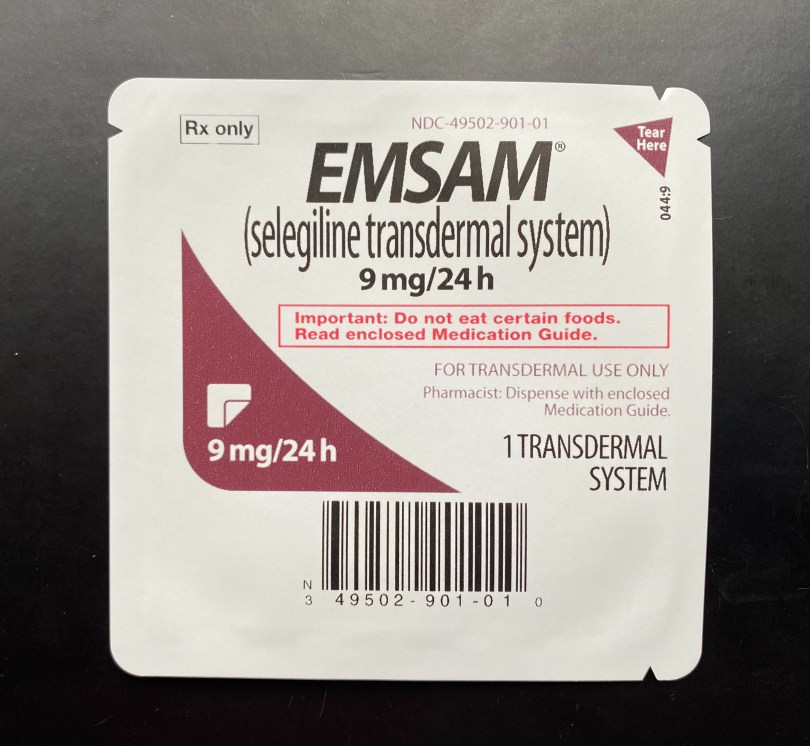
EMSAM-patch-packaging-with-label

I’m Mildly Depressed!

This is momentous. I took my regularly scheduled depression questionnaire and, instead of the “moderate” or “moderately severe” that it’s been for a long time, it said “mild” when I submitted it! I’m mildly depressed! Hooray!

I’ve been taking Emsam for a few weeks, now. I don’t think I’ve felt such a dramatic improvement in my depression since the mega-high dose of lithium I was taking for a little while or the times I’ve done several ketamine infusions in quick succession.

Again – *knock wood, toss a pinch of salt, do all of the superstitious things to avoid a jinx* – it’s still early. I’m nervous about declaring it a success because my positive track record with antidepressants has always been sadly brief. But so far, it’s been very, very nice to feel better. So nice, actually, that I think I’m tricking myself into glossing over the symptoms that remain.

As soon as I hit “submit” on my PHQ-9, I considered that I may have been a tad overzealous in my answers because of how exciting it was to not be selecting “nearly every day” for every question. Not that I don’t think “mild” is an accurate descriptor, I just might have fudged on my answers a teensy bit.

Every time I’ve experienced a sudden improvement in my depression, I get really excited to, you know, not be so depressed and I get ahead of myself. I seem to think that a large improvement means I’m fine now and should push myself to do all of the things that I’ve been struggling to do for years.

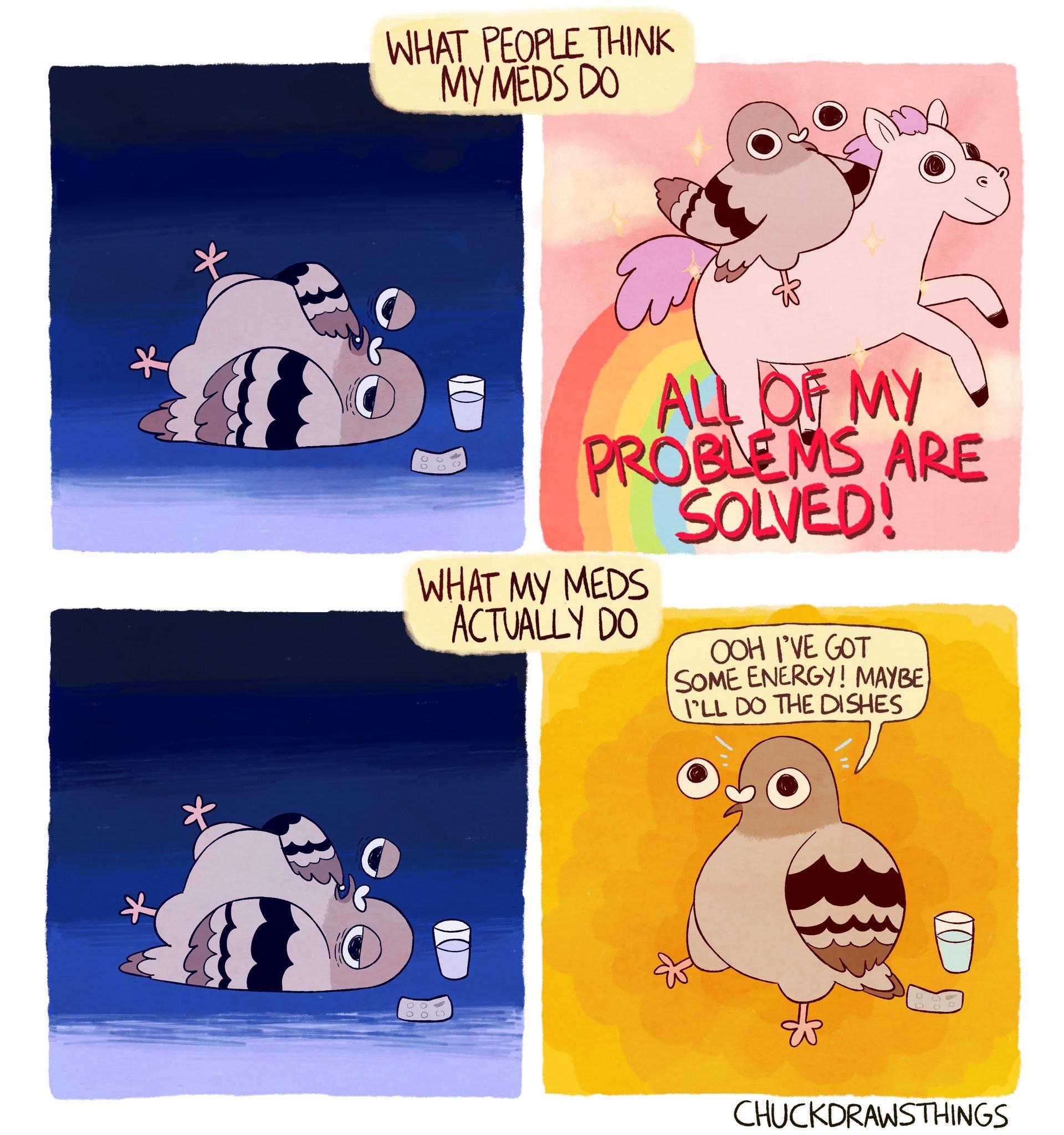
And I do this EVERY TIME. It gets me into trouble when I take a nap and then feel immensely disappointed in myself because I expected to be instantly, spectacularly healthy. I’m reminded of this comic by ChuckDrawsThings:

Antidepressants don’t fix all of your life’s problems, but boy, do they make it easier for you to go about fixing some of them yourself. It’s amazing that I keep thinking, “I should do XYZ” and then finding myself just doing XYZ. There is so much effort that goes into every tiny decision and step of my life when I’m significantly depressed. It’s kind of mind-blowing how much easier it is to function as a human person. Is this how other people feel, or is this just early excitement of feeling better? I’m afraid that it won’t last.

I do feel a little less awesome than I did in the last two weeks, so I wonder if starting the Emsam right before a ketamine appointment sort of trampoline double-bounced me. It is unrealistic to expect that Emsam will just make everything better forever, so whatever benefit I can have, I’ll take. I’m curious about my next ketamine infusion; will it double-bounce me again?

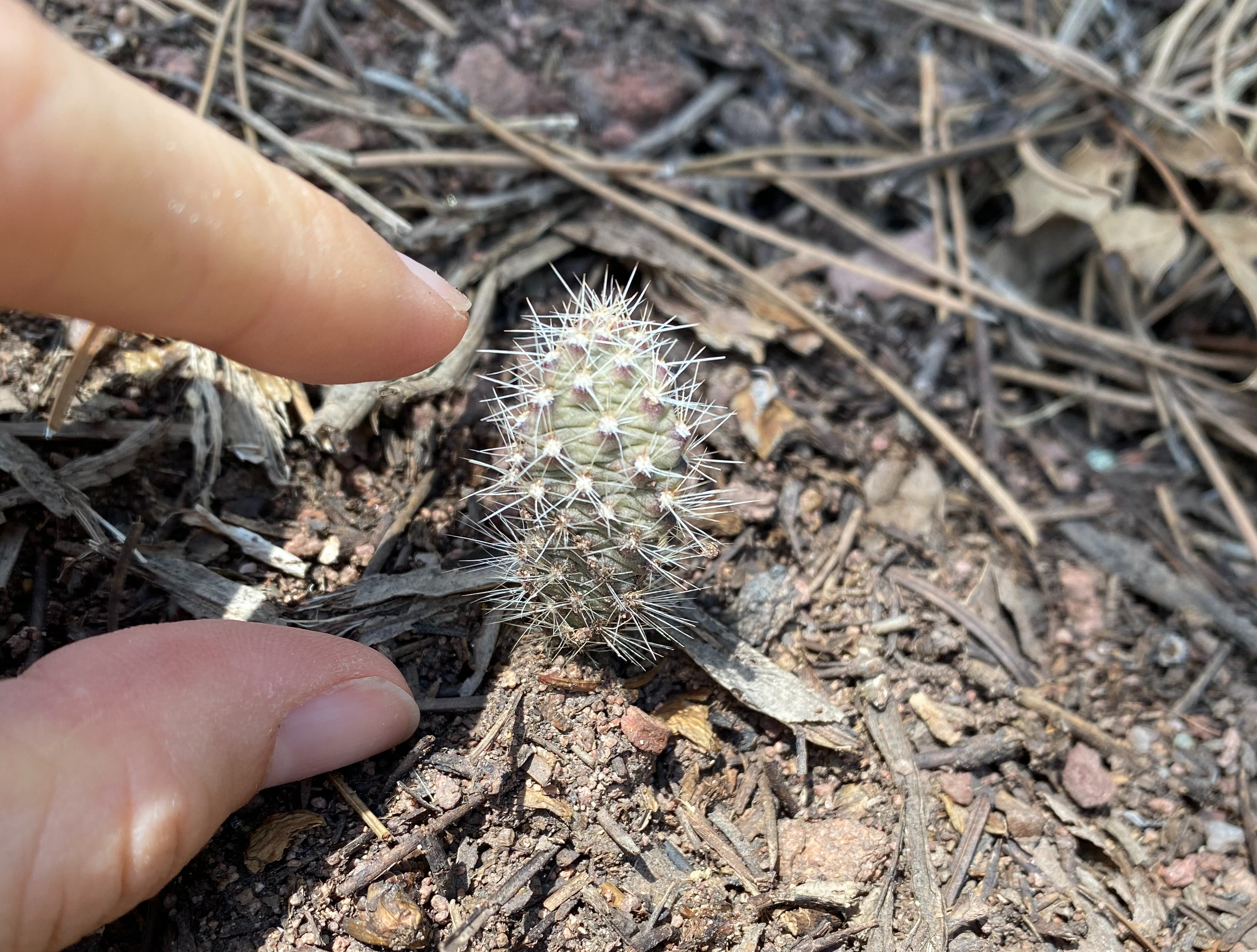
Not everything is fixed, but overall, I feel remarkably lighter than I did pre-Emsam. Conversation is easier, I feel like I laugh more, and I find myself once again delighted by the little things – figuratively and literally – like this tiny prickly pear I saw yesterday.

An index finger and thumb indicating the height of a small prickly pear paddle growing outside

I love dopamine.

close-up-of-dandelion-seed-head-with-green-grass-below

Switching Antidepressants: Emsam Update

I’ve been taking Emsam, an MAOI antidepressant, for a few days now, and although I can’t say that I feel amazing, I think I do feel better than I did before I started. The two weeks between ending Wellbutrin and starting Emsam were a struggle, but hopefully will be worth it.

Emsam comes as a patch that you wear for 24 hours and then replace with a new one. It’s an adjustment to not just plop some additional pills into my organizer for the week. It’s ever-so-slightly more labor-intensive this way, but I think it has been easier for me to accept than previous medicine changes have been. I have some kind of hang-up about pills and how many I need, so adding a new one always upsets me. Even though Emsam is a new antidepressant for me, it seems to have bypassed my usual judgments by virtue of being a patch. Perhaps my inner critic is secretly a child placated by cool stickers.

I’m noticing some insomnia, but nothing horrible. In fact, the napping that had returned when I stopped Wellbutrin has been reduced again. Sometimes I still attempt to take a nap because, well, my napping problem is partly fatigue, partly escapism. So even though I still try to pass a few hours by sleeping, it hasn’t been working since the introduction of Emsam.

As a result, I’ve been doing a lot of yardwork. The dandelions are quickly taking over the backyard. Luckily, endlessly repetitive tasks are my jam. I’m digging them up one by one, a byproduct of which is some unintended soil aeration! I also took down all of the rabbit fencing that I used to make our backyard fence taller because Stella was jumping it last summer. That solution did not work for long.

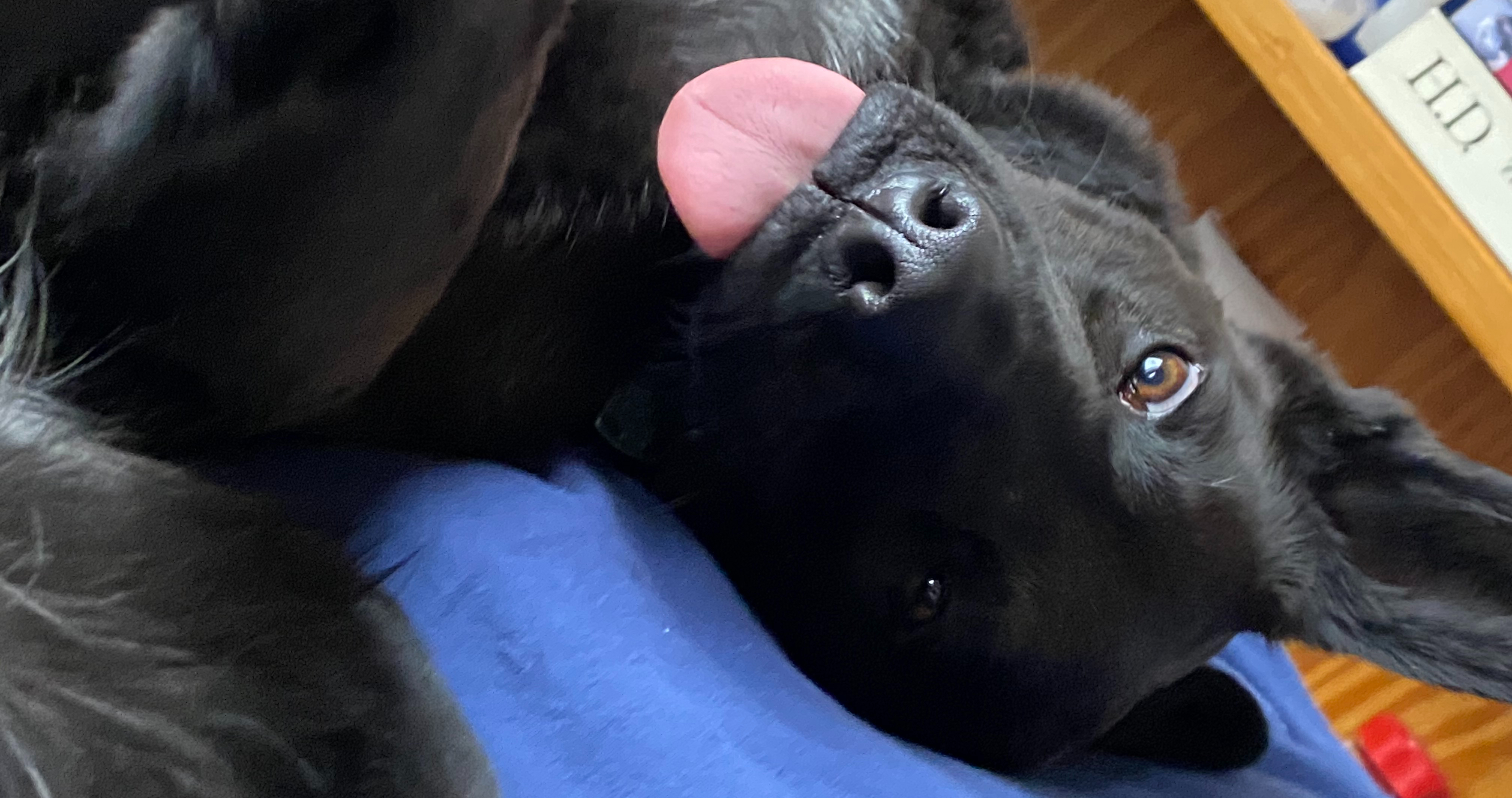
In fact, she jumped a six-foot-tall fence in pursuit of a squirrel the other day, so there really is no containing her unless she’s on a strong tether. Might as well get rid of the unsightly fence addition. She causes me so much anxiety sometimes, but she’s still a wonderful dog.

black-dog-with-pointy-ears-lying-on-blue-blanket-with-tongue-sticking-out
Blep

Historically, I’ve been mean to myself about napping because I tell myself I should be doing something productive with that time. Now that I’m not napping (pretty much), I have lots of time to get stuff done. And I’m still mean to myself. What a surprise.

In sporadic bursts, I’ve been searching for a new job for a while. I’ll get started on it, saving postings, updating things, applying to a few here and there, but not really dedicating myself to it because my current job is “ok.” I know that I’m avoiding it. It used to be that I’d be mad at myself for wasting time by napping. Now that I’m not napping, I’m mad at myself for STILL not tackling it, despite having plenty of time as a conscious person. Then again, it’s only been a few days since I started Emsam, and perhaps it will make things easier with some more time.

I’m attempting to heed my therapist’s advice about how a gentler approach is more effective and that no, you won’t become a stagnant blob of disappointment if you stop beating yourself up about your perceived lack of progress. I’m unconvinced, but I’m trying.

scattered-white-pills-in-upper-right-quadrant-on-light-blue-background

Goodbye, Wellbutrin. Hello, MAOI.

A week ago, I stopped taking Wellbutrin so that I can try Emsam, an MAOI. (I have to wait two weeks between ending Wellbutrin and beginning the MAOI.) I think it was good timing that my most recent ketamine infusion was around the same time I stopped taking Wellbutrin because I’m already feeling pretty terrible. I have the sense that without it, this change might have been even more abruptly bad. Maybe it’s a good setup for when Emsam just blows my mood out of the water, right? A nice contrast will really emphasize its effectiveness. One can hope.

It’s safe to say that Wellbutrin was holding my hypersomnia at bay, and now that I’m not taking it, I’m basically a koala. (They sleep 18-22 hours per day, and not because they’re high on eucalyptus – they’re just dedicating lots of energy to digestion.) It would be great if I could selectively dedicate all the energy I save by sleeping to something else, like hair growth. I could be a brunette Rapunzel in no time.

It is endlessly disappointing to me that I can’t seem to function very well without antidepressants. You’d think I would have accepted it by now. And yet, every single time I change one of my medications and experience a sudden worsening of my depression, I get all upset with myself for not being able to handle it.

I considered this move for a while. SSRIs and SNRIs haven’t helped me much, so branching out to an MAOI seems worth a try. Wellbutrin was clearly helping, particularly in the motivation department, but it was still less impactful than I had hoped. Eventually, I decided that giving up the motivation that Wellbutrin gives me in the hopes that Emsam will help me even more is worth it. It does kind of suck that I can’t go directly from one to the other, though. Two weeks sans antidepressant is proving to be challenging.

A big part of me wanted to just leave things the same and continue to try to build on the benefits of Wellbutrin through my own “natural” efforts. Something that I wrestle with constantly is my uncertainty around what I should expect of myself. It never seems right to say, “I can’t do X because of depression,” because it pains me to be limited by my own brain. So, I continue to struggle far below meeting my perfectionistic standards for myself and then am crushed when “I can’t do X because of depression” turns out to be somewhat true. I never allow myself any grace when depression slows me down.

So, in the end, I’m feebly trying to convince myself that trying yet another medication is fine because if I could have worked my way out of depression by now, I would have. It’s important to do the work I can do day-to-day. But, as anyone with depression knows, it’s tough to do the things that you know are good for your mental health when your mental illness won’t get out of your way. Not impossible! Don’t get me wrong, I’ve been exercising, keeping up with my job, trying to eat 3 meals a day – the works. But that can only get me so far, and most of it tends to fizzle out when I’m in a mental place like this.

I felt okay on Wellbutrin, but ideally, I don’t want to settle for okay. But if Emsam doesn’t work out, it is nice to know that Wellbutrin is something I could return to. For now, I’ll just keep working on my Rapunzel hair and waiting for Wednesday of next week, when I can begin my MAOI experiment.

blurry-photo-of-two-people-standing-in-dark-tunnel-with-beam-of-light

At the Bottom of a Well: The Ketamine Chronicles (Part 33)

I forgot to put on a scopolamine patch the evening before this ketamine infusion, but other than that, this one was packed with stuff intended on making the ketamine more effective. Cimetidine, magnesium, petocin, some anti-nausea drugs, to be honest, it’s all a blur. It was “the kitchen sink.” Getting infusions of IV ketamine for treatment-resistant depression is kind of a balancing act. It works best as an individualized recipe, and it seems that mine is always changing.

I don’t usually start out my ketamine infusions with chit chat, but this time, I spoke to Sarah for a couple of minutes before closing my eyes. What we talked about, I no longer remember, but it was casual and light. When I did close my eyes, I had the sense that this infusion might be a gentle experience at the surface between lucid and zonked. I was very wrong. I think that focusing on my conversation with Sarah diverted some of the weird sensations of ketamine from overcoming me, but they hit me later.

Sand and some lessons about depression

I remember a lot of sand. I was in a desert near some ancient stone ruins, and the sand was shifting like a river in the sunlight. I was on the ground, watching a snake struggle to squeeze between a crack in the stone building before the sand could drag it down. The snake succeeded, turning into a blooming flower as it rose up from the river of sand.

ground-level-photo-of-sand-dune-in-ketamine-dream-on-windy-day
Photo by @wolfgang_hasselmann on Unsplash

At some point, I was looking down a long tunnel into the ground – like a well – at some people on the other side. But as I strained to see who they were, I realized that I wasn’t looking down, I was looking up from the bottom. The people far above me leaned over the edge to gaze down, and the walls of the well crumbled into sand and buried me in darkness. It was quiet. It was something of a relief.

These experiences of being buried or of drowning are never frightening, but they do evoke a certain hopelessness. I used to have whole infusions dominated by water and the feeling of sinking, but lately, that theme has been absent. This theme of sand is different, but it feels much the same. I wonder if it has to do with the state of my depression at the time. In thinking back to the last few times I had a water-based internal experience, I do remember feeling similarly to how I feel now. I’m treading water, still moving a little in the direction of my goals, but I’m decidedly denser than my surroundings. Sinking would be so much easier than pulling myself upwards.

When I’m drowning or being buried in my ketamine infusions, it feels completely out of my control. The forces of water, sand, or perhaps depression, in this metaphor, are simply overwhelming. I think that my perception of depression is manifesting itself as unbeatable natural forces in my ketamine infusions. Most of the time, it doesn’t seem hopeless to that extreme in my real life, so it’s interesting that that’s how it comes out in my ketamine appointments. But, maybe that’s the only way my mind can conceptualize it in that setting.

In my visual experience of ketamine, depression feels like sinking alone in the dark, open ocean. It feels like being buried in sand at the bottom of a well, while people far away can only watch. But in reality, it’s neither of those things. It’s an illness that, like others, can be treated. Reality is clouded by depression, and it’s easy to forget how turned around I can become in my own mind.

Is the ketamine infusion over? Should I get up now?

At the very beginning of this ketamine infusion, my doctor pointed at the photo on the wall across from me and said, “We’ll just see if this starts moving.”

“I’m not supposed to have my eyes open,” I replied, referring to our frequent conflict in which I open my eyes and stare at various entrancing objects while he patiently reminds me over and over again that I’m supposed to have them closed.

“That was a test. You passed.” He laughed.

And then at some point in the infusion, I proceeded to leave my eyes open for what felt like a really long time.

In my defense, I was confused. I opened my eyes because I thought the infusion was over and that everyone was waiting for me to get it together. Let me tell you, trying to fight ketamine while it’s still infusing into your bloodstream is pretty impossible. I kept thinking that I needed to get up and walk to the car, and that seemed utterly beyond my capabilities.

abstract-blue-image-of-flowing-water
Photo by Michael Dziedzic @lazycreekimages

I vacillated between anxiously willing myself into wakefulness and resigning myself to living the rest of my life in that very chair. Words can’t describe how disoriented I was. Every time I blinked (which wasn’t often and was probably more like a short time with my eyes closed), the room seemed to change somehow. It was wider than I remembered, then it was taller, then the picture was farther away, and everything was tilting to the side. I couldn’t understand why it was taking me so much longer than usual to regain my faculties.

I distinctly remember thinking, “I wish someone would just tell me what I’m supposed to be doing.” That thought gave me some satisfaction because after all, how could anyone get frustrated with me for being slow when they didn’t even tell me that I was supposed to be speeding up? “That’s *their* problem,” I thought. Having convinced myself that transportation to the parking garage was not my concern, I stared at the wall with the photo of the wolf and the goat and found that there actually were three frogs hidden in there, too. I occasionally thought things like, “What time is it?” or, “When did we start?” or, “Which way is up?” only to realize that the answer would mean nothing to me and there was no point in mustering up the energy to ask.

After some amount of time that may have been five minutes or five hours, I was told to close my eyes and that there were eight minutes left. Oh my God, what a relief. “How long did I just spend thinking I needed to get up? No matter, now.” Somewhere in my mind, I found some wry humor in my ability to carry my anxiety about inconveniencing people into Ketamine Land. I guess it follows me everywhere.

After that, I spent some time thinking about oobleck, which is a non-Newtonian fluid often made in middle school science class composed of corn starch and water. It moves like a fluid at rest, but solidifies when you exert sudden force upon it. I felt like I was surrounded by oobleck. Or maybe that I was made of oobleck. Things were flowing like a lazy river when I let go and rested, but when I tried to move, I found myself glued in place.

The eight minutes that were left when I closed my eyes instantly shrunk down to about twenty seconds, and then before I knew it, I was back to searching the inside of my brain for control of my limbs. I got my coat on, missed my face a couple of times trying to put my glasses on, wobbled out the door, and successfully made it to the car.

IV ketamine for depression is different every time

The rest of the day passed uneventfully. I was interested to see if the reintroduction of magnesium into my infusion would result in the wild limb jerking that happened the last time we used it, but thankfully, it didn’t. The bizarre afternoon I had that time has continued to be an isolated event. This time, I slept for most of the day, got up for dinner, then went back to bed. I think. To be honest, I don’t remember the details, but I know that it was fairly mundane.

Every infusion I’ve had has been different, which is why I find it so interesting to write about them. Even my experience once I get home tends to change, and I can’t always pinpoint why. Sometimes, I go about my day – working, writing, walking the dog – and sometimes, I just crash.

It doesn’t even seem like a wackier or more mundane experience correlates with any particular result. At least, as far as I can tell. Maybe there are just too many factors for a clear pattern to emerge.

For the time being, I’m planning some more changes to my medication regime, trying not to nap too much, and carrying on with tiny clams.

marbled-swirl-blue-and-white-with-brown-center-of-spiral

Some Benefits of Ketamine for Treatment-Resistant Depression (for me)

My last ketamine infusion was much less trippy than the previous one, so I’m relieved to say that I remember absolutely none of it. Much less fun to describe, but also less persistently, somewhat threateningly bizarre. We skipped the magnesium this time, and I did not have any sudden, limb-jerking spasms. It’s good to know that was likely the culprit. When I can’t remember an infusion, I feel pretty curious about the off-putting gap in my memory. I always think it’s interesting to know what I experienced during a ketamine infusion, and when I can’t, I feel like I’m missing out on something that I just can’t access. Thankfully, the benefits of ketamine for treatment-resistant depression remain even when I can’t remember them.

Eating Food

I’ve been having some problems with nausea and appetite since starting Wellbutrin. They mimic what I feel when I’m really depressed, just amplified. Food is not appealing, neither in my imagination nor my mouth. When it’s time to eat, my goal is to find something that’s least unappetizing. Eating it is a strangely empty experience, as if I can recognize the flavors but can’t assemble them into something I like. The closest analogy I can think of is that it’s like the difference between sound and music. For a few days following a ketamine infusion, that problem is gone. It’s easy to pick something to eat, and not only does it register as, say, a grilled cheese sandwich, but my brain is also willing to exchange it for dopamine. Things taste like how food should taste, and it’s great.

Making Decisions

Ketamine makes the days following an infusion feel remarkably lighter. The difficulty I have with making even small decisions is much improved. I just go about my days without getting stuck at every turn. Speaking of turns, I’ve really been enjoying my morning walks with Stella. When we come to an intersection, I let her choose, and we amble around a ridiculously inefficient route that’s different each day. I am typically a very routine-driven person, so this microscopic spontaneity is a teeny, tiny sign that says
“ketamine helped!” If the ketamine wears off or some other factor occurs and my depression gets worse, I tend to become more rigid in the route we take. I’m sure Stella prefers our ketamine-lightened walks, and so do I.

Thinking about the Future

The bigger benefits of ketamine for treatment-resistant depression, for me, are centered around my attitudes about the future. Depression makes me feel hopeless, and ketamine lifts that – sometimes just a little, but sometimes a lot. I’m not sure what determines the degree of helpfulness, but it’s always a welcome effect. It makes it easier to imagine myself making changes and taking big steps.

Other benefits of ketamine for treatment-resistant depression that I notice include:

  • Sleeping less
  • Feeling more social
  • Experiencing something called “fun”
  • Feeling satisfied about completing a task
  • Noticing little things that I appreciate or find interesting
  • Reduced suicidal thoughts (hasn’t been much of a problem recently, but I’ve definitely noticed that in the past)

Lately, I’ve noticed that the most noticeable changes stick around for a few days or a week, then things level off to a pretty neutral place where I’m neither jazzed about life nor am I in the pits of despair. By three weeks, I’m in something like the salt marshes of despondency; not inescapable, but pretty unpleasant.

That is a completely individualized timeline. Everyone is different, and I get the feeling from the forum I’m on that there are a lot of people who go much longer between needing ketamine infusions. I kind of try not to think about it because of what they say about comparison, I guess. (They = various quotes)

Musings about Medication

hand-holding-stack-of-smarties-candy-in-palm
This was tagged “medication” on Unsplash, and I thought, “that’s a weird swap of the typical ‘pills aren’t candy, kids!’ warning.” (Photo credit: Sharon McCutcheon)

My medications may change again sometime soon, and although I just said that getting ketamine infusions for depression makes making decisions easier for me, I’m setting that choice aside for now. It’s harder to decide soon after an infusion because I feel like I don’t need to change anything. I feel better, therefore, I should keep things the same. But, ketamine wears off at some point, and even though I feel “better,” should I stop at that point? Maybe I only feel a fraction of my potential “better” but it seems like a lot because it’s better than abysmal. These choices are always hard. I don’t want to settle for just ok, but I worry that I’m expecting too much. Maybe this is exactly how happy people feel – they’re just more grateful for it.

But then a couple of weeks pass and I slowly start sliding backwards into napping and apathy and isolation, and I realize that there was no in-between. It was mildly happy and then increasingly depressed. There must be something more than that. I habitually blame myself for depression in the short term. A bad day or week makes me think that I let myself wallow and didn’t try to change things. I think that I’m lazy and burdensome and why can’t I just be cheerful? But when I look at the long-term – the years I’ve spent with depression – I feel kind of robbed. It’s easier to see the trends of it and the forks in the road where I didn’t pick the option the non-depressed me would have chosen. I may try to blame myself for all of that too, but the more reasonable answer is that depression has been in my way. Sometimes, that perspective makes me determined, and all of the other times, it makes me tired.

My last few months have been saturated with medication changes and mood fluctuations. I go up and down, up and down, and I’m thankful for the ups, but there’s something about the downs that feels so much more impactful. Despite the incremental progress I’m making after starting Wellbutrin, I feel completely insecure in that success, like it’s just visiting and will have to leave soon. A large part of me says that would be disastrous and I’ll just have to claw my way forward from here on out because losing ground would be unacceptable. I guess we’ll find out.

neon orange sign spelling change in cursive letters

I Want to Be a Quitter: Thoughts on Personal Growth

Counterintuitively, stubborn determination is a trait that really holds me back from personal growth. It creates a cycle of unnecessary stress, anxiety, and avoidance that leads me to say “no” more often than I’d like.

The Cycle

When I start something, I automatically lock myself into seeing it out, even if I don’t like it, am bad at it, or if any number of valid reasons for stepping away from something crop up. So, the thought of doing something new comes with a flood of anxiety about entering into something I would never allow myself to quit. I worry about doing a bad job, letting people down, disappointing myself, ruining something, etc., and ultimately, being trapped in a role that doesn’t fit. So, I’m tempted to never start at all. It’s rather paralyzing.

But doing something new is not necessarily forever. You can quit things, and it’s ok. In fact, movement and personal growth can come from quitting, as taking new opportunities frequently requires that you let go of something else. It inherently results in change, and although change is uncomfortable, it’s how we grow. And so, I want to be a quitter, and despite the negative connotation of the word, I want it to be like one of those positive affirmations that I never say to myself in the mirror.

“I’m a QUITTER!” I’d say, and then I’d do some fist pumps and charge out of the house, ready to quit some things so that I can start anew, flush with the knowledge that if those new things go awry, I can quit those, too. I don’t want to quit everything, of course – I just want it to be easier for me to accept risk and not hold myself to impossible, permanent standards.

An Quick Anecdote About Quitting

I quit a job with no warning, once. In fact, I quit on the first day. It was such a terrible fit for me that the discomfort of quitting something was nothing compared to the prospect of working there every day. I called after going home and explained that, having experienced the job for a day, I definitely would not be able to do the job in a safe, satisfactory way. And it was fine! In fact, they thanked me for being frank with them. I felt awful for wasting their time, but in hindsight, it was 100% the right thing to do. Quitting was good.

Finding Personal Growth in Stressful Situations

For some reason, that experience has not completely impressed upon me the non-world-ending nature of most quitting scenarios. Just the possibility of encountering something I end up wanting to quit still causes me a lot of anxiety. But logically, I know that for the kinds of choices I make in my daily life, nothing catastrophic would happen if I chose to change things. Even in the worst-case scenario, my life would be likely be altered, but certainly not threatened. People are resilient. I could make it through the bumps of quitting, just fine, and I would probably find some ongoing personal growth along the way.

If only I could just quit my dedication to not quitting things.