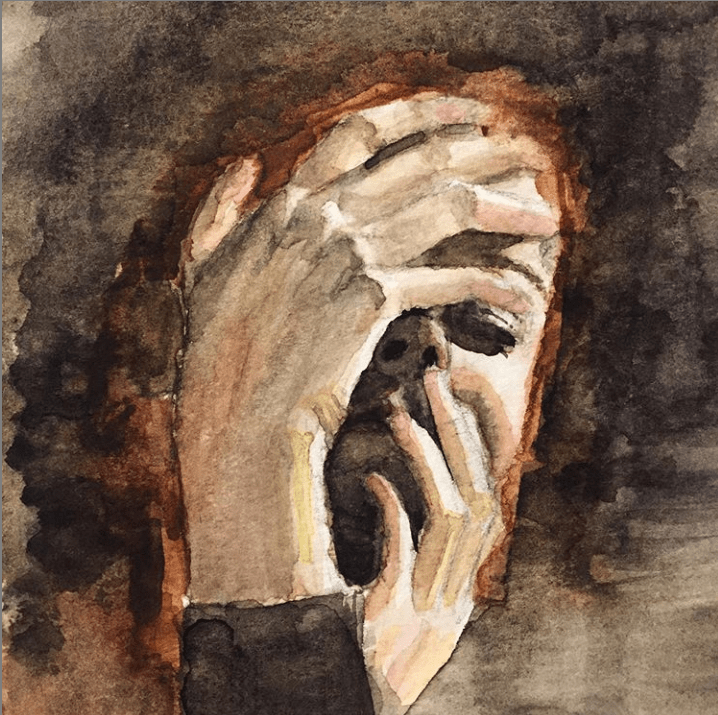
There is no sleep like the sleep of parched eyelids and lithium limbs. Even before you swallow your nightly dose, your breathing deepens, your spine curves forward. Your thoughts retreat to a distant rumble, as if your brain is hosting a party to which you weren’t invited. Perhaps you’re already asleep. Maybe. Did you ever wake up? Maybe not.
In the morning, you place more pills on your tongue and let them be carried down with the water your kidneys are begging for. Today, you tell yourself, no more sleep. I have things to do. But then it’s only been three hours since you rose this morning, and you find yourself sitting heavy on your bed, quickly slipping into the horizontal. No! No more sleep. You drag yourself from your cozy nest and plod to a less comfortable seat.
Yesterday, you slept for four and a half hours in the afternoon, and at that point, is it even called a nap? That’s just second bedtime in your book. And so today, like all the other days, you vow no more sleep. But your bed has its own gravity just for you, and before long, you’re crawling in; a perfect cove, with blanket waves and a pillow beach. Through the open window, you can almost taste the breeze, laden with lithium salt.
Love,
Your brain
I should be clear. I’ve been plagued by suicidal thoughts for three years, sometimes worse than others. Taking a high dose of lithium has given me, by far, the most dramatic positive result of any medication I’ve taken in my adult life.
I don’t want this post to be just another internet story about how terrible a particular psychiatric medicine was for someone. Those reviews are usually written by the people who had the worst side effects and the least benefit; after all, they’re the most motivated to write a review. Every medication has benefits and drawbacks. Scrolling through pages and pages of negative experiences paints a picture that doesn’t capture the thousands of people whose lives are vastly improved by that medicine.
It’s not perfect, and I still have bad days. It’s also a possibility that these sleep marathons are partly a symptom of my depression or the combination of meds I take that can make you drowsy. While I hope that lithium is not a medication I have to take long-term, I would be remiss if I didn’t acknowledge that taking it has probably saved my life.
In the depths of depression and throughout the hills and dips of recovery, apathy is a frequent visitor. It steals motivation and leaves nothing behind. When this happens, it’s tempting to let it overtake you. I’ve found that continuing with a task despite apathy can help end a spell of it. Here are some of the ways I use to get me through a period of apathy.
Rewards
Whatever gets you even a little bit motivated can be useful when battling apathy. Granted, if you’re feeling apathetic, even the usual rewards might not have much of an effect. For me, I sit in the shade with a book and my dog. Maybe for you, it’s watching your favorite show or treating yourself to a delicious snack. Whatever it is, reward yourself for your hard work; apathy isn’t easy to overcome.
A Conversation With Future You
You might not care right now, but you might care a lot in the future. We like to think that we can predict the future, but the truth is that none of us really know what’s going to happen in a week or a month or a year. So, while this one requires a little hope for the future, sometimes all it takes is to allow for the possibility that things might get better; to admit that you’re not a fortune-teller. In fact, I’m working on this one right now.
Cultivate Satisfaction
I know what you’re thinking–well, I don’t know. (That’s another distortion.) But you might be thinking “obviously, if I’m feeling apathetic, I don’t want to do anything because I don’t get satisfaction from completing a task. Why would I do something that gives me no intrinsic reward?”
Well, that’s a good point. I’ll counter with this: an oyster creates a pearl when a grain of sand becomes lodged in its tissues. Layer by layer, the mollusk coats the grain of sand with calcium carbonate to protect itself from the irritating particle. What began as a negative from the oyster’s perspective is turned into something valuable.
Motivation often comes from the desire to solve a problem. Whether it’s a seemingly small problem like noticing that your hair needs to be washed, or a larger-scale problem like slipping grades that could affect your graduation, everything we do, we do to solve a problem. Every time you do something that moves you towards a goal, you’re building a metaphorical layer around the underlying issue. Every time you go to class even though you don’t want to, you’re building up to something great. Every time you go for a run even though you’d rather sleep, you add another layer of persistence to your pearl.
Often, it’s only after many layers, many instances of forcing myself through apathy, that I begin to get a glimmer of satisfaction. Sometimes, the only way to reach the other side of apathy is to just begin. Momentum only comes when you start to move.
A short drive up a dirt road after a long drive up a canyon, there is a cabin in the woods. Inside, there is a sleeping dog–wearing her coat of all-black fur, resting on her side, one upright ear has flopped over. She has sniffed every inch of this cabin since we arrived yesterday afternoon. Her job complete for now, she allows herself a brief intermission to do what puppies do– nap soundly and sweetly.
I am sitting in an armchair near the sleeping dog. I came to the cabin for a short reprieve, to escape the relentless tide of life’s obligations. Most of them, I left behind. But one, I can’t seem to shake. A black dog followed me up here, and not the one at my feet. It goes where I go, does what I do. It can be menacing and imposing, or familiar and safe. This black dog is of my brain’s own creation, made from worry and sadness and guilt. It was set in motion before I knew of its existence. It came from faulty neurotransmitters, genetic predispositions, and the fickle imaginings of chance.
The black dog at my feet jolts awake — a noise on the stairs. It is only the cabin creaking, so she returns to her slumber. We both settle into the peaceful sounds of the woods. A duck laughs on the pond. Swallows swoop and chirp over the water, plucking mosquitos from the sky. A gurgling brook feeds the pond, and its sound is a balm to a worn-out mind. But a balm cannot evict the black dog of depression. It howls its objection, then herds me back to bed, nipping my heels with fatigue and foggy thoughts. As I sink into sleep, I know that soon, my other black dog will come to wake me. She will breathe on my face and wag her tail. She will tell me that it’s time to get up, time to go out, time to take in the sounds and smells of this short reprieve in the woods.
I have an appointment coming up with my psychiatric nurse practitioner, and that means my thoughts frequently settle on the effectiveness of my mental health treatment. By now, I’m familiar with the questions she’ll likely ask me, but somehow the answers never come easily. Determining how I feel is not something I’m very good at, although I’ve gotten better at it. This time, I’ll attempt to describe the seemingly endless plateau of “meh” on which my mood currently resides. I have occasional dips into the dark chasm of “really bad,” but for the most part, things are ok. But as I decided after I was released from the hospital, I’m not settling for “ok” this time. I want to feel great, exuberant, joyful, even- happy. Happy would be good.
At this point, it seems like I’m running out of viable mental health treatment options that come in pill form. I was told I was a candidate for and encouraged to try Electroconvulsive Therapy (ECT) while in the hospital (a treatment that has changed immensely since it first began). My mother’s worried googling turned up IV ketamine as a promising treatment that my psych NP also encouraged. I knew people in my partial hospitalization program that moved on to do Transcranial Magnetic Stimulation (TMS). These are all safe treatments that, if they work, can change your life for the better. So, why am I so resistant to the idea?
I think it comes down to acceptance. When I first became depressed, it took me a long time to get to a place where I felt comfortable taking antidepressants. I clung to (and sometimes still do) the idea that if I just tried harder, all my problems would be solved. This is because, like many of us, I’m way too hard on myself. But it’s also because it was scary to fully accept that I have an illness that can’t be overcome through sheer force of will; a fact that my biochemical imbalance predetermines. On one hand, taking responsibility for your mental health is an important part of managing it. On the other, there’s an element of frightening imposition that comes with accepting that the very fact of your diagnosis is out of your control. I carry my depression around with me- not by choice or through lack of effort, but because its complex tangle of symptoms, neurological effects, and genetic alterations are not things I can leave behind.
Despite coming to terms with the apparent chronic nature of my depressive episodes and the fact that right now, I need antidepressants, I see this next step in mental health treatment options as Phase Two of my personal acceptance hurdle. It was tough to accept that I needed antidepressants, and now it’s tough to accept that I may benefit from another level of psychiatric treatment. I like to mull things over for a very long time, so until or if I decide to make that leap, I’m just considering it.
I’ve been traveling a lot lately, and I’m worn out. While waiting to board my latest flight home, I pretty much sat at the gate in a sensory stupor while the gate agents droned on the speaker about checking your carry-on bag. Because I have Sensory Processing Disorder, I needed an afternoon (or more) to reset my nervous system and return to the real world as a functioning human being. Unfortunately, airports have very few places in which to hide from the noise, movement, and general chaos of airport activity. (But for help finding those rare spots, check out sleepinginairports.net)
Dyspraxia, SPD, and Airports
And, it’s not just the crowds of people that are overstimulating- it’s also the tasks you have to do in order to get onto your flight. These tasks fall under the concept of praxis. In the context of Sensory Processing Disorder, dyspraxia refers to difficulty with planning complex movements and tasks. It falls under the Sensory-Based Motor Disorder subtype of Sensory Processing Disorder.
Tackling Motor Planning Challenges
I have symptoms of dyspraxia, so encountering uncertain situations can be stressful and draining for me. Standing in lines is okay for me; it’s ordered, it’s neat, and the most difficult part for me is identifying which kiosk just opened up (might take me a little longer, but I’ll get it eventually). Security is a mess. People crossing from the main line to a security line across the room, the choices involved in preparing your things to go through the imaging machine (should I take off my shoes first? What about my belt?), and then all of a sudden the line has moved ahead and I’m the dam holding back a flood of grumpy people trying to catch their flights. At least, that’s what I always worry will happen. In reality, it usually goes more smoothly than I expect, and I imagine we look more like ants, focused on our own tasks with occasional hiccups but somehow hurrying around one another to reach our destinations without incident.
Airports Have All the Sensory Stimuli
Airports are visually busy, and with loudspeaker announcements, children crying, businessmen talking shop on their cell phones; it’s a barrage of auditory assaults for people with sensitive nervous systems. Not to mention the vestibular hurdles- the moving walkways clogged with people, the escalator that somehow jostles you up and down while also transporting you diagonally to the next floor. Too much of this, and I begin to get vertigo, letting me know that I’m nearing my limit.
Tips for Traveling with Sensory Processing Disorder
Airports are challenging places to navigate for people with Sensory Processing Disorder. Luckily, there are strategies you can use to make your airport experience less stressful.
Get organized the night before to set yourself up for success.
Print your ticket.
Organize your belongings so that essential items are easy to grab.
Double check your arrangements for transportation. Have parking, shuttle busses, or your ride from a friend figured out in advance.
Consider writing down important information in one easily accessible place. Having your terminal, gate, airline, flight times and numbers, and your itinerary at the ready can help you feel prepared.
Wear clothing that makes getting through security simple.
Bring things that ground you.
Mints, hard candy, gum.
Strong smells such as in diffuser jewelry or a travel deodorant.
Weighted lap pad, compression socks, hats, and other clothing that calms you.
Headphones and a supply of music or your favorite content.
Give yourself time to recover after your flight.
Be patient with yourself and others.
Take care of the needs you can control.
Food and water.
Wear layers.
Bring travel toiletries.
Try to be rested before your adventure!
Traveling with Sensory Processing Disorder may take a little more planning and some extra self-care, but with any luck, you’ll get to your destination as cool and self-regulated as possible.
This guest post was written by the wonderful blogger, Just M.
⚠️Tw – suicide⚠️
“You can’t love someone else until you love yourself.”
I’m calling it.
I’m calling bullshit.
I’ve always hated this quote but as years go by I dislike it more and more. I’m aware that people use it as an insensitive to be kinder to ourselves and that, in itself, is a good thing but I don’t like the quote and here’s why.
For many people with mental health issues, like myself, loving yourself can feel like a colossal task. Many mood and anxiety disorders can be rooted in low self esteem, and if not, it can still cause you to feel pretty bad about yourself.
I struggle with depression and anxiety and I know that loving myself is something that I’ve not quite mastered. When you’re ill, self hate is often easier than self care but that doesn’t mean I’m not capable of love.
One thing I can always hold onto, even in times of terribly low self esteem, is that I’m a very loving person. I have a huge capacity to love stuff. People, animals, films, music. You name it, I probably love it.
Because I over think, I over feel. And because I over feel, I over love. I love with a fire, with a strong and powerful spark and I think this is why I get so angry when I hear this quote.
I also know many other people in my life who are extremely affectionate and also extremely ill. They can co-exist. It’s not impossible to be unwell and loving at the same time.
You can take my word for it, but I imagine you would like some evidence so I’ve got a story for you.
Not too long ago, I had my second suicide attempt. I took an overdose of paracetamol. I went to the shops before school to buy a couple of boxes of pills and when I got out of the shop I was determined to die. My mind was on one thing, escaping. I was speed-walking to school when I was distracted. A small black and white cat was sitting on a wall. I love cats. So I stopped to pet it. Even in this moment, knowing what I was going to do, I had capacity to love.
I was at crisis point. I was on the edge of the cliff. I was on what I thought were my final hours. I stopped to love. I stopped because that’s who I am. I stopped because I could. And I’m glad I did.
It’s something that I didn’t even have to think about, I naturally did it and moved on. It didn’t stop me overdosing. It didn’t even really slow me down. But after I had taken it and survived it, it proved to me something that I already knew.
It doesn’t matter how ill you are, how down or useless you feel, how badly people treat you. You can always love.
M xx
If you enjoyed this post why not go over to thoughtsandwanderings for more content about mental health, music, and more!
Did you know that immune changes are associated with Major Depressive Disorder? Let’s dive into what scientific research says about how depression affects immune system function.
Lately, I’ve been fascinated by the research on depression and immune system function. Perhaps you’re more in-the-know about this topic than I am and this doesn’t surprise you, but I was shocked to learn that not only do there appear to be measurable changes to the immune system with Major Depressive Disorder, but there are also numerous studies on it dating back decades. This isn’t a fringe area of research! Let’s take a look at how depression affects immune system function and what it means for people with depression.
The Evidence: T Cells and Depression
Photo frombodytomy.com
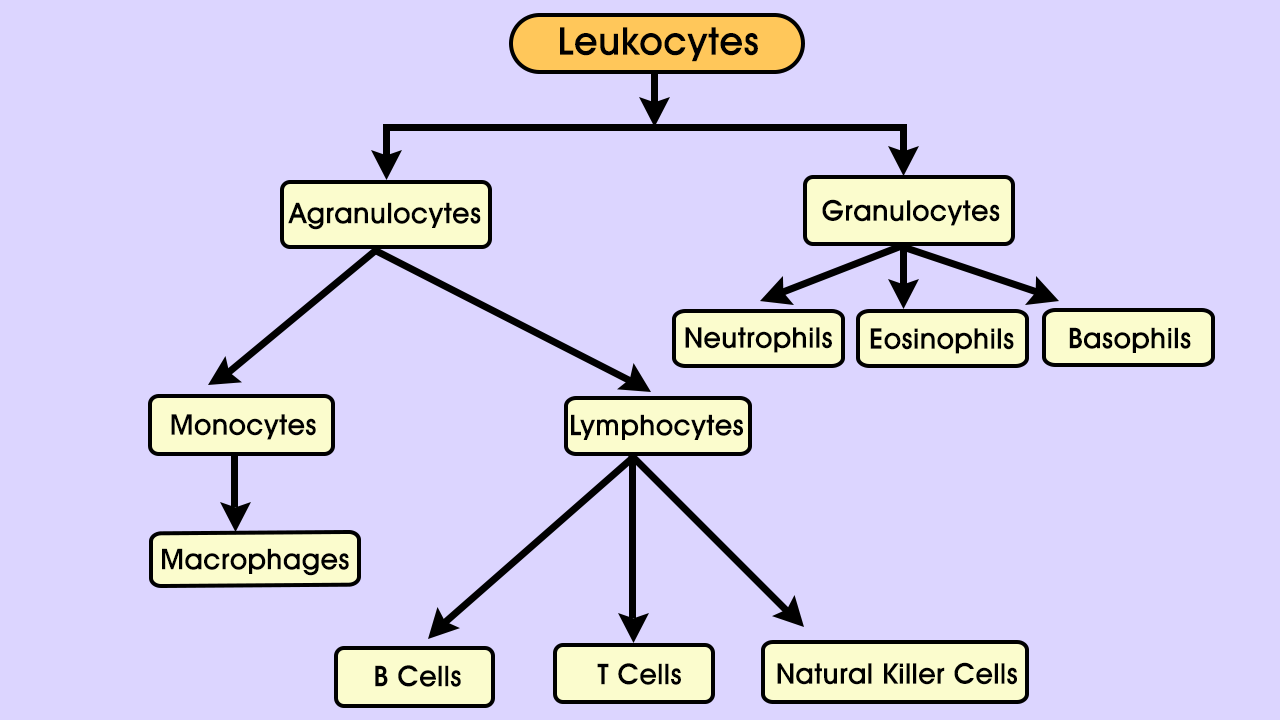
T cells are a kind of lymphocyte, which are themselves a type of leukocyte, or white blood cell. Lymphocytes are involved in what’s called adaptive immunity; they use molecules on other cells – the body’s and invading pathogens – to recognize foreign material and defend against it. Kinds of lymphocytes include T cells, B cells, and Natural Killer cells. Different types of T cells perform different roles, such as “helper” cells (Th- cells), “regulatory” cells (Treg cells), and cytotoxic cells. CD4 and CD8 (which refer to markers on the cell surface) are the two main categories of T cells. CD4 T cells are mainly helper cells, and CD8 T cells are mainly cytotoxic, meaning they mount direct attacks against invaders.
Both main types of T cells, CD4 and CD8, have other molecules attached to their surfaces. Some are receptors that grant the cell access to infections; two such receptors are known as CXCR3 and CCR6. Antidepressant-free patients with MDD have been shown to have significantly lower expression of both receptors on both types of T cells. The same study also found a significant trend in MDD towards fewer Natural Killer cells, a finding that was corroborated in another study.
Research has shown that T cells have a neuroprotective quality. T cells migrating to the brain can reduce stress, promote neurogenesis (growth and development of nervous tissue), and reduce inflammation. Study after study have found inflammation, changes in immune cell composition, receptor alterations, and gene expression changes associated with Major Depressive Disorder.
Causes and Effects of MDD Immune Changes
All of these changes are fascinating in themselves, but are they the results of depression, causes of it, or some intermediary factor?
The Sickness Behavior Hypothesis
Some researchers view depression as a maladaptive result of what’s called “sickness behavior”. Sickness behavior is a vertebrate trait that, through behaviors like somnolence, anhedonia (loss of interest or pleasure), and reduced or no eating, conserve energy that can be directed towards fighting infection. Researchers have presented evidence that both sickness behavior and depression are mediated by pro-inflammatory cytokines– proteins that act in cell signaling roles. These two observations- depression and sickness behavior share symptoms as well as mediators- led to the following hypothesis. Depression is the alternate, maladaptive pathway of molecular processes that, on the other pathway, lead to sickness behavior. Under this hypothesis, the depression pathway leads to neurodegenerative changes that make repeated episodes more likely. Adding that to other research that shows a link between sickness behavior and major depression, and a fascinating picture emerges.
Approximately 60% of people with MDD who experience a single depressive episode go on to have a second episode, and about 70% are likely to experience a third episode. Similarly, having had three episodes increases the chances to about 90% that a fourth episode will occur.
Functional Consequences
Biochemically, these changes are significant. Functionally, do they affect the people who have them? The answer may be yes. One study found a 59% increase in the risk of infection following one depressive episode. The increases weren’t linear, but the risk did go up again after the fourth episode. In addition, among college students, poor mental health is correlated with acute infectious illness.
Fortunately, treatment with antidepressants, if effective for depression, also returns T cell subsets to normal ratios. Differences in the subset ratios between those who responded to treatment and those who didn’t may help determine the chances of efficacy for a particular patient with antidepressant treatment.







 Love, Your Brain