When I started this blog, it was deliberately anonymous in an effort to avoid any mental health stigma from reaching my real life. I didn’t have my name anywhere on it and I made a conscious effort not to mention anything about my life outside the sphere of mental health. I don’t think I even told my immediate family about it until a few months in.
I liked the freedom of writing anything I wanted without overthinking it. Those fears of what will people think? were almost nonexistent because nobody knew who I was. Over time, I began sharing it with people I knew. My immediate family and friends, then my extended family, my therapist, and others involved in my treatment.
I know that putting my name on my blog doesn’t change much for you, the reader. It does, however, signify a big change for me in the context of internalized mental health stigma. I’m finally coming to terms with my diagnoses and feeling more comfortable talking and writing about them as myself, with my real name attached.
Everyone has their own reasons for keeping their online presence anonymous. My reason was rooted in shame. I was afraid that if people knew I was writing about topics like depression, self-harm, and suicidality, they would never again see me for the things that make me, me. The reality is that people I know tend to notice the things that shine through the overarching topics. They comment on my love of writing and my sense of humor before they mention the content of my posts. And when they do broach the subject of my blog, they express their happiness that I’m still working towards stability. It helps, of course, that my family and the people surrounding me are very understanding. Not everyone has that, and I’m so thankful that I do.
Anyway, there you have it. My name is Genevieve (Gen), I’m 23 years old, and I live in Colorado. I got my bachelor’s degree from the University of Michigan, where I studied Ecology and Evolutionary Biology as well as Evolutionary Anthropology. I work from home as an editor and freelance writer (not at all related to my degree, but whatever). On my blog, I write about my diagnoses of sensory processing disorder and major depressive disorder. I like reading, making art, and being in nature. This is starting to sound like a cross between a cover letter and a dating profile, so I’m going to wrap it up.
Lumpdates is still lumpdates, but I’m pretty dang proud of myself for standing up to mental health stigma by typing the nine letters of my name into my username settings.
Part of figuring out what your individual limit is between ketamine infusions for depression is to stretch it out bit by bit until you find the length where it wears off. My daily mood metrics show a drop a few days ago that stayed steadily lower than my previous (good health) average. However, there were several possible factors that may be to blame, so it’s not clear to me whether three weeks between ketamine infusions is actually an accurate time frame to use. That said, we’re going to go another three weeks and see what happens.
Technical Difficulties
I had a lot of trouble with my music this time. The playlist I chose stopped playing shortly after I started to feel the ketamine, but I kept thinking that it was just really quiet. It was like when the radio is on in your car on low volume, and part of your attention gets sucked into it and you’re going, what IS that? I just kept turning the volume up again and again over the course of several minutes before realizing that no, nothing was playing. My brain was just making something up that was barely audible because I expected to hear something. I managed to find a different playlist that I’ve heard many times, so it was comforting but not very interesting.
An Octopus and an Ominous Shadow
Maybe because I listened to something familiar, I didn’t have any sustained scenes like the very memorable fish wedding in a previous ketamine infusion. But, like always, I sank into flowing images that seemed to come from my subconscious. A deep red octopus slithered around my mind, only one day after I marveled at a captive one in a butterfly pavilion. Under the influence of ketamine, I tried to imagine what it would be like to be an octopus; how would it feel to have eight limbs, each one a sensing individual capable of independent reactions?
Photo by @sigmund on Unsplash
At some point, a vibrant green light was disrupted by a dark shadow moving up from the bottom of my internal “visual” field. Like when someone stands up in front of a projector, this vaguely ominous shape rose up again and again. As it reached the top and had obscured all of the green light, the bottom thinned out and the light shone through again. Then, the shadow started again from the bottom.
Ketamine Infusions Make My Hearing Sensitive
I have no idea how far into the infusion this happened, but at some point, my doctor sat down at the desk in the room and began preparing something with plastic bags and vials. It sounded exactly like he had taken an enormous bag of peanut M&Ms and dumped them out on the desk, then rolled them around with his hands. The sound reminded me of how on road trips, my dad used to stop at the gas station before we left and get “a duffle bag” of skittles, peanut M&Ms, whatever was the largest bag available.
This image reminds me of how sounds feel while on ketamine. (Photo by Scott Webb on Unsplash)
I tried not to laugh at this memory, as that might sound weird out of the blue, and then I’d have to explain it with my too-big tongue. Instead, I cracked my eyes open and tried to discern what he was actually doing, because I knew, rationally, it definitely wasn’t the M&M thing. Too blurry. I got distracted and started looking around the room.
Sneaking a Peek Around the Room
The walls looked sort of like I was looking at them through a big sheet of cling wrap. Subtly shiny, a little distorted, and slightly moving. The edges of things were indistinct, and trying to focus on any one thing produced a weird motion that was like looking at something far away with one eye, then switching to the other eye. It felt like a very subtle change in perspective, despite looking at it from up close with both eyes open. The M&M noise had paused momentarily, so I looked over at Dr. G, who motioned for me to close my eyes. Ah yes, I’m not supposed to be looking at things. That’s how you get a bad case of nausea. I shut my peepers and was swept away by…something. I don’t remember.
Later, I laughed about the M&M sound with my mom, who apparently didn’t even notice it, despite sitting directly next to my feet. I’m sure Dr. G was actually being very quiet, but something about ketamine can make your hearing sensitive while the infusion is going.
Knowing My Pattern with IV Ketamine for Depression
I’ve been noticing that, for me, it’s the second day after an infusion when I wake up and feel better. The day after an infusion is usually a pretty sluggish day, but then the day after that is when things start to look up. If I didn’t know that, it would be pretty discouraging to wake up the day after an infusion and feel crummy. Now I know to wait it out and not let that first day throw me off. Experience is a great teacher.
If you ever feel like a deer in headlights when asked to talk about yourself, I empathize. Whether it’s one of those dreaded get-to-know-you icebreakers or your therapist asking you a question, having to talk about yourself is uncomfortable for many people. By now, I’ve been in mental health treatment for several years, and I have a few tips for therapy I’d like to offer.
When I first sought therapy for myself, I found it extremely difficult to engage with it fully. If you don’t like being the center of attention, beginning therapy can be overwhelming. After all, the entire point of it is to focus on you. Early on, talking about myself in therapy felt, at times, nearly unbearable. Too many questions too fast made me shut down, and too loose of a structure lead to lots of awkward silences, both of us waiting for the other to say something. Over time, however, I’ve gotten much better at it. Here are some of the ways I’ve found to help me feel more comfortable about talking about myself in therapy.
The essentials
Any list of tips for therapy wouldn’t be complete without a soapbox moment about the therapeutic relationship. It doesn’t matter if you’re just starting therapy or you’ve been in it for a while; it’s vital that you like your therapist. The struggle of talking about yourself will be even worse if you don’t feel understood or accepted in therapy. In fact, research shows that therapy is much more effective when you and your therapist click. Don’t feel bad about shopping around or about switching therapists if it’s just not working out.
Secondly, remember that therapy sessions are for you. Push yourself out of your comfort zone, but go at your own pace. Therapy is your time to do with it what you will.
Communicate what you want to get from sessions
This is a tough one. There’s a lot that falls under this umbrella, but mostly what I mean by it is: tell your therapist if you would like to direct the topic of each session or be given more structure. Maybe it’s hard to talk about yourself because answering questions feels too probative, and you’d rather start off with a narrative. I prefer to have more structured questions because if I’m given free rein, I go blank and have absolutely nothing to say. Regardless of which end of the spectrum you’re on, your therapist is always there to help direct you and keep you on track.
Practice saying how you feel
I struggle hardcore with identifying how I feel. Maybe it’s sensory processing disorder, maybe it’s Maybelline. Sensory discrimination issues have extended into the emotional realm and mean that I often don’t know how I feel about something. If you have a hard time verbalizing how you feel, my advice is to practice. It sounds silly, but just as if you were a little kid, practice saying “I feel ____” and then fill in the blank with something more specific than “okay” or “fine.” Even on your own, check in with yourself; am I feeling excited? Lethargic? Irritated? It really does start to feel more natural over time.
I also find that using metaphors breaks the tension and allows me to communicate more comfortably. For example, my therapist and I talk about “clams” instead of “goals” because the very mention of goals used to make me a sweaty, anxious tear factory. The Potato Scale of Depression is another way that I like to remove a little of the scrutiny from myself and package it up in a statement about mashed potatos or soggy gnocci. There are many ways to get used to talking about your feelings!
Make the Space Comfortable
Of course, it’s not your office. You can’t go swapping out furniture and changing the overhead lights. But you can do some things to make the space more comfortable for you. A therapist I saw in college noticed that I have a very wide bubble of personal space and offered to move her chair a little further away from me. You can ask to close the blinds if it’s too bright for you, bring a small blanket to help you feel cozy, and be sure to wear comfortable clothing.
Stay (Mildly) Busy
Something that I learned in occupational therapy but haven’t put into practice (maybe I should!) is that talking about difficult things is often easier when your hands are busy. Bring a coloring book, a fidget toy, or a craft- if you’re a knitter, crocheter, or have some other portable project. Of course, this is one of my tips for therapy clients that is only good advice as long as your therapist doesn’t need you to be completely present during your work together. It doesn’t hurt to ask.
For us reticent folks, therapy can be scary even just to think about. But, like so many things in life, working on what’s difficult often leads to the best outcomes. With time and practice, talking about yourself in therapy gets easier, especially if you find what will support you and then advocate for yourself.
Over the last week, I have taken a grand total of one nap. ONE. This is grossly reduced from my usual minimum of six depression naps per week, each spanning roughly three hours. I cut back on naps this week because I was spending time with my family, instead. Between running errands, cooking, cleaning up, and catching up, there wasn’t much time to sleep during the day, and if there was, I prioritized family time.
The week is over, and I’m learning that I’m capable of being more active than I feel I am. My depression and the medication I take to treat it make me tired, and I might need a whole ‘nother week to recoup from this napless week, but I can function without naps. I think I should take this to mean that doing more is more sustainable than I thought.
I’ve been nervous that adding activities outside the house would be a disaster, because how could I go out and do stuff when I sleep for three hours every afternoon? This is probably a cart and horse problem; I’m worried that I won’t be able to fulfill my commitments if I still feel the need for excessive sleep. But perhaps adding more commitments to my schedule will make me less depressed, and therefore, I would sleep less. There’s bound to be an unhappy medium in the middle, but it would probably settle out eventually. In (wildly simplified) essence, be tired and have nothing to do, do more and briefly be more tired, then be a normal amount of tired and have fun doing whatever you want. This is something that everyone in my life has been saying forever, but sometimes it takes a while for you to come to the same conclusion, right?
A large part of my robust depression nap schedule is due to the lithium I take in the morning. However, I’m sure that another part of it is, at this point, a habit. My brain has learned that every day at the same time, we go to sleep for a few hours. It’s come to expect it. Breaking out of that habit is tough, but if I eliminate that and reduce my depression as much as possible, I’ll be left with just the lithium tiredness. That’s manageable, and as I’ve learned this week, very possible to function with.
Before I was even taking any medication, I slept as an escape. I went to bed before dinner because I didn’t want to be awake anymore, and I took long naps because I couldn’t stand the feeling of experiencing an entire day. Maybe this was what I needed, for a time. It helped me face my existence in more manageable chunks, but then it spiraled into something more damaging. I’m not going to stop taking naps entirely. I feel best when I give in and curl up on my bed for a few hours, sleep it off, and wake up partially refreshed. But I’m also going to remember that I don’t have to do that.
Working on Us is a wonderful series over on Beckie’s Mental Mess, where each week has a new prompt meant to get people talking about mental health topics. Check out the original prompt for week 25 and click around to find participants of previous weeks’ topics!
This week, the prompt is loose; just write about something you’re thankful/grateful for.
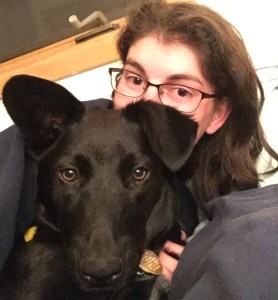
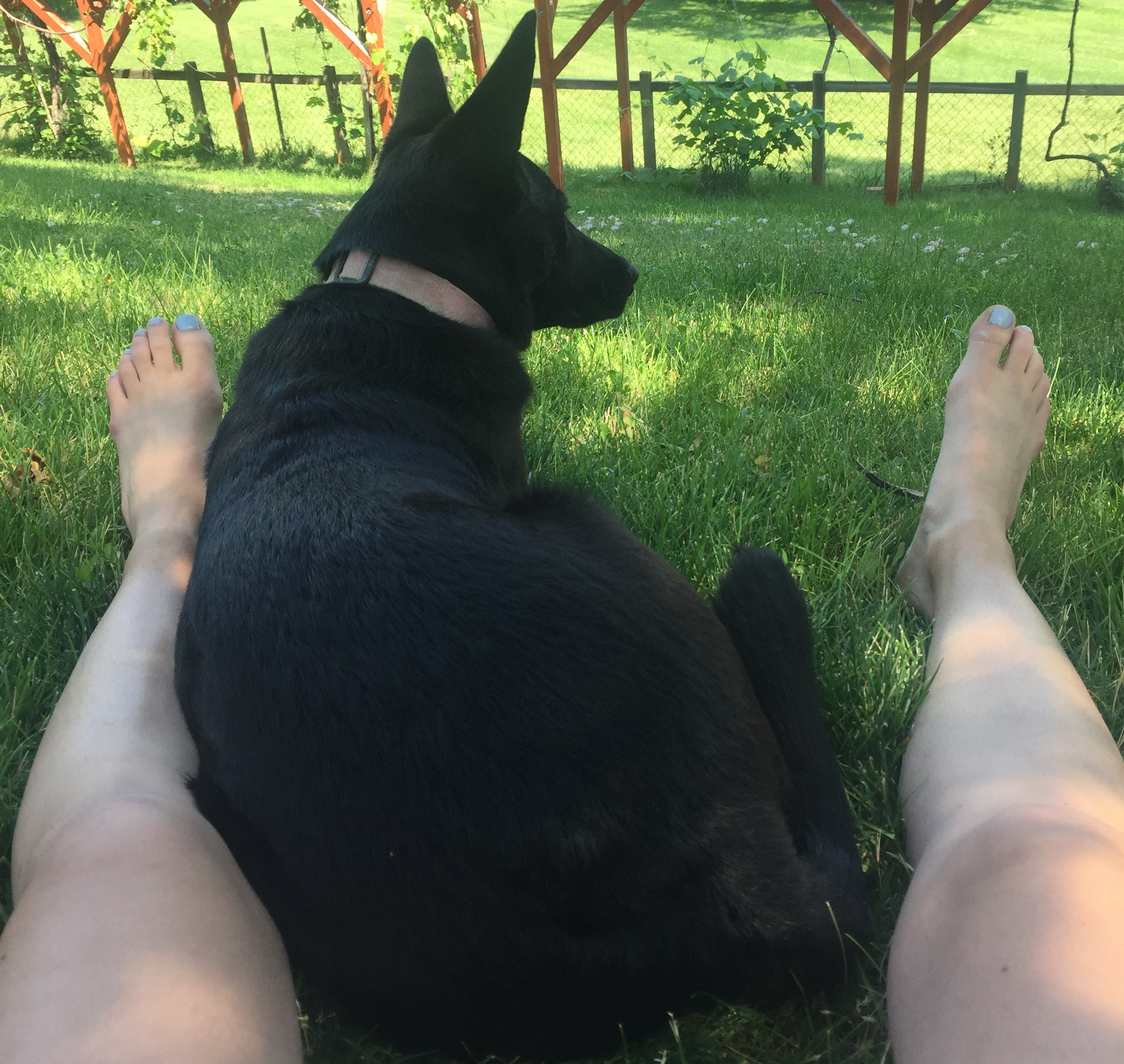
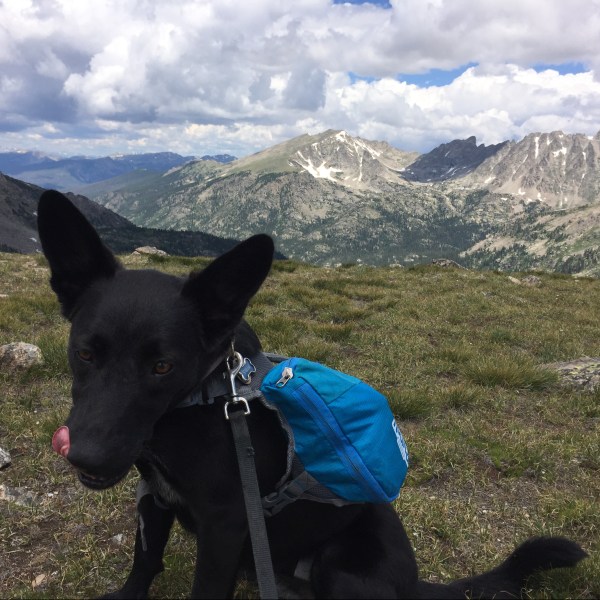
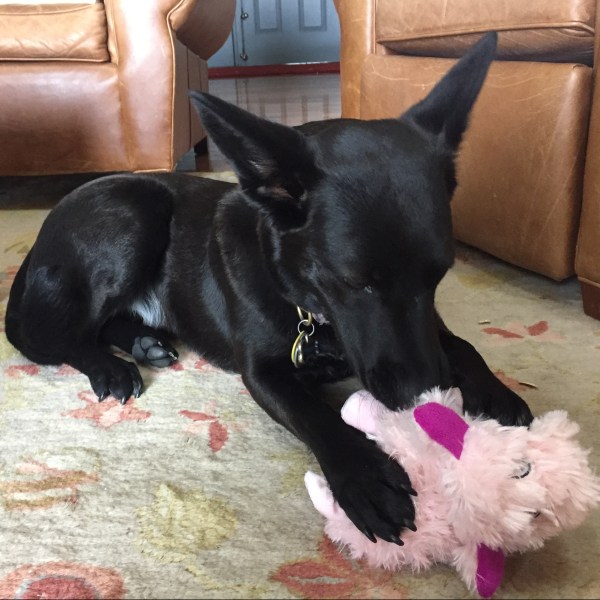
I joke with my family that my life basically revolves around the dog park, and although it’s funny, it’s also kind of true. I adopted Stella when I was in a really tough place, mentally, and her sweetness, affection, and persistence are what have gotten me out of bed and outside over the last year.
When I think about how grateful I am to have Stella, I also think about my family’s support and patience, and how willing they were to care for her when I was in the hospital. I’m thankful for the people I meet at the dog park, and the sense of community and routine I’ve found there. I think about the resources I have to be able to provide for Stella, and the fact that my body allows me to walk, run, and play with her.
When I think about how grateful I am to call Stella mine, it ripples out to every aspect of my life with her. I think that’s a powerful quality of giving thanks; you cannot be thankful for one thing without also being thankful for what contributes to it and leads to it.
I’m also incredibly thankful for what comes from my responsibility for and love of Stella. I’m thankful for long walks with frequent sniff stops and short walks around the block. She gives me stories to tell and reasons to get out of my comfort zone. I’m grateful that she makes me laugh every day.
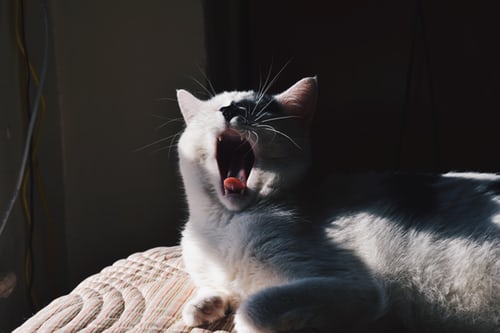
I’m thankful that she is instantly joyful when I buy her toys, but is also amused with a simple piece of cardboard. I’m thankful that I can tell when she’s tired because one ear flops over.
I’m thankful for my pup because she makes my life more joyful, she connects me to other people, and she demands that I take care of her and in so doing, myself. I hope that everyone had a lovely Thanksgiving, and if you don’t celebrate Thanksgiving, I hope that you had a great week filled with all of the people, pets, and things you’re thankful for all year long.
As they all are, this ketamine infusion was pretty…different. I popped my earbuds in and started a classical music playlist. Like last time, I closed my eyes and waited for it to begin. It was subtle, and when Dr. G asked me a few minutes later if I was feeling it yet, I opened my eyes and was met with a normal-looking world. “Not really,” I said. Of course, I was eating my words when, a couple of minutes later, I felt like my nose was sinking into my face. (It should be noted that none of this is ever scary for me. I had the sensation that my nose was sinking, but I was completely aware that it wasn’t.)
I thought that maybe I should say, “My nose is sinking into my face,” as Dr. G wanted to know when I felt it taking effect. Somehow, this got lost when I began seeing a whirlpool in a lake that turned into the eye of a storm, spiraling endlessly (song: Full Room Empty Space by Vincent & A Secret).
[I tried to remember which songs went with which images by taking screenshots of my lock screen. I’m finding it tough to remember the majority of this infusion, but I’ll do my best to match up the songs with what I saw.]
Music Influences My Ketamine Dreams
When I got home, I sat down with my laptop and my phone and began trying to recreate the images I saw by listening to the songs over again. Most of them only evoke general feelings and a vague memory of an image. For example, I remember that Prelude and Fugue in C by Bach produced a vision of bright red ink spreading on a ceiling of thick watercolor paper with a chandelier hanging down from the middle.
Concerto in D Minor by Handel gave me a feeling of very old royalty and led to images of stately, historic stone buildings.
At some point, there was a song – I think it was River Free by Boil the Ocean – that paired with images of vast open ocean and a whale shark swimming slowly near schools of fish. While most of these have faded in my memory and I have screenshots of more songs than I can remember images, there was one that stuck with me:
The Fish Wedding
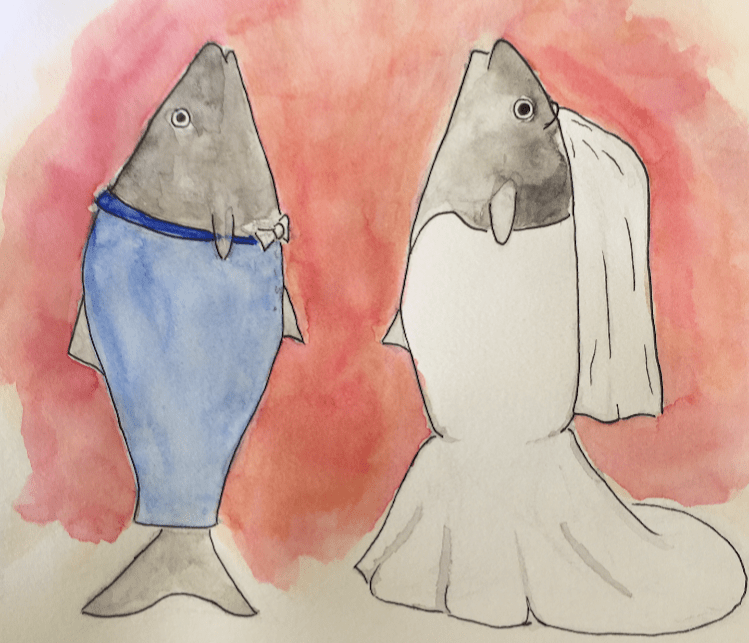
The song is “Songs My Mother Taught Me” by Dvorak. It begins with two fish tucked into a bed, the linens pulled neatly up to their fins. Then, the bed falls away, and the fish are dressed in wedding attire; tuxedo on one and dress and veil on the other.
My phenomenal attempt to depict the fish wedding.
The fish bride is moving down the aisle (conveniently, I can only see her top half. Not sure about the mechanism of movement, having no legs). There are rows of guests on either side, and I cannot figure out if they’re fish or human. Either way, they watch her breathlessly.
Now, we’re at the reception. The bride and groom are cutting the cake, fins gripping a large knife. As it cuts into the cake, the entire thing collapses in on itself, as if the cake were made of cardboard. The song ends, Allegri’s Miserere mei, Deus begins, and we return to the church with the fish bride.
And then it’s like my brain went, “Wait a minute – we can’t have an anthropomorphized fish in a wedding dress in here, at least not with THIS song,” and the entire feeling of the vision changed. If you can consider your brain to have “cinematography” in ketamine scenes, the images went from “Pride and Prejudice meets quirky, French cartoon,” to “emotional history documentary.” The fish disappeared, and it was just soaring views of an empty cathedral with light streaming in through stained glass windows.
Photo by Alexander Watts on Unsplash
Memories of Ketamine Dreams are Choppy
It’s mildly frustrating to remember thinking “Wow, this song goes perfectly with what I’m seeing,” and not being able to remember what it was that I saw. Sometimes patients will ask the doctor to write down things they think of while the ketamine infusion is going, thinking that it’s incredibly profound, only to read it later and either have no idea what it means or be entirely underwhelmed by its meaning. I imagine that’s what would happen if I could remember every image with its accompanying song. It probably wouldn’t be as perfect as I thought it was.
This was definitely an entertaining infusion, and when I came back to the room, I had no words to describe it other than to say, “There was a FISH. WEDDING.” And then laugh and shake my head.
What it Feels Like to Come Out of a Ketamine Infusion
The best way I can explain what it feels like right after a ketamine infusion is that it’s like waking up over and over again. You’re listening to someone talk, definitely paying attention, and then all of a sudden you feel like you just woke up again. The words you remember them speaking bounce around in your head for a minute- were they dreams? This happens several times, each coming a little further out than the last one. Eventually, you’re solidly awake and can go home to contemplate the love lives of fish.










 Love, Your Brain