Connecting During the Pandemic

As a highly introverted person, I didn’t expect social distancing to have much of an effect on my mental health. After all, I don’t get out much to begin with. But what I’m finding, and what I’m hearing from others, is that the few social interactions we introverts had prior to pandemic life were more important than we realized.

I’m starting to really feel cooped up. I miss my library, my dog park, volunteering with other humans, and not sucking air through a mask while I run. My world, small as it was, has shrunk. But perhaps more than the social isolation, it’s the uncertainty about when it will end. Before, I might have chosen to stay in, but it was a choice. Now, this strange, lonely way of life stretches on indefinitely. I’m feeling restless, anxious, and sad. I sometimes joke that I’d like to go live on a mountain by myself, and while I’ve always known that wouldn’t actually be good for me, it still sounds tempting. But now, the social interaction that used to threaten to overwhelm me is in short supply, and I’m finding myself a little bit lost.

Luckily, we have options for connecting with others from a distance. I’ve been enjoying video calls with friends, yelling across the fence to my neighbors in their backyard, and texting extended family members. We have social media, phone calls, blog posts, any number of ways to get in touch with people who are far away. Even when digital methods fail, there are still connections to be made at home, and creativity goes a long way.

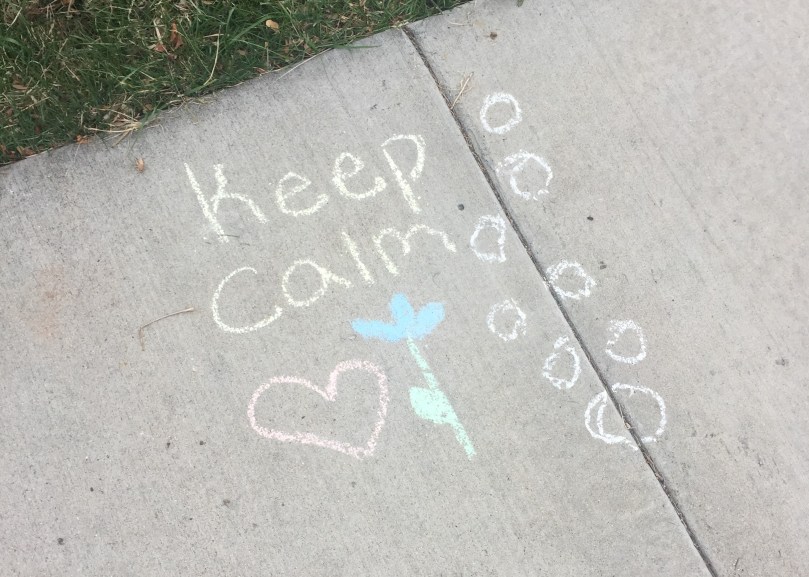
Towards the beginning of the pandemic’s reach in the U.S., when schools were closing and people started staying home from work, some kids in my neighborhood took it upon themselves to spread some positivity. I stepped out the door with Stella’s leash in hand and headed down the sidewalk for a quick walk around the block. At my mailbox, there was a message written on the sidewalk in chalk. It said “keep calm” and had a pink heart and a blue flower next to it. It made me smile and, frankly, gave me some warm fuzzies. All the way around the block, there were short messages encouraging everyone to stay safe and some adorable drawings of flowers and butterflies. It was a great reminder that we are all feeling the stress of the pandemic in our own ways and in our own homes, but we can still find ways to connect.

keep-calm-written-in-sidewalk-chalk-with-pink-heart-and-blue-flower

woman face in profile with eyes closed against dark background

Close Your Eyes: The Ketamine Chronicles (Part 16)

“I think Stella is a bad influence,” is a phrase I remember hearing Dr. G say during my latest ketamine infusion for depression. Stella is my willful, independent dog who sometimes flat-out refuses to listen to me. In trying to piece together the events of my day, that phrase bounced around in my head without context. What had happened?

Apparently, I had refused to close my eyes. Dr. G repeatedly told me to shut them, but dang it if that little glass dragonfly suspended from the ceiling wasn’t absolutely mesmerizing. I remember it glittering and moving gently while I stared. I closed my eyes eventually.

Some Changes to My Ketamine Infusion

This infusion was different from what I described in previous posts of The Ketamine Chronicles in a few ways. For one thing, it was a higher dose of ketamine paired with a sedative to make it less intense. I also am completely off of one of my mood-stabilizing medications, Lamictal, which can interfere with ketamine. Like my previous ketamine infusion, I took some Tagamet before my infusion to slow the metabolism of the ketamine and make it last longer. The sedative kept this infusion from being bizarre, or at least from me remembering any bizarre images I might have seen.

Abstract architecture made of long, connected panels like scales.
Photo by Luca Bravo on Unsplash.

Dissociation with Ketamine Treatments

At first, I didn’t feel as deeply removed from the world around me as usual. This was deceptive, though, as I soon began to feel – as trippy as this sounds – like my being was shrinking into my body. Or perhaps like my body was expanding to create a shell around my consciousness. Things were happening in the room – sounds of typing and clicking, machines beeping, Dr. G telling me to take a deep breath (which I also did not listen to, apparently) – but they all seemed so far away as to be completely beyond my caring.

I opened my eyes periodically to see what was going on and, due to the dissociative effects of ketamine, usually got sucked into the computer monitor, which displayed a series of calming images of winter mountains. This is the danger of not wearing a sleep mask; when you’re hooked up to a ketamine infusion, EVERYTHING looks interesting and it’s incredibly tempting to let all of your automatic functions, like blinking and breathing, be abandoned in favor of absorbing whatever magical thing you’re looking at. Nothing matters more than watching a snowy peak meld into a pine forest. Nothing.

Monitoring Vitals During Ketamine Infusions

It’s a strange experience to realize that you haven’t breathed in a while but not find that alarming at all. In fact, the longer I went without breathing, the harder it seemed to do. It’s sort of a heavy slowness that keeps me from breathing deeply. It has to be quite deliberate. My vital signs are monitored during ketamine infusions, so if my blood oxygenation drops or some other concerning development occurs, my doctor is alerted right away. I’ve had to be reminded to breathe during previous infusions, but a simple, “Hey, take a deep breath,” always seems to break through my trance easily. This time, Dr. G repeatedly telling me to take a deep breath reminded me that breathing was a thing that people did, but I found myself reluctant to put in the effort. There wasn’t much that I cared about doing, and I remember thinking that I felt oddly cushioned against the ketamine.

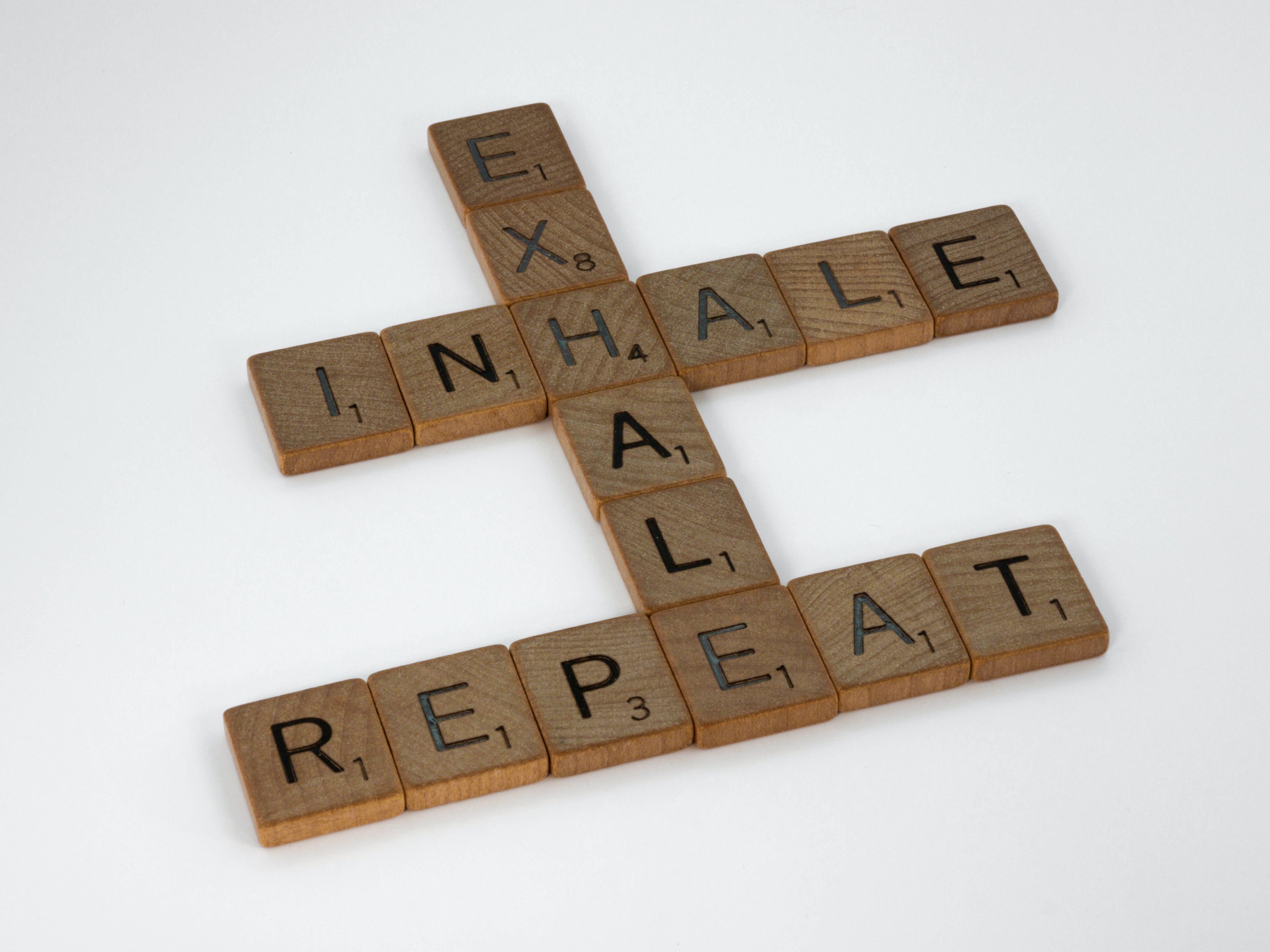
Intersecting scrabble tiles spelling inhale, exhale, and repeat.
Photo by Brett Jordan on Unsplash

Sleeping off a Ketamine Infusion

Afterward, I tottered down the steps to the car and marveled at my mom’s apparent lightning reflexes as she drove us home. We stopped at the pharmacy and grocery store (a whole day of essential outings!) and I simply put my seat back and waited in the car while my mom went in. Unable to get comfortable, I flopped around until the car got too warm. I cracked the door open and leaned out a little to get some fresh air, resting my head against the door frame. I wonder what people in the parking lot thought. I was clearly not very with it and kept doing that embarrassing head-jerk that happens when you fall asleep sitting up.

When we got home, I crashed for several hours, then got up and walked the dog around the block. I didn’t think much about how I was acting until I passed a house and then noticed someone sitting on their porch. I had been walking a few steps, stopping for Stella to smell something, zoning out, then repeating all the way around the neighborhood. I have no idea how long I stood in front of that person’s porch with a blank look on my face, but it might have been much too long to look normal. Who knows – maybe they thought it was quarantine brain.

If you’d like to read more about my experience with ketamine for depression, start from the beginning of The Ketamine Chronicles or visit the archives. Click here for mobile-optimized archives of The Ketamine Chronicles.

My MTHFR Gene is a Problem. Again.

You would think I had learned my lesson. Refilling my medicines is not something I find easy to do if a phone call is involved. I waited until the very end of my supply to refill my Deplin, and now, because of shipping delays, I’ve been without for several days. Deplin contains l-methylfolate, which fills a metabolic gap caused by a mutation in the MTHFR gene. Essentially, it helps my antidepressant work. Not taking my Deplin is what pushed my suicidality to new lows last year when I was hospitalized. It seems like I can feel my brain slowing down. I sleep all day like I’m hibernating in reverse by starting in spring. There is nothing to get me up except the dog, who stands by my bed and huffs at me, threatening to wake me with a full bark if I do not move. I accomplish the necessary and return to bed, already sinking into sleep. The occasional diversion brings some welcome entertainment, but it’s just a momentary distraction.

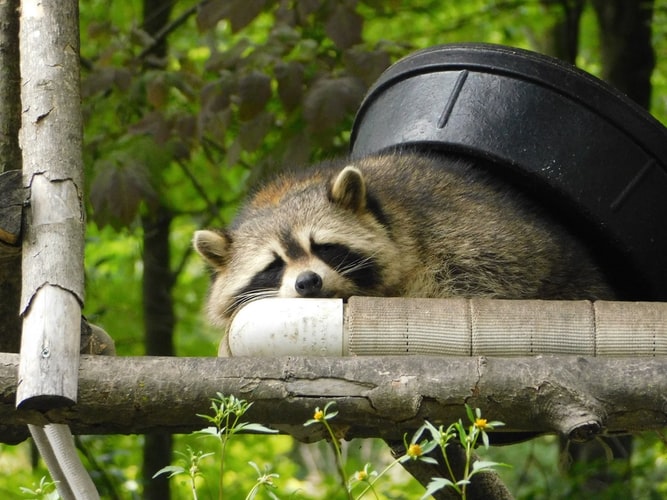
tired raccoon lying on platform with black container on its back and foliage in background
Me. It’s me. (Unsplash user @successfullycanadian)

I took some time off of work when my grandfather passed away last week, but then I decided it would be more helpful to have something to do. So, I went back to work (which I thankfully do from home under normal circumstances) on Monday. Unfortunately, it’s shaping up to be a slow week, anyway. I suppose I should turn to hobbies to fill my time. I’m partway through a drawing that I promised to someone, but like many of us judging ourselves for not utilizing all of this time to finish household projects or write a sonnet or whatever we think we should be doing, motivation eludes me.

My shipment of Deplin is finally at my local post office and should be delivered by the end of the day today. It couldn’t come too soon. I plan to rip it open right there at the mailbox and throw one down the hatch. Well, okay, maybe I’ll go inside for a glass of water.

A brown fuzzy moth with its wings outspread

Moth Wings: The Ketamine Chronicles (Part 15)

As I was pulled into mesmerizing moving images of purple and white half-circles, I remember pouring the words “please fix me” over and over into my mental space. Maybe if I asked it nicely, it would last longer. In a strange mixture of thought and vision, the words became part of the image, and they fanned out and seeped into the fabric of my mind. Ketamine infusions continue to be the best treatment for my treatment-resistant depression I’ve tried, but like anything else, it’s not perfect. Arriving at each appointment feeling depressed once again gives me a sense of hopelessness all its own. I know the ketamine infusion will help, but it may not last. We’re still trying to arrange the best combination of dose, timing, and medications that could help things remain more stable. 


Puzzles, Puddles, and Skyscrapers

I closed my eyes and settled back, listening to the “atmospheric piano” playlist I had chosen for yesterday’s ketamine infusion. Eventually, my awareness of my hands and arms disappeared, and I spent some time wondering where they had gotten to. The gentle piano music was relaxing, and tucked under my blanket and weighted lap pad, I began to feel like I was being enveloped in something. I imagined myself being zipped into a giant pea pod, and the image was comforting. “Nothing can get me in my pea pod,” I thought. There were times during the infusion when noise outside the room intruded on me, so I just imagined my soft pea pod and retreated within it again.

There were at least two scenes involving puzzle pieces and building skyscrapers in this ketamine infusion. We’ve been working on a 2,000 piece puzzle of Monet’s garden, and the pink, purple, and white pieces are haunting my subconscious. The puzzle pieces came together to form an endlessly tall building; I craned my neck back to see it disappear into the clouds.

At some point, everything dissolved. I was “looking” at a computer screen, and as I tried to read it, the contents of the page began to melt. The lines ran together, words sagged under the force of gravity, and eventually, the entire laptop softened and melted into a puddle. I began to melt, too. I slipped into the puddle of digital sludge – it looked like an oil slick – and soon accepted my new form. I was too tired and heavy to do anything.

I was far, far, far away when I heard the PA, Erin, ask if I was ok. Finding my mouth and giving it words to say was too difficult, so I nodded and hoped that my head was actually moving. It must have been, since she seemed to accept that as an answer. A little later, she sneezed, which startled me. At the sudden noise, I instantly saw moths with shattered wings, like glass with spiderweb cracks. They fluttered around and came closer until their soft, broken wings were all I could see.

Post-Ketamine Infusion Confusion

Coming back to the room was much harder than usual. I felt a little like I was wearing 3D glasses; everything was in relief with subtle red and blue auras. When asked, I said I felt like “someone else is talking,” meaning the words were mine but the sensation of talking seemed foreign. This is something I experience every time I have an infusion of ketamine for my depression. Erin said I seemed pretty lucid, to which, in relief, I said, “Great – I’m pulling it off.”

Walking down the steps to the first level of the parking garage was challenging. I clung to the railing and stepped carefully, feeling like I was walking on pillows. I’m usually fine to walk after a ketamine infusion; I could fall asleep at any second, but I generally feel pretty with it. This time, though, I felt a lot like this:

stoned fox

Tracking Adjustments to My Ketamine Infusions

In an effort to make the effects of the ketamine infusion last longer, I took some Tagamet before yesterday’s infusion. It’s an H2 blocker used to treat heartburn, but it might also slow the metabolism of ketamine and give patients more time between infusions. I’m usually tired after ketamine infusions, but this was different. I got home around 4 (I think) and by 6:30, I still felt like I was periodically dissociating and then coming back to the room and remembering I was in the middle of something. Walking was hard for a couple of hours. I was off balance and wobbly and had mild vertigo. I think it’s safe to say that the Tagamet is doing something. This morning, I woke up with a mild headache and am still incredibly tired, but the sun is out and our near-impossible puzzle will provide hours more entertainment.

P.S. I remember making a mental note that Shrek appeared briefly during my infusion, but I cannot for the life of me remember how/when. It’s such a bizarre thing to remember, though, that I am sure it really happened.

If you’d like to read more about my experience with ketamine for depression, start from the beginning of The Ketamine Chronicles or visit the archives. Click here for mobile-optimized archives of The Ketamine Chronicles.

blue and pink mountains illuminated by sunrise over snowy plains

Why Self-Care Can Be Hard For Me

Taking care of yourself comes in many forms, some easier than others and some more pleasant than others. Throughout my years of depression, self-care has meant several things to me. In times of severe symptoms, self-care focused on basic skills; eating, bathing, and taking my medications. When I’m doing better, self-care looked more like the conventional meaning of the term; taking time to relax, allowing myself tasty treats, watching a favorite show, etc. But no matter the state of my mood disorder, self-care has always included a mental component that can be particularly difficult: being nice to myself.

I know, that sounds so obvious it’s ridiculous, but you can absolutely do the actions of self-care without believing you deserve it. I run into this issue a lot; I spend an evening in sweatpants and a cozy sweater, absorbed in an episode of [insert ever-changing favorite show here]. Great self-care, right? Except I finish up the whole endeavor with terrible self-criticism for having let myself waste time and be lazy when I could have been getting work done. Somehow, it seems like that negates all the good that the action of self-care does for me.

Don’t get me wrong; I’m sure there are plenty of benefits of self-care even when you’re not feeling it. If you’re doing something essential to your survival, like eating food, of course that outweighs whether or not you think you should do it. Plus, there’s likely some neurological benefits of taking care of yourself- dopamine, less cortisol, heck, there’s probably benefit to just practicing those neural pathways and making them feel more natural. But it also seems logical that the benefit of self-care itself would be even better if you let yourself have it guilt-free.

Sometimes, the hardest part of self-care is believing that you deserve it. And that’s usually when I need it most urgently. It’s a work in progress, but I’m trying to be less critical of myself. Deliberately being nice to myself sometimes feels like a big lie, like I’m only humoring the part of me that thinks all my negative self-talk is pretty crappy. Living with depression makes it complicated because I know that I need to do things like exercise, take time to relax, and let myself say “no” to things. But the part of me that fights tooth and nail to appear “normal” resents the fact that if I’m not gentle with myself, I might end up debilitated by depression again. I don’t want to need anything, and certainly not anything pampering. I’m fine how I am.

“I’m fine,” she says stubbornly.

Sometimes you’re not fine, and that’s ok. And it doesn’t matter how long you’ve been not fine- you still deserve to take care of yourself. Sometimes I feel like having been depressed for a long time means that I’ve been indulgent in my sluggishness and I need to be hard on myself to get out of it. I would never tell someone else that. Be as kind to yourself as you would be to a friend in the same situation.

Stress and anxiety abound right now, so take care, stay busy, and get some fresh air when you can.

-G


extended-hand-holding-soap-bubbles-with-beige-background

COVID-19 and Anxiety: Caution vs Compulsion

Yesterday, my city declared a local disaster emergency. A growing number of presumptive cases of COVID-19 in my county have led officials to close all city facilities. This has given me pause when it comes to the complexities of COVID-19 and anxiety.

I was diagnosed with obsessive-compulsive disorder when I was about 11, and I dealt with many different obsessions over the years. Perhaps the longest-lasting obsession I had revolved around contamination and germs. For the last several years, I’ve been blessedly free of OCD, and when an old obsession pokes its head out, I’m fairly quick to oppose it by doing an exposure. Since the start of the media coverage of COVID-19 in Wuhan, I actively tried not to let it worry me too much. I could feel the pull of anxiety, coaxing me into watching the news coverage and letting it take over my life. Of course, I stayed informed but did my best to not obsess.

Now, my own city is seeing dramatic effects of the virus, both in increasing cases and in the social results of widespread, repetitive media coverage. Many of our city facilities were closed several days ago, and our city council has decided today to close them all. This afternoon, I finally made the trip to my pharmacy, located in a grocery store, to pick up my medications. The sight of so many empty shelves was unnerving. The only fresh vegetable remaining was lettuce. The bread aisle was sparsely populated with hamburger buns and a few loaves of whole wheat. A man asked the pharmacist where the thermometers were and was told there were none left.

I bought my items and went home, then washed my hands several times between unloading groceries, putting them away, and cleaning the counter they sat on. I’ve been cleaning my phone case, our door handles, and even my sunglasses after touching them while out. Am I simply being cautious, or have I crossed the line into compulsions?

For people with anxiety disorders, dealing with COVID-19 and anxiety during the pandemic puts them in a confusing position. People are being encouraged to be extra careful about handwashing and touching potentially dirty items. Events have been canceled and gatherings are recommended to be limited, making it easy to justify complete isolation due to anxiety. So when the behaviors that normally indicate a disorder are socially sanctioned, what do you do?

I can tell that going to the pharmacy triggered something, and where before I was simply careful, I’m now afraid of things in my own house because they came from outside, and I haven’t cleaned them. This alarms me because it’s exactly how I used to feel in the grips of contamination OCD. It’s overwhelming to suddenly feel like nothing around you is safe to touch.

This coronavirus could live on surfaces for two to three days, so maybe constant cleaning and disinfecting are completely warranted. I imagine many people are feeling this despite never experiencing feelings like it before. Nobody really knows how much is too much, and this is exactly why OCD is so tricky. In non-pandemic times, contamination-focused OCD is fed by a seed of doubt (indeed, every kind of OCD is fed by doubt). It can feel shameful because you know that your compulsions are irrational. Now, it’s unclear what rises to the level of irrationality. Maybe the compulsions I usually try to avoid are precisely what I should be doing.

There is no blueprint for handling COVID-19 and anxiety. I think it’s reasonable to increase your awareness of surfaces you might normally touch and to wash your hands more frequently. However, I know that for me, allowing myself to engage in my old compulsions is a slippery slope. It might be acceptable to do right now, but it will be harder to stop the longer I let it go on. It’s a balancing act, and I have to decide how much my anxiety is serving a purpose now versus how detrimental it is and could be in the future.

I’m certainly not going to tell anyone how to keep themselves safe. I am, however, going to tell myself to be cautious about being too cautious. As long as I can leave the compulsions behind again when life approaches normal, I’ll be okay.

Stay safe,

Genevieve

An abstract blue and red painting with wide brush strokes and vertical red lines

What Noise Sounds Like in IV Ketamine Treatment: The Ketamine Chronicles (Part 14)

Yesterday, I had another ketamine infusion for my treatment-resistant depression. It had been almost five weeks since my previous infusion, and while three weeks was our best guess for my interval, it seems like now I can actually go something like four weeks before really noticing it wearing off. I’m hoping that if I keep doing the behavioral things that help my depression (running, volunteering, therapy, etc.), I can at least maintain this amount of time between IV ketamine treatment appointments.

Linguistic Confusion During IV Ketamine Treatment for Depression

Most of my ketamine infusions have been visually focused, and usually what stands out to me are snapshots of images and colors. However, some of my ketamine infusions are much more auditory-heavy. Throughout it, conversations in the hallway and the other room sounded loud and close, and I felt as if I were being crowded around in the room I was in. Strangely, conversations outside the room sounded loud but were completely unintelligible. The boundaries of words and sentences disappeared and I was washed in streams of unending verbal noise. Nothing made sense, but I still strained to understand. The sounds of English words were familiar, but I just couldn’t parse them enough to grasp their meaning.

A messy spread of wooden typography letters in dark and light wood.
Photo by Raphael Schaller on Unsplash

This theme of linguistic confusion stretched throughout the infusion. I remember a filing cabinet stuffed with folders that I couldn’t read. The letters were there; I could pick them out, but putting them together and reading them as words eluded me. Later, messy papers with gibberish words filled my internal vision. I felt confused, I was upsidedown, my arm with the IV ached. The room seemed loud, and I saw stampedes of paper animals painted with pastel watercolors. They piled up and tumbled around me, threatening to knock me over and crush me. The fan in the room added noise that pushed it all to an intolerable volume, so I asked Erin to turn it off. I got ready to speak, opened my mouth, and seemed to just think the words out loud.

Did I Say That?

I notice this feeling often during my IV ketamine treatments, and it’s interesting to note how little deliberate control over our mouths’ movements we need in order to make coherent sounds. All I do is form an intention to say something, and it just…happens. It feels a little like I’m inhabiting my body separately from its direct controls.

A distorted glass with yellow and blue fractals approximating the experience of ketamine for depression
Photo by Jakob Owens on Unsplash

Ketamine is a dissociative anesthetic, meaning it creates a state of perceived separation from the self. Altered senses and seemingly “out-of-body” experiences are common when receiving treatments of ketamine for mental health conditions like depression and PTSD. In my experience, I can still talk during a ketamine infusion, but it feels like someone else is doing the talking.

In any case, my request apparently worked, as Erin then got up and switched the fan off. That lowered the ambient volume enough that I could focus again on my music.

I remember there being more visual scenes after that, but I don’t recall them very well. The only one I have much memory of is a scene set in a grocery store with a broken jam jar, shards of glass glinting under the fluorescent lights, and wine-red jam splattered on the linoleum.

IV Ketamine Treatment for Depression in Combination with Other Strategies

The rest of the day is a blur. I slept off and on, interrupted by Stella periodically. It wasn’t until about 6 P.M. that I started to feel more like a person, but I was still glad to crawl into bed at night and sink into sleep. This morning, I’m tired. I’d like nothing more than to go back to bed for the rest of the day, but I know it’s important to get myself up and moving. I do best with routine, so in the interest of helping my brain repair itself through the effects of ketamine therapy, I’ve already had coffee and been to the dog park. So far, so good.

If you’d like to read more about my experience with ketamine for depression, start from the beginning of The Ketamine Chronicles or visit the archives. Click here for mobile-optimized archives of The Ketamine Chronicles.