Search & Rescue Elephants and Other Therapy Tidbits

My mental health has once again taken a turn in a not-fun direction, which I attribute to some recent medication changes. So, instead of sitting here thinking, I should write something. I can’t think of anything to write, and then putting down anything I do write as being the worst drivel ever to appear on my screen, I’m going to take you on a little diversion.

Did you know that an elephant’s sense of smell is twice as strong as that of a bloodhound’s? (C, that documentary led me astray. Google says twice, not four times.) This is what I said to my therapist the other day in one of my many futile attempts to distract from the topic at hand. We’ve also discussed, among other things, a documentary I watched called “Octopus Volcano,” how scallops have eyes, and what “horse” is in ASL. Usually, when I share a fun fact like this, there’s a brief exchange, and then she goes, “Well, that used up about a minute and a half.” And then we’re back where we started, just a little more entertained. This time, I think we probably used up, like, at least three minutes with the elephant fact. It may have been the most productive time-wasting fact I’ve ever pulled out of my sleeve. We got going on a train of thought that I think has some incredible real-world promise.

Just imagine: search and rescue ELEPHANTS. The police force brings out the specially trained sniffer elephants in super-wide trailers. They step down, decked out in vests that say “DO NOT PET. I’M WORKING,” but the vests are really just tarps secured around their bellies with bungee cords because the elephant service vest market just isn’t there yet. Soon, they’re working in airports, sniffing for bombs and drugs. All floors have widened stairs and elephant-safe ramps, and next to the dog relief areas are rooms with piles of dirt for the pachyderms to toss over their backs. Retired sniffer elephants spend their golden years relaxing with their family herd with frequent visits from their old handlers, revered as heroes for their invaluable contributions. I think we’re on to something, here.
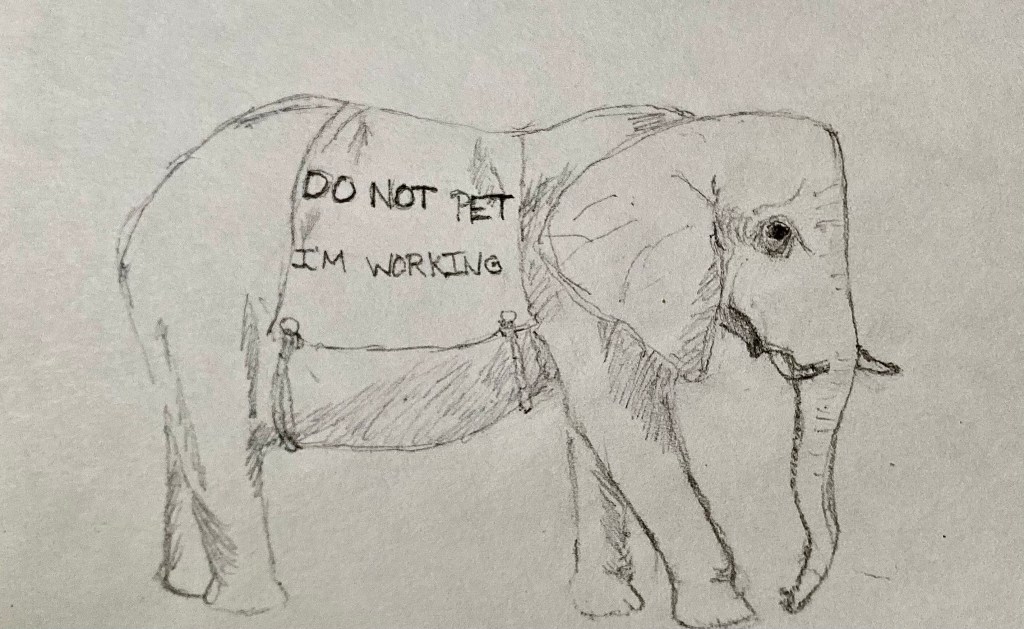
“Sir? Sir! This is a service animal. Please don’t feed her the limp lettuce off your hamburger.”

Is this a breakthrough? Did I have a breakthrough in therapy?! Yeah, yeah, it’s not about me, but a striking realization is a striking realization. Elephants are the next sniffer dogs. Maybe they’re not as motivated to please humans, and they do need to eat a tremendous amount of foliage as they travel great distances throughout the day, but I think those problems could be overcome with some creativity. There really is no limit to what you can take away from therapy.

Non-sequitur segue! Other problems that can probably be overcome include my current difficulties with changing my clothes and eating and getting work done and my general depression problems. Titrating down on an antidepressant can be tricky. I’m trying to figure out whether this dip in my mood is because this antidepressant was helping me more than I thought it was, regular old withdrawal, ketamine wearing off, or any number of other variables. I suppose time will tell. Let’s persist in our efforts to overcome wacky, theoretical elephant scenarios and the challenges of living life.

P.S. Good luck to the Google algorithm in trying to figure out what the heck this post is about. 🙂


green-mug-with-steam-rising-sitting-on-side-table-with-rumpled-sheets-on-bed-in-background

Anxiety is Keeping Me Awake

And I love it. Well, “love” is too strong, but I have distinctly positive feelings about this change in my depression. From the outside, it may sound amazing to take a four-hour nap every day. Living it is a different matter. When you’re absolutely exhausted all the time and you crawl into bed simply because you don’t want to exist as a conscious person anymore, it’s not rejuvenating. When you go to sleep because you just want the day to be over and at least that way, you won’t perceive the passage of time, it’s not indulgent self-care. Instead, it’s just a black hole siphoning days, weeks, months of your life away from you. So, when you suddenly have every precious second of the day to be awake, it’s wonderful – and a little bit uncomfortable.

Wellbutrin is what’s still making me anxious – a side effect that Google says goes away within a week or two. Not so, for me, although hopefully, for a more complex reason. When I started taking propranolol, a beta blocker, to counteract the anxiety and jitters, I hoped that I could start to really enjoy my improved motivation. I’ve been mostly feeling like it arose solely as a product of anxiety that propels me from distraction to distraction. Instead, I encountered a strange result. Two propranolol per day had minimal effect, but three made me so shaky that I struggled to type or to use a spoon. This is weird, and not at all what’s supposed to happen. Perhaps I had a paradoxical reaction to it, but it’s hard to say. As for the anxiety, my psychiatric nurse practitioner theorized that the addition of Wellbutrin made for three medications in my list that deal with norepinephrine. I was making too much of it, essentially leaving me constantly primed for fight or flight. I’m now tapering down on one of those meds in preparation to increase the Wellbutrin.

Although the anxiety is improving, it still keeps me from napping most days. It’s that odd combination of being tired and full of energy at the same time. I want to close my eyes and rest, but it kind of feels like my trachea is the size of a large straw, and I can feel my heartbeat in my ears. It’s a tug-of-war between depression, which still votes in favor of sleep, and anxiety, which votes for frantic activity. Consequently, many of my days feel much longer than they used to because I’m unable to sleep. I’m still not as interested in my, well, interests as I used to be, so although I have this itch to be active, nothing seems quite right. The anxiety is also not nice, but it is a novel experience to be conscious for an entire day. There are so many hours to pass!

In an example day, I’ve:

  • fixed my clogged bathroom sink
  • drawn some potted plants
  • accomplished my part-time work in one sitting
  • refilled the bird feeder
  • took the dog to the vet
  • *perused the web for “doggles”
  • went for a walk

There have been some recent days that included naps, but on the whole, I’m pleased with my daily awakeness. Now to try not to go too far in this direction and become more anxious that I’m only doing very minimal activity and it somehow feels like a lot to me. Don’t. Over. Think. It.

*Doggles, or dog goggles, are on my shopping list because my dog, Stella, habitually develops eye infections, likely in the course of her high-speed, full-contact dog park outings. The doggles are for her to wear while we play fetch, silly as that is. But hey – ten bucks for doggles, or $180 for each vet trip? They also look awesome.

a-black-dog-and-a-red-brown-dog-playing-with-mouths-open-next-to-each-other-showing-teeth-outdoors
It’s hard to get photos of dogs playing that don’t look terrifying, but I swear, this is Stella and Tugs having a great time. Imagine how cool they would look with doggles.

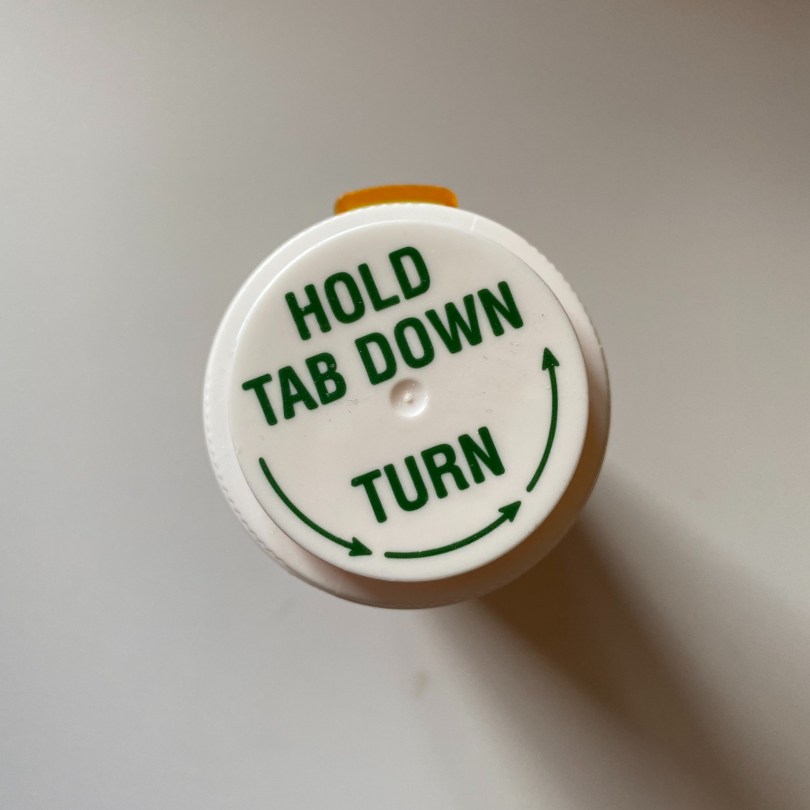
top-down-view-of-pill-bottle-with-tex-hold-tab-down-turn-with-arrows

Changing My Depression Medication

It’s come to my attention that my depression medication doesn’t seem to be doing much. IV ketamine infusions are also doing less than they used to, unless it’s the case they they’re doing just as much but my brain is kicking its level of stubbornness up a few notches. Who’s to say what the cause is? Maybe it’s just the curse of 2020.

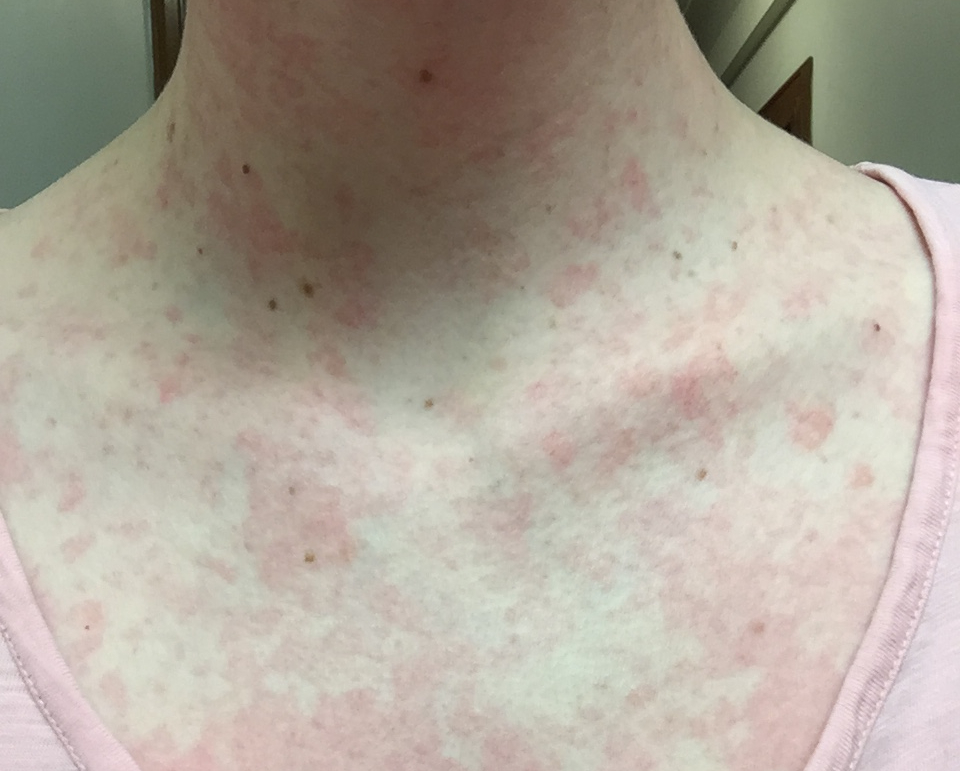
I got sidetracked. The point of this post is this: I’m about to start taking Wellbutrin, a medication that I tried a few years ago and really liked. I was only on it for about a week, though, because I promptly broke out in a blotchy rash that spread from my chest, up my neck, and all over my face.

close-up-of-woman's-collarbone-area-with-blotchy-red-rash
(the rash of 2018)

It seemed like a cruel joke played on me by the universe. The only oral antidepressant I’d ever tried that made a sudden, discernable difference in my depression is one that I’m allergic to.

Cut to now – I’m once again finding myself floundering in the soupy mashed potatoes of my depressed brain, looking for some way to change things. I’ve always carried a little bit of disappointment about my failed Wellbutrin trial, especially because I was taking the generic at the time. What if I wouldn’t have a reaction to the brand name version? Would it be stupid to try?

You know those prescription medication commercials that include a disclaimer like “Don’t take [name of drug] if you’re allergic to [name of drug],” and you’re like “Well, DUH?” I am now the person that those disclaimers target. To me, the risk of an allergic reaction is worth the potential benefit of taking Wellbutrin. I think it’s telling that when faced with the possibility of a rash, swelling, even anaphylaxis (unlikely), my reaction is “sign me up.”

I remember being so amazed at how motivated Wellbutrin made me feel. It was the only oral depression medication that’s ever given me that “I didn’t fully realize how depressed I was until I wasn’t” feeling. I was in my last semester of college when I took it. By that point, I had tried several medications and was struggling to get through the last few months before graduation. I was over the moon when I realized that Wellbutrin was working for me. It was SO much easier to get my work done and interact with people, even just for the few days that I was on it. When I got the rash, I stopped taking it abruptly, and the sudden changes did not do good things to my mental health. I had already been utterly overwhelmed by classwork and worn down by the near-constant suicidal thoughts that had plagued me for over a year. I canceled my trip home for spring break because I wanted to be alone, and I reluctantly started yet another combo of meds. I just remember the whole thing being bitterly disappointing. It was like Wellbutrin had swooped in, showed me how much easier everything could be, and then ditched me with the gift of an itchy, burning rash after just a few days.

So, I’ll take the chance of a rash if it means I might feel better. That said, if I let myself get too hopeful and the result is a letdown, I know I would feel incredibly defeated. I’m trying to temper my expectations. If I get a rash or if it doesn’t work, at least I’ll finally know for sure if it’s an option for me. I’ll write an update soon.

Categories

How Do I Love Thee? A Haiku About Meds

New bottle of pills

Contains capsules, not tablets

Let me count the ways


Three of my nighttime pills are tablets, and I like to take them all at once to minimize the horrible dissolving-pill taste as much as possible. One time, two went down but one got stuck to the back of my tongue and began to dissolve. It was like purifying the essence of every cruciferous vegetable and mixing them with charcoal, then pouring the horrific concoction down my throat. Immediately, my esophagus’s movement reversed direction and it took serious effort not to hurl right then and there. Instead, I had to force myself to chug water and think about anything but my poor tastebuds. To this day, the memory makes me shiver in horror.

And now, a change in the formulation of one of my meds means that I have received capsules instead of tablets. It’s the little things.

A woman wearing a black one-piece swimsuit floating in dark water with her knees bent and her arms outstretched to the sides

Underwater: The Ketamine Chronicles (Part 12)

Breaking through the thin boundary between water and air is easy, but the farther down you are, the harder it is to swim to the surface. Higher doses during IV ketamine infusions for depression make me feel like I’m sinking beneath vast volumes of water, and the barrier between my mind and the outside world is very far away.

I don’t remember much from this IV ketamine infusion, which I have every few weeks as a treatment for my severe, treatment-resistant depression. I remember sitting in the chair and closing my eyes. Then, a minute later, the machine beeped and the nurse reached over to me. She fiddled with the IV, smiled wryly, then said, “We have to have the clamp open.”

“That helps,” I replied with a smile.

After that, I remember very little. I was listening to classical music in my earbuds, which seems to create (for me) more memorable images than meditation music, but apparently not memorable enough to outweigh the sack of bricks that hit me when the ketamine kicked in. I do remember bursts of thin lines that became ripples on water, and finger painting a nature scene with varying shades of pink. I remember a crocodile, a puffy dress, and watching my inner set of eyelids close to darkness.

It always takes some work for me to come back to the room when a ketamine infusion is over. This time, I kept thinking that people were waiting on me to come out of it, so I thought I should hurry up and return to my body. But, when I dragged my real eyelids open and looked around, somebody said, “Just a couple more minutes.” Oh. That’s why it was so hard to pull myself back. It wasn’t even over yet.

Slow to Return to My Body and Mind

At lower doses of ketamine treatments, I generally feel normal within 30 minutes of the infusion ending, if a little tired. This time, though, it’s all a blur. I remember the rest of the day in jumbled snapshots. Returning to the room around me and talking to Sarah, who mysteriously took the place of the nurse at some point; telling Dr. G that I didn’t remember what I saw; pushing the footrest down with my heels, then walking to the car with my mom. Two kids sprinted past us, almost colliding– wait– was that before the infusion or after? That was before. When I woke up on my bed hours later, I was mildly unsettled that I could remember so little of the day. I know that I wouldn’t have said that I felt weird in the moment, but my memory of it all is so broken that I clearly was pretty impaired.

Four or five hours after getting home, I pushed myself out of bed and tottered to the kitchen for some food. When I turned or bent, mild vertigo briefly grabbed me. A can of soup and a clementine later, I pulled out my laptop to jot down some notes about the infusion, only to sit, stumped by my lack of memory. Listening to the music I chose over again prompted flashes of scenes and images, but I still have the sense that there are some rich plots that I’m missing. It’s like when you know you had a bizarre dream, but you just can’t quite remember what it was about. Ah, well. It’s entertaining to remember my ketamine dreams, but the important part is that it’s getting to work in my noggin to treat my depression as we speak.

If you’d like to read more about my experience with ketamine for depression, start from the beginning of The Ketamine Chronicles or visit the archives. Click here for mobile-optimized archives of The Ketamine Chronicles.

A male lion stretching in the downward dog pose in a field of tall grass

Backyard Lion: The Ketamine Chronicles (Part 11)

I awoke to darkness. And barking. Whipping the blanket off of me, I thought what I always think in this situation, which is: Stella, don’t wake the neighbors up! And then I thought:

Wait a minute, I didn’t let her out this morning, followed by, wAiT a minute, IS it morning? 

It was not. It was 5:30 P.M., the same day as my latest ketamine infusion. I napped hard after this infusion, which was a higher dose than normal. I went in earlier than scheduled because a change in my birth control threw things out of whack (see Part 10 of The Ketamine Chronicles) and my depression made an appearance sooner than we had hoped. This ketamine infusion was longer and felt pretty different compared to my normal dose. I still saw vivid images and scenes, but they felt more immersive, somehow. They were more like realistic, sometimes-lucid dreams rather than IMAX movies.

There always seems to be a lot of water in my ketamine imagery, but this one was especially saturated (pun intended). I remember a lot of ocean waves, people walking on mostly-empty beaches, and the gentle rocking of the tide. It’s odd to have a relaxing experience of being on water. One aspect of my sensory processing disorder means I get motion sickness so easily that escalators can set it off, so I usually dislike any tilting or bobbing motions. The movement of water during this ketamine infusion, however, was very calming. At one point, I was on a boat where I watched water come up through a square hole in the deck, then recede, then repeat. At a different time, I saw foamy waves that I could stop at will, perfect dollops of whipped-cream water, frozen in place.

There were several dream-like plots this time, but I only remember one.

Why is This in My Brain?

This is the “We Bought a Zoo” bootleg knockoff of ketamine dreams. In the actual movie, Matt Damon plays a recently widowed father who purchases a defunct zoo and moves in with his children. They have to earn the trust of the animals and the people who work there in order to save the zoo and reconnect with each other. It’s heartwarming, at times dramatic, and funny. The bootleg ketamine version was like putting the whole script through several layers of Google Translate and getting rid of 90% of the characters.

In a mundane twist of fantasy, my ketamine protagonist buys a house. He moves in, but later learns that there’s a lion living in the backyard (seems like something the inspection should have caught, but oh, well). At first, he throws food into the far corner of the yard to keep it away. Over time, though, he and the lion start to trust each other, eventually becoming friends. The man even goes so far as to buy a puppy for the lion to bond with (à la cheetahs with emotional support dogs). This seems like a supremely bad idea, as the lion is already fully grown, but the protagonist is confident.

(Un)fortunately, I will never know how that turned out because I either “woke up” or simply moved on to some other surreal, mental drama. By “woke up” I mean that some change around me brought my attention back to the real world, not that I opened my eyes and was back to normal. What pulled me back may have been movement in the room, a new song in my earbuds, or the sudden realization that I wasn’t actually in a bizarre plot about a backyard lion (which is, of course, horribly cruel and irresponsible).

Illusions of Ketamine Infusions

I prefer to not wear an eye mask during ketamine infusions, just because I like to have the option to open my eyes, and I’m not a fan of having stuff on my face. However, there are times when I think an eye mask would come in handy. You know that feeling when you’re falling asleep on an airplane and you keep waking up because you feel like your mouth might be open? That’s the kind of sensation I get during ketamine infusions, except instead of my mouth, it’s my eyes. They’re not actually open during ketamine infusions, it’s just that the feeling of “seeing” in my mind is so realistic that sometimes I can’t tell. I used to sleep with my eyes a little bit open, and apparently, it was really creepy. I’d like to spare the occupants of the room my unsettling zombie eyes.

Lately, I have been dreading the morning. Stella’s enthusiasm and relentless needling get me out of the house to tire her out, but depression has made it a slog. I’m hoping that this ketamine treatment will bump me back into feeling good about the day ahead.

Note: this blog recently hit 100 subscribers! Thank you all for reading my ramblings and thoughts about depression and mental health. Just before the new year, too! I hope you’ll stick around in 2020. 

If you’d like to read more about my experience with ketamine for depression, start from the beginning of The Ketamine Chronicles or visit the archives. Click here for mobile-optimized archives of The Ketamine Chronicles.

Week 23 of Working on Us: Medications

Working on Us is a wonderful series over on Beckie’s Mental Mess, where each week has a new prompt meant to get people talking about mental health topics. Check out the original prompt for week 23 and click around to find participants of previous weeks’ topics!

mental health matters

When you first were diagnosed with your mental illness/disorder, did it take a while to get used to your medications that were prescribed to you?  If you answer the question, (YES), How did you feel initially?

It took me a while to get used to the idea of taking medications for my depression, but the first antidepressant I tried had very little effect on me. So, from a physiological perspective, no- nothing wild happened at first. But from a psychological perspective, it definitely took me a while to get used to it. I was a college student when I sought psychiatric help, and I had all kinds of negative beliefs about what it meant for me to be taking medication. It took me a while to accept that I was depressed, instead believing that I was simply not working hard enough. I even believed for a while that I was taking resources away from other students who really needed them by going to my appointments at the student health center. That’s a sad memory.

Depending on how long you have been on medication, how many times do you think it has been adjusted to make you feel stable?

Gosh, I don’t know. Dozens? Counting each medication I’ve tried, there’s been a lot of adjusting. Ketamine infusions have been the most effective treatment for me, but I still take my medications to keep me stable.

Have you ever had a bad reaction to medication?

Twice.

A couple of years ago, I started taking Wellbutrin and almost immediately felt my depression improve. Unfortunately, I also almost immediately had an allergic reaction and had to stop taking it. I developed an intensely itchy, blotchy rash on my chest that spread to my face, back, stomach, and eventually started to cover my arms.

Somewhat recently, I tried adding Abilify to my other medications. I didn’t notice any improvement to my mood, and it made me incredibly shaky. Going down stairs started to feel a little dangerous because my legs were like jelly!

Have you ever suffered withdrawals from a certain type of medication, and if so… What type was it?

No, I was worried about coming off of Effexor because I had heard it could be difficult, but I didn’t have any withdrawals from that or any other med I’ve stopped.

Do you work closely with your doctor in regards to your medication intake?  (In other words, do you have a good relationship with your doctor?)

Yes! Finding a provider I really like has helped enormously. I had such a hard time speaking openly about my symptoms with doctors, so the first year or so of my medication treatment was tough. Once I switched providers and found someone who helped me be honest and upfront, medications have been much less intimidating.

Since your diagnosis, have you ever tried to not take medication and see if you can handle your symptoms of mental illness/disorders on your own?  If so, how did that work out for you?

Nope. I recently tried to decrease my lithium dose and didn’t get the outcome I wanted. I think I’ll be leaving my meds alone for a while.

Tell us briefly how medication has affected your life?

While medications haven’t helped me nearly enough that I would consider myself fully functioning, they have helped me way more than I could do on my own with talk therapy. That is, they haven’t been wildly successful in treating my depression, but they have saved my life and continue to allow me to live with my symptoms and find other treatments.