Mental Health is More Important Than Academic Success

Growing up, I was always motivated by grades. I liked having that definitive mark to indicate whether I did well or not. Clearly, the beginnings of my perfectionistic tendencies go way back. Even in middle school, I remember carrying around a lot of anxiety about tests and grades. When I got to college, I was excited to be focusing more time on my interests – biology and anthropology – but the pressures of academia and my budding mental health issues wore me down.

Still, I was determined to do well. I had learned that I could earn good grades if I just put in enough work, even in subjects that didn’t come naturally to me. School was what I knew, and I felt tantalizingly close to the finish line. So, when I was diagnosed with major depressive disorder in the middle of my college career, I didn’t slow my progress down. Like many students, I simply forced myself to put my mental and physical health behind academic success.
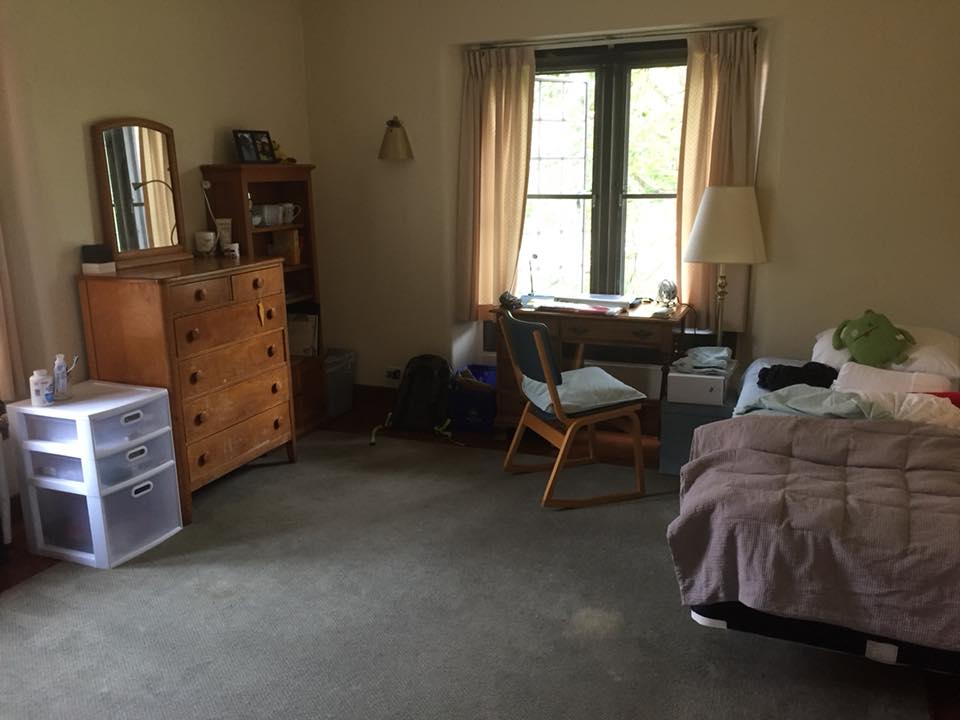
At its worst, I went back and forth from my bed, desk, and class, taking naps when necessary but skipping meals and forgoing social interaction to conserve emotional energy. I thought about suicide a lot. I had several plans in mind, and I kept the worst of it from my therapist, fearing that she would force me to go to the hospital. The worst part of that potential event, in my mind, was missing class and falling behind. When I look at photos of myself from this time, I remember how forced it often felt to smile. Even on graduation day, I didn’t look happy; I just looked exhausted.

I hoped that if I could just make it to graduation and go home, I could rest and recover, and my mental health would improve. Instead, the sudden lack of structure combined with my admittedly fragile emotional state made things much worse. I tried – for months, I went diligently to therapy and attempted to pull myself out of my depression, but ultimately slipped back into suicidality. I was hospitalized for over a week, then released on condition that I do a partial hospitalization program for two more weeks.

I don’t know that all of that was caused by the stress of college. I am in my early twenties, when many mental illnesses make their presence known, so it’s possible that my symptoms would have been just as severe had I not gone to college at all. But I suspect that my perfectionism surrounding academics and the pressure I put on myself to succeed made an already risky situation worse.

When I can find compassion for myself these days, it makes me sad that I treated myself so poorly. Yes, I got a good GPA, but at what cost? To imagine anyone else doing what I did – valuing their academic success over their own life – is unbelievably sad. There is no grade that matters more than your wellbeing. I’m not exactly sure how my perspective was so narrow for so long. I knew that I could have taken a semester off – my mom suggested it, once – but I was vehemently opposed. I didn’t want to fall behind my peers. The thought of returning to campus without my friends made me anxious, and it left a vaguely shameful feeling in my chest. To take a semester off felt like a failure to me. That was my perfectionism speaking. There is absolutely nothing wrong or bad about taking a semester off. Or two. Or however many you need.

If I could go back, I would do things differently. I did love my majors – I would keep those. In fact, finding subjects that sparked my curiosity was a positive force on my mental health. Knowing that I had something to use in a career gave me a sliver of hope that was enough to let me imagine a future in which I wasn’t depressed. But two majors in four years is hard. I took a lot of credits each semester, and there was no way to avoid pairing difficult classes together. If I could go back, I would do it all more slowly. I’d take fewer credits per semester and accept that it would take me longer than four years. I’d also apply for accommodations. Beyond the assistance of longer exam times, it would have been nice to have my professors in the loop about my depression.

A lot of my perfectionism surrounding academics existed long before college, but there is something to be said for the culture that permeates my alma mater. There’s a sort of competitiveness among perfectionistic students for who can push themselves the hardest. If you say you’re stressed, people ask you how many credits you’re taking, as if your stress doesn’t count unless your course load is full. It’s not stated outright, but the general atmosphere is one of suffering-related humblebragging. If you’re stressed, it means you’re pushing yourself. If you’re not stressed, you might be slacking. Again – I love my university, and I’m proud to have gotten my degree there. People are motivated to achieve at Michigan, which is wonderful. That said, the limitless pressure to succeed can be dangerous.

Suicide is the second-leading cause of death for college-age people in the US, and its rate is increasing. Around 1,000 college students die by suicide each year. When young people are off at college, often away from home for the first time, they’re vulnerable to the prevailing ideas. Submerged in a competitive culture, it’s easy for students to believe that their future will be ruined by a bad grade. And I get it – students have plans beyond college that require top-notch GPAs. For a while, I thought that veterinary school would be my next step. Instead, my plans seemed to come to a screeching halt after college. Depression has altered my life enormously. If I could talk to sophomore me, I’d say, “I haven’t gone to grad school, but my life is not ruined.” Through the waves of depression, I catch glimpses of what really matters, and none of it is a letter grade or a GPA. I think I have a healthier perspective on life and academics now.

I sincerely believe that most of my depression is biochemical. That said, I’m pretty sure my college experience sped up the decline in my mental health significantly. Again – I don’t regret going to college, but I do think that if I had taken time to consider my innate traits, really thought about the stresses of being a highly introverted person at a university with more than 40,000 students, things might be different for me today. I did my best at the time, but I wish that I had honored those parts of myself; the quiet parts, the parts that need calm and routine, which were frazzled and burnt out after four years of high pressure. My sensory differences made the pace of life I’d chosen at university unsustainable, and by the time I graduated, I had an almost constant low level of vertigo, loud noises made me cry, and lots of movement in my visual field (like in a busy dining hall or a crowded hallway) made me disoriented.

I would encourage anyone who is pursuing a degree now or considering doing so to remember that it’s your education and your life. Everyone goes at their own pace, and what anyone else thinks about your pace doesn’t matter. Furthermore, what you think other people are thinking is likely more harsh than the reality. Taking care of yourself and your mental health is not always easy, and going against the grain takes courage. Think about the resources and environments that would support you and seek them out. Make friends who understand you, and above all, put your health first.

(There were parts of college that I really loved. The friends I made and the things I learned were priceless. Football games, waffles, fancy events at my dorm, exploring campus – there are tons of great things about college! I didn’t intend for this post to turn out so dark. It’s all about moderation.)

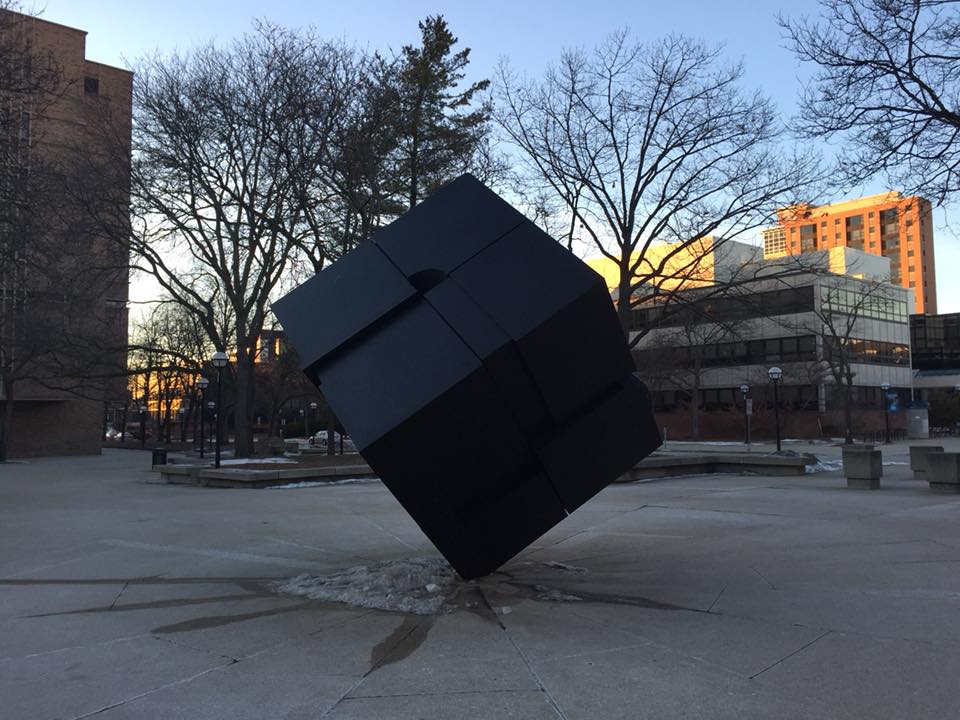
Watching rotund squirrels eat nonspecific trash was always fun, too.

top-down-view-of-pill-bottle-with-tex-hold-tab-down-turn-with-arrows

Changing My Depression Medication

It’s come to my attention that my depression medication doesn’t seem to be doing much. IV ketamine infusions are also doing less than they used to, unless it’s the case they they’re doing just as much but my brain is kicking its level of stubbornness up a few notches. Who’s to say what the cause is? Maybe it’s just the curse of 2020.

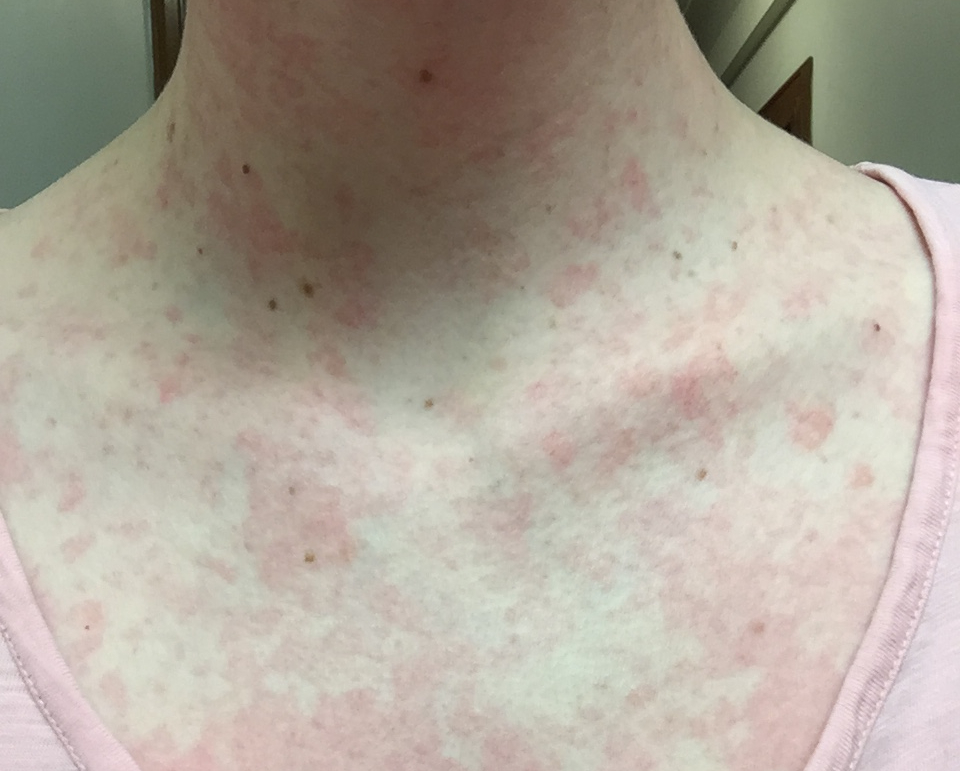
I got sidetracked. The point of this post is this: I’m about to start taking Wellbutrin, a medication that I tried a few years ago and really liked. I was only on it for about a week, though, because I promptly broke out in a blotchy rash that spread from my chest, up my neck, and all over my face.

close-up-of-woman's-collarbone-area-with-blotchy-red-rash
(the rash of 2018)

It seemed like a cruel joke played on me by the universe. The only oral antidepressant I’d ever tried that made a sudden, discernable difference in my depression is one that I’m allergic to.

Cut to now – I’m once again finding myself floundering in the soupy mashed potatoes of my depressed brain, looking for some way to change things. I’ve always carried a little bit of disappointment about my failed Wellbutrin trial, especially because I was taking the generic at the time. What if I wouldn’t have a reaction to the brand name version? Would it be stupid to try?

You know those prescription medication commercials that include a disclaimer like “Don’t take [name of drug] if you’re allergic to [name of drug],” and you’re like “Well, DUH?” I am now the person that those disclaimers target. To me, the risk of an allergic reaction is worth the potential benefit of taking Wellbutrin. I think it’s telling that when faced with the possibility of a rash, swelling, even anaphylaxis (unlikely), my reaction is “sign me up.”

I remember being so amazed at how motivated Wellbutrin made me feel. It was the only oral depression medication that’s ever given me that “I didn’t fully realize how depressed I was until I wasn’t” feeling. I was in my last semester of college when I took it. By that point, I had tried several medications and was struggling to get through the last few months before graduation. I was over the moon when I realized that Wellbutrin was working for me. It was SO much easier to get my work done and interact with people, even just for the few days that I was on it. When I got the rash, I stopped taking it abruptly, and the sudden changes did not do good things to my mental health. I had already been utterly overwhelmed by classwork and worn down by the near-constant suicidal thoughts that had plagued me for over a year. I canceled my trip home for spring break because I wanted to be alone, and I reluctantly started yet another combo of meds. I just remember the whole thing being bitterly disappointing. It was like Wellbutrin had swooped in, showed me how much easier everything could be, and then ditched me with the gift of an itchy, burning rash after just a few days.

So, I’ll take the chance of a rash if it means I might feel better. That said, if I let myself get too hopeful and the result is a letdown, I know I would feel incredibly defeated. I’m trying to temper my expectations. If I get a rash or if it doesn’t work, at least I’ll finally know for sure if it’s an option for me. I’ll write an update soon.

Categories

light-and-dark-blue-in-close-up-of-glacial-ice

The Subtleties of Water: The Ketamine Chronicles (Part 27)

I’m always looking up at the sky when the water closes over me. This time, it was cold, and an eggshell-thin layer of ice formed above me while I watched. Gentle waves followed one another, freezing over the previous layer and leaving a frosty texture on the surface. Darkness spread from the periphery of my vision until I strained to see through the last window of light, the only notable image being the shadow of a person standing above me on the ice.

I didn’t put a lot of effort into remembering this IV ketamine infusion. I know there were graceful, disembodied hands dancing amid blue and red lines, swirls, and dots. There was more water – ripples and waves, mostly. There was a pyramid with a circle above it, which turned into a blinding white light. I’m certain that there was a lot more, but it’s faded away from me by now.

Treatment-Resistant Depression

My mental health is declining. I’m not sure why. IV ketamine treatment doesn’t seem to be working as well for me, now. Every day, I have to rate my mood on a ten-point scale. It’s hard to capture how I feel in numbers. Potatoes are easier, but still not quite enough. Honestly, sometimes words themselves seem too limited. How can I describe how I feel?

This morning, I woke up at 4. I got dressed in the cold – same clothes as yesterday – and went to the kitchen for some food. I walked the dog when the sun came up, but we came home quickly because of the sharp, cold air. My eyes feel heavy. Not the lids – the actual eyeballs; they sit heavy in their sockets, like wet marbles or enormous caviar. I wonder, if I tip my head forward, will they fall out? When my depression is worsening, I often notice this feeling in my face. Everything is heavy and hard to move, and I’m sure my expression is grim. I think the clinical term is RDF – resting depression face. At least my pandemic mask covers most of it.

Maybe the person above me on the ice in my ketamine dream is me. I’m on thin ice. Skating across a just-frozen lake in my wool socks at 4am. Someone else is waiting beneath the surface, straining to see through the darkness. Is she also me?

__________

Why Do I See Water in My Ketamine Treatments?

My recent IV ketamine infusions have all featured water, and I’m often drowning in it. It’s not scary – it’s peaceful. It’s soothing. I’ve never stayed up by the surface before; always finding myself sinking into the dark, quiet depths. But this time, I was floating – pressed against the underside of the ice, trying to see through it to the person on the other side. I was curious about this person, but the darkness closed in before I could begin to unravel what was happening, and then I found myself in a different scene, which I do not remember.

I’m fascinated by this recurring theme of water, especially because in my regular life, I’m not a big fan of it.

An Early Trauma

I have sensory processing disorder, and as a young child, I flat-out refused to swim. I was overwhelmed to the point of tears by the splashing, the echoes in the pool, the temperature change from air to water, and most of all, the fear of people touching me. I eventually came around to the idea, but never enough to take lessons. So, having never properly learned how to swim, I nearly drowned at a friend’s birthday party when I was 8.

I remember being uncomfortable going into the deep end, but my friend was insistent. I lost my grip on the side of the pool and began to sink. When people say that drowning is not a dramatic event – there’s no splashing or screaming – they’re right. My head tilted back instinctively as I went under, and I could see my hand, extended above me, slip under as well while the rest of my limbs flailed uselessly underwater. A panicked hopelessness overtook me as I choked on chlorinated pool water. Then, my friend’s hand broke the surface, reached down, and grabbed my wrist.

I have never felt relaxed on or in water, and it’s not just the near-drowning that explains it. The same sensitivities that kept me from participating in swimming lessons have persisted into my adulthood. I dislike the unsteadiness of water, the unpredictability of how it will splash, the feeling of water on my face.

And yet, when I’m reclined in my doctor’s office, ketamine moving into my bloodstream, visions of water are soothing. I can feel the cool, constant pressure of being underwater without the anxiety or the sensory overload. I can feel myself standing on the deck of a boat, watching the foamy water beneath me leap forward and recede, and I feel peaceful. I’ve seen whirlpools, rivers, melting glaciers, and the unbelievable enormity of oceans. It’s a strange experience to suddenly realize what water might be like for other people, as those feelings are foreign to me in my waking life.

Open ocean near the surface with light filtering down from above.
Photo by Cristian Palmer on Unsplash

I feel as though, unhampered by the symptoms of my sensory processing disorder, I can connect to a larger, evolutionary interest in water that I am unable to find under normal circumstances. Humans have been fascinated with water for millennia. In fact, some evolutionary anthropologists believe that nearness to water supported the development of large brains – that we are, in part, the heritage of small, coastal communities of early humans whose lives revolved around the movement of water and the food within it. To this day, many island and coastal cultures retain great reverence for the ocean. When we gaze out upon a watery horizon, it is difficult to not be awed by the vastness before us. In my eye, to find our place in relation to bodies of water is akin to our struggle to find our place in the vastness of space. Questions of identity and survival are found in the depths, and I believe we carry the answers within ourselves.

Lessons from IV Ketamine Treatment for Depression

My depression is a constant in my life. It is all-encompassing, lonely, and feels like drowning. I’m not one to find meaning in every dream, but the images of water that I experience during IV ketamine treatments have begun to feel profound. What does it mean? Certainly not that I should give in, wave a white flag and let the water crush me. Nor should I wait breathlessly under the ice, squinting as if to look through a frosted pane of glass, uncertain if I’m even above or below. Rather, I believe my visions of water are windows into the nature of the human experience. Perhaps they’re snapshots of how I feel – how depression feels to me. My mind is an ocean, and at times, it’s oppressive. I sink within myself, finding it easier to let the water cradle me as I descend than to keep swimming. At other times, I find comfort in accepting the changing nature of my illness. Like a river flowing downhill, impermanence is unstoppable, and the emotions of being a human move inexorably back and forth. When we crest the top of a wave and begin to fall down the other side, we wait for the next one, just as we take each arriving day. And when you are drowning, reach up. A helping hand may be just about to break the surface.

If you’d like to read more about my experience with ketamine for depression, start from the beginning of The Ketamine Chronicles or visit the archives. Click here for mobile-optimized archives of The Ketamine Chronicles.

hand-touching-pink-flowers-outside

Self-Compassion When Living With Depression

I had a conversation the other day about the balance between recognizing that treatment-resistant depression is chronic and pushing oneself to do difficult-but-healthy things.

It started with a question: What advice would you give someone about dealing with depression?

Personally, I find it helpful to remind myself that depression gets in the way of my ability to think clearly. Depression brain is a liar. It makes me think that I’m a stupid, horrible burden and that everyone would be better off without me, even if they say otherwise. It makes me think that feelings are forever and that I must be too weak to effectively change myself.

It’s really hard to change the way you think, especially when depression is sitting on you, yelling into your ear about how terrible you are. Sometimes it helps to remember that I have a disorder that skews my thinking. But that doesn’t mean that I shouldn’t push myself. It’s a difficult balance; to recognize that my symptoms explain my behavior, but they aren’t the be-all-end-all of what I do.

You know how frustrating it is when a well-intentioned but misinformed person tells you that if you’d just try barefoot ultra-marathon running or hot goat yoga at 5 am, you wouldn’t be depressed? That person is inside my brain all the time, and because I know that it’s unreasonable to expect myself to just *poof* try harder and not be depressed, I’ve always struggled to write something on this subject. I don’t want it to come across in the same way that my brain talks to me, because I would never, ever talk to anyone about their depression in same the way I think about my own. My brain says stuff like this:

“Yeah, you feel pretty crappy today, and you know why? Because you only ran one mile. Maybe if you’d run THREE, you’d feel better. You only have yourself to blame.”

The example that I’d like to set as a person who writes about mental illness is something more like this:

“I still feel crappy, even though I went for a run. I’m glad I did it, though, because I know that it’s helpful – even if it doesn’t feel like it.”

That kind of thinking is really hard to implement, and I won’t lie – I’m pretty far from doing it naturally. It’s hard in part because we know that things like exercise, being outside, and social connection are helpful for depression. How much pressure should I put on myself? How much am I capable of when I’m depressed? Should I be expecting these things to “fix” me? Whenever I ask myself these questions and get bogged down in the details of how much I’m doing, my plans for doing more, why I should be doing x, y, z, I miss the obvious point.

I’m mean to myself.

I’m trying to convince myself that it doesn’t really matter how much I decide to do in miles, minutes, or step-by-step sequences. It only matters that I did a little bit more than I wanted to. It only matters that I did something because it’s good for me, not because I bullied myself into it. It’s good to set goals (or clams, if you’re being fancy) for yourself, and it’s fine to go at a pace that works for you under your current circumstances. I know that for me, I often fall into the trap of expecting myself to function at the same level that pre-depression me did. Sometimes I worry that if I don’t berate myself enough, I’ll get complacent and stop striving to improve. In reality, I know from experience that the motivation to grow returns naturally when I’m feeling better. It’s tough to believe it, but my first priority should be to treat my depression, and everything else will fall into place.

If you’re hard on yourself for not meeting your own expectations while depressed, I relate. A lot of people relate. After all, feeling bad about yourself is itself a symptom of depression. And to be clear: trying to be nicer to oneself is not advice intended to invalidate that symptom. It’s not to say “you’re doing it wrong, just be nicer to yourself,” it’s that combatting negative self-talk with positivity (or at least positive-tinged neutrality) is a strategy intended to treat that symptom.

I’m not very good at it yet, but I’ll keep working on it. Gently.

abstract-galaxy-particle-picture-with-red-and-blue-lights-against-black-background

The Taste of Music: The Ketamine Chronicles (Part 26)

The last couple of weeks have been hard for me when it comes to depression. I recently wrote about how IV ketamine can make me feel like I’ve been launched out of a metaphorical cannon. The last time, it was like a little pbthpbpthh – an underwhelming puff that was more like being propelled by air coming out of an untied balloon than like being launched out of a cannon. I don’t remember much at all of the previous ketamine infusion, so I didn’t push myself to write about it. I thought it would likely be boring, anyway.

The Ups and Downs of Ketamine and Depression

I can’t say for sure why that IV ketamine treatment was less effective than others. It could be hormones. It could be the changing seasons. It could be that I haven’t been exercising much. Maybe it’s all three. Whatever the reason(s), I’ve been front seat on the struggle bus – sleeping in my clothes multiple nights in a row and then wearing them the next day, getting my work done late or barely on time, napping by mid-morning. I find myself paring down my daily activities. Prioritizing one thing means getting rid of another thing, as the energy needed to do both is more than I have. In some ways, I’ve been getting along ok – my mood has been dipping here and there. But overall, that hasn’t been terrible. The hardest part is honestly the lack of energy.

Dissociation with IV Ketamine for Depression

So, I’m hoping that this week’s ketamine infusion can knock me back into better functioning. One change this time around is that I decided to stop using scopolamine for my infusions. I used it the last time and it resulted in a very…buried experience. I’m not sure how else to describe it. It was sort of smothering – as though I had sunk far, far below the surface of the Earth, and there was nothing I could do to get back to the room.

Every once in a while, from leagues above me, I’d hear someone tell me to take a deep breath – the pulse oximeter on my finger had alerted them to the fact that I had stopped breathing. And I found that often, I just did not care. I felt like my body was just a suit I was wearing, and maintaining it was proving to be a lot of work. I could feel that my heart rate was slowing and my lungs were waiting for me to inhale, but it didn’t feel like it was innately me, and so I was content to just watch it happen. In fact, when I was told to breathe in, my recollection is that I felt a little annoyed at having to exert the effort. A couple of times, I tried to ignore it, but the voice was persistent, so I relented.

My experience with scopolamine is not entirely strange, I don’t think. Apparently, it can add to the dissociation that ketamine produces, which explains my sense that my body was not really a part of me. My description of that infusion is a little unsettling in hindsight, but in the moment, I don’t remember being afraid or anxious at all. Actually, the whole infusion was very relaxing, minus the slight annoyance of having to breathe. You know, those fragile humans, needing oxygen. Geez.

Acceptance and Flow in Depression Treatment with Ketamine

The most notable aspect of this infusion in my memory is that at some point, my music stopped. I’ve never had an infusion in which there was no music, so when I noticed its absence, I was mildly worried about what it would be like without it. Not worried enough to move or to say something, of course. That would be too much work. So I just waited, accepting that it wasn’t what I had planned for, but that was okay.

Noise in the IV Ketamine Clinic

The sounds of the room, which are often prominent at the beginning of my infusions but fade away as time goes on, were extremely loud. I was most aware of the infusion pump next to me, which emitted constant mechanical noise. My mother was typing in the corner, and every once in a while, I noticed the sounds of papers shuffling or a door closing. I remember thinking that I felt like a pillar in a sandstorm, tiny particles being whipped into motion around me. The sand was the noise, and as it bounced off me and flew around the room, it started to sound a little like music. Rhythmic whirring from the machine combined with staccato typing somehow resulted in organic, landscape-based images in my mind. There were lots of shades of brown, but that’s pretty much all I can remember.

Brief Synesthesia?

Another first for me this time was that I seem to have experienced synesthesia. To some degree, I think I always come close to it during ketamine infusions – the way I associate music with colors and images is not something I’m able to do when lucid. This time, though, I could taste sound. I can’t quite conjure it up enough in my memory to understand what it was like, but I do remember it dawning on me that tasting sounds is not something people usually do.

When the noise in the room morphed into strange music, I became distinctly aware of the inside of my mouth. My tongue felt oddly small in the cavernous space behind my teeth, and the general feeling was of something… earthy. There is absolutely no way I can accurately compare the experience to anything, especially because I don’t remember it clearly enough. As I wrote in my hasty, post-infusion notes, “I can taste music. Indescribable.”

Images from My Subconscious

The rest of the ketamine infusion is jumbled in my memory, but I’m pretty sure the other images I can remember were from the beginning, when the music was still playing. I remember watching dogs eating something, and then their faces stretched and stretched until they turned into alligators. Eventually, an alligator head kept on stretching until it turned into the tendons of a human hand, which stretched until they were the layers of a landscape. Somehow, my brain went from dogs to alligators to tendons to landscape. I could explain the associations from my recent thoughts and experiences, but it would be convoluted. Suffice it to say, all of the elements of that bizarre sequence somehow make sense to me. Brains are fascinating.

Seeing Improvement in Depression Symptoms

Given my general lack of response to the previous IV ketamine treatment, we tried adding magnesium to this most recent one. It’s been two days now since my infusion, and I am definitely feeling a bit better. I woke up this morning, put on clean clothes, washed my face, and did three laps at the dog park instead of one. Improvement is improvement, no matter how small!

If you’d like to read more about my experience with ketamine for depression, start from the beginning of The Ketamine Chronicles or visit the archives. Click here for mobile-optimized archives of The Ketamine Chronicles.

small-songbird-sitting-on-white-surface-with-white-background

Working on Depression

Sometimes I feel like a bird that can’t figure out how to fly. I periodically get launched out of a cannon (in this metaphor, that’s due to IV ketamine treatment for depression), then flap and flap to no effect. I’m trying to make progress, but gravity is always there. Eventually, I sink lower and lower, just exhausting myself with all that flapping.

That’s how it feels, but I don’t think that’s entirely accurate. Yeah, ketamine wears off eventually, and yeah, my brain has a biochemical problem that means I can’t fix depression just by flapping. But the flapping is doing something. All that work I put into therapy and maintaining a routine and getting exercise must be functioning in tandem with the IV ketamine to push my little bird wings just a smidge farther.

I know this because my mood still dips pretty low sometimes, but on the whole, I’m in a better place than I was a few months ago. Perhaps it’s that I bounce back faster, now. Or maybe it’s just knowing that it won’t last forever.

And now, being able to look back and see that I’m flippity flapping on my own a little makes it just a little bit easier to continue. Chipping away at something day by day is tedious and frustrating, but all of that work adds up. If you can look back at where you were a little while ago, it helps to notice that in working on depression, you have made progress, even if it’s just in the personal growth or a skill you’ve learned or the support you’ve gotten.

Keep flapping, everybody.

neon-sign-speech-bubble-shape

Therapy Code Words

Unfortunately for me and my therapist, my ability to write words does not always translate well to being able to speak them. I need time to think through an entire thought before I speak it, and I struggle sometimes to get the words out when the topic is something challenging. And not just for sensitive topics like self-harm or suicide, but even for topics like life goals.

In fact, the word “goals” makes my stomach twist. I feel so much internal pressure when it comes to my ambitions that any discussion of the topic overwhelms me. It’s as if I know that once I start really acting to reach my goals, I’ll have to go all out because I don’t know how to not do something 100%. And that’s overwhelming. And unrealistic. So I try to avoid talking about it or thinking about it beyond my daily sense of guilt for not “doing more.”

It goes without saying that I don’t like this. Goals are important, and they should be exciting, not something you dread. Yes, they often take hard work to reach, but I think the balance of work to reward should be worth it. I don’t want to put in work just to alleviate an unhealthy internal pressure; I’d rather work for something because I want the excitement and fun and pride of achieving the thing. Depression makes this hard. Excitement and fun and pride are not feelings that depression wants around. So, I find myself terrified of adding more to my plate and pursuing my goals, and terrified that I’ll do nothing and fall even more behind my self-imposed schedule. Trapped in between the two, “goals” is a scary word.

Here’s where the code word comes in. Instead of “goals,” my therapist and I talk about “clams.”

It’s groundbreaking, I know.

There’s no significance to clams, it was just the first word my therapist thought of, but it stuck. Much like the Potato Scale of Depression is useful in its humor, “clams” are somehow easier to talk about because of the silliness. It takes away the gravity of having a discussion about goals and replaces it with a lighthearted conversation about a bivalve often eaten with a lemon-butter sauce.

And this is how I want my goals to be. Not so scary. Not so enormous. Just little steps to bigger results, like shucking one clam at a time to make a chowder.

Photo: Andy Castille – @kikini