Being anxious and depressed at the same time feels like a mental contradiction. I feel mismatched, like my head and my body are going at different speeds. Many times during a day, depression tells me I’d like to sit and do nothing, but my body impolitely declines that option. I feel an almost constant low level of adrenaline, like someone jumps out of a closet and startles me 15 times a day.
Still, for me, this level of anxiety is vastly preferable to the hibernation I was doing before Wellbutrin. At least now, I have more motivation to stay out of bed and put my energy towards something productive. I feel more like a regular human who can get stuff done, as long as I can focus long enough to do it. I’ve decided to call this combination of symptoms “Depression on Fast-Forward”. If these were potatoes, they’d be hot potatoes, never in one hand for very long. Sometimes, they fall on the floor and split open, to later be relegated to the bin.
Distractions are helpful, as I wrote in my last post. My mom and I recently started cross-country skiing again, and wow, does it really shake your confidence in being proficient at standing upright. I fell five times on our first outing, and three times on our second outing, so I’m really improving on my wobbly wipeout score. That’s pretty good, I’d say.
I just recently figured out yet more issues with my pharmacy, so I’ll be able to try a beta blocker to help with the jitters. An added benefit of this is that it may help reduce my essential tremor. Upon hearing the news of my upcoming fine motor skills, my mom said, “You could do eye surgery!” And I said, “That is what’s holding me back from my love of eyeball operations.” My tremor has worsened in recent years, probably due to the lithium I take for depression, which is totally worth it, but still annoying. Sometimes, if I wake up very suddenly, I find my hands shaking so badly that I can’t unlock my phone. It’s somewhat disturbing, but again- worth it.
Depression on Fast-Forward is troublesome. I’m more active, but most of it is hollow. The bigger things I’m doing, like skiing with my mom, feel meaningful, but the rest of my time…not so much. Well, except for all of the puppies I’ve met lately. They were all amazingly, infectiously joyous creatures. That’s the solution – I need more puppies.
When my depression lifts, I often suffer from a kind of aimless anxiety that seems to have no discernable cause. Unfortunately, I also get anxious about how long I’ve been putting off large goals. Double anxiety. Having recently started taking Wellbutrin, I’m also dealing with the jitters. Triple anxiety. Luckily, feeling less depressed gives me newfound motivation and energy. I’ve been putting that motivation to use in an effort to calm my anxiety.
I’ve been writing more, for one thing. I’m much more motivated to be creative when my mood is ok. And, maybe the cortisol increases my typing speed. Gotta get that words per minute rate up, right?
I’ve also been renewing my dog training efforts. I work with Stella on our daily walks to teach her polite leash walking skills. I generally let her wander the length of the leash and sniff around. She knows not to pull (too much), but I’d like her to walk at my side on command. We’re definitely making progress. In a silly-but-functional goal, I’m also attempting to train her to open her mouth on command and let me brush her teeth without her writhing around like an unearthed worm. It’s ambitious, but hey – they teach hippos at the zoo to do that. Surely, Stella is smarter than a hippo.
Tackling tasks that I’m already comfortable with, like walking the dog or writing something, is one thing. It’s a great way to distract myself from anxiety that I can’t address at the source. But tackling the anxiety that comes from avoiding something is different. When I’m anxious about something large – something that I perceive as a big step – I’m paralyzed. If you struggle with procrastination, you might relate to this. The thing is scary, so you avoid the thing, which makes you anxious because you haven’t done the thing yet, but the cycle continues. The more you avoid it, the bigger and scarier it becomes in your mind.
These are the two sides to the “big step anxiety” coin for me. There’s the anxiety of doing the thing, and the anxiety of knowing I’m putting it off. Usually, I remain inactive until the latter anxiety outweighs the former. At that point, I’m forced to examine the steps I’ll need to take in order to alleviate the discomfort of procrastination. I have this problem where I jump ahead to the end goal and get overwhelmed by all the steps in between. Even though I know that I can break it down and do a little at a time, it feels like a big commitment to get started because I know that I’ll have to do all of the hard parts at some point.
I have a lot to work on in this department, so I’m obviously not the picture of success (yet). What I do know is that in the same way that purposeful action helps me deal with general anxiety, getting started on something I’ve been putting off usually feels better than procrastinating. Having a direction to go in, as long as I can get my motivation past some undetermined threshold, is comforting. I like structure. It helps me organize myself and not do that thing where I skip to the end and get overwhelmed. (It helps a little. I always do that thing).
By procrastinating, you’re suffering both sides of the anxiety coin. Rationally, you can save yourself some stress by chipping away at unpleasant tasks bit by bit, right away. Too bad people are not always rational, and avoiding immediate pain is more attractive than choosing the benefit of the long view. So in essence, fight human nature, beat back entropy, and go conquer your goals! Boom. Fixed procrastination.
Growing up, I was always motivated by grades. I liked having that definitive mark to indicate whether I did well or not. Clearly, the beginnings of my perfectionistic tendencies go way back. Even in middle school, I remember carrying around a lot of anxiety about tests and grades. When I got to college, I was excited to be focusing more time on my interests – biology and anthropology – but the pressures of academia and my budding mental health issues wore me down.
Still, I was determined to do well. I had learned that I could earn good grades if I just put in enough work, even in subjects that didn’t come naturally to me. School was what I knew, and I felt tantalizingly close to the finish line. So, when I was diagnosed with major depressive disorder in the middle of my college career, I didn’t slow my progress down. Like many students, I simply forced myself to put my mental and physical health behind academic success.
At its worst, I went back and forth from my bed, desk, and class, taking naps when necessary but skipping meals and forgoing social interaction to conserve emotional energy. I thought about suicide a lot. I had several plans in mind, and I kept the worst of it from my therapist, fearing that she would force me to go to the hospital. The worst part of that potential event, in my mind, was missing class and falling behind. When I look at photos of myself from this time, I remember how forced it often felt to smile. Even on graduation day, I didn’t look happy; I just looked exhausted.
I hoped that if I could just make it to graduation and go home, I could rest and recover, and my mental health would improve. Instead, the sudden lack of structure combined with my admittedly fragile emotional state made things much worse. I tried – for months, I went diligently to therapy and attempted to pull myself out of my depression, but ultimately slipped back into suicidality. I was hospitalized for over a week, then released on condition that I do a partial hospitalization program for two more weeks.
I don’t know that all of that was caused by the stress of college. I am in my early twenties, when many mental illnesses make their presence known, so it’s possible that my symptoms would have been just as severe had I not gone to college at all. But I suspect that my perfectionism surrounding academics and the pressure I put on myself to succeed made an already risky situation worse.
When I can find compassion for myself these days, it makes me sad that I treated myself so poorly. Yes, I got a good GPA, but at what cost? To imagine anyone else doing what I did – valuing their academic success over their own life – is unbelievably sad. There is no grade that matters more than your wellbeing. I’m not exactly sure how my perspective was so narrow for so long. I knew that I could have taken a semester off – my mom suggested it, once – but I was vehemently opposed. I didn’t want to fall behind my peers. The thought of returning to campus without my friends made me anxious, and it left a vaguely shameful feeling in my chest. To take a semester off felt like a failure to me. That was my perfectionism speaking. There is absolutely nothing wrong or bad about taking a semester off. Or two. Or however many you need.
If I could go back, I would do things differently. I did love my majors – I would keep those. In fact, finding subjects that sparked my curiosity was a positive force on my mental health. Knowing that I had something to use in a career gave me a sliver of hope that was enough to let me imagine a future in which I wasn’t depressed. But two majors in four years is hard. I took a lot of credits each semester, and there was no way to avoid pairing difficult classes together. If I could go back, I would do it all more slowly. I’d take fewer credits per semester and accept that it would take me longer than four years. I’d also apply for accommodations. Beyond the assistance of longer exam times, it would have been nice to have my professors in the loop about my depression.
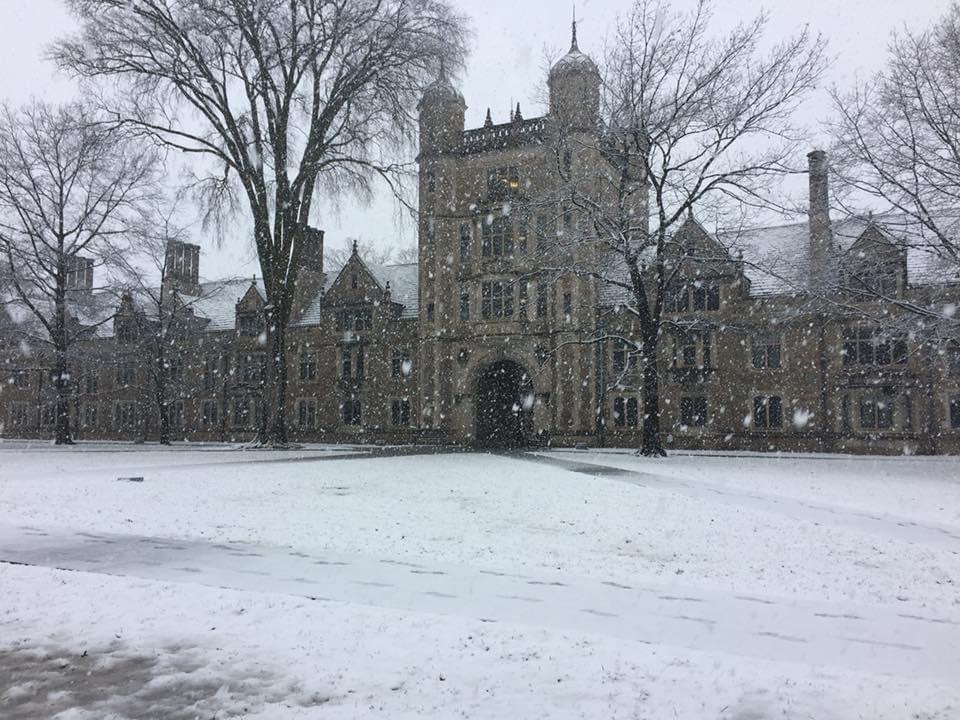
A lot of my perfectionism surrounding academics existed long before college, but there is something to be said for the culture that permeates my alma mater. There’s a sort of competitiveness among perfectionistic students for who can push themselves the hardest. If you say you’re stressed, people ask you how many credits you’re taking, as if your stress doesn’t count unless your course load is full. It’s not stated outright, but the general atmosphere is one of suffering-related humblebragging. If you’re stressed, it means you’re pushing yourself. If you’re not stressed, you might be slacking. Again – I love my university, and I’m proud to have gotten my degree there. People are motivated to achieve at Michigan, which is wonderful. That said, the limitless pressure to succeed can be dangerous.
Suicide is the second-leading cause of death for college-age people in the US, and its rate is increasing. Around 1,000 college students die by suicide each year. When young people are off at college, often away from home for the first time, they’re vulnerable to the prevailing ideas. Submerged in a competitive culture, it’s easy for students to believe that their future will be ruined by a bad grade. And I get it – students have plans beyond college that require top-notch GPAs. For a while, I thought that veterinary school would be my next step. Instead, my plans seemed to come to a screeching halt after college. Depression has altered my life enormously. If I could talk to sophomore me, I’d say, “I haven’t gone to grad school, but my life is not ruined.” Through the waves of depression, I catch glimpses of what really matters, and none of it is a letter grade or a GPA. I think I have a healthier perspective on life and academics now.
I sincerely believe that most of my depression is biochemical. That said, I’m pretty sure my college experience sped up the decline in my mental health significantly. Again – I don’t regret going to college, but I do think that if I had taken time to consider my innate traits, really thought about the stresses of being a highly introverted person at a university with more than 40,000 students, things might be different for me today. I did my best at the time, but I wish that I had honored those parts of myself; the quiet parts, the parts that need calm and routine, which were frazzled and burnt out after four years of high pressure. My sensory differences made the pace of life I’d chosen at university unsustainable, and by the time I graduated, I had an almost constant low level of vertigo, loud noises made me cry, and lots of movement in my visual field (like in a busy dining hall or a crowded hallway) made me disoriented.
I would encourage anyone who is pursuing a degree now or considering doing so to remember that it’s your education and your life. Everyone goes at their own pace, and what anyone else thinks about your pace doesn’t matter. Furthermore, what you think other people are thinking is likely more harsh than the reality. Taking care of yourself and your mental health is not always easy, and going against the grain takes courage. Think about the resources and environments that would support you and seek them out. Make friends who understand you, and above all, put your health first.
(There were parts of college that I really loved. The friends I made and the things I learned were priceless. Football games, waffles, fancy events at my dorm, exploring campus – there are tons of great things about college! I didn’t intend for this post to turn out so dark. It’s all about moderation.)
Watching rotund squirrels eat nonspecific trash was always fun, too.
I hate making phone calls. A strange sort of performance anxiety makes me script it out in my mind and practice over and over with the number dialed in, waiting for me to hit the call button. I never feel ready. Eventually, I get so fed up with myself that I have to just press the button and hope that my verbal skills are adequate for getting me through the act of ordering delivery or making an appointment or whatever it is. And, they are. I’m not actually bad at phone calls. I don’t think I’ve ever had a call that validated my fear – that I’ll just forget how to talk and have to hang up after embarrassing myself with gibberish. Once I’m on the phone with someone, it usually goes smoothly. For whatever reason, the lead-up is the worst part.
I’ve had to call the vet numerous times in my two short years as a dog owner. My dog, Stella, is what you’d call “high-energy.”
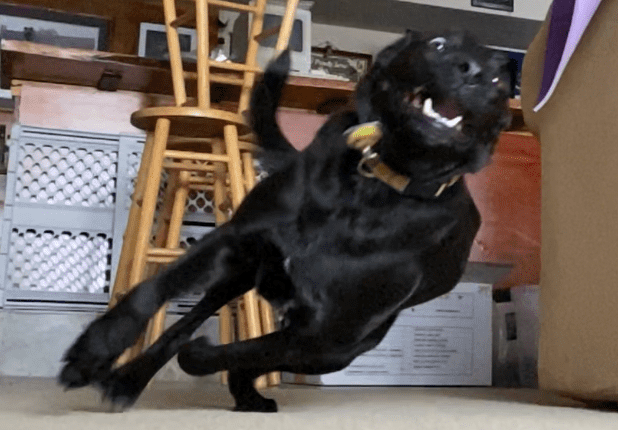
Zoomies around the couch.
She needs activity, either vigorous exercise or a long, meandering “smell outing,” as I call them. (There’s not much walking. It’s mostly smelling.) She gets into a lot of weird, wonderful stuff outside – sometimes she puts it in her mouth, sometimes she rolls on it. She plays fetch with reckless abandon – skidding to a stop or wiping out in a cloud of dust. Stella’s ability to seek out disgusting, physically risky situations is pretty incredible. First, it was giardia. Then, it was an eye infection. Then tapeworms, then another eye infection, kennel cough, a bloody, broken nail, and finally, another eye infection. Actually, this time she had an ulcer on her eye. Yowch. When I woke up and saw her swollen, watery, goop-laden eye, it wasn’t hard to pick up the phone.
I think it’s common to feel braver when you’re doing something for someone else than when doing the same thing for yourself. It’s easier to give up when the only one impacted will be you. When you’re being depended upon, either by volunteering to help or because it’s your responsibility, there’s much less room to waffle. I’ve found that in calling the vet for vaccinations, checkups, eye infections (ugh!) my anxiety is dramatically reduced because I don’t consider it an optional task. When I have to do it, I have to do it; there’s no point in waiting.
I also find an extra boost of authority in advocating for someone else. It’s like I’m calling up the vet and saying “Ah, yes. I’m calling on behalf of my dog. She… doesn’t know how to talk, so I promised to call for her.” And then it’s like I’m not even a part of the phone call. I’m just a proxy for a four-legged creature with a goopy eye.
I think I might start using that when I have to make other phone calls. I’ll just imagine that I’m calling on behalf of my anxious self, who I promised to take care of. “Yes, hello? I’m calling about Gen’s prescriptions. Yeah, she’s overthinking right now and can’t come to the phone.” I’ll be her more courageous counterpart. She needs me, poor thing.
I know people who use this tactic for public speaking – pretend you’re someone else. You’re playing a character. That way, the attention isn’t actually on you, because you’re not really being yourself. It’s an interesting little mental trick that, I’d imagine, takes a lot of commitment to pull off.
For a while, I thought that my anxiety about phone calls was because of the lack of visual social cues. It seemed like the potential for misunderstanding or blundering mistakes was higher when I couldn’t see the person I was talking to. But why, then, wouldn’t texting make me anxious? The written word is where I’m most comfortable, mostly because it gives me time to think through what I want to say and edit before I hit “send.” Maybe that advantage outweighs the anxiety of not being able to see the recipient of my words.
In any case, I hope that Stella chooses to be a little more cautious in the future. But if not, I’m prepared to call the vet for her, seeing as I’ve had plenty of practice.
I can’t believe it’s been a month since I last posted here. I have some in-progress posts that are languishing in my drafts folder, but none of them feel complete enough to be posted. So, to try to break through the stall in my writing, this is a rambling update that will have to be good enough for me.
Look at me, fighting perfectionism one disjointed blog post at a time.
Ketamine
I haven’t written about my most recent ketamine infusions because the propofol makes it harder to find anything about them to share. I think that going into it with the expectation that I won’t remember much makes it harder to grasp whatever snippets do remain. Having the intention to write about an infusion helps me pay attention to my experience; without it, the whole appointment just disappears from my memory in the hours following an infusion.
When I began my treatment with ketamine infusions, I was fascinated by the endless imagery that each infusion created. Every appointment held new associations and interesting scenes. But lately, they all feel the same. Of course, this is okay. The dose of ketamine that I receive would probably be too intense without the propofol, and I suppose I’d rather not remember much than have a terrifying trip. Still, there was something helpful about having something of the experience to hold onto.
I have the sense that I’m more able to remember things when I’m more present in the real world – like how you remember your dreams when you awaken in the middle of them. I wonder if the degree to which you’re aware of your surroundings during a ketamine infusion impacts its efficacy, if at all. Because if it’s not at all, I’d totally ask my doctor to poke me every 15 minutes and ask me what I’m thinking about so that he can write down whatever absurd, hilarious things I say. Although, my level of zonk is usually such that I probably wouldn’t answer.
Birthday
My birthday happened this month, and it caused a lot of anxiety about the future. It’s frustrating to be hindered by my own brain. I commonly hold myself to unrealistic expectations and judge myself harshly for not meeting them. I wanted a different path than the one I’m on now, and I’m having a hard time letting go of that vision. Not that I can’t eventually end up in the same place, but I didn’t see it progressing along such a challenging path. But that’s life, right? I’ve been trying to re-frame my birthday as just another marker of survival. If I can’t get myself to be pleased with my progress in the last year, I can at least be neutral.
Anxiety
Anxiety and depression often go together, and I’ve noticed a pattern in my mental health where I alternate between the two. As I start to come out of depression, the anxiety kicks in and I feel horrified by all of the time I “wasted”. I think about how far behind my expectations I am, and then I get a frantic sense of urgency to kick it into high gear. Unfortunately, I’m also easily overwhelmed and the prospect of “catching up” to my expectations triggers an avalanche of worries and insecurities. Ultimately, whether it’s depression or anxiety that is most immediately at hand, the result is still a barrier to my forward movement.
This flexible connection between depression and anxiety is not black and white. I wouldn’t say that I move completely out of depression and into anxiety – the Venn diagram has more overlap than that. My position within it just shifts into the middle so that I’m simultaneously slow, tired, and occasionally hopeless while also filling up with anxiety saturated with heavy judgement. Fun times.
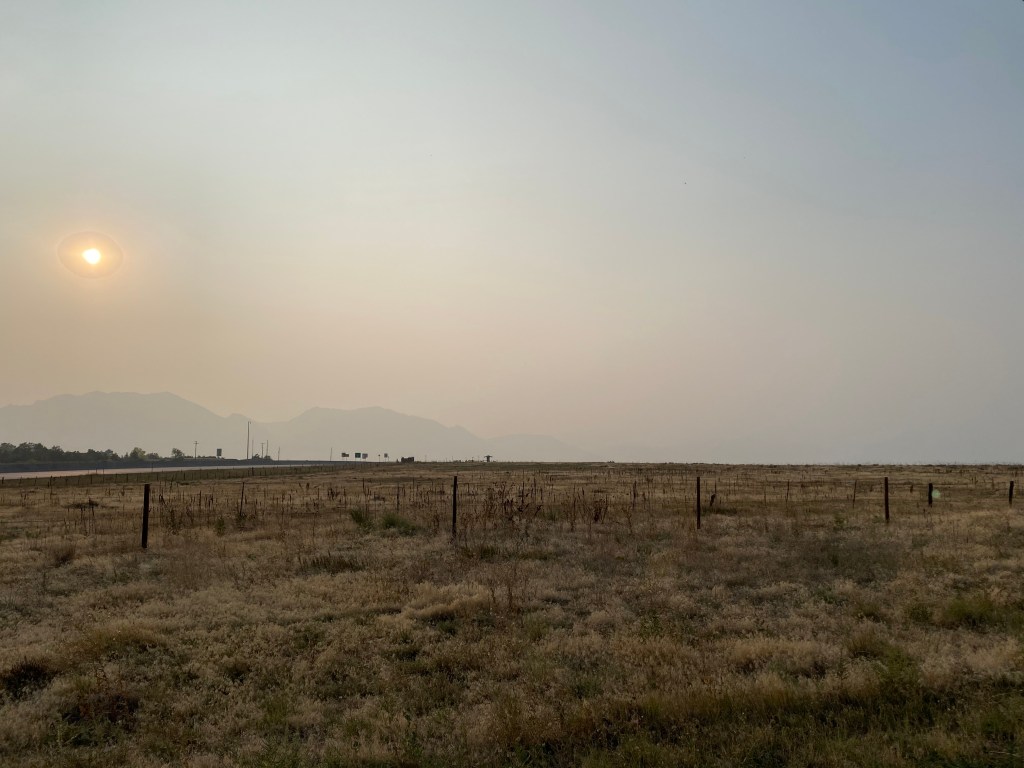
At least the anxiety pushes me to do more than I otherwise would. I would rather be motivated by the reward of doing the thing rather than the fear of not doing the thing, but I also prefer being motivated at all over not at all (if that makes sense). I’ve been trying to run again, and have been somewhat successful in the last couple of weeks. The wildfire smoke in Colorado has intermittently lifted and returned, so I don’t always get clear air, but I figure the benefit to my mental health probably outweighs the damage.
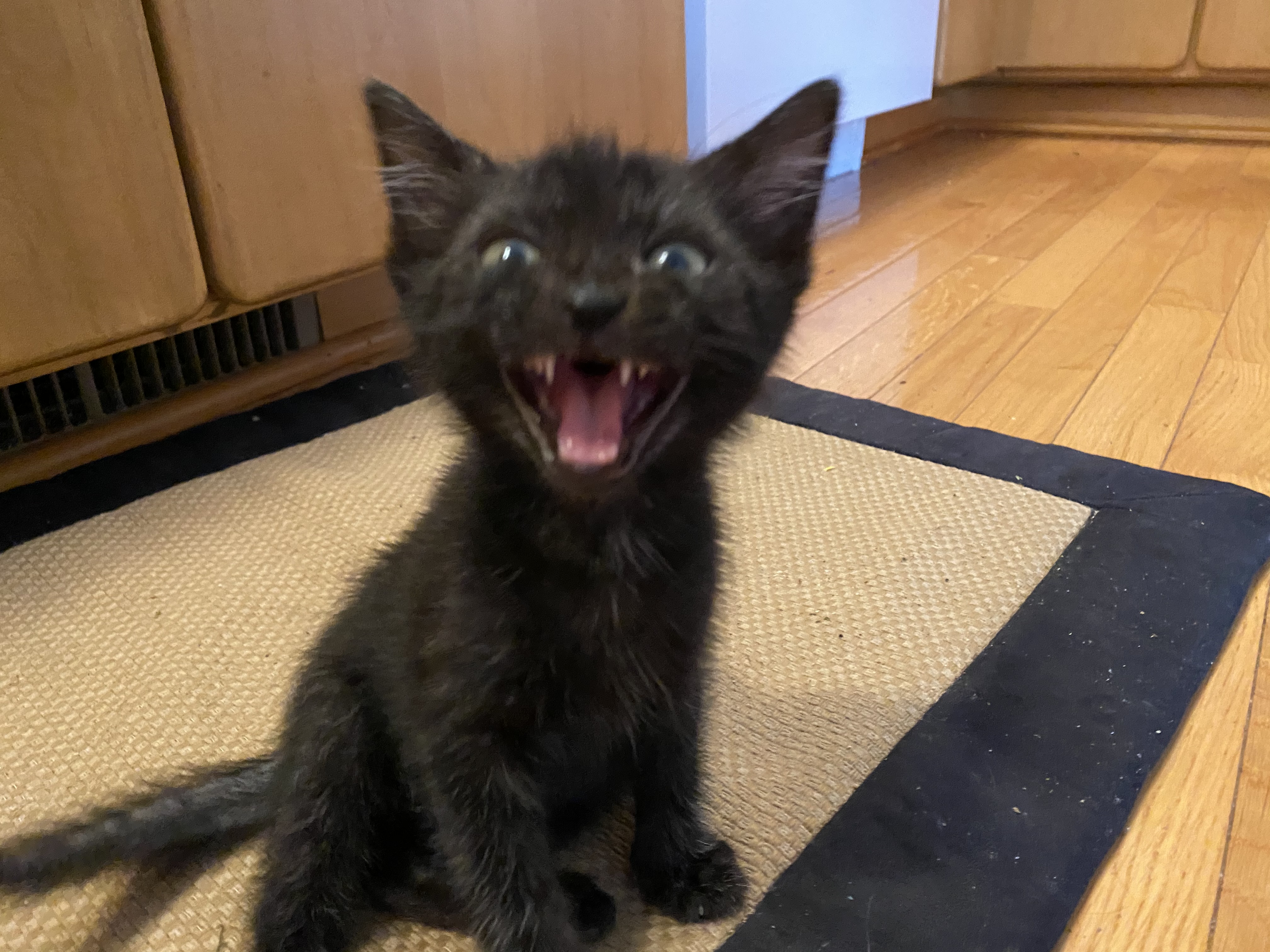
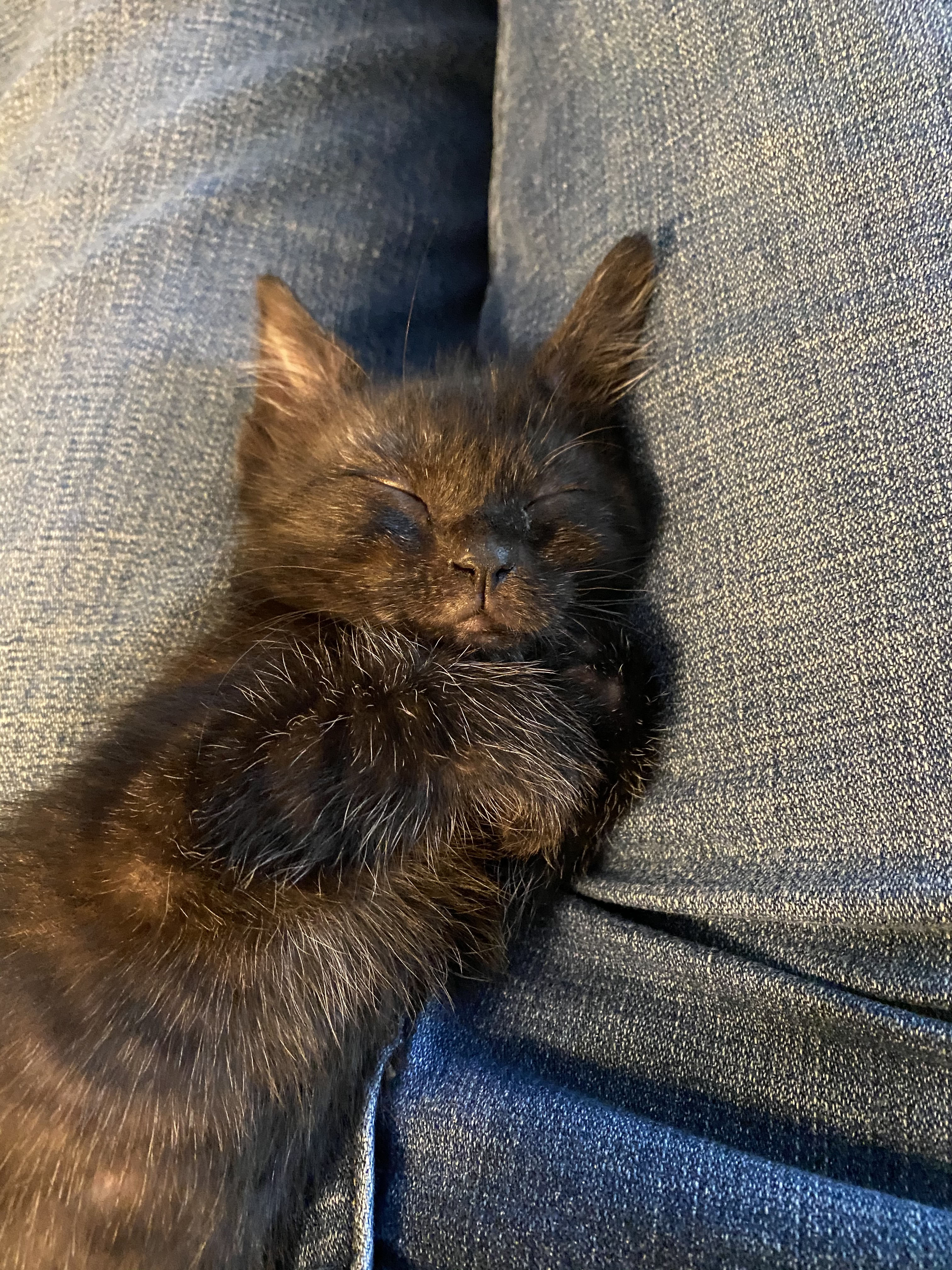
This is kind of a rambling post, but again, I can’t seem to write anything in this context that seems worthy of posting. So, this will have to do. In other news, this is not my kitten, but look at how cute she is.
We clambered into the car, half of the backseat piled with our stuff so that the dog could have the back. We’re all isolated these days, and since we were able and the infection data in the states we’d be in looked ok, we got on the interstate for a family visit (with careful precautions). Two months after the passing of my grandfather from COVID-19, the family was feeling the distance. We made it in 14 hours, a new record for the journey we’ve made dozens of times.
I’ve always gotten motion sickness in cars, so road trips can be a boring affair for me. Hour after hour, I look out the window, listen to music, and let the movement of the car lull me into a drowsy stupor. As a child on this trip, I would fall asleep for a while and wake to the car slowing down as we took an exit to a gas station or a rest stop. As an adult, I find it hard to disengage from the road; I’m always paying attention to the other cars and looking out for danger in our lane.
Traveling during a pandemic made us uneasy. We stopped as little as possible, only getting off the highway for gas and careful bathroom breaks. Few people wore masks, and we got odd looks and a wide berth on our way through the doors to the little convenience store in Nebraska. In Iowa, we took a side door past families eating at outdoor picnic tables, used the facilities, and beelined it back to the car. Illinois was busier, and by then we were exhausted. Despite spending the entire time sitting, long road trips are remarkably draining.
We left home at 5 A.M. and arrived at our destination at 8 P.M. After unloading the car, supervising Stella’s obligatory investigation of all smells contained in the house, and eating some real food, we each turned in for the night.
Coming from semi-arid Colorado, I’m unaccustomed to the humidity. I was instantly too hot under the blankets. After I threw off the covers, I tried to relax and put my sweaty discomfort out of my mind. When I closed my eyes, I felt the world moving beneath me — gently but unpredictably. I’ve had mild vertigo before. Boats, amusement park rides, and treadmills all produce a similiar feeling of unsteadiness for me. This, however, did not subside as my previous spells have tended to do. Instead, it only became more intense. I sat up and tried to take deep breaths through the rising nausea. The room was jostling around me, and I felt very high up on my bed. I slid to the floor and started to panic; it was only getting worse, and at this point, I didn’t think I could get up without falling over. Realizing there was no trash can in my room, I decided that I might have to throw up in the dog bowl. (Thankfully, that was avoided.)
In an attempt to convince my brain that my body was stationary, I lay flat on the floor, pressing my palms and heels against the hard surface. Truly panicking now, I took gasping breaths and tried to keep my gaze locked on something still. It was not working. I crawled to the wall and sat with my back pressed against it, crying, shaking, and trying to get my breathing under control. I felt like I was in a rickety wagon, speeding along a track while bumping and swaying dramatically. Even when sitting completely still and looking only at one point, the world around me continued to move.
I don’t know how long it took — I’m sure it felt like longer than it was — but the panic subsided and I eventually felt capable of making it downstairs to the kitchen. I sat at the table and looked at a spot on the tablecloth for over an hour. Slowly, the vertigo improved. Moving my head as little as possible, I got up to get a snack, hoping it would settle my stomach. I shuffled two small steps forward, then stopped to wait for things to slow down, then repeated as I moved through the kitchen and back to the table with some crackers.
Part of the anxiety came from the overwhelming disorientation, which then produced more anxiety because I instantly thought “how will I get home?” Sitting in a car for 14 hours created horrific vertigo and a subsequent panic attack, so the thought of doing the same thing a week later worried me.
Thankfully, our trip home was uneventful. I took Dramamine and we made more lengthy stops. I also hogged the front seat for part of the drive. The vertigo I noticed upon getting home was much less intense and didn’t stop me from swiftly falling asleep. Human beings are not well-suited to spending an entire day in a moving vehicle, but it was more than worth it to see family. Even with the masks, the social distance, and the little Lysol wipes wrapped around the serving utensils, we managed to fully enjoy our time together.
Yesterday, my city declared a local disaster emergency. A growing number of presumptive cases of COVID-19 in my county have led officials to close all city facilities. This has given me pause when it comes to the complexities of COVID-19 and anxiety.
I was diagnosed with obsessive-compulsive disorder when I was about 11, and I dealt with many different obsessions over the years. Perhaps the longest-lasting obsession I had revolved around contamination and germs. For the last several years, I’ve been blessedly free of OCD, and when an old obsession pokes its head out, I’m fairly quick to oppose it by doing an exposure. Since the start of the media coverage of COVID-19 in Wuhan, I actively tried not to let it worry me too much. I could feel the pull of anxiety, coaxing me into watching the news coverage and letting it take over my life. Of course, I stayed informed but did my best to not obsess.
Now, my own city is seeing dramatic effects of the virus, both in increasing cases and in the social results of widespread, repetitive media coverage. Many of our city facilities were closed several days ago, and our city council has decided today to close them all. This afternoon, I finally made the trip to my pharmacy, located in a grocery store, to pick up my medications. The sight of so many empty shelves was unnerving. The only fresh vegetable remaining was lettuce. The bread aisle was sparsely populated with hamburger buns and a few loaves of whole wheat. A man asked the pharmacist where the thermometers were and was told there were none left.
I bought my items and went home, then washed my hands several times between unloading groceries, putting them away, and cleaning the counter they sat on. I’ve been cleaning my phone case, our door handles, and even my sunglasses after touching them while out. Am I simply being cautious, or have I crossed the line into compulsions?
For people with anxiety disorders, dealing with COVID-19 and anxiety during the pandemic puts them in a confusing position. People are being encouraged to be extra careful about handwashing and touching potentially dirty items. Events have been canceled and gatherings are recommended to be limited, making it easy to justify complete isolation due to anxiety. So when the behaviors that normally indicate a disorder are socially sanctioned, what do you do?
I can tell that going to the pharmacy triggered something, and where before I was simply careful, I’m now afraid of things in my own house because they came from outside, and I haven’t cleaned them. This alarms me because it’s exactly how I used to feel in the grips of contamination OCD. It’s overwhelming to suddenly feel like nothing around you is safe to touch.
This coronavirus could live on surfaces for two to three days, so maybe constant cleaning and disinfecting are completely warranted. I imagine many people are feeling this despite never experiencing feelings like it before. Nobody really knows how much is too much, and this is exactly why OCD is so tricky. In non-pandemic times, contamination-focused OCD is fed by a seed of doubt (indeed, every kind of OCD is fed by doubt). It can feel shameful because you know that your compulsions are irrational. Now, it’s unclear what rises to the level of irrationality. Maybe the compulsions I usually try to avoid are precisely what I should be doing.
There is no blueprint for handling COVID-19 and anxiety. I think it’s reasonable to increase your awareness of surfaces you might normally touch and to wash your hands more frequently. However, I know that for me, allowing myself to engage in my old compulsions is a slippery slope. It might be acceptable to do right now, but it will be harder to stop the longer I let it go on. It’s a balancing act, and I have to decide how much my anxiety is serving a purpose now versus how detrimental it is and could be in the future.
I’m certainly not going to tell anyone how to keep themselves safe. I am, however, going to tell myself to be cautious about being too cautious. As long as I can leave the compulsions behind again when life approaches normal, I’ll be okay.










 Love, Your Brain