Guest Post: We Are Capable of Love

This guest post was written by the wonderful blogger, Just M.


⚠️Tw – suicide⚠️

“You can’t love someone else until you love yourself.”

I’m calling it.

I’m calling bullshit. 

I’ve always hated this quote but as years go by I dislike it more and more. I’m aware that people use it as an insensitive to be kinder to ourselves and that, in itself, is a good thing but I don’t like the quote and here’s why.

For many people with mental health issues, like myself, loving yourself can feel like a colossal task. Many mood and anxiety disorders can be rooted in low self esteem, and if not, it can still cause you to feel pretty bad about yourself.

I struggle with depression and anxiety and I know that loving myself is something that I’ve not quite mastered. When you’re ill, self hate is often easier than self care but that doesn’t mean I’m not capable of love.

One thing I can always hold onto, even in times of terribly low self esteem, is that I’m a very loving person. I have a huge capacity to love stuff. People, animals, films, music. You name it, I probably love it.

Because I over think, I over feel. And because I over feel, I over love. I love with a fire, with a strong and powerful spark and I think this is why I get so angry when I hear this quote.

I also know many other people in my life who are extremely affectionate and also extremely ill. They can co-exist. It’s not impossible to be unwell and loving at the same time.

You can take my word for it, but I imagine you would like some evidence so I’ve got a story for you.

Not too long ago, I had my second suicide attempt. I took an overdose of paracetamol. I went to the shops before school to buy a couple of boxes of pills and when I got out of the shop I was determined to die. My mind was on one thing, escaping. I was speed-walking to school when I was distracted. A small black and white cat was sitting on a wall. I love cats. So I stopped to pet it. Even in this moment, knowing what I was going to do, I had capacity to love.

I was at crisis point. I was on the edge of the cliff. I was on what I thought were my final hours. I stopped to love. I stopped because that’s who I am. I stopped because I could. And I’m glad I did.

It’s something that I didn’t even have to think about, I naturally did it and moved on. It didn’t stop me overdosing. It didn’t even really slow me down. But after I had taken it and survived it, it proved to me something that I already knew.

It doesn’t matter how ill you are, how down or useless you feel, how badly people treat you. You can always love. 

M xx

If you enjoyed this post why not go over to thoughtsandwanderings for more content about mental health, music, and more!

A young woman wearing a white sweater sitting on a medical exam table.

How Depression Affects Immune System Function

Did you know that immune changes are associated with Major Depressive Disorder? Let’s dive into what scientific research says about how depression affects immune system function.

Lately, I’ve been fascinated by the research on depression and immune system function. Perhaps you’re more in-the-know about this topic than I am and this doesn’t surprise you, but I was shocked to learn that not only do there appear to be measurable changes to the immune system with Major Depressive Disorder, but there are also numerous studies on it dating back decades. This isn’t a fringe area of research! Let’s take a look at how depression affects immune system function and what it means for people with depression.

The Evidence: T Cells and Depression

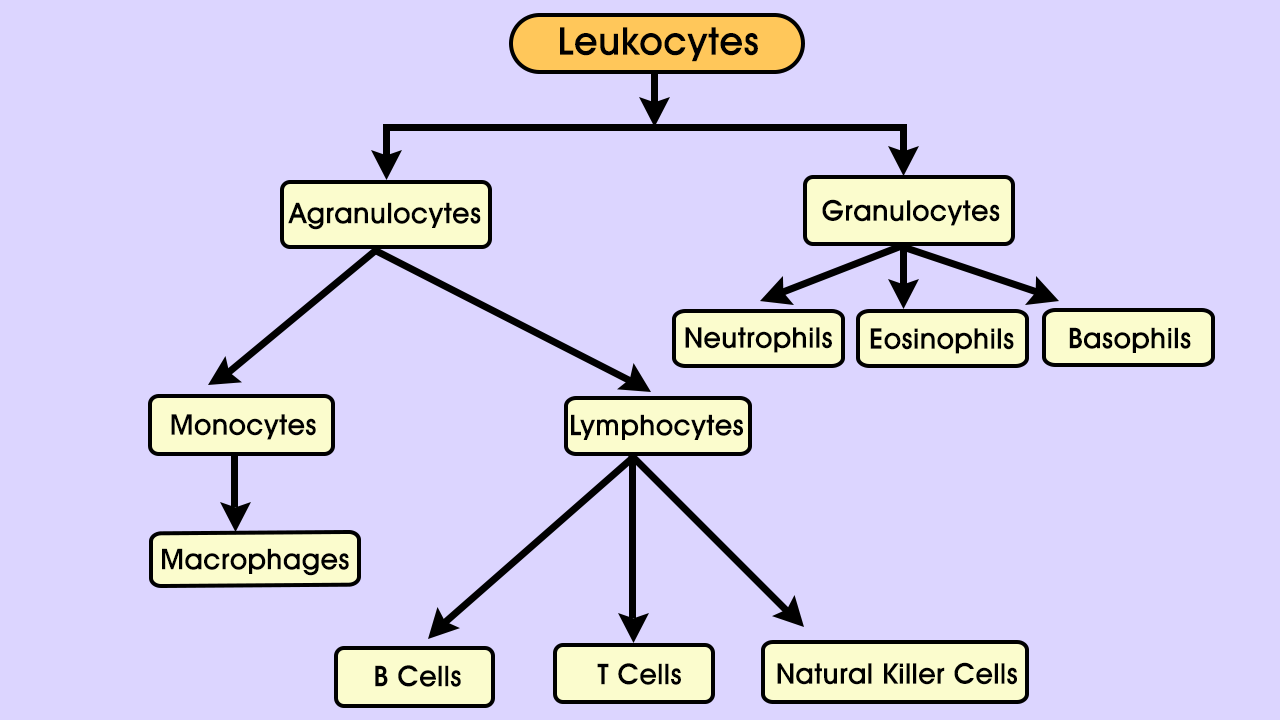
flow-chart-of-types-of-leukocytes
Photo from bodytomy.com

T cells are a kind of lymphocyte, which are themselves a type of leukocyte, or white blood cell. Lymphocytes are involved in what’s called adaptive immunity; they use molecules on other cells – the body’s and invading pathogens – to recognize foreign material and defend against it. Kinds of lymphocytes include T cells, B cells, and Natural Killer cells. Different types of T cells perform different roles, such as “helper” cells (Th- cells), “regulatory” cells (Treg cells), and cytotoxic cells. CD4 and CD8 (which refer to markers on the cell surface) are the two main categories of T cells. CD4 T cells are mainly helper cells, and CD8 T cells are mainly cytotoxic, meaning they mount direct attacks against invaders.

Both main types of T cells, CD4 and CD8, have other molecules attached to their surfaces. Some are receptors that grant the cell access to infections; two such receptors are known as CXCR3 and CCR6. Antidepressant-free patients with MDD have been shown to have significantly lower expression of both receptors on both types of T cells. The same study also found a significant trend in MDD towards fewer Natural Killer cells, a finding that was corroborated in another study.

Research has shown that T cells have a neuroprotective quality. T cells migrating to the brain can reduce stress, promote neurogenesis (growth and development of nervous tissue), and reduce inflammation. Study after study have found inflammation, changes in immune cell composition, receptor alterations, and gene expression changes associated with Major Depressive Disorder.

Causes and Effects of MDD Immune Changes

All of these changes are fascinating in themselves, but are they the results of depression, causes of it, or some intermediary factor?

The Sickness Behavior Hypothesis

Some researchers view depression as a maladaptive result of what’s called “sickness behavior”. Sickness behavior is a vertebrate trait that, through behaviors like somnolence, anhedonia (loss of interest or pleasure), and reduced or no eating, conserve energy that can be directed towards fighting infection. Researchers have presented evidence that both sickness behavior and depression are mediated by pro-inflammatory cytokines– proteins that act in cell signaling roles. These two observations- depression and sickness behavior share symptoms as well as mediators- led to the following hypothesis. Depression is the alternate, maladaptive pathway of molecular processes that, on the other pathway, lead to sickness behavior. Under this hypothesis, the depression pathway leads to neurodegenerative changes that make repeated episodes more likely. Adding that to other research that shows a link between sickness behavior and major depression, and a fascinating picture emerges.

Sickness behavior and major depression do look remarkably alike in their symptoms, and we do know that major depression is often a lifelong illness.

Approximately 60% of people with MDD who experience a single depressive episode go on to have a second episode, and about 70% are likely to experience a third episode. Similarly, having had three episodes increases the chances to about 90% that a fourth episode will occur.

Functional Consequences

Biochemically, these changes are significant. Functionally, do they affect the people who have them? The answer may be yes. One study found a 59% increase in the risk of infection following one depressive episode. The increases weren’t linear, but the risk did go up again after the fourth episode. In addition, among college students, poor mental health is correlated with acute infectious illness.

Fortunately, treatment with antidepressants, if effective for depression, also returns T cell subsets to normal ratios. Differences in the subset ratios between those who responded to treatment and those who didn’t may help determine the chances of efficacy for a particular patient with antidepressant treatment.

Two Poems, One Year Apart

I. 2018

How long can I hold my breath

in this murky, underwater state?


Life moves in slow motion.

Here, strange fish glide past-

feathers mark them as birds

in a different world.

There, tall grass sways

in the current.


My lungs are screaming-

-breathe in

-breathe in

it’s only air.


II. 2019

Finally-

my head above water,

I begin to swim

towards shore.


I get fatigued-

my body’s heavy,

still waterlogged,

and yet-


Clear air

and sunshine-

kiss my face

each day.


mountains

I was recently flipping through a journal and came across the first poem. I remember writing it. I was sitting on a bench outside, feeling utterly defeated by depression. I had gone for a walk on a trail I’d paced a hundred times, but felt foreign on the path and in my own body. Everything heavy, I sat on a bench and looked numbly at the world around me. All the parts of being outside that I love the most- the sun, the animals, the plants- seemed wrong. The sunlight was flat, the grasses moved unnaturally, and the birds seemed oblivious to my presence- as if I had already faded away.

These days, I still walk the same trail. Sometimes it feels like a chore, and sometimes it feels just right. I listen to the meadowlarks sing and the prairie dogs yip, and moving forward is easy. One foot in front of the other, I let the motion of my legs carry me without a thought. Other days, the weight of depression demands my attention. When that happens, and I’m overwhelmed by the sense that I shouldn’t be here- I shouldn’t be anywhere- all I can do is breathe, and wait for another good day.

Love,

Your brain

Time-lapse photography in black and white of stars appearing to rotate in the sky over silhouetted trees

Overcoming Depression’s Inertia

It seems that every stage of depression recovery comes with its own tortuous fear.

I’m depressed, and I’m afraid I’ll feel like this forever.

I’m depressed and can see recovery in the distance, but I’m afraid I won’t be able to handle it. What if I don’t even know who I am anymore?

I’m less depressed, and I’m afraid that if I give myself a break, everything will fall apart again. 

I feel good, but I’m afraid that my depression will come back at any time.

I’m less depressed, and I’m getting out of the house and going for runs and doing yoga and going for hikes and doing the shopping and talking to neighbors and making appointments and I’m terrified. I’m terrified that if I stop even for a second, everything will fall apart. I’ll be right back where I started, in the deep nothingness of depression.

I wish it were easy to maintain balance; add a sprinkle of joy on this side, toss in a handful of rationality over here. But entropy won’t allow it, and neither will the laws of inertia. If an object at rest stays at rest, I must keep moving.

Except- there are outside forces acting on this object. I cannot keep moving indefinitely. Eventually, I must rest. Then, when I’ve replenished my energy, I’ll move again, each time becoming more and more balanced.

Love,

Your brain

Depression Limbo

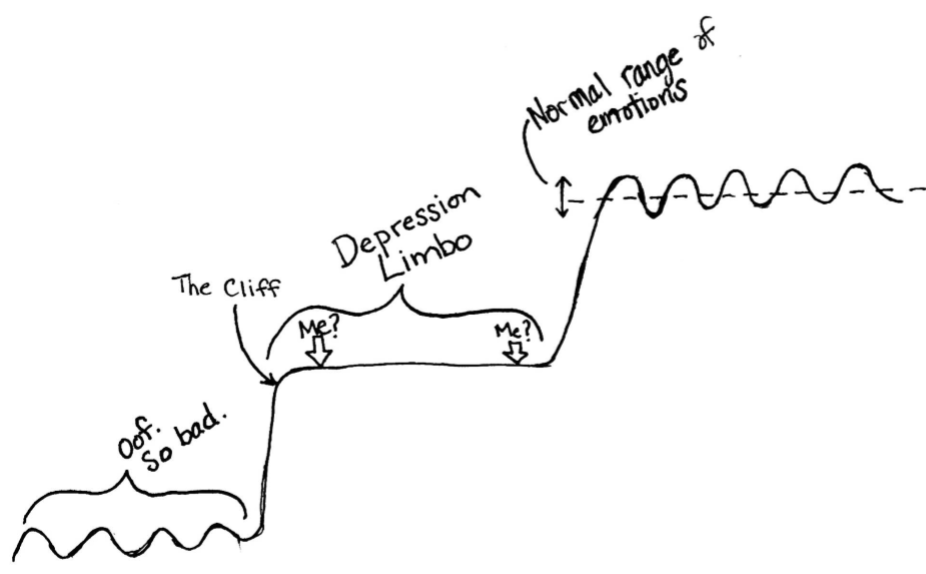
There’s a plateau that I always seem to hit in my recovery from a bout of depression. Since the first time I became depressed, I don’t think I’ve ever gotten past the plateau. I call it “Depression Limbo”. Here’s what I mean:

graph-of-depression-limbo-concept

Depression Limbo is an in-between place where things aren’t terrible, but they’re not great, either. Because you’re not in the pit of darkness, it’s easy to think you’re doing alright; and you are- comparatively. Things aren’t great, but they are ok. This makes it hard to find the motivation to pull yourself out of Depression Limbo. You think “this isn’t so bad. I can settle for this.” And that’s where it gets dangerous. Depression Limbo is flat, so you have no idea how close you are to the cliff and, therefore, to crisis. You could be anywhere along the plateau, but it all looks the same.

I’m in Depression Limbo. It’s a familiar place; I’ve been here several times before. I can laugh again. I’m enjoying my hobbies. I’m exercising again. I’m tempted to say it’s good enough, but I know that that’s risky. I’m tired all the time, I don’t really want to eat, and I tend to be trapped in my routine. This time, I won’t be settling for “good enough”. I’m going all the way to the top.

prickly-pears-in-rocky-mountains

Why I Love Hiking: a Sensory Photo Narrative

Mud squelches underneath my boots, and I reach out with my fingers to balance myself against a tree. I can feel the pack on my shoulders, hear birds chirping, and smell the sharp scent of pine needles.

I love hiking both because I love nature and because it fulfills nearly all of my sensory requirements. I can go at my own pace and under the power of my own body; only the weather and the wildlife are out of my control. When the world around you is overwhelming and hard to understand, it’s nice to put on a backpack with everything you’ll need for the day and let your legs carry you just as far as you want to go. Along the way, every element of a hike serves as a sensory “snack”. The vestibular input of balancing on rocks as I cross a stream. The feeling of my arms swinging at my sides as I get into a rhythm. The soft, spongy moss that I pause to touch with my fingertips.

close-up-of-green-moss-on-multi-colored-rock

piece-of-quartz-on-rock-with-dried-moss


I don’t like the dried moss surrounding it, but I notice a smooth piece of quartz that draws my eye.


muddy-hiking-boots-on-feet-of-hiker-sitting-on-large-rock


Later, we stop for lunch and I study the rust-colored mud on my boots.


two-hiking-backpacks-on-a-rock-in-the-rocky-mountains-on-a-sunny-day


My pack feels secure; it’s a comforting weight. We get up to investigate the surrounding plants, and I look back at our lunch spot. It’s breathtaking in the sunlight.


black-dog-in-profile-sitting-with-hiking-day-dog-pack-on-back


I hear my dog lapping up some water from her bowl, and I take a moment to appreciate her presence.


We find some prickly pears and admire their toughness. Centers chewed through, their spiny armor breached, they continue to survive. We don’t touch them; we just look at the color and shape of them.

prickly-pears-in-rocky-mountains

Across the path, a Ponderosa pine stands tall and broad. This one isn’t in the sun, but I gently scratch the bark and lean in to smell it. Warm Ponderosa pine bark smells like vanilla, and it’s one of my favorite parts of hiking. This one offers a very faint fragrance. It smells like vanilla and fresh cookies and hiking and happiness.

ponderosa-pine-bark

After lunch, we decide that it’s time to head back. Back through the forest, back through the mud, back through the tall grass at the base of the mountain. When we get home, I settle on the lawn with my dog, our muscles tired but happy, and our senses satisfied. Time for a well-deserved nap.

black-dog-sleeping-on-side-in-grassy-lawn

There is Always a Choice

TW: self-harm and suicide

I wrote this in my hospital journal towards the end of my stay. A few days ago, I published a post about self-compassion. The two seem to go together, in my mind.

drawing of landscape with tree and river and words about self-compassionThere is always a choice. Two therapists have told me this independently. It took a little while for the meaning to sink in after the first therapist said it. I had gone a few weeks without self-harm at that point, and I still felt utterly controlled by it. The question of whether to do it or not didn’t seem like a choice; it seemed like an inevitability. Over time, the less trapped by it I felt, and the more sense that statement made. Although the choice of whether to self-harm might have been stacked in favor of doing it, the choice to take steps to change that was still mine.

I relapsed and eventually ended up here, in the hospital. On the surface, I’m likely to view all of that as a failure. However, I didn’t make the wrong choice. I experienced the symptoms of wanting to self-harm and having suicidal thoughts. I made the choice to be honest and to go to the hospital. I’m making choices every day to participate in groups and to work towards stability.

Was cutting a choice? Yes, but it’s about more than that. It’s about larger choices. When my disorder makes resisting those urges and thoughts too difficult, agency over my life as a whole is still mine. I can decide to work towards taking back control in all areas, however slowly I have to do that. It’s about the choices I make to be honest with my loved ones, to go to therapy, and to take my medication, that will affect my recovery from an illness that makes me want to hurt myself, that makes me want to disappear, that tells me that I don’t matter.

I do matter. I choose to work towards self-love.

There is always a choice.

Love,

Your brain