A brown fuzzy moth with its wings outspread

Moth Wings: The Ketamine Chronicles (Part 15)

As I was pulled into mesmerizing moving images of purple and white half-circles, I remember pouring the words “please fix me” over and over into my mental space. Maybe if I asked it nicely, it would last longer. In a strange mixture of thought and vision, the words became part of the image, and they fanned out and seeped into the fabric of my mind. Ketamine infusions continue to be the best treatment for my treatment-resistant depression I’ve tried, but like anything else, it’s not perfect. Arriving at each appointment feeling depressed once again gives me a sense of hopelessness all its own. I know the ketamine infusion will help, but it may not last. We’re still trying to arrange the best combination of dose, timing, and medications that could help things remain more stable. 


Puzzles, Puddles, and Skyscrapers

I closed my eyes and settled back, listening to the “atmospheric piano” playlist I had chosen for yesterday’s ketamine infusion. Eventually, my awareness of my hands and arms disappeared, and I spent some time wondering where they had gotten to. The gentle piano music was relaxing, and tucked under my blanket and weighted lap pad, I began to feel like I was being enveloped in something. I imagined myself being zipped into a giant pea pod, and the image was comforting. “Nothing can get me in my pea pod,” I thought. There were times during the infusion when noise outside the room intruded on me, so I just imagined my soft pea pod and retreated within it again.

There were at least two scenes involving puzzle pieces and building skyscrapers in this ketamine infusion. We’ve been working on a 2,000 piece puzzle of Monet’s garden, and the pink, purple, and white pieces are haunting my subconscious. The puzzle pieces came together to form an endlessly tall building; I craned my neck back to see it disappear into the clouds.

At some point, everything dissolved. I was “looking” at a computer screen, and as I tried to read it, the contents of the page began to melt. The lines ran together, words sagged under the force of gravity, and eventually, the entire laptop softened and melted into a puddle. I began to melt, too. I slipped into the puddle of digital sludge – it looked like an oil slick – and soon accepted my new form. I was too tired and heavy to do anything.

I was far, far, far away when I heard the PA, Erin, ask if I was ok. Finding my mouth and giving it words to say was too difficult, so I nodded and hoped that my head was actually moving. It must have been, since she seemed to accept that as an answer. A little later, she sneezed, which startled me. At the sudden noise, I instantly saw moths with shattered wings, like glass with spiderweb cracks. They fluttered around and came closer until their soft, broken wings were all I could see.

Post-Ketamine Infusion Confusion

Coming back to the room was much harder than usual. I felt a little like I was wearing 3D glasses; everything was in relief with subtle red and blue auras. When asked, I said I felt like “someone else is talking,” meaning the words were mine but the sensation of talking seemed foreign. This is something I experience every time I have an infusion of ketamine for my depression. Erin said I seemed pretty lucid, to which, in relief, I said, “Great – I’m pulling it off.”

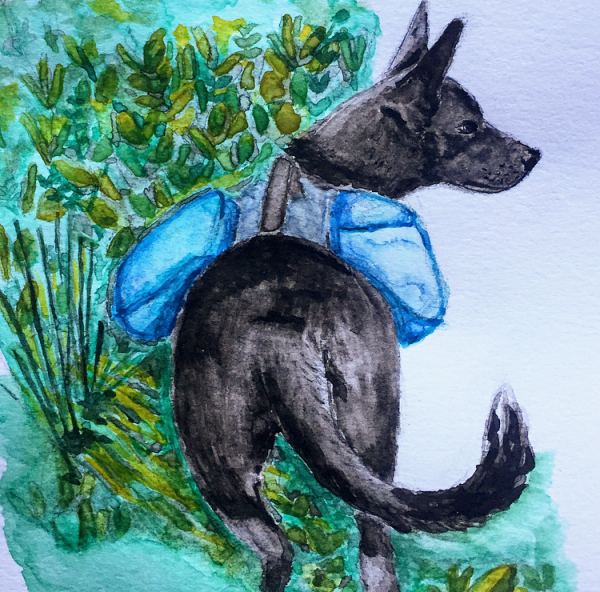
Walking down the steps to the first level of the parking garage was challenging. I clung to the railing and stepped carefully, feeling like I was walking on pillows. I’m usually fine to walk after a ketamine infusion; I could fall asleep at any second, but I generally feel pretty with it. This time, though, I felt a lot like this:

stoned fox

Tracking Adjustments to My Ketamine Infusions

In an effort to make the effects of the ketamine infusion last longer, I took some Tagamet before yesterday’s infusion. It’s an H2 blocker used to treat heartburn, but it might also slow the metabolism of ketamine and give patients more time between infusions. I’m usually tired after ketamine infusions, but this was different. I got home around 4 (I think) and by 6:30, I still felt like I was periodically dissociating and then coming back to the room and remembering I was in the middle of something. Walking was hard for a couple of hours. I was off balance and wobbly and had mild vertigo. I think it’s safe to say that the Tagamet is doing something. This morning, I woke up with a mild headache and am still incredibly tired, but the sun is out and our near-impossible puzzle will provide hours more entertainment.

P.S. I remember making a mental note that Shrek appeared briefly during my infusion, but I cannot for the life of me remember how/when. It’s such a bizarre thing to remember, though, that I am sure it really happened.

If you’d like to read more about my experience with ketamine for depression, start from the beginning of The Ketamine Chronicles or visit the archives. Click here for mobile-optimized archives of The Ketamine Chronicles.

blue and pink mountains illuminated by sunrise over snowy plains

Why Self-Care Can Be Hard For Me

Taking care of yourself comes in many forms, some easier than others and some more pleasant than others. Throughout my years of depression, self-care has meant several things to me. In times of severe symptoms, self-care focused on basic skills; eating, bathing, and taking my medications. When I’m doing better, self-care looked more like the conventional meaning of the term; taking time to relax, allowing myself tasty treats, watching a favorite show, etc. But no matter the state of my mood disorder, self-care has always included a mental component that can be particularly difficult: being nice to myself.

I know, that sounds so obvious it’s ridiculous, but you can absolutely do the actions of self-care without believing you deserve it. I run into this issue a lot; I spend an evening in sweatpants and a cozy sweater, absorbed in an episode of [insert ever-changing favorite show here]. Great self-care, right? Except I finish up the whole endeavor with terrible self-criticism for having let myself waste time and be lazy when I could have been getting work done. Somehow, it seems like that negates all the good that the action of self-care does for me.

Don’t get me wrong; I’m sure there are plenty of benefits of self-care even when you’re not feeling it. If you’re doing something essential to your survival, like eating food, of course that outweighs whether or not you think you should do it. Plus, there’s likely some neurological benefits of taking care of yourself- dopamine, less cortisol, heck, there’s probably benefit to just practicing those neural pathways and making them feel more natural. But it also seems logical that the benefit of self-care itself would be even better if you let yourself have it guilt-free.

Sometimes, the hardest part of self-care is believing that you deserve it. And that’s usually when I need it most urgently. It’s a work in progress, but I’m trying to be less critical of myself. Deliberately being nice to myself sometimes feels like a big lie, like I’m only humoring the part of me that thinks all my negative self-talk is pretty crappy. Living with depression makes it complicated because I know that I need to do things like exercise, take time to relax, and let myself say “no” to things. But the part of me that fights tooth and nail to appear “normal” resents the fact that if I’m not gentle with myself, I might end up debilitated by depression again. I don’t want to need anything, and certainly not anything pampering. I’m fine how I am.

“I’m fine,” she says stubbornly.

Sometimes you’re not fine, and that’s ok. And it doesn’t matter how long you’ve been not fine- you still deserve to take care of yourself. Sometimes I feel like having been depressed for a long time means that I’ve been indulgent in my sluggishness and I need to be hard on myself to get out of it. I would never tell someone else that. Be as kind to yourself as you would be to a friend in the same situation.

Stress and anxiety abound right now, so take care, stay busy, and get some fresh air when you can.

-G


extended-hand-holding-soap-bubbles-with-beige-background

COVID-19 and Anxiety: Caution vs Compulsion

Yesterday, my city declared a local disaster emergency. A growing number of presumptive cases of COVID-19 in my county have led officials to close all city facilities. This has given me pause when it comes to the complexities of COVID-19 and anxiety.

I was diagnosed with obsessive-compulsive disorder when I was about 11, and I dealt with many different obsessions over the years. Perhaps the longest-lasting obsession I had revolved around contamination and germs. For the last several years, I’ve been blessedly free of OCD, and when an old obsession pokes its head out, I’m fairly quick to oppose it by doing an exposure. Since the start of the media coverage of COVID-19 in Wuhan, I actively tried not to let it worry me too much. I could feel the pull of anxiety, coaxing me into watching the news coverage and letting it take over my life. Of course, I stayed informed but did my best to not obsess.

Now, my own city is seeing dramatic effects of the virus, both in increasing cases and in the social results of widespread, repetitive media coverage. Many of our city facilities were closed several days ago, and our city council has decided today to close them all. This afternoon, I finally made the trip to my pharmacy, located in a grocery store, to pick up my medications. The sight of so many empty shelves was unnerving. The only fresh vegetable remaining was lettuce. The bread aisle was sparsely populated with hamburger buns and a few loaves of whole wheat. A man asked the pharmacist where the thermometers were and was told there were none left.

I bought my items and went home, then washed my hands several times between unloading groceries, putting them away, and cleaning the counter they sat on. I’ve been cleaning my phone case, our door handles, and even my sunglasses after touching them while out. Am I simply being cautious, or have I crossed the line into compulsions?

For people with anxiety disorders, dealing with COVID-19 and anxiety during the pandemic puts them in a confusing position. People are being encouraged to be extra careful about handwashing and touching potentially dirty items. Events have been canceled and gatherings are recommended to be limited, making it easy to justify complete isolation due to anxiety. So when the behaviors that normally indicate a disorder are socially sanctioned, what do you do?

I can tell that going to the pharmacy triggered something, and where before I was simply careful, I’m now afraid of things in my own house because they came from outside, and I haven’t cleaned them. This alarms me because it’s exactly how I used to feel in the grips of contamination OCD. It’s overwhelming to suddenly feel like nothing around you is safe to touch.

This coronavirus could live on surfaces for two to three days, so maybe constant cleaning and disinfecting are completely warranted. I imagine many people are feeling this despite never experiencing feelings like it before. Nobody really knows how much is too much, and this is exactly why OCD is so tricky. In non-pandemic times, contamination-focused OCD is fed by a seed of doubt (indeed, every kind of OCD is fed by doubt). It can feel shameful because you know that your compulsions are irrational. Now, it’s unclear what rises to the level of irrationality. Maybe the compulsions I usually try to avoid are precisely what I should be doing.

There is no blueprint for handling COVID-19 and anxiety. I think it’s reasonable to increase your awareness of surfaces you might normally touch and to wash your hands more frequently. However, I know that for me, allowing myself to engage in my old compulsions is a slippery slope. It might be acceptable to do right now, but it will be harder to stop the longer I let it go on. It’s a balancing act, and I have to decide how much my anxiety is serving a purpose now versus how detrimental it is and could be in the future.

I’m certainly not going to tell anyone how to keep themselves safe. I am, however, going to tell myself to be cautious about being too cautious. As long as I can leave the compulsions behind again when life approaches normal, I’ll be okay.

Stay safe,

Genevieve

How Perfectionism Can Block Creativity

Over the years, I’ve made deliberate efforts to reduce my perfectionism surrounding my artwork. I think I’ve made some good progress. When I’m in the groove of regular artwork production, I can sit down with a blank page and some materials and just… start. With minimal agonizing, I can just start to put lines or colors on the page and see where it goes. But, when I stop making art for a while, the barrier of perfectionism returns. It always leaves me overthinking and judging myself harshly for my attempts to get started again. I haven’t been making anything in the last couple of months, and it took me some serious intention to pull out my watercolors and paint this.

IMG_5516

Rationally, I know that it doesn’t matter if I make something and rip it up, or if I make something and let people see it even if I’m not proud of it. But the perfectionist in me thinks I need to have a piece planned out and executed perfectly. I do think that there is some value in this trait. It can give you the patience to get something “just right,” or to sketch your concept with different angles or color schemes and figure out what you like the best. But then again, art never turns out exactly how you imagine it, and there’s rarely a point where you know for sure that it’s done. While perfectionism can help you get closer to your mental vision, it can also keep you from getting started at all– and that’s paralyzing.

In my experience, perfectionism and creative block go hand in hand. You can’t figure out what to make because none of your ideas are good enough; your attempts don’t look like you imagined them, so you scrap the whole thing; the longer you go without making something you like, the higher your expectations and the harder it is to get started. My approach to getting through this is to pick something that I like looking at and just start drawing/painting it. I don’t try to come up with a completely original idea yet- just pick a reference and get started. Sometimes this is enough to jumpstart my inspiration, and at the very least, it usually gets me excited about creating more things– whether from imagination or reference.

That painting I showed earlier– I don’t like it much. It’s based on a photo of Stella that I absolutely love, and my painting doesn’t come close to giving me that feeling. So, I don’t like it much, but I like that I made it. I like the feeling of seeing something coming together, even if it doesn’t match my expectations. I’ve been trying for weeks to get over the funk of creative block, and I think this painting may have helped.

Fighting perfectionism takes practice, and for me, it seems to take deliberate consistency. Letting my practice collect dust makes it harder to pick back up later. But no matter how long it’s been, I know that the more willing I am to make mistakes and to take risks, the more satisfied I am with the results.

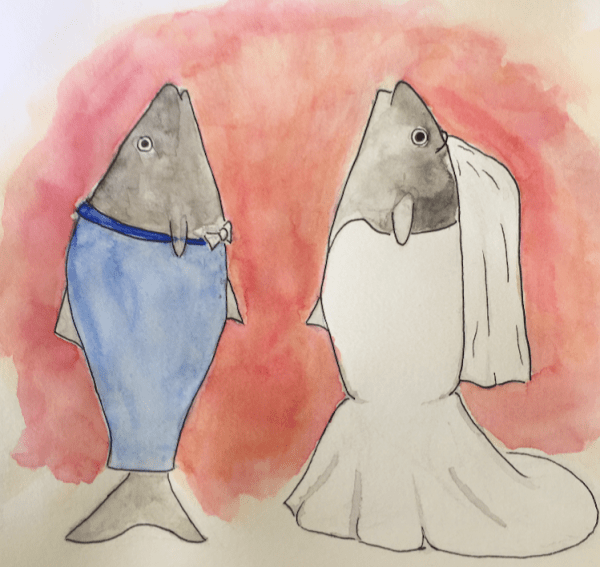
As a bonus, here’s my attempt at depicting the fish wedding from one of my ketamine infusions (part 8). It looked pretty much like this:

fish wedding

Yup. Pretty weird.


An abstract blue and red painting with wide brush strokes and vertical red lines

What Noise Sounds Like in IV Ketamine Treatment: The Ketamine Chronicles (Part 14)

Yesterday, I had another ketamine infusion for my treatment-resistant depression. It had been almost five weeks since my previous infusion, and while three weeks was our best guess for my interval, it seems like now I can actually go something like four weeks before really noticing it wearing off. I’m hoping that if I keep doing the behavioral things that help my depression (running, volunteering, therapy, etc.), I can at least maintain this amount of time between IV ketamine treatment appointments.

Linguistic Confusion During IV Ketamine Treatment for Depression

Most of my ketamine infusions have been visually focused, and usually what stands out to me are snapshots of images and colors. However, some of my ketamine infusions are much more auditory-heavy. Throughout it, conversations in the hallway and the other room sounded loud and close, and I felt as if I were being crowded around in the room I was in. Strangely, conversations outside the room sounded loud but were completely unintelligible. The boundaries of words and sentences disappeared and I was washed in streams of unending verbal noise. Nothing made sense, but I still strained to understand. The sounds of English words were familiar, but I just couldn’t parse them enough to grasp their meaning.

A messy spread of wooden typography letters in dark and light wood.
Photo by Raphael Schaller on Unsplash

This theme of linguistic confusion stretched throughout the infusion. I remember a filing cabinet stuffed with folders that I couldn’t read. The letters were there; I could pick them out, but putting them together and reading them as words eluded me. Later, messy papers with gibberish words filled my internal vision. I felt confused, I was upsidedown, my arm with the IV ached. The room seemed loud, and I saw stampedes of paper animals painted with pastel watercolors. They piled up and tumbled around me, threatening to knock me over and crush me. The fan in the room added noise that pushed it all to an intolerable volume, so I asked Erin to turn it off. I got ready to speak, opened my mouth, and seemed to just think the words out loud.

Did I Say That?

I notice this feeling often during my IV ketamine treatments, and it’s interesting to note how little deliberate control over our mouths’ movements we need in order to make coherent sounds. All I do is form an intention to say something, and it just…happens. It feels a little like I’m inhabiting my body separately from its direct controls.

A distorted glass with yellow and blue fractals approximating the experience of ketamine for depression
Photo by Jakob Owens on Unsplash

Ketamine is a dissociative anesthetic, meaning it creates a state of perceived separation from the self. Altered senses and seemingly “out-of-body” experiences are common when receiving treatments of ketamine for mental health conditions like depression and PTSD. In my experience, I can still talk during a ketamine infusion, but it feels like someone else is doing the talking.

In any case, my request apparently worked, as Erin then got up and switched the fan off. That lowered the ambient volume enough that I could focus again on my music.

I remember there being more visual scenes after that, but I don’t recall them very well. The only one I have much memory of is a scene set in a grocery store with a broken jam jar, shards of glass glinting under the fluorescent lights, and wine-red jam splattered on the linoleum.

IV Ketamine Treatment for Depression in Combination with Other Strategies

The rest of the day is a blur. I slept off and on, interrupted by Stella periodically. It wasn’t until about 6 P.M. that I started to feel more like a person, but I was still glad to crawl into bed at night and sink into sleep. This morning, I’m tired. I’d like nothing more than to go back to bed for the rest of the day, but I know it’s important to get myself up and moving. I do best with routine, so in the interest of helping my brain repair itself through the effects of ketamine therapy, I’ve already had coffee and been to the dog park. So far, so good.

If you’d like to read more about my experience with ketamine for depression, start from the beginning of The Ketamine Chronicles or visit the archives. Click here for mobile-optimized archives of The Ketamine Chronicles.

How Do I Love Thee? A Haiku About Meds

New bottle of pills

Contains capsules, not tablets

Let me count the ways


Three of my nighttime pills are tablets, and I like to take them all at once to minimize the horrible dissolving-pill taste as much as possible. One time, two went down but one got stuck to the back of my tongue and began to dissolve. It was like purifying the essence of every cruciferous vegetable and mixing them with charcoal, then pouring the horrific concoction down my throat. Immediately, my esophagus’s movement reversed direction and it took serious effort not to hurl right then and there. Instead, I had to force myself to chug water and think about anything but my poor tastebuds. To this day, the memory makes me shiver in horror.

And now, a change in the formulation of one of my meds means that I have received capsules instead of tablets. It’s the little things.

Thoughts on Perspective and Depression

coin-operated-binoculars-with-raindrops-on-surface-and-red-knob-reading-turn-to-clear-vision
Photo by Chase Murphy on Unsplash

When I’m moving out of severe depression and into something closer to happiness, I’m intensely aware of the fact that I will soon forget what it felt like to be depressed. Not intellectually, of course. Having the experience of depression makes me forever able to empathize with others and remember, in objective terms, what it felt like. But the internal feelings– the heaviness, the soul numbness, the twisting slowness of being utterly squashed by life’s requirements- all of those will trickle away until I can only comprehend them from afar. Just as I can’t quite grasp the truth of happiness when I’m depressed, I can’t quite understand depression when I’m well.

It’s a problem I contemplate fairly often. Holding two perspectives at once isn’t fully possible, so I find myself slipping between two conclusions with different contexts. When I’m depressed, I vaguely remember feeling better. That memory, however, always pales in comparison to current pain. I eventually end up concluding that dragging myself back to mediocre happiness would not be worth the effort.

Inevitably, when the depression ends or at least improves, I understand how clouded my judgment was. Over time, I forget just how sharp and all-encompassing depression can be. I disregard its immediacy, letting healthy coping skills fall to the wayside. When I move beyond the basics– eating, bathing, stepping outside– to more advanced skills like socializing and nurturing my ambition, the basics are the first to go when stress hits. This is especially true when time has faded the memory of how quickly depression can return.

It scares me that depression so thoroughly warps my thinking, and recalling the cycle of depression and recovery makes me wonder if any number of episodes will teach me to ignore my depressed brain. It’s easier when each day is different; I can tell myself that this will pass– and I might believe it. But when I’m entrenched in depression, it stretches ahead of me until it’s all I can see. Then, the lies my brain tells me seem awfully convincing.

Right now, I’m going day by day. Things aren’t wonderful, but they’re not terrible, either. When I want to crawl back into bed in the middle of the day and not get up until tomorrow, I try to remember that I’ve been here before. I’ve been here before and I’ve done that before, and it never changes anything. Eventually, things will get better, and maybe I can get there faster if I make those hard but healthy choices. So, I’m back to the hardest self-care of all: doing what’s best for you even when it’s the last thing you want.