Black, grey, and orange alphabet letters scattered around the word therapy

What is Ketamine-Assisted Psychotherapy for Depression?

Some people experience profound mental health breakthroughs with a treatment called ketamine-assisted psychotherapy (KAP). I’ve been treating my depression with IV ketamine infusions for a while, now, but never really considered ketamine-assisted psychotherapy an option for me. I’m comfortable with the arrangement of treatments I have now, and KAP has always intimidated me. I’m about to tackle that fear in my next IV ketamine treatment for depression. So what is ketamine-assisted psychotherapy? How does ketamine-assisted psychotherapy for depression work?

What is Ketamine-Assisted Psychotherapy for Depression?

KAP is a type of mental health treatment in which a person engages in talk therapy while having a ketamine infusion. Ketamine-assisted psychotherapy is effective partly because the dissociative state that ketamine puts you in can make you less inhibited. It lets you separate yourself from your emotions. A therapist can then help you through topics that might otherwise be too difficult to talk about.

My Treatment-Resistant Depression is Gaining Ground

I’m in a rut. Again. My previous ketamine infusion didn’t seem to have a large effect on my mood, so discussions began to circulate about how to adjust things. My doctor suggested a ketamine-assisted psychotherapy session and directed me to the release form that would allow him to talk to my therapist.

At this point, my alarm bells were going off, urging me to slow the KAP train down, but alas, here we are. My therapist had a conversation with my doctor, in which it sounds like they agreed that I am, indeed, in a rut. My therapist got some information about what ketamine-assisted psychotherapy for depression entails and then brought her thoughts to me at our regular session.

For context: One problem that I consistently run into during therapy is the brick wall between my mouth and certain emotional topics. Sometimes I can plow through it, but sometimes, I just shut down and the words don’t come out. There’s no fixing it until I go home and, often, write down what was happening on the other side of the brick wall.

A person wearing a mustard yellow sweater and bangles on one wrist is typing on a laptop while sitting at a wooden table
Photo by Christin Hume on Unsplash

The conclusion that everyone reached upon discussion of KAP was something like, “Well gee, KAP would probably improve that problem where Gen makes like a mollusk and clams up.” (It’s likely that that particular wording only happened in my own brain.)

Taking Charge of My Mental Health Treatment

Blue pen resting on an open notebook with lined paper on a wooden table
Photo by Daniel Alvasd on Unsplash

I’ve decided to give KAP a try. Despite constantly feeling like I don’t do enough, I do recognize that I work hard at improving my mental health. Beyond keeping up with the everyday tasks that seem to pile up to colossal proportions in my depressed mind, I also routinely push myself to leave my comfort zone. And yet, I continue to slog through quicksand. I sometimes feel like I “should” be able to heal myself with the tools I already have at my disposal, and if I can’t, it’s because I’m not working hard enough. This is garbage thinking. I’m allowed to add things to my treatment, and I’ll try something new if it seems like it could help me, even if it does sound scary.

Keeping an Open Mind

My therapist asked me, “What’s the worst that can happen,” when I expressed my reluctance to do KAP. We decided that the worst is probably that I could embarrass myself or cry a lot, both of which I have already done in front of my therapist. Still, I know how I feel during a ketamine infusion, and that knowledge makes the idea of having a therapy session at the same time feel uniquely invasive.

The sensation of talking while under the influence of IV ketamine treatment is something I’ve written about before because it is just so bizarre. I’m always struck by how quickly thoughts go from my mind to coming out of my mouth; there’s no time to deliberate on whether or not you’ll say it.

Again – thinking less is part of the goal for me in this ketamine-assisted psychotherapy experiment, but man, as a guarded person, the idea really provokes anxiety. Somehow, I’m also worried that I may not say anything. There is no way for me to enter into this with no worries other than to accept that there is no wrong way to do it.

If you’d like to read more about my experience with ketamine for depression, start from the beginning of The Ketamine Chronicles or visit the archives. Click here for mobile-optimized archives of The Ketamine Chronicles.

Noticing “Good Enough” During Depression

I recently drove into the mountains with my mom for a relaxing day in the woods. A few years ago, forest fires left blackened, branchless trees standing on the mountainside. From the winding highway, we could see large swaths of charred landscape, but up close, new growth has begun to fill in the gaps. Long grasses and delicate wildflowers are recolonizing the ecosystem, and stands of young aspens have already claimed their soil.

I love the Rockies; it’s where I grew up, and it’s the first environment that nurtured my love of nature. I hope that no matter how depressed I get, I’ll always have an appreciation for the outdoors. On this particular outing, though, my enjoyment of my surroundings was dampened.

We found a set of campsites and picked a spot between them to use as our hammock/picnic place. The scent of warm pines and soil enveloped us while we ate our sandwiches among the bearberry carpet. I looked at an interesting circular lichen and listened to the insects buzzing nearby. Later, in my hammock, I watched a curious hummingbird zip around our site. I noticed all of these things and recognized their loveliness, but was disappointed by the absence of contentment. The person I am at my core, unhindered by depression, adores that exact place with those exact circumstances. But the person I am today – tired and depressed – couldn’t help but think “I wish I were at home, taking a nap in my bed.” I wanted to feel peaceful there, but I was missing that easy contentment that happens when you have nowhere you’d rather be. Realizing that non-depressed me would have enjoyed the day much more was disappointing, which threatened to overshadow what small enjoyment I did get from it.

It’s important for me to get out of my usual routine when I’m depressed, mostly because that routine doesn’t consist of much. When I take the very small risk of leaving my house to do something theoretically fun, it could turn out to be terrible. Mostly, it’s mildly nice, and as my therapist says, “If it doesn’t suck, then it’s worth noticing. It might just be good enough.”

Silhouette of a person walking into a lake at sunset with ripples on the water and a view of the horizon

Just Float Away: The Ketamine Chronicles (Part 20)

Erin, the PA, tells me I have gorgeous veins. It’s just one of my many redeeming qualities. Prone to perfectionism and crippling indecision? Yes. But hey – at least I have great veins! Starting the IV for my ketamine infusions, which treat my depression, is always an easy process, which is nice. This time, we once again did a pretty robust dose of ketamine with some propofol to make it less intense. Erin got me set up while we chatted, and then Dr. G popped into the doorway, explained just how many anti-nausea drugs I got (technically four(?), if I remember correctly), and then stopped. “What are we NOT going to do a lot of this time?” He asked.

“[brief silence] Looking around!”

I got a figurative gold star for my answer. I promised Dr. G I’d keep my eyes closed, popped in my earbuds, and settled in.

What Ketamine Infusions for Depression Feel Like

The familiar floating sensation reminded me strongly of water, as usual. Behind my eyelids, the blackness rippled and flowed, hinting at some unseen current. Soon, minuscule red specks glittered against the dark, moving with the gentle waves and forming dynamic shapes. It seemed as if there were something beyond the darkness that I could nearly see, like I needed to travel through the black, quiet water to reach something.

I began to imagine that I was lying on a beach, submerged in shallow water, looking up at the sky through the water that lapped at the shore. The sand beneath me was gritty, but the water was clear and the sky was blue. It was peaceful. Soon, though, the movement of the water reminded me of my recent road trip vertigo and the anxiety it created, and the peacefulness was ruined.

I wondered if it would even be possible to have a panic attack while mildly sedated, but decided that I should put effort into preventing one, regardless. After all, it would be rather counter-productive. Bobbing and rolling in the imaginary water did make me anxious, although part of it was at the thought that freaking out would be pretty embarrassing. In trying to resist the anxiety, I realized that I was only making myself more aware of the movement. I needed to not fight it – to just accept that I was not going to feel completely still.

Dark blue water with gentle ripples on the surface
Photo by Lothar Boris Piltz on Unsplash

Once I let myself float away, the infusion seemed to speed up, and large chunks of time just disappeared. I don’t remember anything except standing in a room in a family member’s house, recalling the details of my surroundings with what seemed to be incredible accuracy. I actually worried momentarily that I might be flouting Dr. Grindle’s orders by having my eyes open. He might confiscate my gold star!

Except, wait- my eyes were closed. And yet, the windows let bright sunlight in through the blinds. The ones on the right were broken three slats up. The wicker chair with the yellow cushions was angled just right in the corner. The dresser with a sand dollar and a starfish on top sat just how I remember it. That rug that years ago was closer to shag but is worn and aging now, laid on the floor. I took in the scene quietly. There was nothing happening; I was just absorbing the room’s contents.

Recovering from an IV Ketamine Infusion

It seems like the more I think about it now, the less I remember how I got home. The infusion finished and Erin took the I.V. out. Then, Dr. G handed a bottle of apple juice to Erin, who offered it to me. I reached out and took it with my wacky inflatable car dealership arms and then decided to wait for my facial features to materialize before trying to drink it. Somehow, I got my shoes on and made it to the car with my mom, who politely stopped after every three or four steps down the parking garage stairs and turned slightly to make sure I was still on my feet.

I may have fed the dog twice that night. My memory of post-infusion actions is incomplete, and I don’t doubt for a second that Stella would take advantage of that. Maybe that’s why she begs for food in the evening after I’ve already fed her– because sometimes it works! This is why it’s important to not make any important decisions following a ketamine infusion treatment for depression. You might end up with a new boat or no house or, you know, a spoiled dog.

blurry-photo-of-beach-with-camera-moving-while-taking-picture

Vertigo-Induced Panic is Terrible

We clambered into the car, half of the backseat piled with our stuff so that the dog could have the back. We’re all isolated these days, and since we were able and the infection data in the states we’d be in looked ok, we got on the interstate for a family visit (with careful precautions). Two months after the passing of my grandfather from COVID-19, the family was feeling the distance. We made it in 14 hours, a new record for the journey we’ve made dozens of times.

I’ve always gotten motion sickness in cars, so road trips can be a boring affair for me. Hour after hour, I look out the window, listen to music, and let the movement of the car lull me into a drowsy stupor. As a child on this trip, I would fall asleep for a while and wake to the car slowing down as we took an exit to a gas station or a rest stop. As an adult, I find it hard to disengage from the road; I’m always paying attention to the other cars and looking out for danger in our lane.

Traveling during a pandemic made us uneasy. We stopped as little as possible, only getting off the highway for gas and careful bathroom breaks. Few people wore masks, and we got odd looks and a wide berth on our way through the doors to the little convenience store in Nebraska. In Iowa, we took a side door past families eating at outdoor picnic tables, used the facilities, and beelined it back to the car. Illinois was busier, and by then we were exhausted. Despite spending the entire time sitting, long road trips are remarkably draining.

We left home at 5 A.M. and arrived at our destination at 8 P.M. After unloading the car, supervising Stella’s obligatory investigation of all smells contained in the house, and eating some real food, we each turned in for the night.

Coming from semi-arid Colorado, I’m unaccustomed to the humidity. I was instantly too hot under the blankets. After I threw off the covers, I tried to relax and put my sweaty discomfort out of my mind. When I closed my eyes, I felt the world moving beneath me — gently but unpredictably. I’ve had mild vertigo before. Boats, amusement park rides, and treadmills all produce a similiar feeling of unsteadiness for me. This, however, did not subside as my previous spells have tended to do. Instead, it only became more intense. I sat up and tried to take deep breaths through the rising nausea. The room was jostling around me, and I felt very high up on my bed. I slid to the floor and started to panic; it was only getting worse, and at this point, I didn’t think I could get up without falling over. Realizing there was no trash can in my room, I decided that I might have to throw up in the dog bowl. (Thankfully, that was avoided.)

In an attempt to convince my brain that my body was stationary, I lay flat on the floor, pressing my palms and heels against the hard surface. Truly panicking now, I took gasping breaths and tried to keep my gaze locked on something still. It was not working. I crawled to the wall and sat with my back pressed against it, crying, shaking, and trying to get my breathing under control. I felt like I was in a rickety wagon, speeding along a track while bumping and swaying dramatically. Even when sitting completely still and looking only at one point, the world around me continued to move.

I don’t know how long it took — I’m sure it felt like longer than it was — but the panic subsided and I eventually felt capable of making it downstairs to the kitchen. I sat at the table and looked at a spot on the tablecloth for over an hour. Slowly, the vertigo improved. Moving my head as little as possible, I got up to get a snack, hoping it would settle my stomach. I shuffled two small steps forward, then stopped to wait for things to slow down, then repeated as I moved through the kitchen and back to the table with some crackers.

Part of the anxiety came from the overwhelming disorientation, which then produced more anxiety because I instantly thought “how will I get home?” Sitting in a car for 14 hours created horrific vertigo and a subsequent panic attack, so the thought of doing the same thing a week later worried me.

Thankfully, our trip home was uneventful. I took Dramamine and we made more lengthy stops. I also hogged the front seat for part of the drive. The vertigo I noticed upon getting home was much less intense and didn’t stop me from swiftly falling asleep. Human beings are not well-suited to spending an entire day in a moving vehicle, but it was more than worth it to see family. Even with the masks, the social distance, and the little Lysol wipes wrapped around the serving utensils, we managed to fully enjoy our time together.

A padded grey sleep mask with an elastic band arranged on white linens

Trying a Sleep Mask During IV Ketamine Therapy: The Ketamine Chronicles (Part 19)

While walking through the grocery store the other day, a cheap sleep mask caught my eye. My previous post about ketamine for treatment-resistant depression, in which I was utterly entranced by a framed picture of what looked like a standoff between a wolf and a mountain goat but was really just a river and some rocks, piqued my interest in sleep-mask wearing. I grabbed the mask on a whim, intending to give it another try at my next IV ketamine therapy session.

An Unsuccessful First Attempt

My first attempt to cover my eyes during a ketamine infusion for my depression was at my very first appointment. Not knowing what to expect and finding that I had never experienced anything like it, I was overwhelmed by the bizarre, dissociative sensations of ketamine. I remember the darkness behind the mask inducing a feeling of slow spinning, like turning a heavy stone on the end of a long, long string and then letting go. Soon, my head began to spin in one direction while my body spun in the other, and I took the mask off, preferring to keep my eyes open.

Adapting to Change is Tough with Sensory Processing Disorder

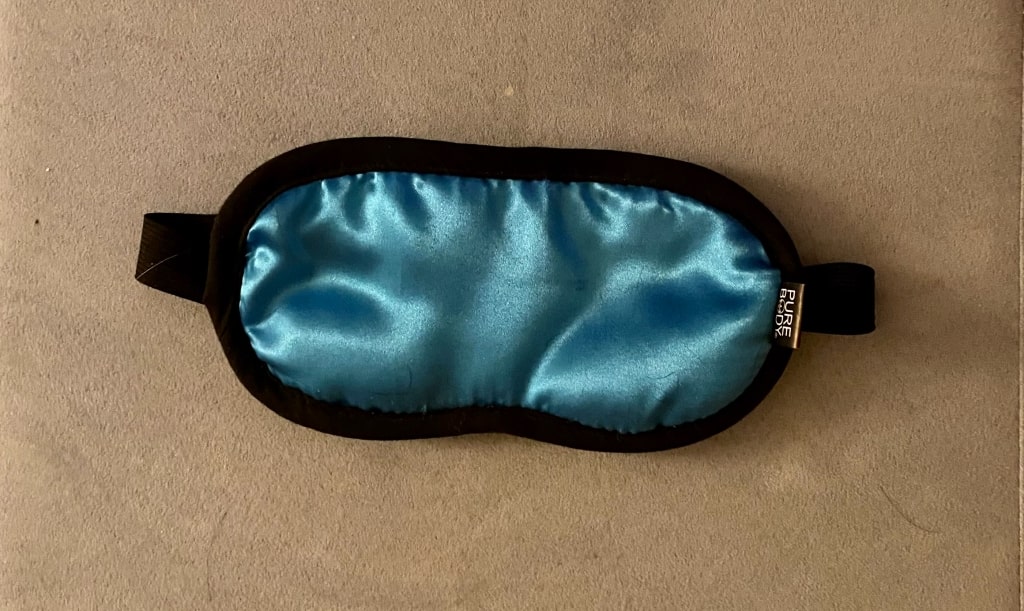
A light blue satin sleep mask with a black border and black strap lying flat on a light grey surface

I hadn’t worn a sleep mask during a ketamine infusion again until yesterday. I brought my newly purchased satin mask, seemingly made for someone with no nose, and slipped it on just as the ketamine infusion started. My immediate reaction was, “I don’t like this.” But, comorbid sensory processing disorder makes it hard for me to discern what exactly something feels like and if it’s to my liking or not. Therefore, my default is no new things ever. I decided to give the mask a few minutes, which I attempted to measure by the progression of songs on my playlist. By the time two or three songs had gone by, I had mostly forgotten about it.

Physical Distortions and IV Ketamine Therapy for Depression

At first, I was frustrated because nothing seemed to be coming to me. It was just dark. Gradually, subtle circles of purple and yellow faded in and out. I couldn’t tell if the ketamine was working yet or not, so I shifted my attention to my body and found that I was all stretched out. My feet were incredibly far away from my head, and the more I thought about it, the more I stretched. I got thinner and thinner, and I eventually was reminded of taking Flat Stanley home in elementary school. (Flat Stanley is a children’s book about a character who travels the world. As part of a literacy project, kids make paper Stanleys and keep a journal about his adventures, swap Stanleys with a partner via snail mail, then mail them back, often with photos of Stanley out and about.)

I felt like Flat Stanley – like I had been rolled out with a rolling pin and then peeled back up. Briefly, I considered the strange photos that would result if somebody took me on their family vacation, this flattened-out woman waving in a gust of air, Little Timmy reaching up to hold my paper-thin hand while everyone says “cheese.”

IV Ketamine Therapy Creates Indescribably Sharp Images

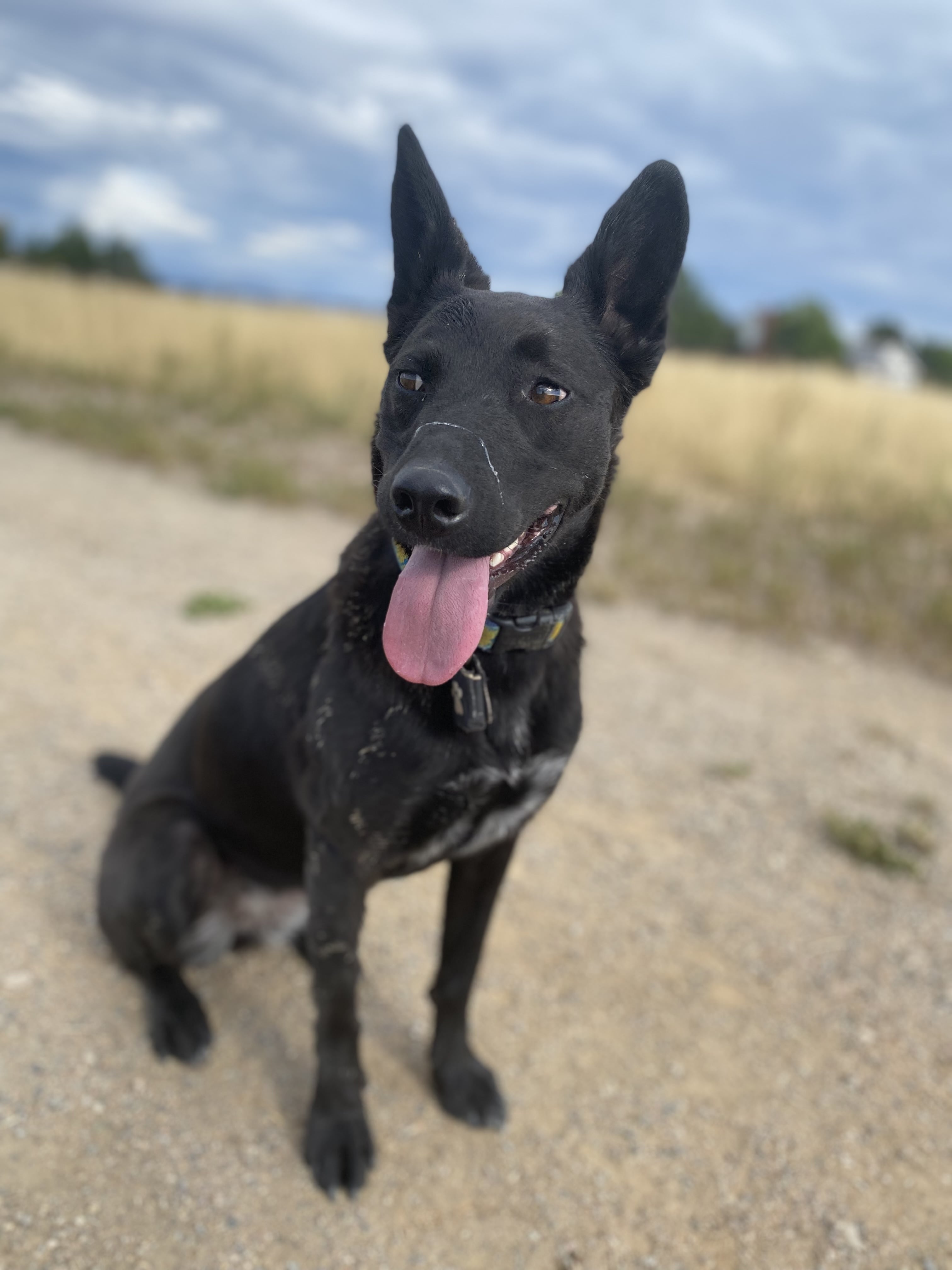
Sometimes, the things I see in my IV ketamine therapy infusions are bizarre or fantastic, and sometimes, they’re closer to real memories. After the Flat Stanley adventure, I enjoyed a slow-motion movie of my dog, Stella, running by me. We locked eyes as she rushed by, a moment captured in the dusty roll of fur on her shoulder and her tongue lolling out of the side of her open mouth. In slow motion, the prairie grasses waved lazily and Stella’s paws hung in midair, a snapshot of a great freedom gallop. I’ve seen such an image hundreds of times, yet my lucid memories never produce such a striking, detailed image as what I saw during my ketamine infusion.

A black dog with pointy ears sitting and panting outside

Memories and My Subconscious

My thoughts of Stella led me to a less pleasant memory. She killed a young rabbit the other day; I tried to stop her but was too slow. The weight of its still-warm body in my hands came back to me in my ketamine infusion. I looked at the delicate veins in its ears and a bit of fur stuck to one dark eye as I gently wrapped it in an old cotton t-shirt. Seeing it again during my ketamine infusion wasn’t disturbing, but it evoked some sadness and a sense of wastefulness.

I only vaguely remember other images from this ketamine infusion – mostly measurement things like ticking numbers on a digital counter and tape measures stretching out.

The Verdict on the Mask

Overall, wearing the sleep mask during depression treatment with ketamine made me much less concerned with time. I never have any idea how much time has passed, even when I try to keep track of how many songs have gone by. Usually, returning to the real world periodically reminds me that time exists, and I then wonder where I am in its course. But with the mask, I was just floating in darkness.

I still don’t love the feeling of having my eyes covered, but it wasn’t as bad as I thought it might be. Occasionally, I considered taking it off but decided that lifting my arms would be too much effort. I did eventually sense that a good deal of time had passed, and I lifted a corner of the mask to peek out. Erin told me I had ten minutes left, so I leaned my head back and forgot all about time, once again.

Having Hope with IV Ketamine Therapy for Depression

I have not been doing well, lately. I tried to go off of one of my medications (with the OK from my prescriber), and it backfired tremendously. I’m back on it and hoping that things will return to how they were before I decided to go messing with my meds. Hopefully, this ketamine infusion will help me get back on track.

If you’d like to read more about my experience with ketamine for depression, start from the beginning of The Ketamine Chronicles or visit the archives. Click here for mobile-optimized archives of The Ketamine Chronicles.

drawing of landscape with tree and river and words about self-compassion

Art for Mental Health Awareness Month

May is Mental Health Awareness Month, and Mental Health America has several initiatives to spread awareness during May. One of these is #mentalillnessfeelslike. Peruse different categories on their website, where MHA has compiled Instagram posts from people participating in the hashtag. It’s always comforting to find validation in others’ experiences.

The hashtag got me thinking about my own attempts to represent what mental illness feels like to me. This blog is mostly writings that describe my experiences with depression, anxiety, and their various treatments. So, for something different and a trip down memory lane, I thought I would take a jaunt through some of the art I’ve made on the topic of mental health/illness.

The following slideshow was my attempt to depict a strange sensation brought on by an antidepressant I no longer take. It left me feeling “better”, but in an artificial way, as if I could feel my depression just outside the boundaries of myself. It was sort of like being squeezed into a neutral mood that didn’t fit.

Depression 1Depression 2Depression 3Depression 4

And then we have The Potato Scale of Depression, born when I responded to “how are you” with “everything is mashed potatoes”. What I meant by that was that the world was dull, my senses felt mushy, and seeing past any of it felt impossible. The beauty of the potato scale is that it opens the door to describing your mood in a creative, silly way, while still communicating a serious topic. And, you get to have eye-opening conversations about how you and your conversation partner rank various types of fries. Of course, this is an abridged version of the scale; there’s a whole world of poorly-prepared potato dishes to choose from. (Soggy latkes, undercooked gnocci, etc.)

Potato Scale

Clearly, analogies are my favorite way to say how I feel. This next one is a good reminder for present me.

Balance

The rest are simply some depictions of what mental illness feels like to me.


collage-of-flowers-and-words-from-magazine-spelling-it's-going-to-get-better-with-watercolored-woman's-face


silhouette of wolf standing on ridge with tall grass at sunset

The Wolf and the Goat: The Ketamine Chronicles (Part 18)

At this point, I’ve lost track of how many IV ketamine treatments for depression I’ve had (they don’t line up exactly with the number of blog posts). My treatment-resistant depression has dug its heels in once again, and I’m wrestling for the millionth time with whether or not there is any chance of improvement for me (despite having experienced significant improvement that fell apart when the pandemic began. Clearly, it is possible).

In a conversation with my therapist in which I explained my growing sense of hopelessness and how it makes me reluctant to keep going with ketamine infusions, she pointed out that I have said that ketamine makes a difference in my mental health. It’s true. It’s tough to remember that the hopelessness is the depression talking. I can’t trust my assessment of the world when I’m getting all my info through the warped view of depression. At least, I think. Sometimes it’s all so confusing.

The Wolf and the Mountain Goat

The wolf had its mouth open, partway through devouring some kind of amorphous, green animal. Perhaps a giant frog? An algae-covered sloth? Try as I might, I couldn’t interpret the image correctly. But there, below the wolf’s fearsome jaws, was a pure white mountain goat kid. It stood perfectly still, watching the wolf eat its catch.

That mountain goat should move, I thought. Directly below a hungry wolf definitely seemed like a risky place for a baby mountain goat. But nothing moved at all. The image was static. And then I remembered that I was not supposed to have my eyes open during my ketamine infusion, and I definitely was not supposed to be staring at the photo on the wall across from me. There is no wolf in that photo- nor is there a mountain goat. It’s a picture of a river flowing through rock formations with greenery on the shore. It was quite a trip.

I can’t unsee it.

Ketamine Depression Treatment and Visions of Water

From the beginning, I could feel the warm air inside my mask. At some point, it started to feel like liquid, like I suddenly possessed the ability to breathe underwater. I’m fairly neutral when it comes to swimming in real life, and I don’t have any particular fascination with water. But ketamine always brings out these intense associations with bodies of liquid water and, occasionally, ice.

Ripples and waves of all sorts, whales, jellyfish, cold rivers flowing downhill, being on a boat, icebergs; these are all images from previous ketamine treatments that stand out enough for me to remember them. Perhaps the physical sensations of unsteadiness trigger my brain’s water-related pathways. Except that I’m always decidedly stationary during ketamine treatments. In any case, I’d be interested to know if other people also see lots of water during their ketamine infusions.

Drowning in Deep Water

This time, it was the ocean, or perhaps a very, very deep lake. My perspective was from beneath the surface, and I could see someone sinking slowly from the glowing blue into the inky blackness below. I was watching the person, but I also was the person. We were sinking through vast expanses of empty ocean, only water and light around us. It was striking but lonely – only the silhouette of a human form, gently falling through deep water.

Slowly, the light receded above and I began to think that I didn’t want to be in darkness. It occurred to me that the person was drowning, and although I felt comfortable enough, that meant that I was also drowning. We were, after all, the same person. I didn’t know what was beneath us, and the unknown was somewhat unsettling. But everything was heavy, and the constant pull of the water was hard to resist.

The silhouette of a person falling through open ocean with light filtering down from above.
Photo by Daoud Abismail on Unsplash

It was confusing; how was it possible that I was breathing the water that filled my mask? I must be drowning, but I felt fine, only incredibly heavy. Then I heard my own voice in my mind say forcefully, “open your eyes,” and suddenly, I was back in the room, looking at the wolf and the mountain goat once again.

Space and My Mental Map on Ketamine

Have you ever looked at a familiar room and felt like you’ve never seen it before? Like you just never really looked at the angles of the walls or the color of the furniture? I’ve noticed that my ketamine infusions often give me the sensation that a room has changed and space is distorted.

When my eyes are closed, I feel as though everything is moving closer to me, but also over me. It’s like the weight of my body is folding space so that my surroundings move up and over me. Things feel much smaller, and I’m always momentarily surprised when I open my eyes, the space instantly expands, and I find myself in a bigger room than I expected. And every time, it’s as though I’m looking at a room that I’ve never really looked at before. By the time I’m semi-lucid and ready to set my legs in motion towards the hallway, the feeling has passed and the room is familiar again.

Some Thoughts on Masks and Privacy During Treatment with Ketamine

I don’t often relax in places that aren’t my own home. Even friends’ and family’s places give me that tense feeling of being a guest; I’m less familiar with my surroundings and therefore need to be alert and polite. It’s uncomfortable to imagine that someone might walk by and catch me making myself at home by taking a nap or, I don’t know, putting my feet up.

I’ve obviously been forced to let that go to a very large degree while treating my depression with ketamine infusions. But it’s gotten me thinking — this might be why I tend to open my eyes so much. My vulnerability alarm goes off when my eyes are closed anywhere that’s not my home. I guess it periodically yanks me out of whatever trip I’m on so that I can look around for a second. Maybe that also explains some of why I remember such vivid scenes. It’s like when you wake up in the middle of a dream and can recall it with perfect clarity, versus sleeping all the way through it, and then all you know in the morning is that Shrek was there.

A hand holding a stack of neatly folded, colorful face masks.
Photo by Vera Davidova on Unsplash

That said, lots of people wear a sleep mask during their ketamine infusions and find that the darkness helps them immerse themselves in the experience. I have found that wearing a mask that covers my nose and mouth does make me feel oddly secure – like it’s hiding me from any eyes that may look in my direction. I wonder if a sleep mask would have the same effect, or, as I expect it might, just make me feel more vulnerable by preventing me from looking around occasionally. Who knows – I may try it someday.

(Imagining my entire face covered in masks makes me feel like the spider in that viral voice-over video: I cannot see you, you cannot see me…I am hidden.) 

If you’d like to read more about my experience with ketamine for depression, start from the beginning of The Ketamine Chronicles or visit the archives. Click here for mobile-optimized archives of The Ketamine Chronicles.