When I began my working relationship with you, I thought we would be short-term collaborators, but your presence in my life has continued for several years longer than expected. Furthermore, your performance has been inconsistent and, at times, relatively poor. I try to overlook your harmful behavior: the nausea you cause, the thirst, the insomnia. People I trust seem to think that you benefit me, but I wonder if I wouldn’t be better off without you. I resent you. And I wonder if I’m wrong.
This grievance letter is for me. For my stubbornness. For my excuses and my denial. My doubt seems insurmountable, and it leads me to blame you. I cannot stop clutching at a hope that I could leave you behind. Maybe I’ve grown beyond you and could strike out on my own. Evidence of failed expeditions suggests that’s foolish, but I can’t help but nurture that seed of doubt. It’s fed with a steady supply of self-criticism and frustration.
You’ve been with me throughout a period of enormous change and development. How can I be sure that I’m still better off because of you? How can I even be sure that I’m myself when you’re influencing me? What effect are you having on my thoughts and perceptions? Always hovering over my shoulder, whispering in my ear. I recognize that I might not be here without you, but I desperately want to be free of you. Perhaps if I worked harder on my own, I could overcome my problems independently. Sometimes, I think I’m weak for relying on you, and at other times, I think I’m pulling all my weight by myself with the added burden of your shortcomings. If I let you go, maybe I’ll thrive. If I embrace you, maybe I’ll be at peace. I wish I could pick one because this wavering is torture. I hate uncertainty, but that’s all I feel when I think of you.
My unlimited ability to criticize myself allows me to see my desire to abandon you as a sign of an immature, selfish idealism I should root out and destroy. And it also allows me to see my reliance on you as a shameful weakness I should leave behind. Which flaw do I choose?
I know that my feelings about you are irrational. You’re just a tool, and I’m just a messy human who wants to make everything perfect. Confronting these thoughts is not new territory for me, and yet I can’t seem to arrive at a decision. I wrestle with myself and rail against you and never make any progress. Siding with the rational arguments takes constant effort, and I’m tired. It would be much easier to give up on you, and I want to believe that’s a good choice. Part of me does. Part of me is afraid I’d be making a terrible mistake.
Sincerely, Me
I wrote that letter two months ago when I was struggling with consistency. I was taking my medication roughly half the time and was having trouble getting back on track. I decided to give it one month of solid effort and restarted my old tracking method to gather some data. It wasn’t terribly revealing, but I did find that the act of tracking my mood and medication helped me stay consistent. It’s harder to push under the rug when I confess to my journal every day.
Embarrassment has been keeping me from examining this issue because I feel like I can’t get beyond my discomfort. I keep hoping I’ll work my way toward positive feelings about medication, all while knowing deep down that the more reasonable goal is to simply accept it. Accept that I’ll never like it, and embrace it as a necessary tool. I don’t like brushing my teeth, but I don’t resent my mouth for needing toothpaste. I just do it because I accept it as a task I’ll have to do forever. It would be irrational to expect my teeth to take care of themselves and then torture myself over their repeated failures.
I know that this is what I do when it comes to mental health medication. I can see acceptance over the ridge, but I can’t quite get to it. Having the ability to see exactly how I’m keeping myself stuck and yet not allowing myself to move feels unbelievably childish. I feel petulant — crying to myself about what I don’t want to do instead of sucking it up and doing it. The existence of the problem feels embarrassing because I know that I can fix it. I just haven’t done it because, in some ways, fixing it would require me to relinquish control. I have a deathgrip on the handlebars of life, and it’s starting to wobble. I know that letting go a little would solve the problem, but my instincts tell me to fight it. I want to make my emotions perfect and neat and palatable.
If I had an alter ego, she would be self-assured and unbothered. She would do things when she wanted to without overthinking, and she would feel her feelings without judging herself. She would be easygoing and relaxed. My alter ego would take her medication with the ease of brushing her teeth. It would be nothing to her. Maybe she wouldn’t like it, but she wouldn’t let herself be distracted by self-criticism. She’d let her emotions come and go while staying firmly on the path of rational decision-making.
Maybe I can be like her. It’s odd that the only way to do that is to stop trying so hard. Achievement has always been about effort for me. If I can work hard enough, I can do just about anything. But if I ever want to stop fighting with myself, I have to let go.
When I think about what I want my life to look like, I tend to imagine a me with more motivation. But there are nuances to what I desire, and I’ve come to the conclusion that I don’t want just any type. I’ve spent a great deal of time being motivated by anxiety and fear of failure and a sense of inadequacy. It feels better than nothing because, at its core, I think my discomfort comes from stagnation. Anything that moves me toward accomplishment soothes my fear of a wasted life, but it’s a frightening position to hold. Instead, I want to be motivated by inspiration. I want to chase something that feels meaningful and impactful, not run from something bleak.
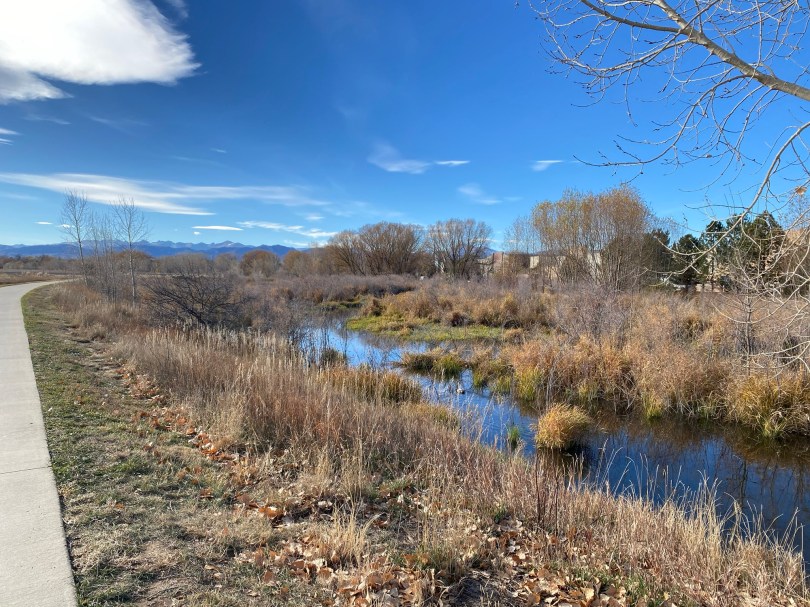
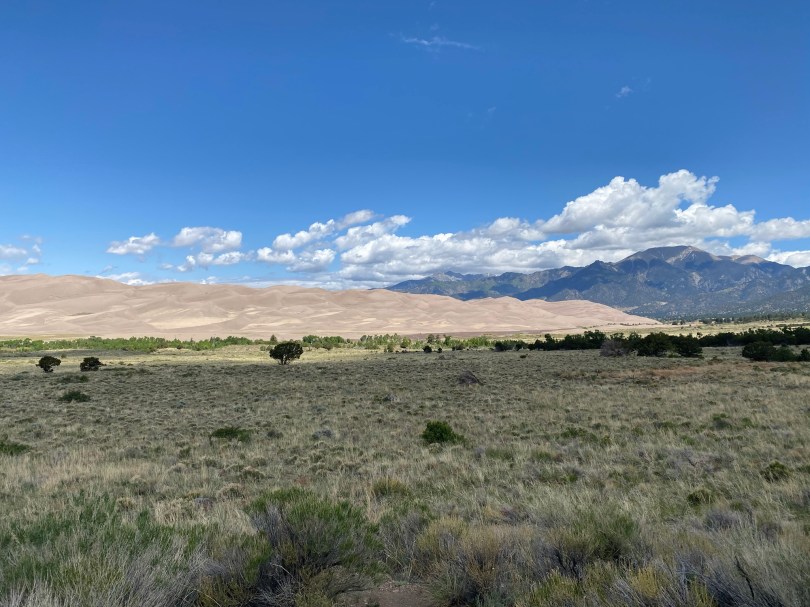
My therapist sent me some journal prompts, one of which was “What topic or cause ignites a fire in you? How can you dive deeper into this passion, and how might it align with a larger purpose?” When I feel inspired, it usually revolves around my interests in art, writing, and science. As a teenager, I saw these interests as divergent, and when faced with the decision of what to pursue, I chose science as the safer option. Now, with a span of seven years between present day and college graduation, I feel I’ve strayed from that path. My job as an editor has nothing to do with ecology, evolutionary biology, or anthropology. Grappling with that void has revealed that the combination of my interests sparks consistent inspiration. Being in nature often gives me the urge to create something. I love marveling at the results of evolution: the complexity of forms and function and the beauty of competition and coexistence. Representing the colors, the scenes, and the thoughts and emotions they spark, whether through images or writing, feels satisfying.
But what is the larger purpose of art? Is simple appreciation a worthy pursuit? Does sharing a perspective benefit others? Writing this blog certainly feels meaningful. I enjoy reducing stigma surrounding mental health, encouraging connection and conversation, and helping others feel less alone. Perhaps creative inspiration fuels my desire to share with others — and hopefully be a force for good.
The singular problem with relying on inspiration is that the fear of losing it holds me back. When inspiration wanes, I find myself plagued by feelings of failure and the sort of motivation I don’t like: the relentless self-criticism that leads to unsustainable and unfulfilling production. Rather than enjoying the inspiration while it lasts and accepting that it might come and go, I resist even starting out of a shameful pessimism. Why invest in creativity when I’ll inevitably lose it and feel hopelessly frustrated and disappointed? This is perfectionism and the negative outlook of depression.
In an effort to combat this pattern, I’ve decided that the formula for inspiration is:
Exposure + (Intention – Expectation)
I need to put myself in situations that expose me to the kinds of things that inspire me, and I need to be looking for that spark. Walking through the world without the intention of finding opportunity, or worse — staying isolated — makes for a life sapped of color. Avoiding expectation is crucial, though. Guidelines can be good; I have a loose goal of posting to my blog every other week. But intending to find inspiration with a strict expectation that I will (or else), is a recipe for disappointment. I’m trying to be more flexible and less perfectionistic.
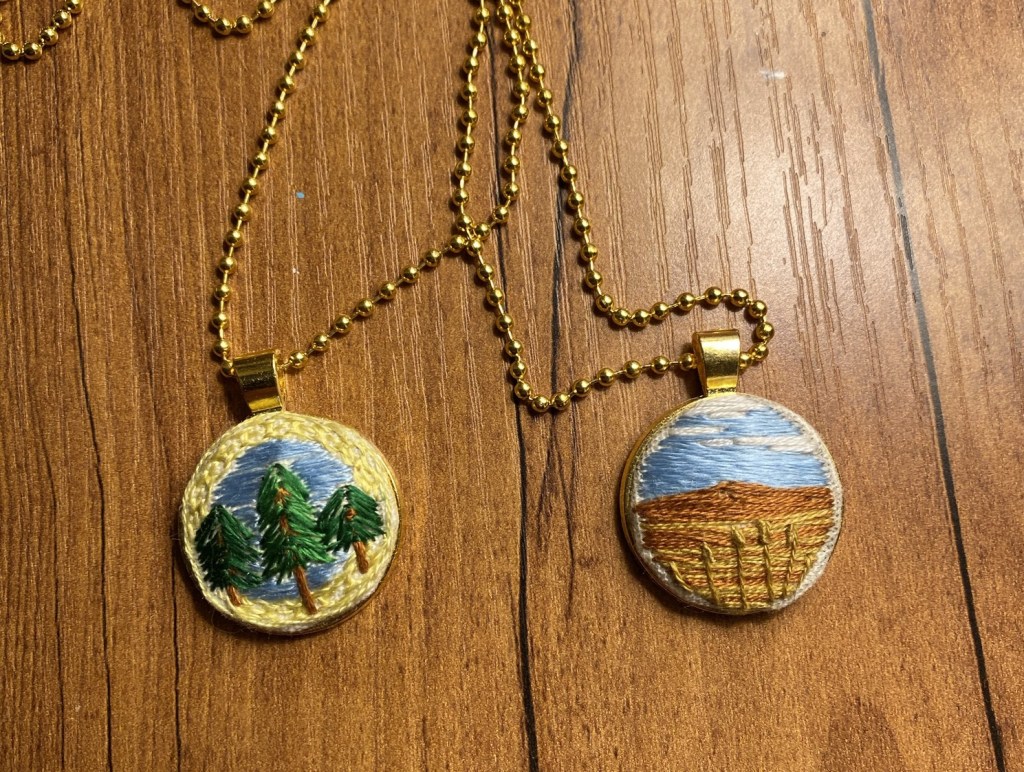
Applying this formula to my life is easier said than done, especially while dealing with the irresistible depression naps and fatigue. But I’m making small steps, beginning with a return to my blog and embroidery. These tiny pieces have proven to be approachable, satisfying, and fun.
I hope that all of you, dear readers, can find ways to be open to inspiration, whether it’s the spark to create, to reach out to a friend, to ask for help, or to learn something new. What inspires you?
Much has happened since I was last a regular writer. The details are too numerous to recount, but suffice to say, I had a period of contentedness that convinced me depression was conquerable. I started a relationship, I moved, I made friends. Life was incredible and full and sparkling. But the contentedness didn’t last, and my memory of the feeling is becoming hard to grasp.
As always, depression is a heavy fog. The longer it lasts, the thicker and wider it becomes. It’s hard to imagine that there’s anything beyond it. It started as summer came to a close last year. I had a strong sense that winter would be difficult, and I was right. I got back on Lamictal and tried to remember to use my SAD lamp. The months slogged by, but having supportive relationships helped. I hoped that when the weather warmed in the spring, my mood would lift. Unfortunately, that hasn’t happened. I’m not the most depressed I’ve ever been, but when my therapist asked me if it would be okay if I felt the way I feel for the next five years, the answer was a clear “no.”
The most noticeable problem at the moment is the hibernation that I’m doing. I have a distinct daily pattern: I feel relatively good in the morning and then absolutely abysmal in the afternoon. The pull of my bed is terribly strong. Sleeping feels right in the moment, but I know it’s a bad idea. There’s a void in my day, and clawing my way out of it after several hours leaves me feeling much worse than when I fell into it. I know that I need to fill that time with something healthier, but leaving the house in the afternoon is difficult.
Writing has fallen to the very distant wayside for far too long. Running this blog was a source of satisfaction for a long time, and it always helped me work through my thoughts in ways a journal just couldn’t. A journal is usually private, but a blog has an audience, and the act of explaining can illuminate what we do not know and solidify what we do. Feelings are elusive and subjective, so the process of pinning them down in words others can understand often helped me work through them. But I’m out of practice, and I’m low on motivation. I’ve heard that when you lack motivation, you just have to do the thing until a habit forms. So let this be the first step in rediscovering my old habit. I’m going to trek out to the very distant wayside and poke around until I find it.
This post is in memory of Ashley Peterson, a fellow blogger I exchanged comments with before her passing in 2022. Her support of my blog helped me immeasurably during a difficult time, and I wish I had known her more. Ashley’s blog remains a valuable resource for those seeking information about mental health.
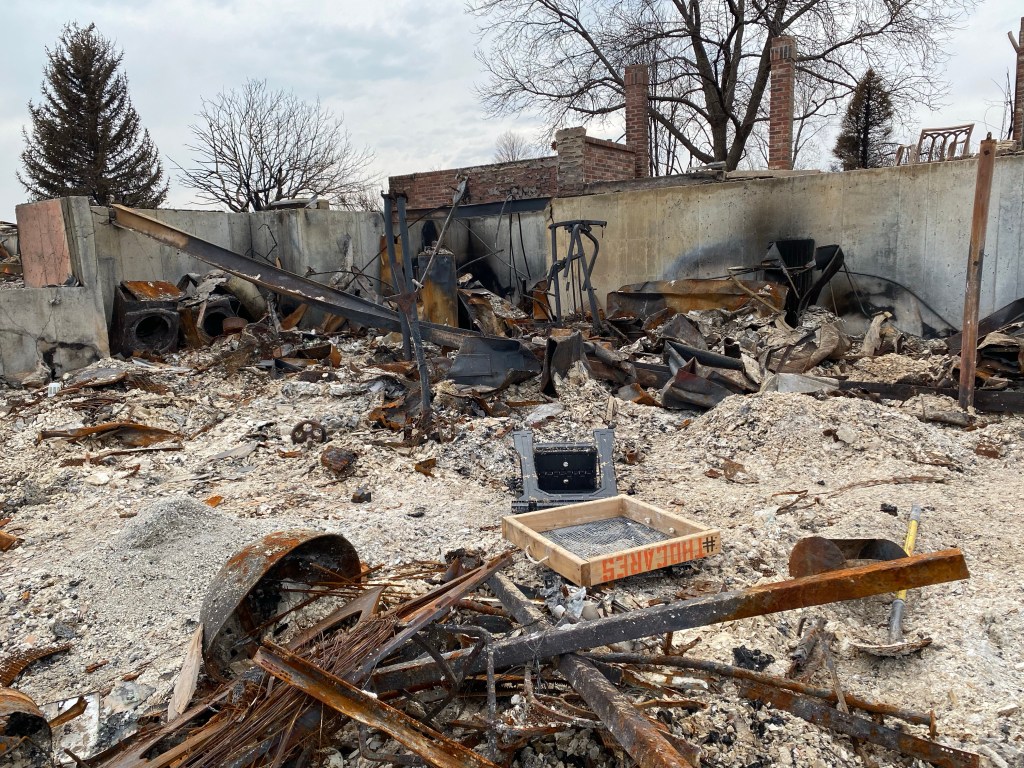
This might be my last Marshall fire-related post, at least for a while. The remnants of our house have been cleared away, and it seems like a natural opportunity to reflect. While painful, I hope that this step in the process can offer us some closure.
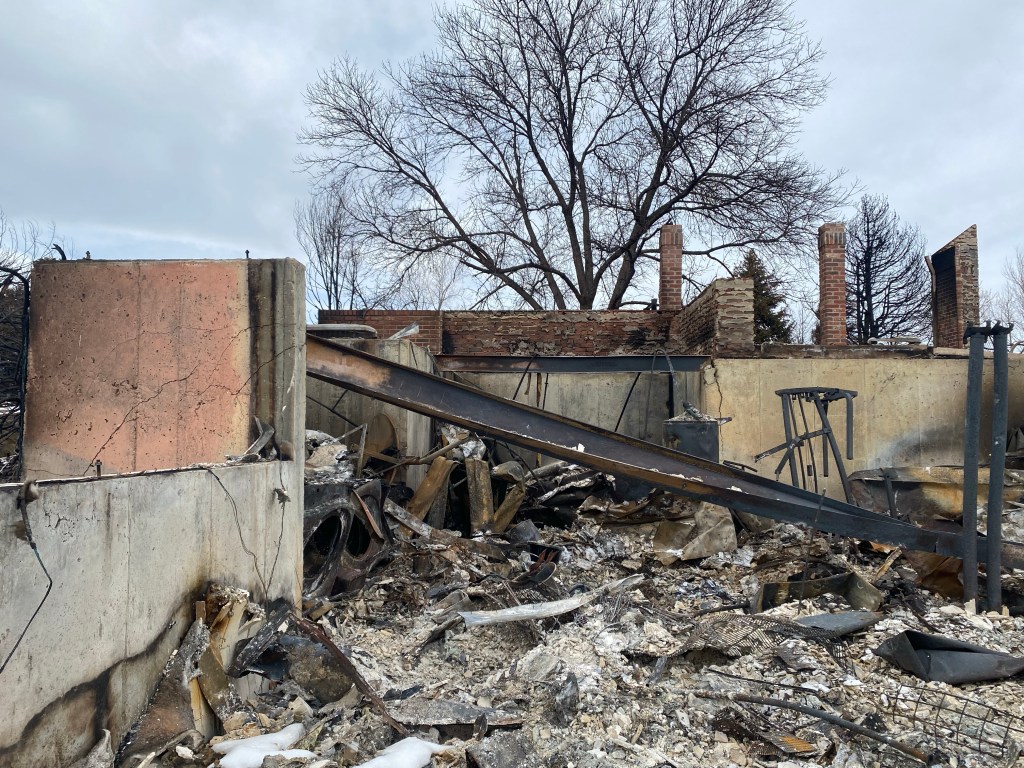
Part of me struggled with the idea of the lot being cleared because, although it was all ash, rusty metal, and shards of glass, much of it was still there, just in a different form. When the crews demolished the foundation and cleared it all away, our belongings truly disappeared. The property as it was had become a sad monument in my mind, marking the events of December 30, 2021. Now there is almost no evidence on the property of our home ever having existed.
On the other hand, I think it will be a relief to move forward without the wreckage occupying space in my mind. It felt strange to go about my daily life while a violent reminder of something terrible existed nearby. It was always draining a small amount of my attention.
I have to resist the muscle memory of taking that exit on the highway, and it still feels weird to call my current residence “home,” even six months later. When I close my eyes in the shower, the smell of my shampoo transports me to my old bathroom, with the sun streaming in through the frosted glass window. Sometimes, when I’m somewhere between asleep and awake, I feel disoriented; I can’t picture the room I’m in. Not home. Not here. Where am I?
I visited the house on some Thursdays on my way back from therapy. Sometimes, I got out and stood on the front step, looking down at the piles of ash. Sometimes, I just sat in the car. Every time I went, I wondered if it was the last chance I had to say goodbye to it.
The Roses
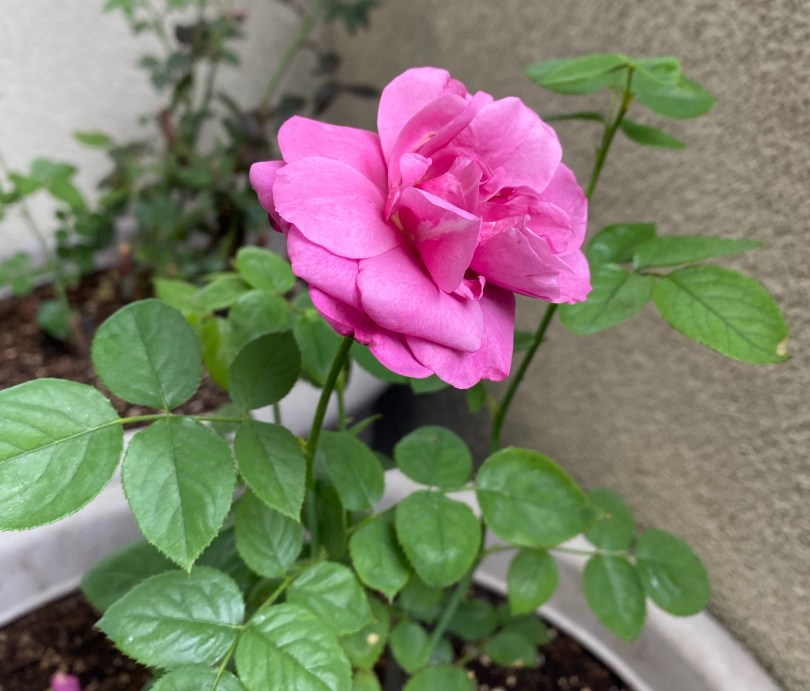
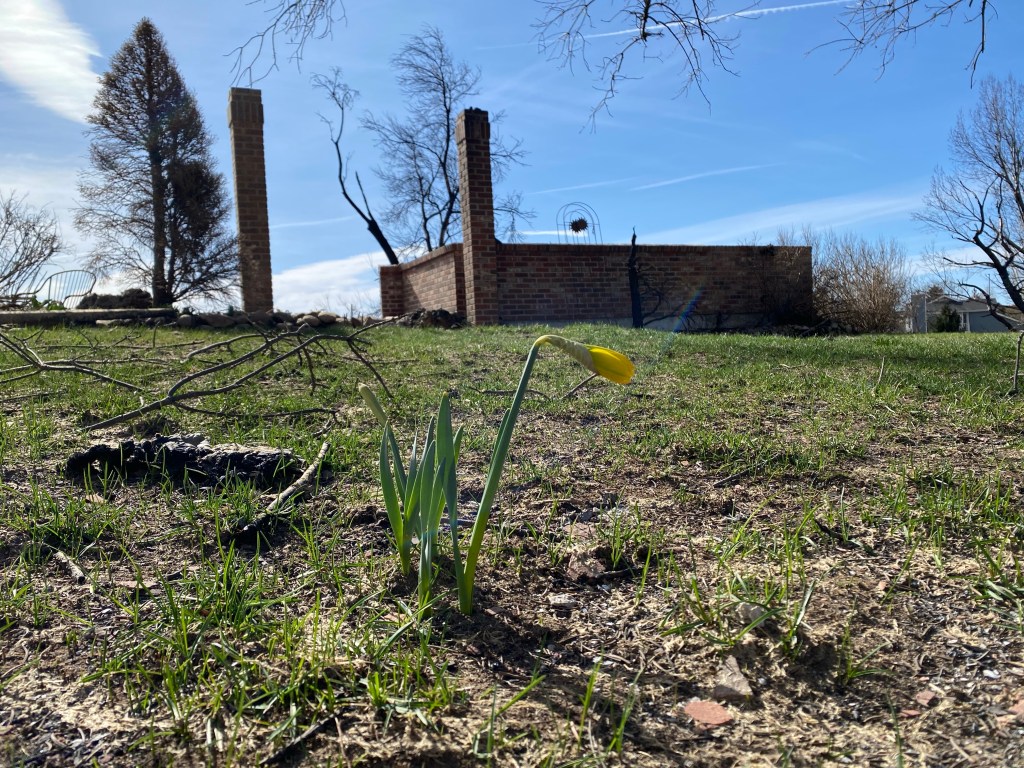
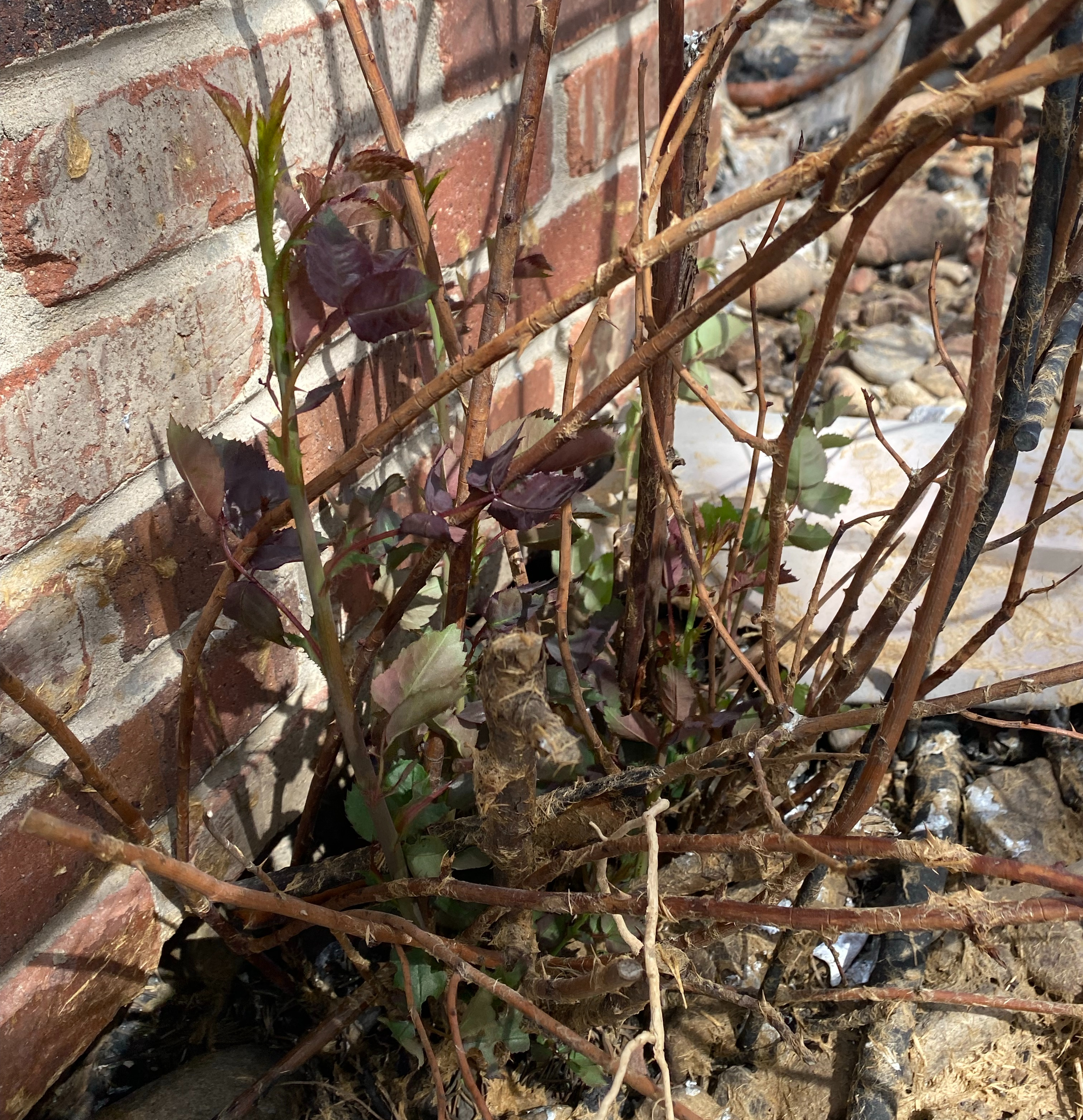
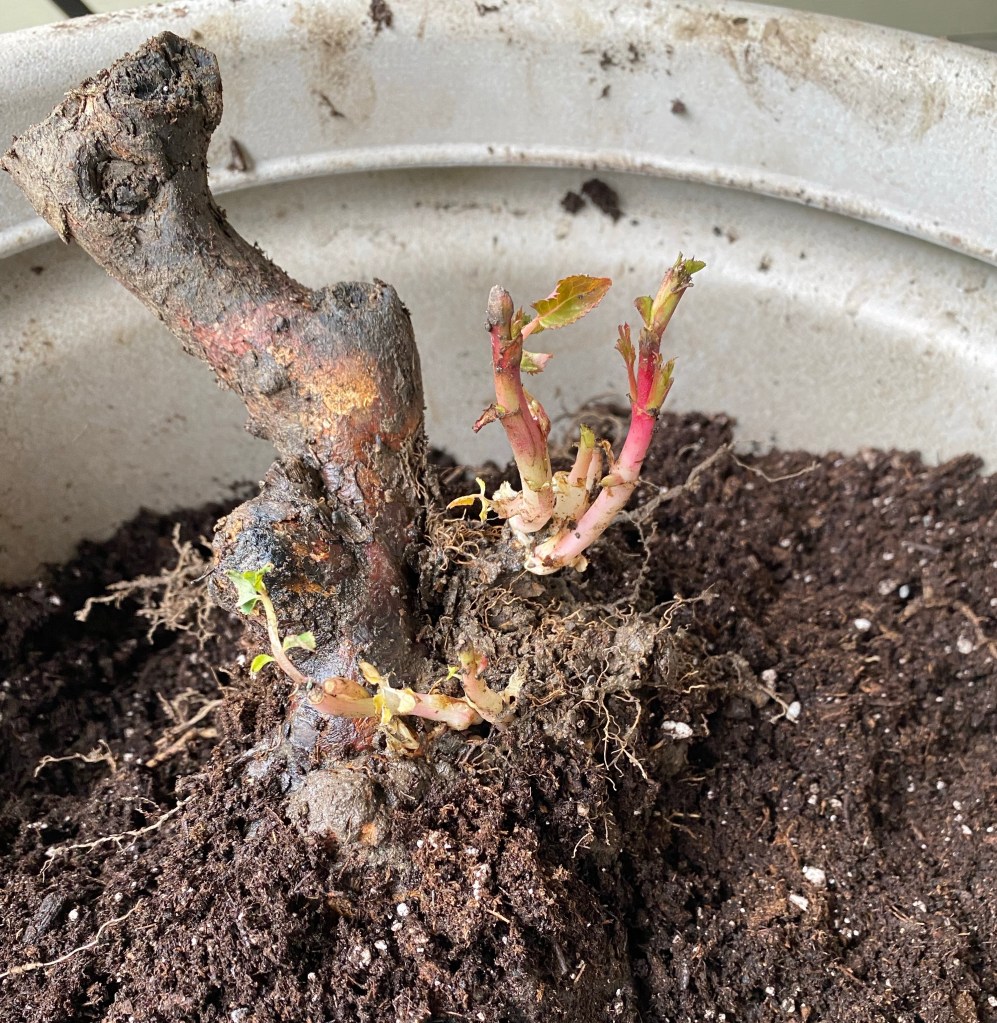
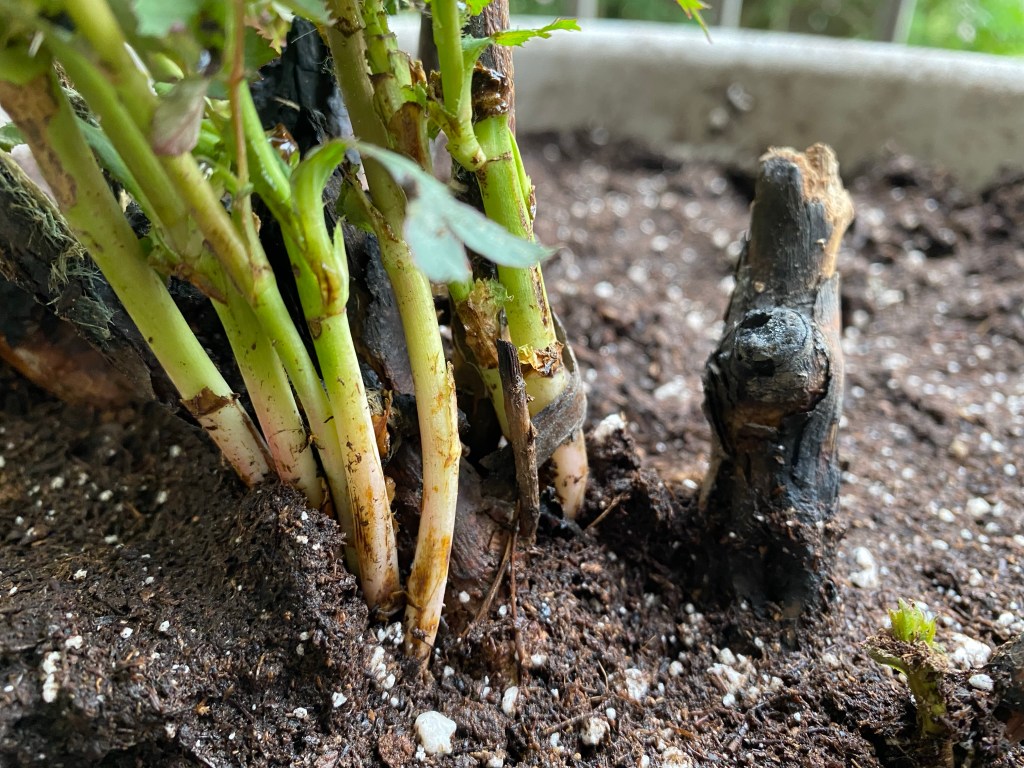
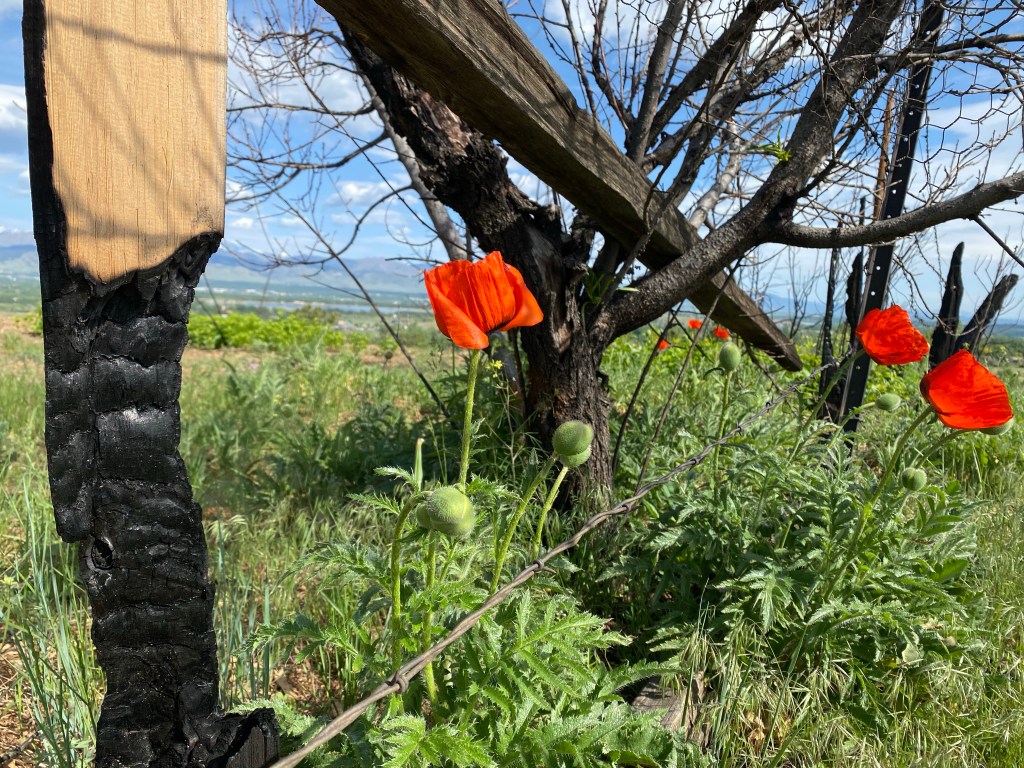
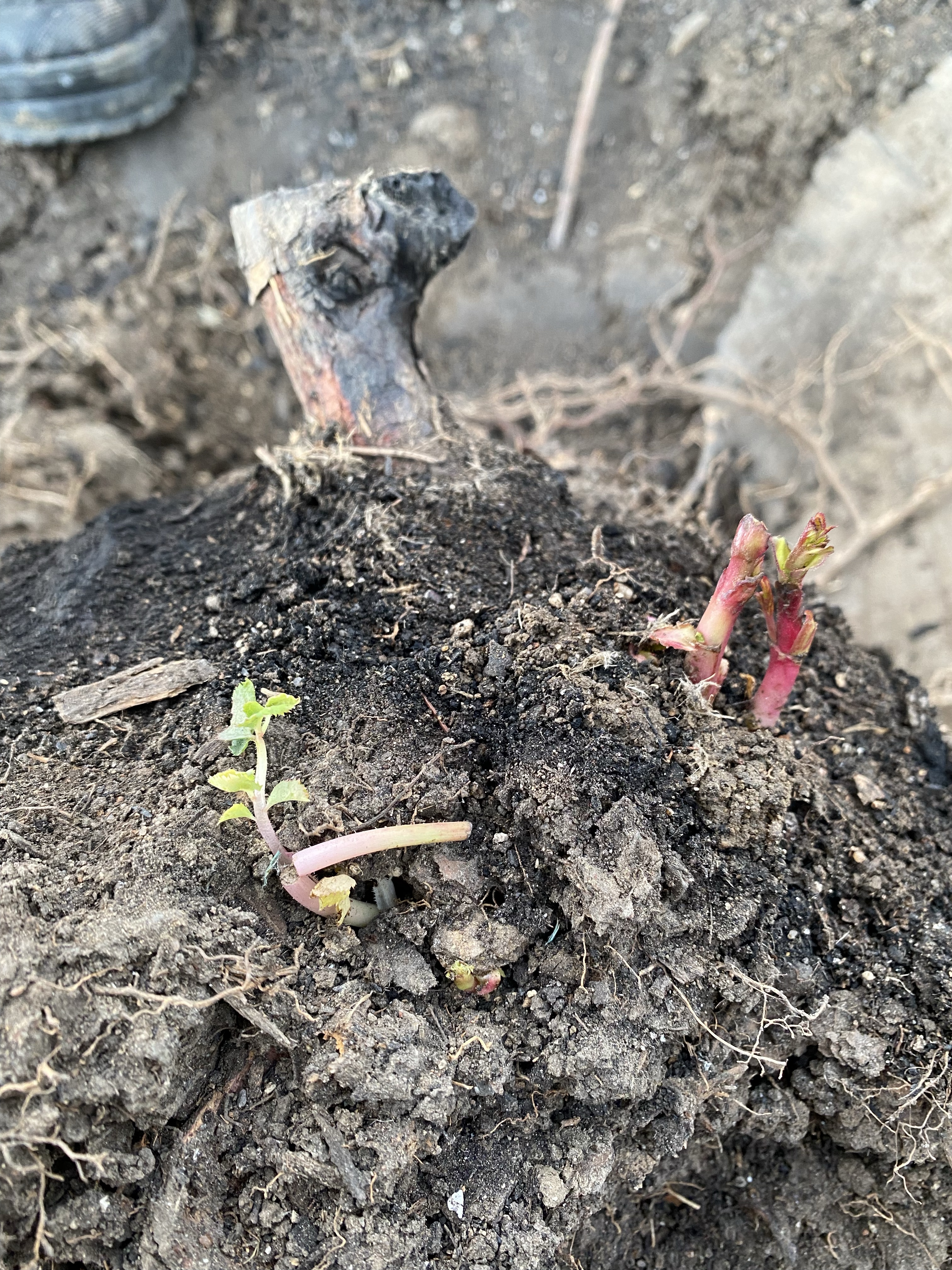
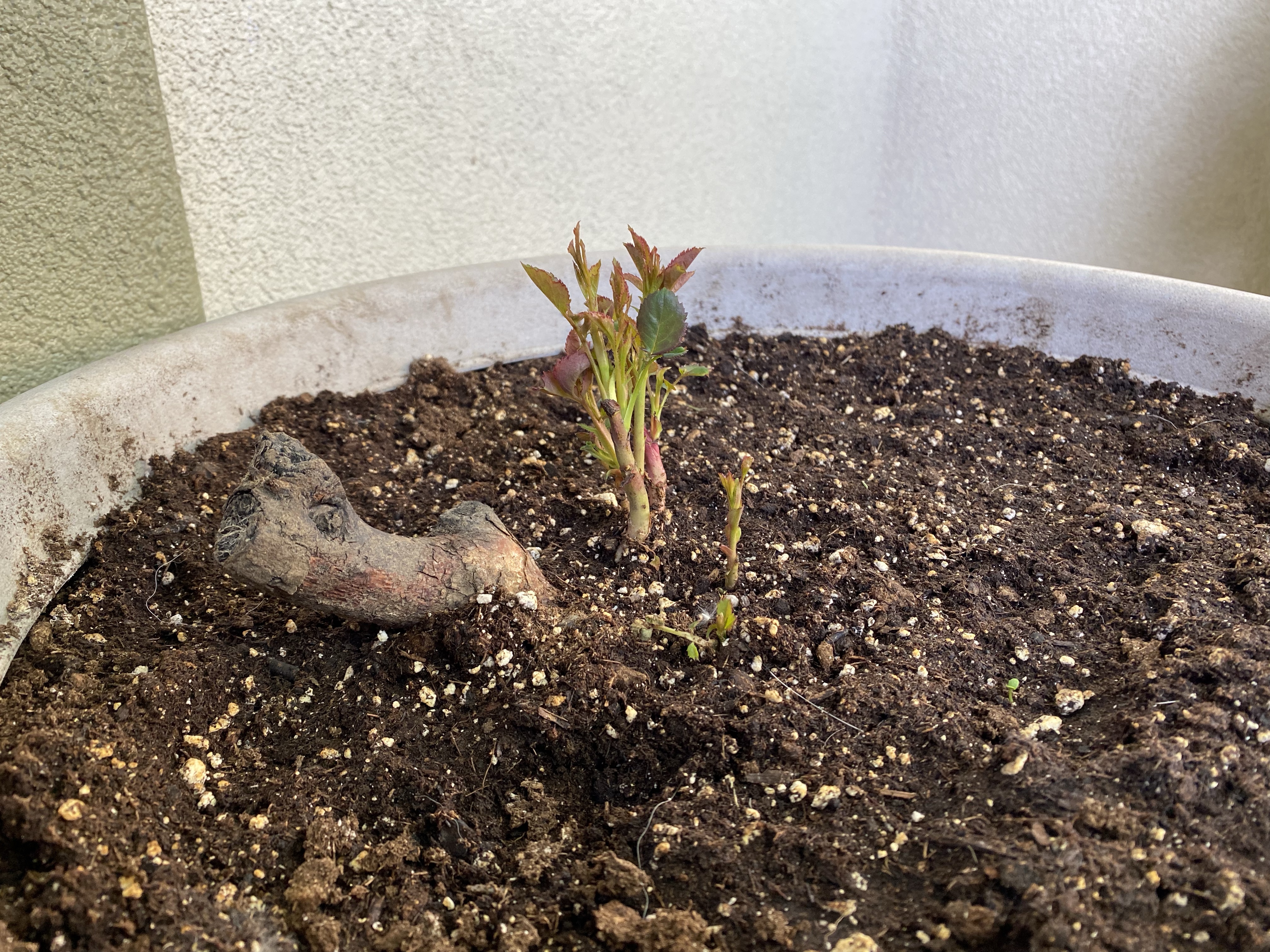
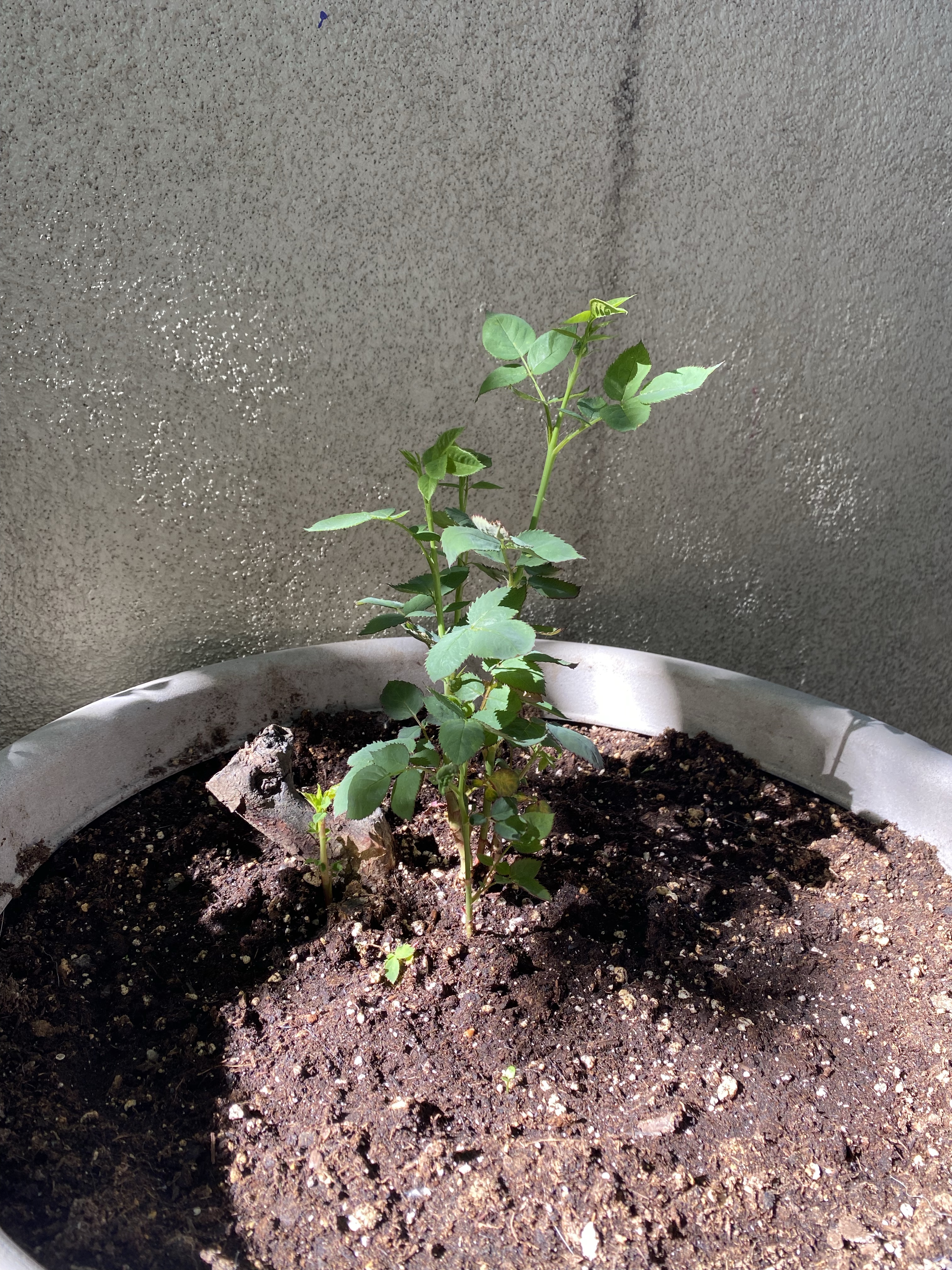
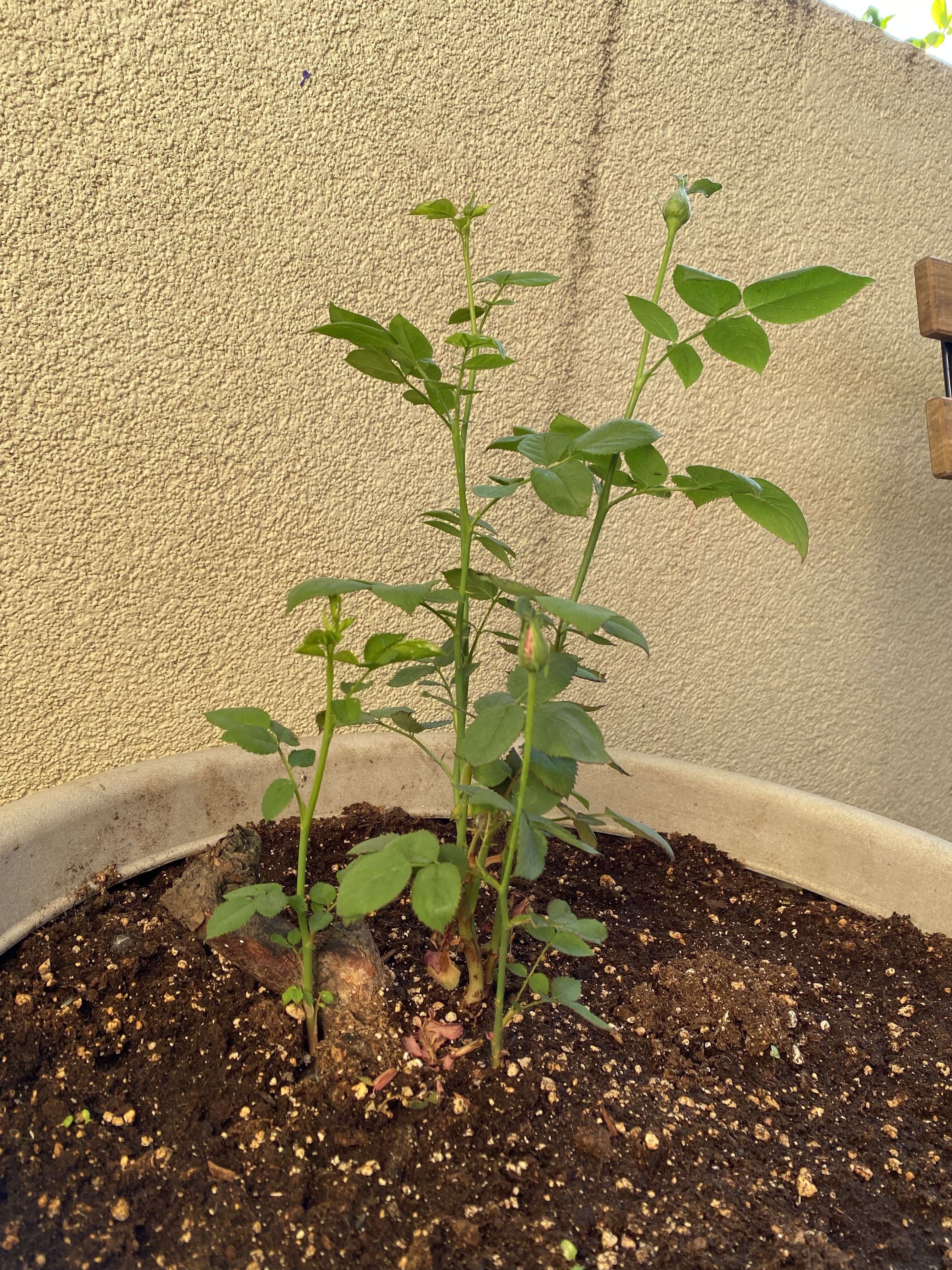
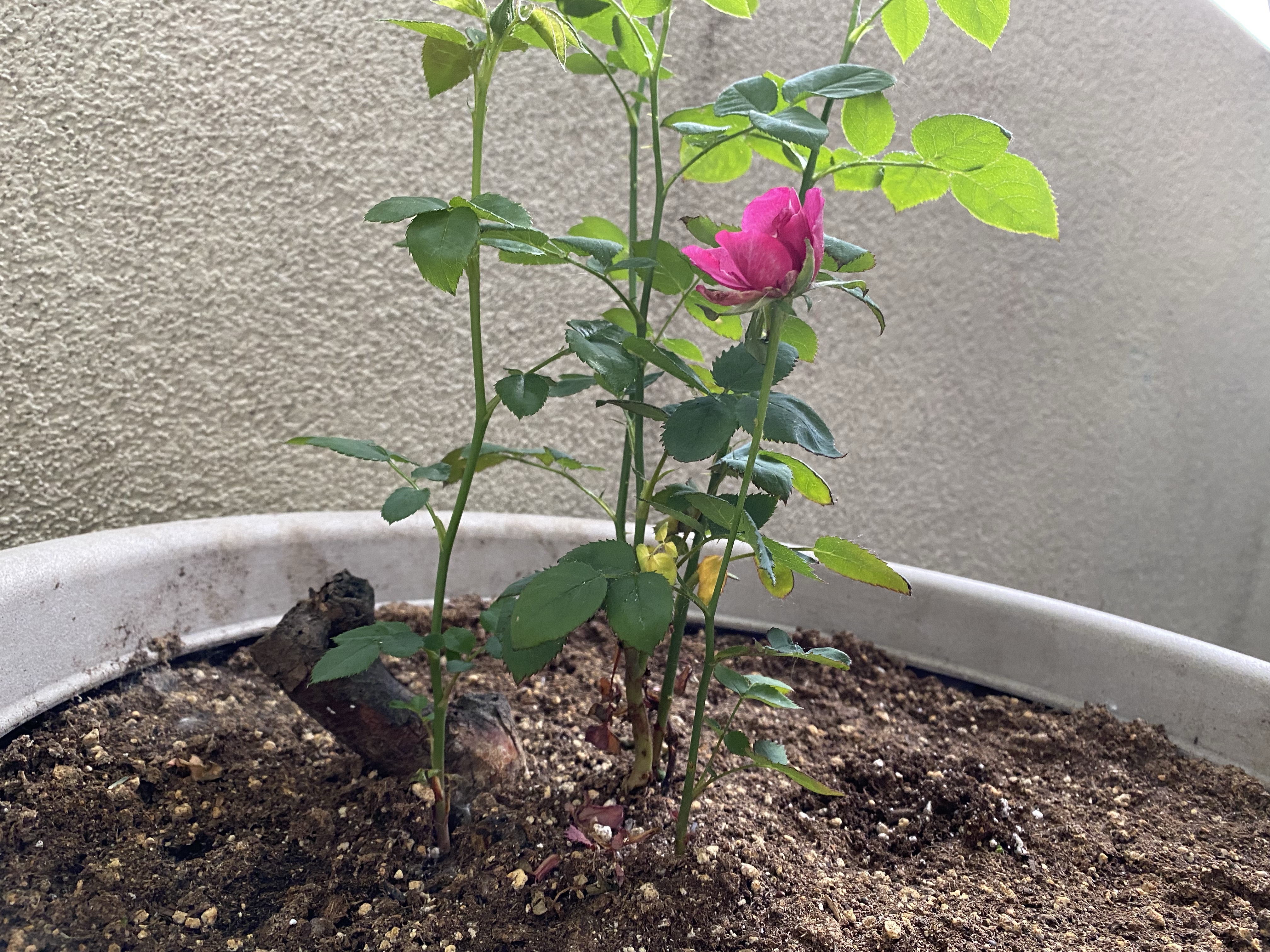
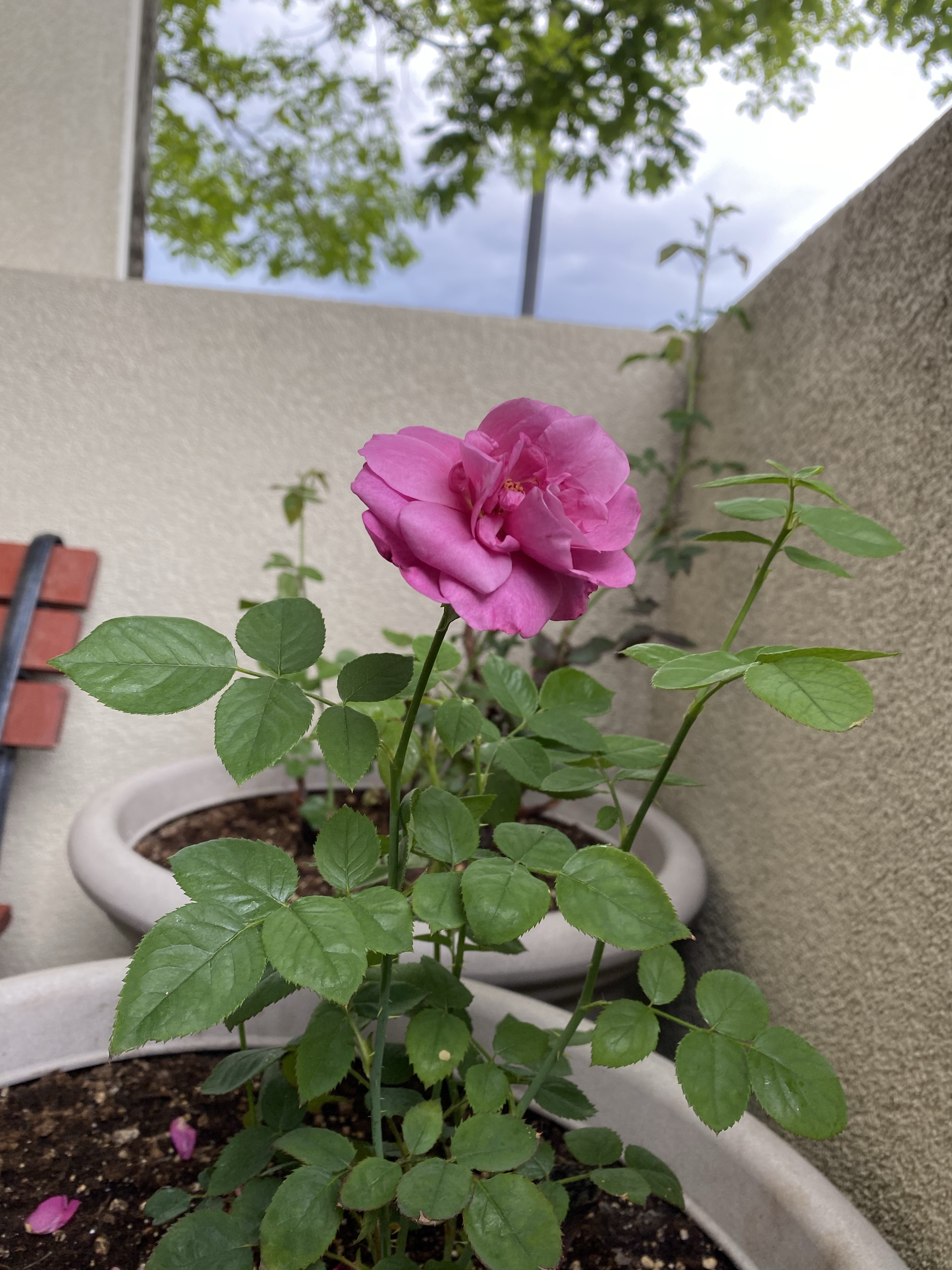
On one such visit a while back, I saw some greenery sprouting out from the dry, brittle remnants of a rose bush. The above-ground vegetation was burned or singed, but the rose’s root system was still alive. It sent up brand-new stalks when spring beckoned.
Rose #1
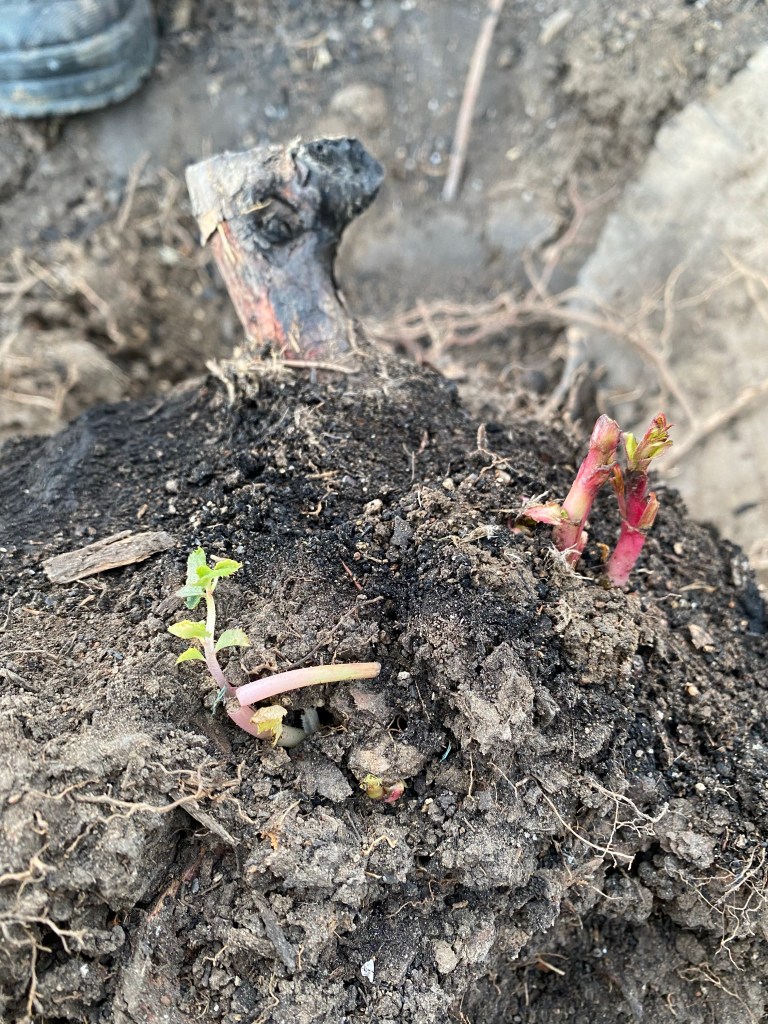
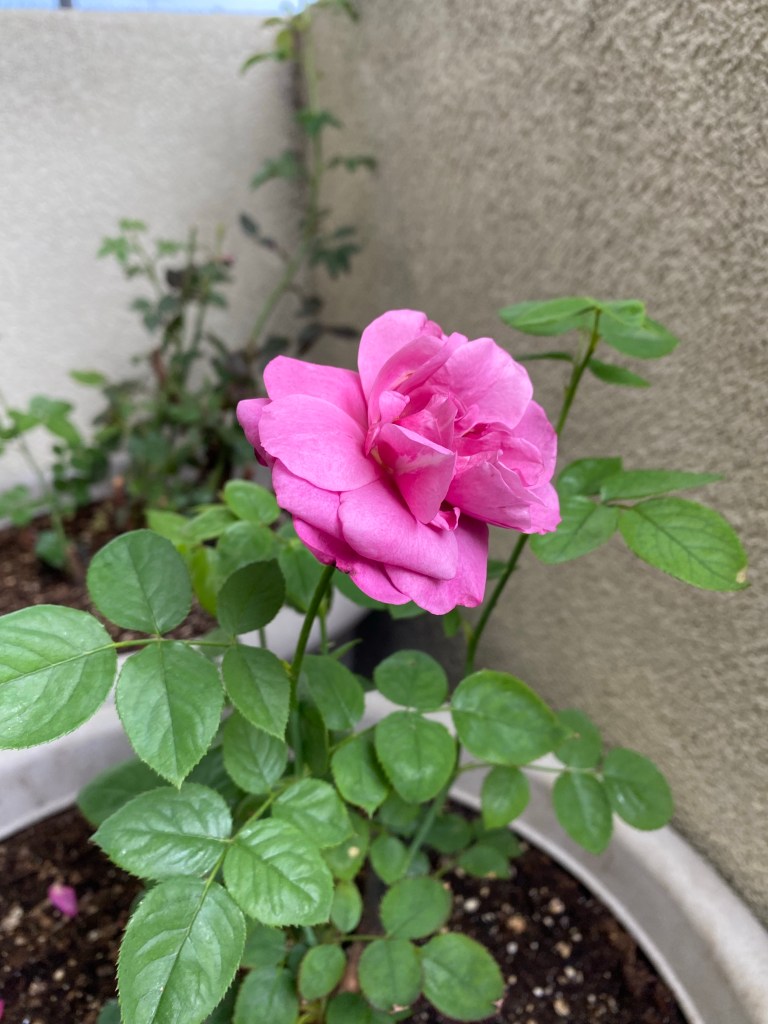
Actually, two of our four roses survived the fire. Seeing as how they were running out of time before the crews arrived to clear and level the property, we bought two large plant pots and got to work digging the roses up.
It was arduous; when soil burns, it can become somewhat hydrophobic, so although it had snowed and melted before we started, the soil was still incredibly hard. We brought water with us, but pouring it on the ground was only effective at wetting the top 1/8th of an inch of soil. It simply ran off, leaving the packed dust underneath it untouched.
Once we got down to the lower layers, the water helped more, but we still could only make progress by chipping away clumps of hard dirt and clay with our newly purchased gardening tools.
Rose #2
After about 20 minutes of digging, I came across a pill bug scurrying on its tiny legs across the disturbed earth. It struck me that I hadn’t seen any invertebrates before then. In our eight hours of digging across two days, we saw three or four worms, a couple more pill bugs, and one ant. The soil was barren.
In some ways, digging up the roses was familiar. We’d planted, pruned, weeded, and watered that garden bed countless times over the years. The sun was out, birds were calling to one another, and I knelt on the walkway as I worked, just like I did before.
Parts of it felt familiar, and feeling around for roots and gradually excavating them was mesmerizing. We lost track of time.
And yet, in the background, I was always aware of the space the house no longer occupied. It sat off to my right and tugged on my attention. There were no insects or spiders in the dirt, no kids running down the block, and no noises in the air. Without lawnmowers, dogs barking, and sprinklers chugging nearby, the neighborhood was eerily quiet.
We wanted to get as much of the root systems as possible, but we had to start cutting them somewhere. We also had to get rid of the top three to six inches of soil because it was contaminated with toxic ash. It pained us to sever so many roots and expose the fragile sprouts to the sun, but we figured the roses had nothing to lose. They would be destroyed if we didn’t save them.
The Trees
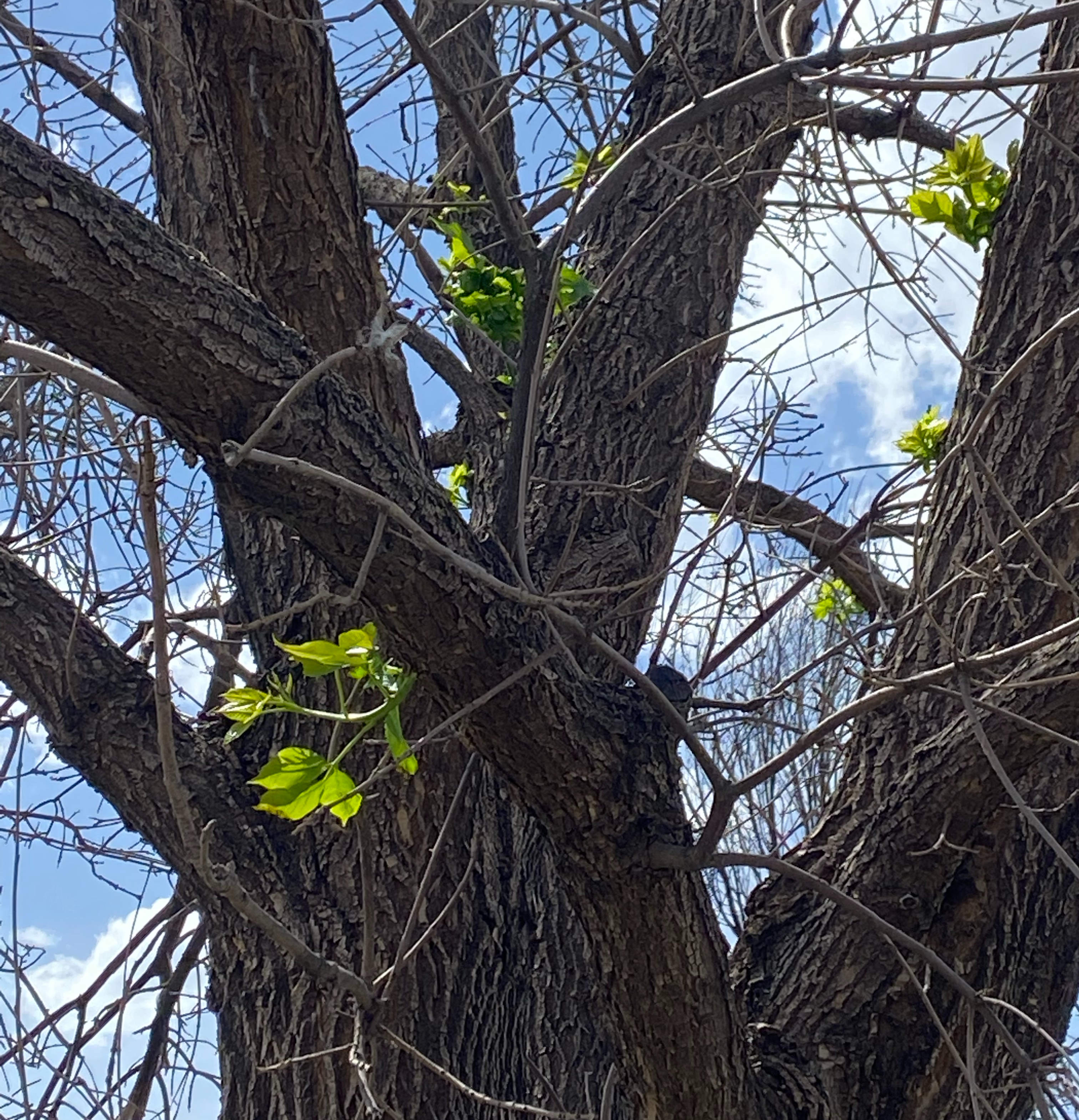
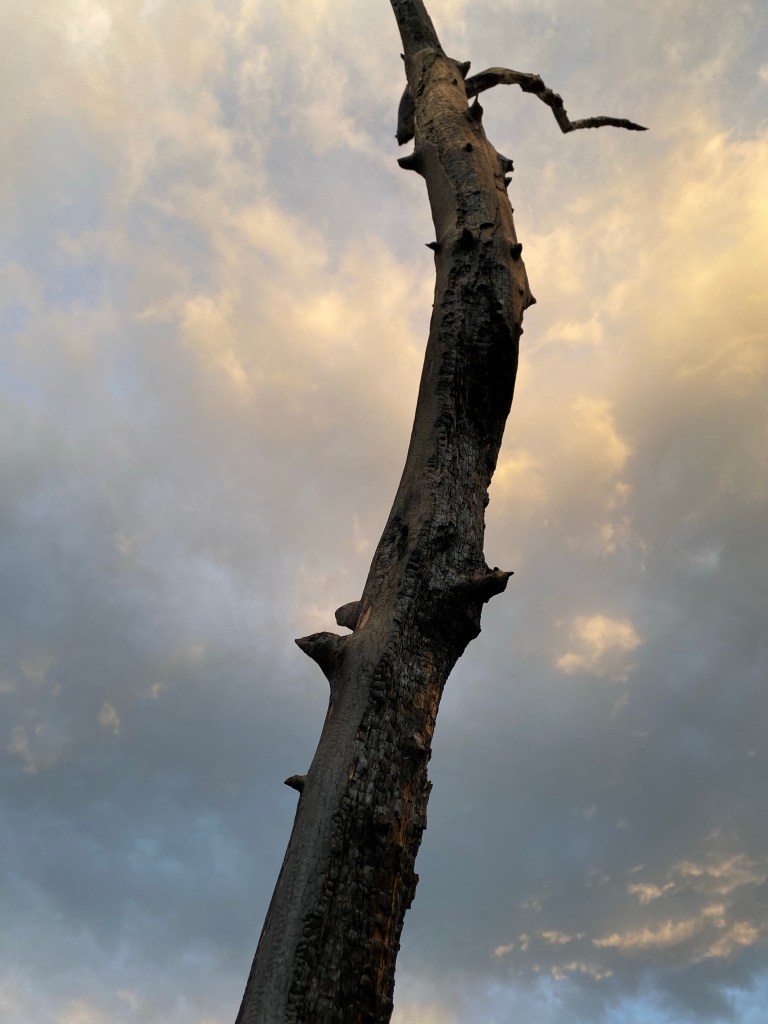
Unlike the roses, the trees were not saveable. There was an ash tree in our front yard that had new growth, but an arborist assessed it and delivered the sad news: it was too damaged to survive long term. The sap on the inside of a tree burns more effectively than the outer layers of wood. Essentially, trees can burn from the inside out. The outer layers of the trunk might have survived enough to grow new branches, but the tree’s ability to transport water was so reduced that it would not be able to sustain itself.
We arrived at the lot just as the crews were beginning to remove the trees. They started with the pine to the left of the driveway, then moved on to the ash tree in the front yard. They had cut it down at the base beforehand, so the backhoe operator got to work breaking the tree apart. We listened to the terrible sounds of dead wood being snapped under pressure, chunks of main branches flying into the air.
Slowly, the tree was reduced to where its main trunk split into three branches. The operator picked it up from the top to break it down again, and it dangled in the air for a moment. It was surreal – like I was watching a child use a toy backhoe to play with sticks on a playground. Except, it was such a familiar tree that seeing it lift off the ground and hang there did not sit right with me. The deconstruction of something so solid and unchanging was difficult to accept, even as I saw it happen.
When I was in middle school, I used to climb up to the best branch of that tree and read books, swinging my legs and listening to the rustle of the leaves in the breeze. I used to sit under it with my childhood dog, and later, with my current dog. I patted the bark and said goodbye to it when I went to college, and then I said hello when I moved back home.
This week, I stood on the other side of the street and watched my favorite tree get snapped into pieces by a backhoe and carted off in the back of a truck.
We left after that, trusting that the rest of the process would be even more disturbing to us. It’s necessary, and I’m relieved to finally be at this point, but it is distressing to see your already-obliterated home be torn apart even further.
Growth and Looking Ahead
Overall, I feel like I’m making progress, but I also feel like I’ve been changed by my experience, and no amount of moving on will restore the sense of safety I used to have.
I find myself organizing my important belongings so that they would be easy to grab in an emergency. I sometimes have nightmares in which something is on fire and I can’t find enough fire extinguishers to put it out or even hold it back.
There are some things I feel better traveling with than leaving at home because you never know what could happen while you’re away.
Some of my anxiety about fires feels useful to me, like it could help me respond more effectively in the future. At the same time, it seems to be in conflict with the sense of urgency I have about taking back control of my reactions to fire.
If the last few years have taught us anything, by late summer, Colorado will be so dry it will practically burst into flames of its own accord.
There will be more fires this year, and I don’t want to be thrown into a panic every time one crops up in the mountains or a few towns over. I don’t want it to impact my love of my home state or my desire to live here. I’d much rather adapt.
My depression has not been great lately, and I’ve let my blog go wild in my absence. The longer I go without posting, the harder it is to pick up again. I have to think back to where I left off and decide how to begin.
After the Disaster
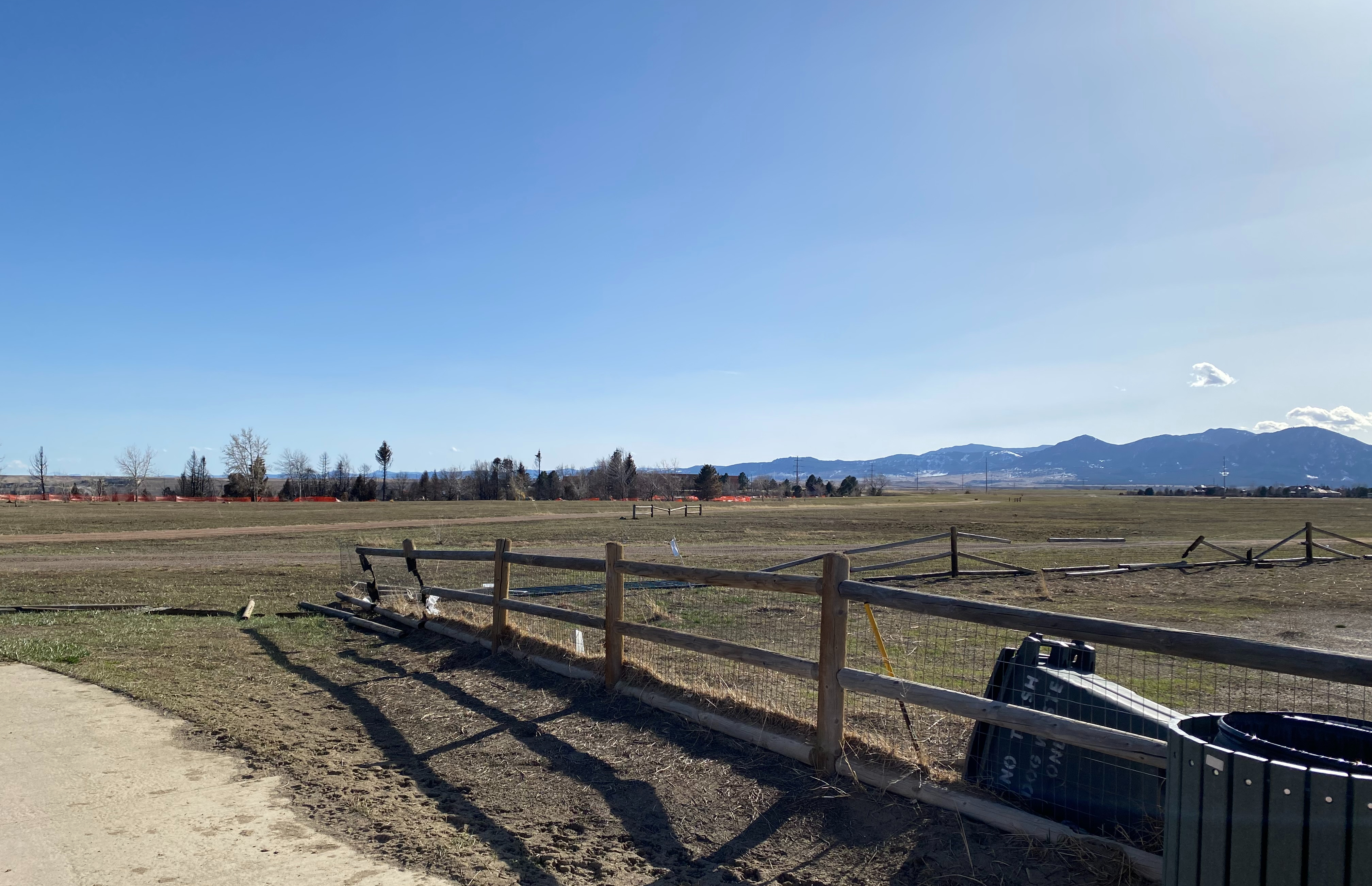
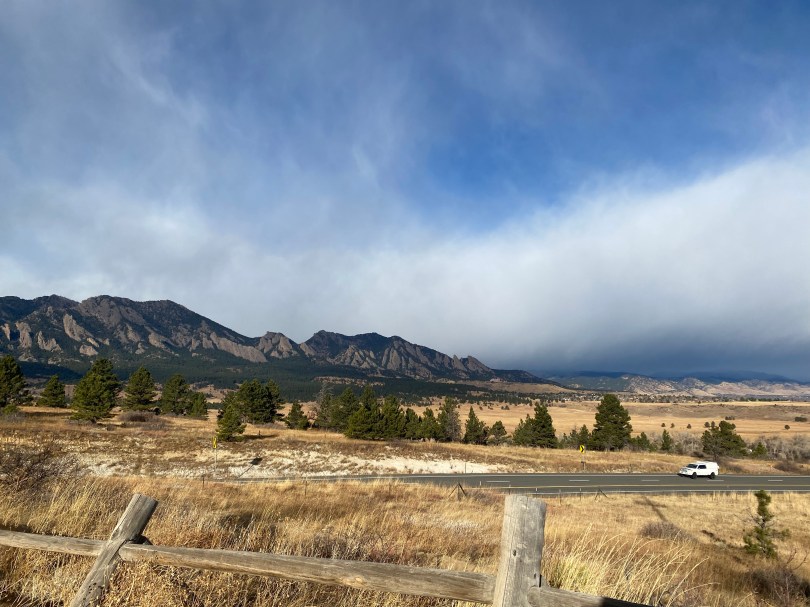
Last I wrote, I was wrestling with the loss of our house and belongings after a grassfire destroyed them. Life has gone on, as it tends to do. I’ve been back to the house a few more times, but only to look at it – not to search for anything. Yesterday, I parked by the trails near my neighborhood (when do I start calling it “my old neighborhood?”) and got out to look at the mesa. Green grass was growing like stubble over the burned landscape. I don’t know why I was surprised to see it that way. I knew the mesa would recover quickly. I suppose it was just more painful than I expected to notice the passage of time after a disaster.
It’s not prominent in national news anymore, displaced people have scattered and settled, and we’ve acquired all the things we need in our new place. The wider community is moving on, as is reasonable and expected. And yet, it still feels so immediate and all-encompassing to me.
The Day-to-Day Stress
Wind, for instance, makes me feel a horrible sense of dread. It reminds me of walking Stella by the houses across the street that morning, several hours before the fire. Snapshots of it come back to me: a woman in her pajamas, rushing to pick up trash from her capsized bin; a full recycling can skidding across the street at high velocity; picking up crumpled, Christmas-themed debris and hearing someone remind me that wrapping paper can’t be recycled.
Most viscerally, though, wind reminds me of stumbling to a fencepost on the mesa, my hair whipping around my face in the deafening howl of near hurricane-force wind. It reminds me of standing there in disbelief, watching the wall of smoke move closer.
I was driving during a high wind advisory the other day, and all I could think about was my dog, Stella, alone in the apartment. I wanted to get back there as soon as possible in case a fire broke out. I couldn’t help but imagine the terrible possibilities. What if the road to the gate was clogged with cars? Could I park on the sidewalk and climb the fence? How would I transport Stella and our things to the car? What would I take? I imagined myself climbing the fence and running to our apartment, only to realize that imaginary me had left the garage door opener in the car, and I would need it to get inside. Should I break a window or run back to the car?
Suddenly, my GPS told me to get off at the next exit, so I took a deep breath and reminded myself that it was windy. That was it. No emergency.
The slightest thing will make me think of the fire. A wooden bowl in a craft store brought me to tears the other day. The realization that it’s spring and I don’t have any warm-weather clothes is disheartening. Then again, I don’t think about it all the time, and in some ways, I’m settling into our new place and getting used to my new routine. When I try to notice when things don’t suck, I can identify things about the apartment that I like. It’s sunny, conveniently located, and it has walking paths nearby. I like my room, which feels bigger than my old one. My new plants are doing well. It’s a nice place to live, and we’re fortunate to have it.
Depression is Stubborn
Despite the positive developments, my mental health has been declining for a while. Well, it’s on a low plateau, like one of those deep-sea shelves. Even before the fire, things were trending downward, so all the upheaval hasn’t helped my depression.
I’m having a hard time pulling myself out of the hopelessness. Whenever my depression worsens, I struggle to see things positively, and not just about the fire. The future is hard to imagine. Depression seems to stretch on infinitely. I can go out and do things and even enjoy them on some level, but underneath the top layers, any kind of meaningful goal or long-term ambition feels like too much effort and utterly out of reach.
Depending on when I finish working for the day, I either take a nap or go for a walk with Stella. My afternoon walks feel long and exhausting, but Stella doesn’t mind if I walk slowly and stop a lot. I let her point us down a new street the other day, and I ended up getting completely turned around. I had to use Google Maps to get back. Small hiccups like that make me irritable when my mental health is poor, so I put Stella on a short leash for the rest of the walk. She eats goose poop, rolls on damp dirt, and forgets she’s on a leash when she takes off in pursuit of squirrels. It’s better if she walks right next to me.
I know that I’m very isolated. It’s somehow overwhelming to talk to friends or even make a blog post. I worry that if I go do something social, I’ll run out of energy and won’t be able to muster up any enthusiasm. Usually, it’s fine, but the thought of it is so exhausting that I’d rather be alone. I’m more comfortable alone, but I know it’s not good for me.
I don’t like abandoning my blog for long periods of time. Depressed me struggles to create an entire post that follows a cohesive story or structure. When I do write something, I usually convince myself that it needs more work before I can post it. I let it languish in my drafts folder until I eventually return to it, read it, and wonder why I thought it was so bad. This post, for instance, is a conglomeration of several drafts I wrote over the last few weeks.
The combination of depression and perfectionism is a strange mix. When it comes to things like showering and eating, I’m apathetic. But, when I’m writing a blog post, an email, or even a text, I have to edit obsessively. That is, until depression fills me up with apathy like sand in an hourglass, and I decide to set aside my writing.
Let’s see how long it takes me to write the next one. I’m setting that clam for one week. Maybe two.
When we saw the pictures of our house after the Marshall Fire, we thought for sure there would be nothing left. We wanted to see for ourselves whether anything survived, though, so once we had donned our protective gear, we got to work sifting through the ash and rubble. Almost immediately, I found the ceramic tile from a Munich souvenir magnet that was part of my extensive collection.
I was hoping to find some of my jewelry, which I had gathered mostly as meaningful gifts from other people. When I found the magnet, I knew I had to be close to my jewelry, so I started digging again. After an hour or so, I unearthed my jewelry tree.
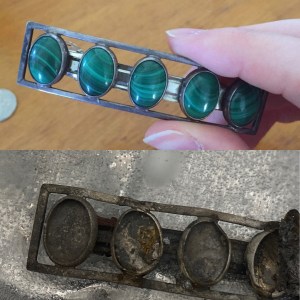
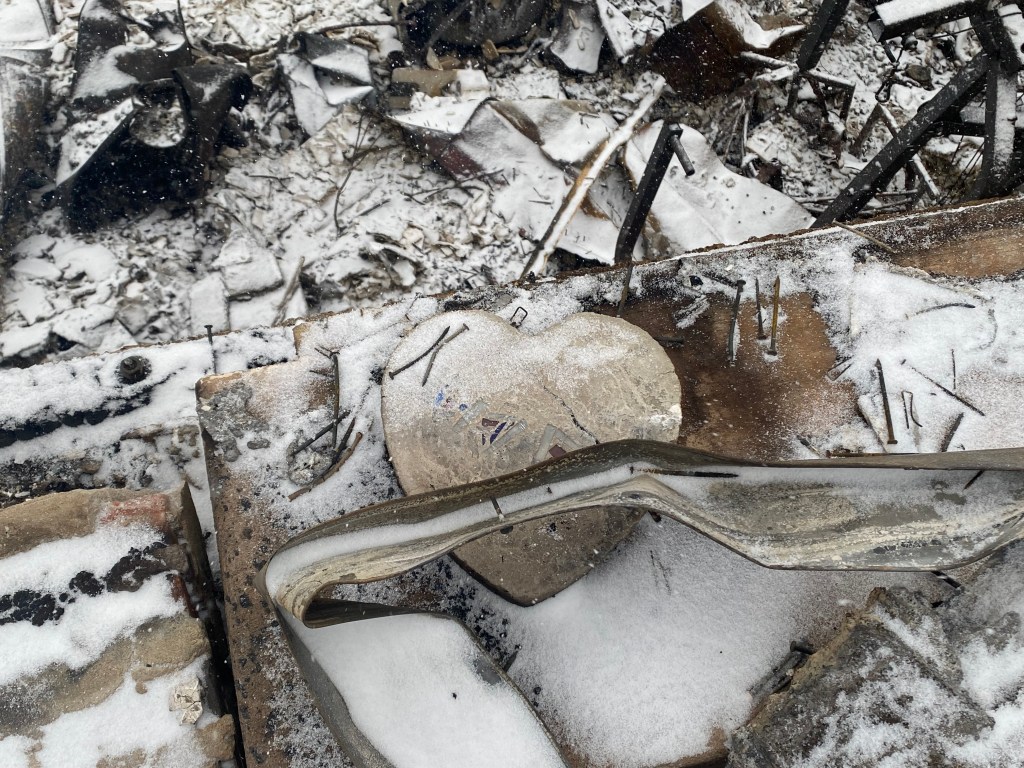
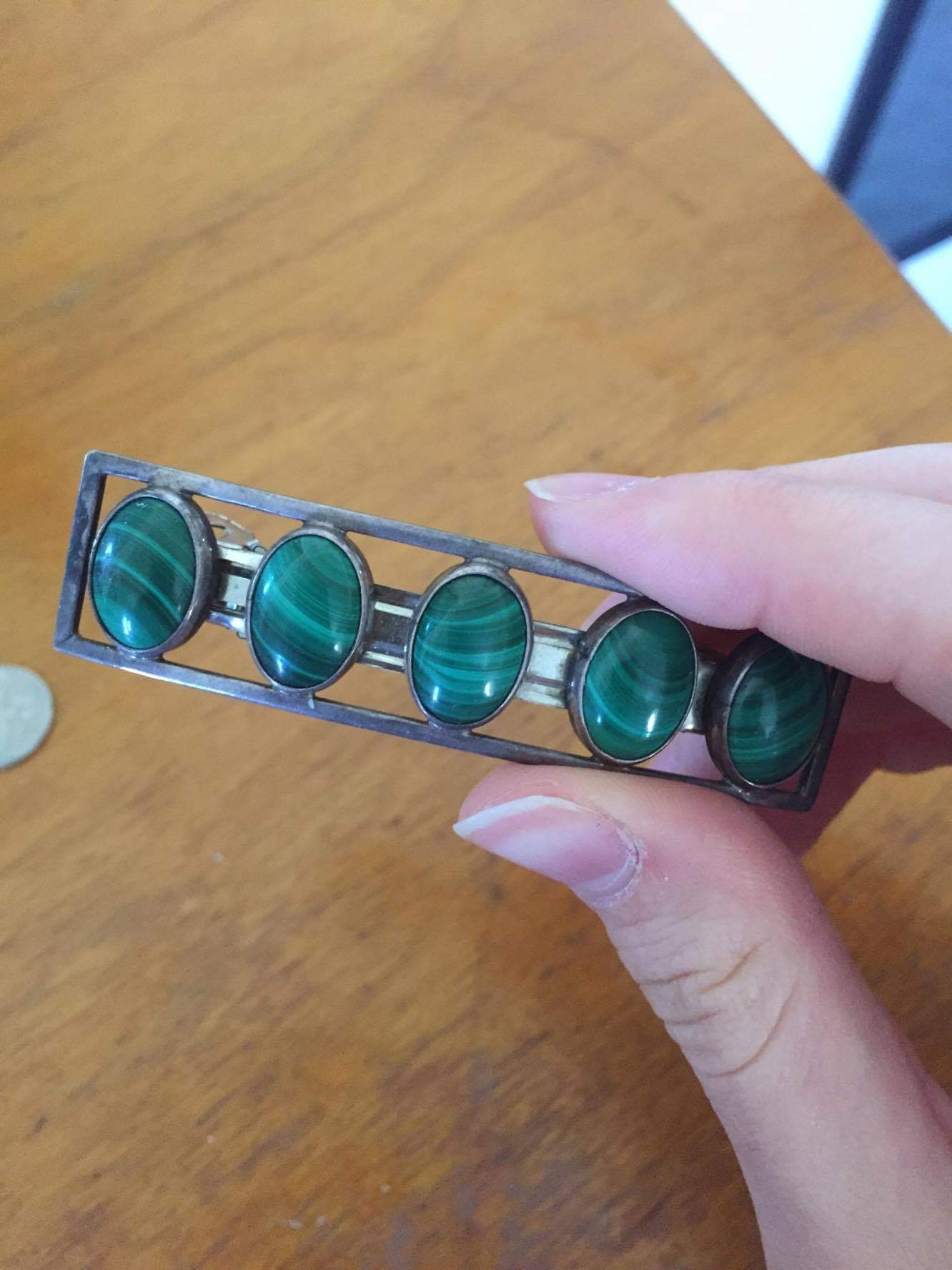
It was crusted over with bits of drywall and ash, but it still held a couple of pieces in the tray at the bottom. A bracelet I rarely wore, assorted earring backs and beads, and the barrette I mentioned in my previous post, now warped and empty.
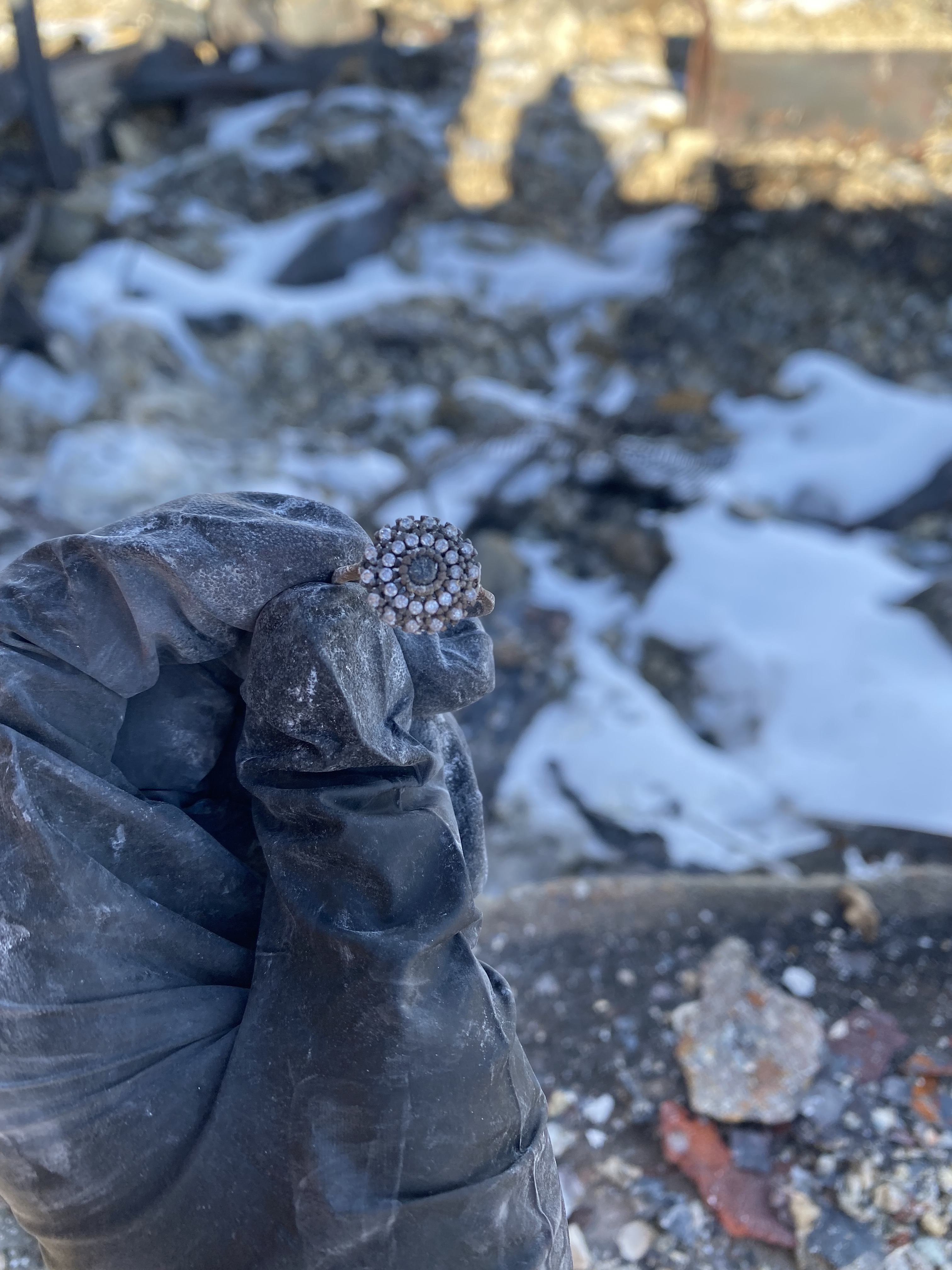
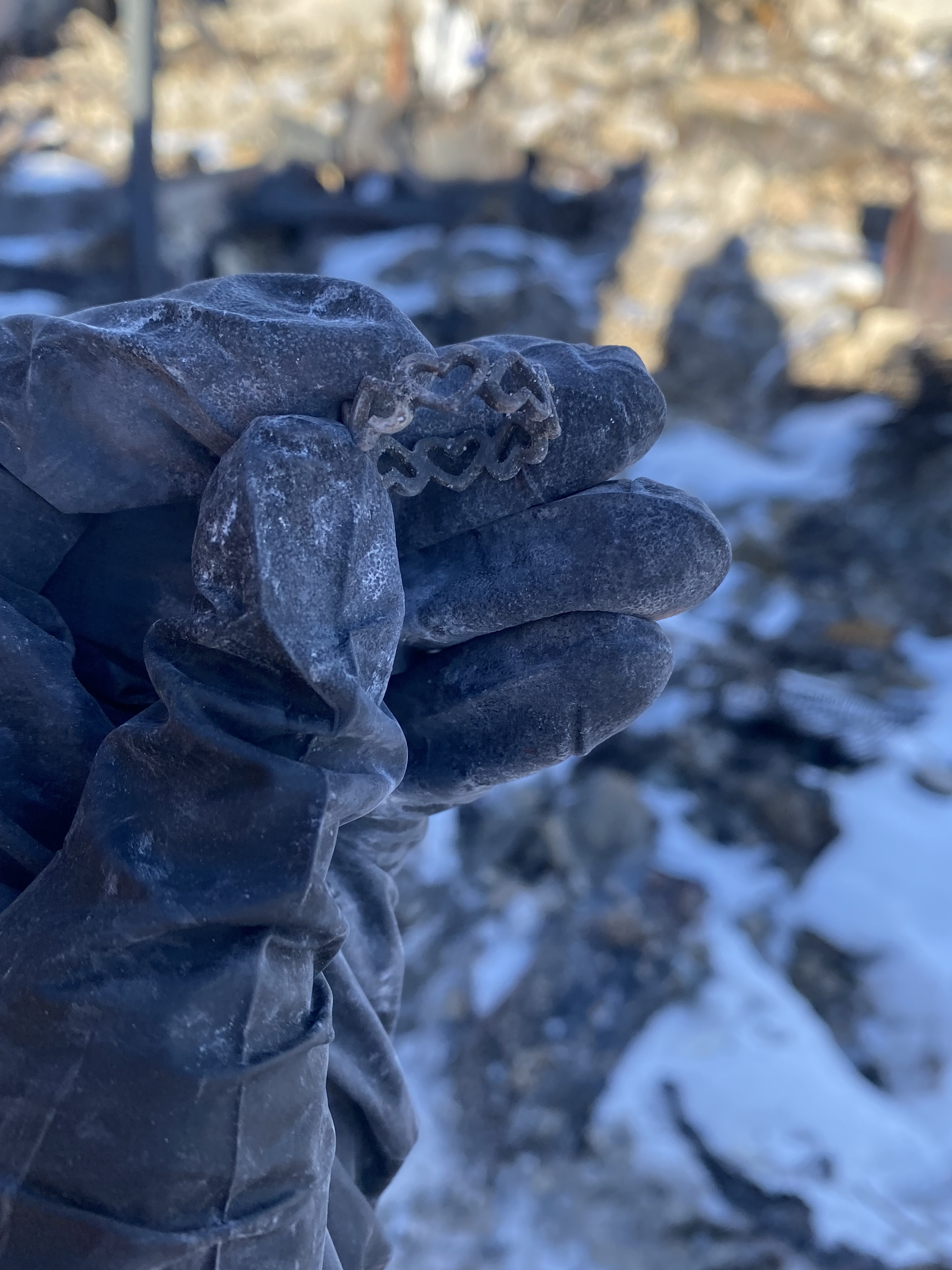
I dug around some more and found three rings and two heavily damaged pendants. I placed all of them in a small bucket for safekeeping while I continued to sift.
On a small scale, I could understand where things were. Once I found my books and a magnet, I figured my jewelry was close. But it wasn’t always so intuitive. Things fell and were blown around so violently that at times, nothing seemed to belong in the areas in which I was looking.
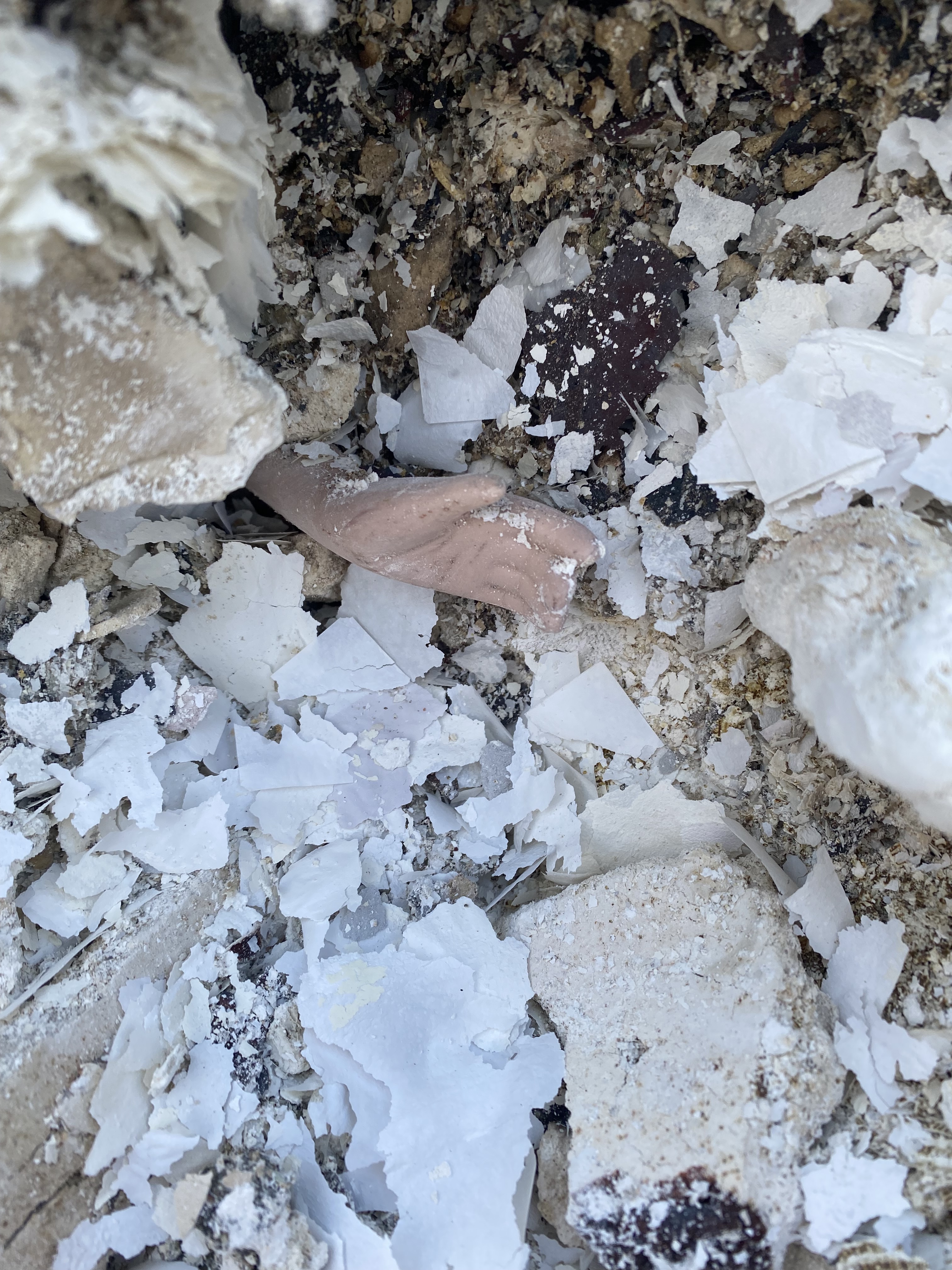
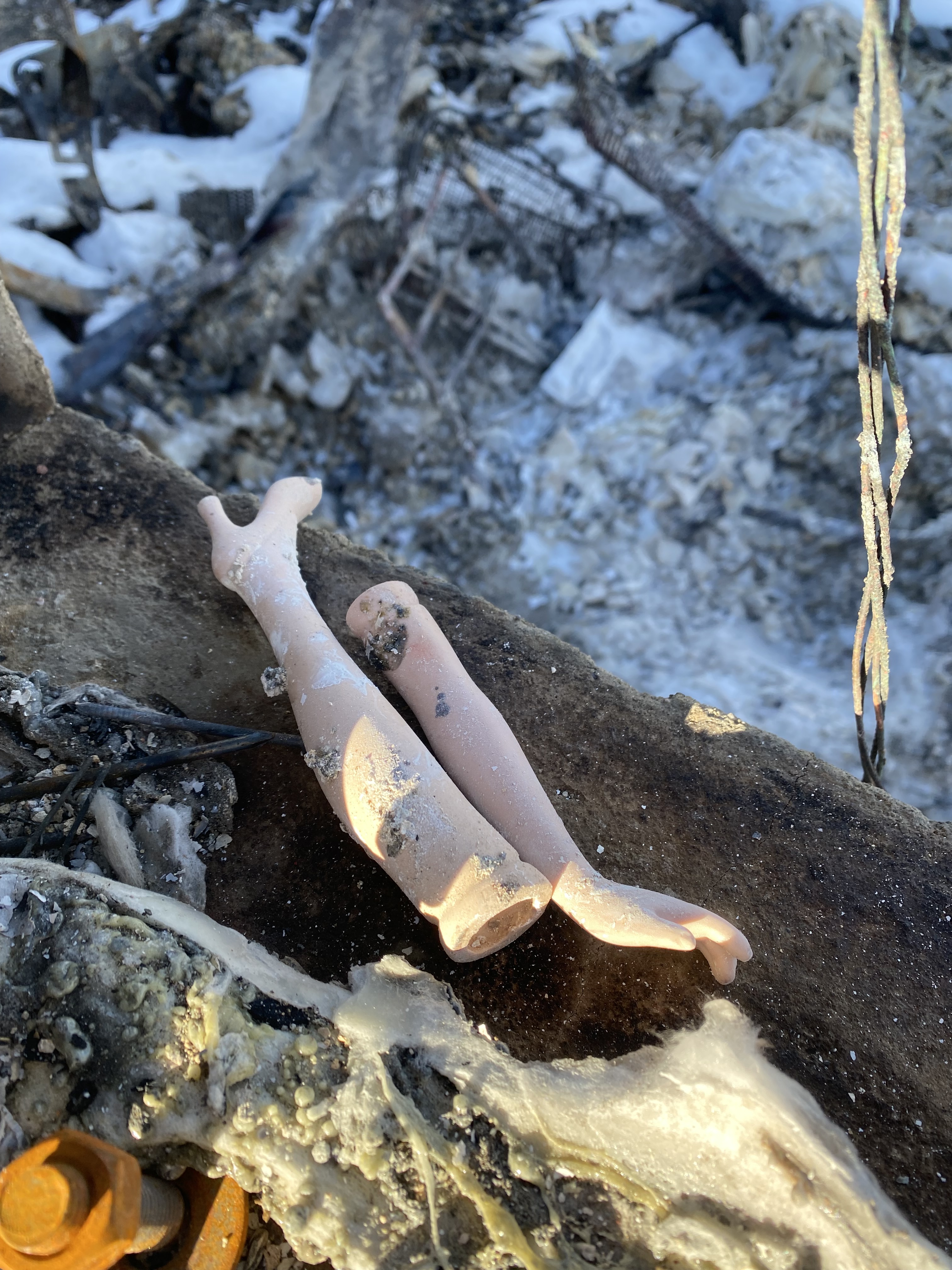
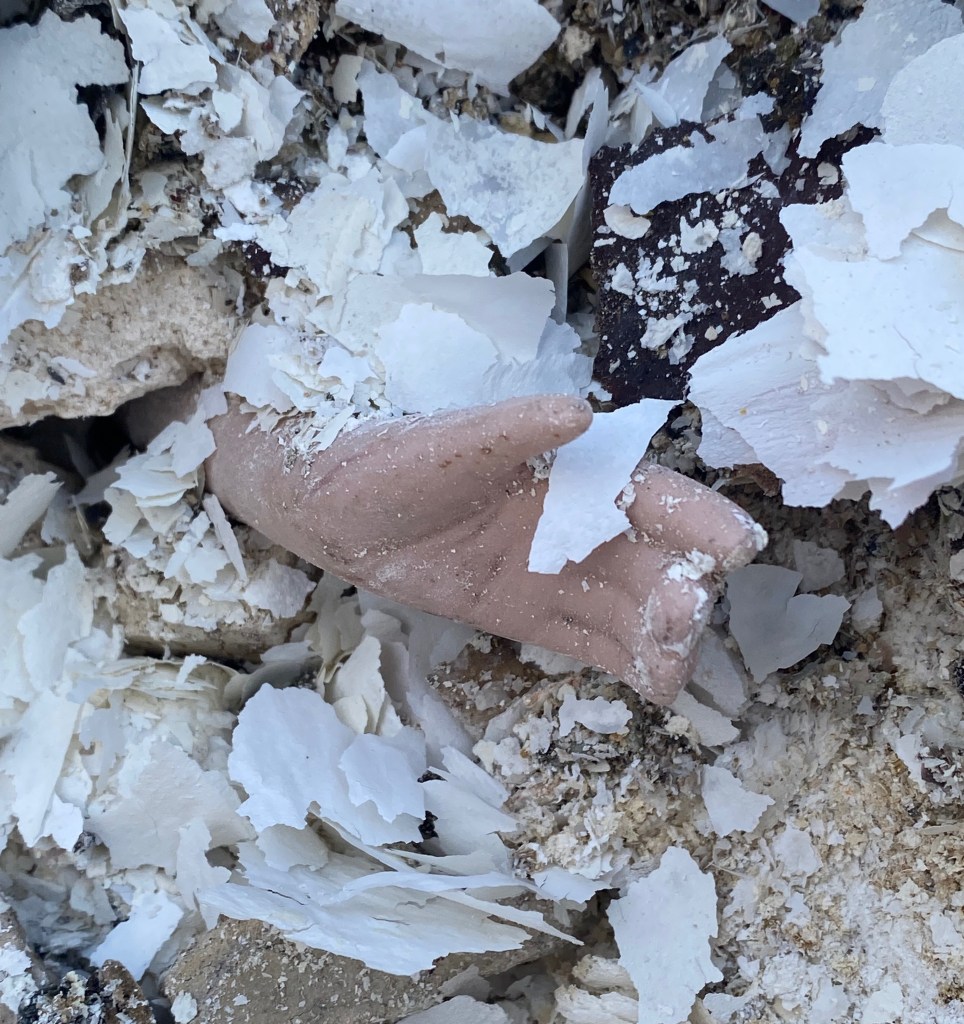
The doll arm was a disturbing surprise. The small, ceramic arm that I pulled out from under a bleached, flaking book used to belong to a decorative doll with a purple dress and curly, brown hair. I had placed her up on the top shelf of my closet years ago and quite frankly, I forgot she was there. I found two arms and a leg.
Later, I tried to clean the disembodied limbs with vinegar and baking soda, but they’re too far gone. I suppose it might be creepy to hold onto them, but the gallows humor of it was too good to pass up without trying.
That first day at the house was exhausting. The shock of seeing it in person and of walking over the shattered glass and buckled drywall covering the blueprint of our house was beyond difficult.
It’s odd the way things blend into the rubble. I walked by the spiky metal pole at the back of the house 5 or 6 times before I realized that it was our Christmas tree. It took me another second to recognize that the amorphous glass shape adhered to the middle was a conglomeration of melted ornaments and lights.
Several large pieces of twisted metal in what was my room turned out to be Stella’s crate, the shelving from my closet, and my box spring. I was crouched, wearing a Tyvek suit, an N95 respirator, and goggles, digging with my gloved hands through two feet of wet ash and drywall. It hit me occasionally that I had been sleeping mere feet away from that exact spot only two weeks ago. Blissfully unaware of the impending disaster.
It was exciting to find some things on our first day. We weren’t expecting to, so the rush of success kept us sifting and digging far longer than we intended to. It was hard to stop once we had started. That momentum made it easier to focus only on the section in front of me and the items I thought were nearby. I could tune out the rest of the house, only taking it in when I stood to move to a new area.
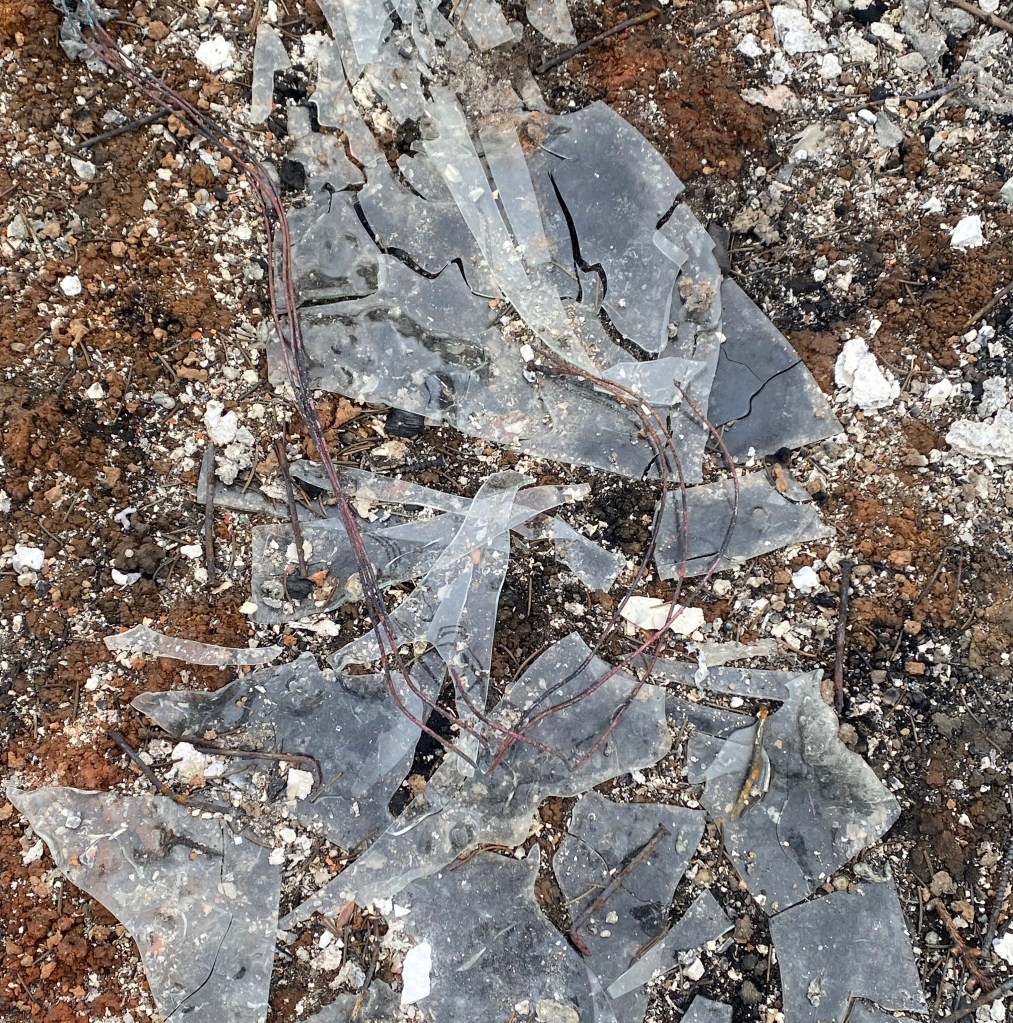
A windowpane
The second time we went to the house was more emotionally challenging. Having seen it once already, it was less shocking but more deeply disturbing. It had sunk in since our last effort to sift. Still, we had found some things the first time, so we suited up and got back to work. Very quickly, my sliver of optimism turned into a sad, frustrated, mildly foul mood.
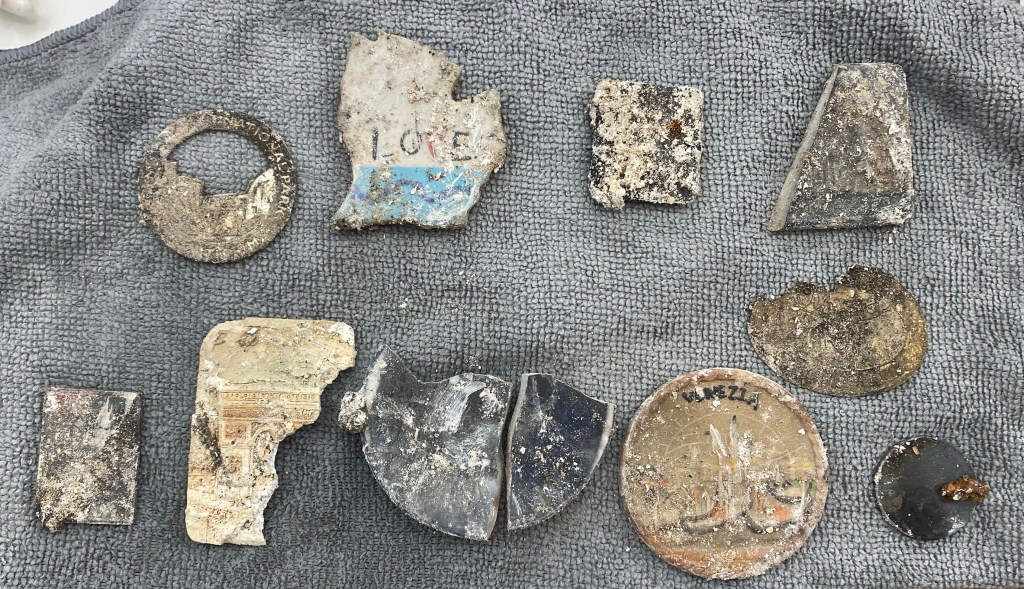
I was finding crispy, rusted rectangles that once were magnets from my collection. Was this one from Denmark? Was it from Sicily? I found a ceramic turtle, broken in several pieces, and I found mound upon mound of worthless rubble.
Grand Canyon National Park, Michigan, Cologne, Washington DC, no idea, Paris, Florence, Venice, Glacier National Park, no idea. And these are the good ones of the nearly 100 that existed before the fire. I’ll get rid of most of them, but I wanted to take a photo.
Most of the things I found that were recognizable were too damaged to keep, so every time I found something, I reacted with sad dismissal. More ruined magnets, more shards of ceramic something or other, more melted glass, more ash and twisted metal and gritty debris. Everywhere I turned, there was more of the same.
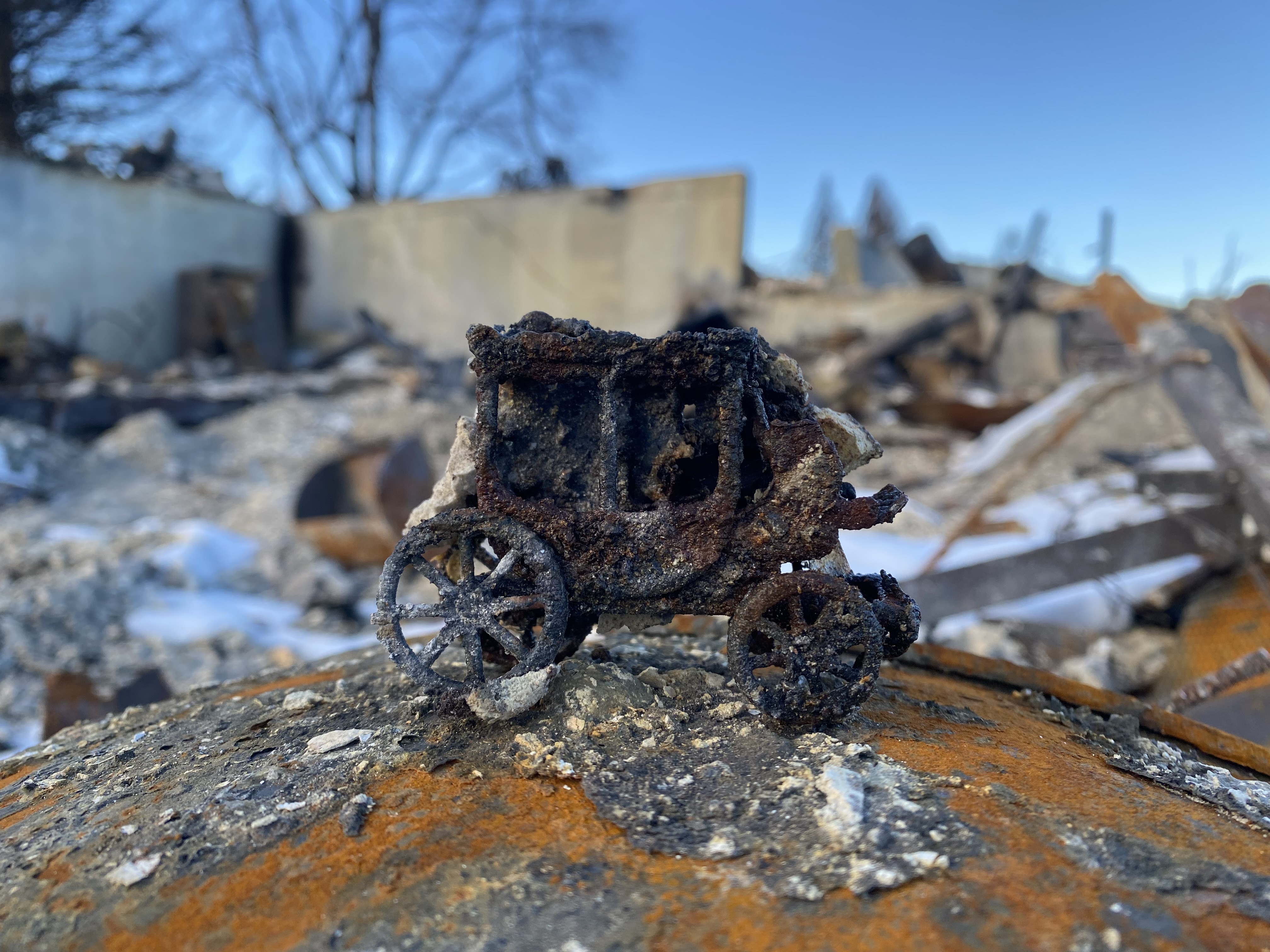
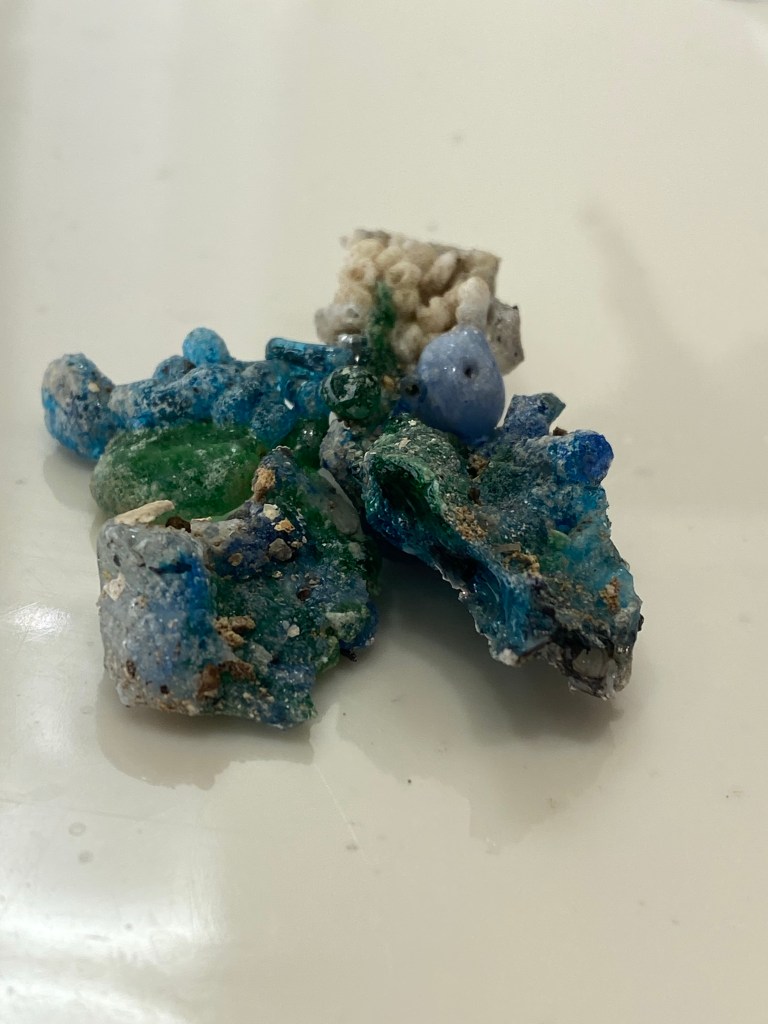
Sometimes, I’d find something bizarre and warped, puzzle over it for a few moments, then discard it when it dawned on me that it was a carabiner that was in Stella’s hiking pack or the extra charging cables I kept by my bookcase. It was hard to know whether I was holding something precious or not because it all looked largely the same; everything is crusted over with foul-smelling concretions that have strange forms and colors. That, or the object itself is melted into something else and is completely distorted.
Melted beads
For the majority of the time we spent there on the second visit, it was absorbing and easy to get carried away with. But, I eventually reached a point where nothing I found seemed worth keeping and my presence there felt pointless.
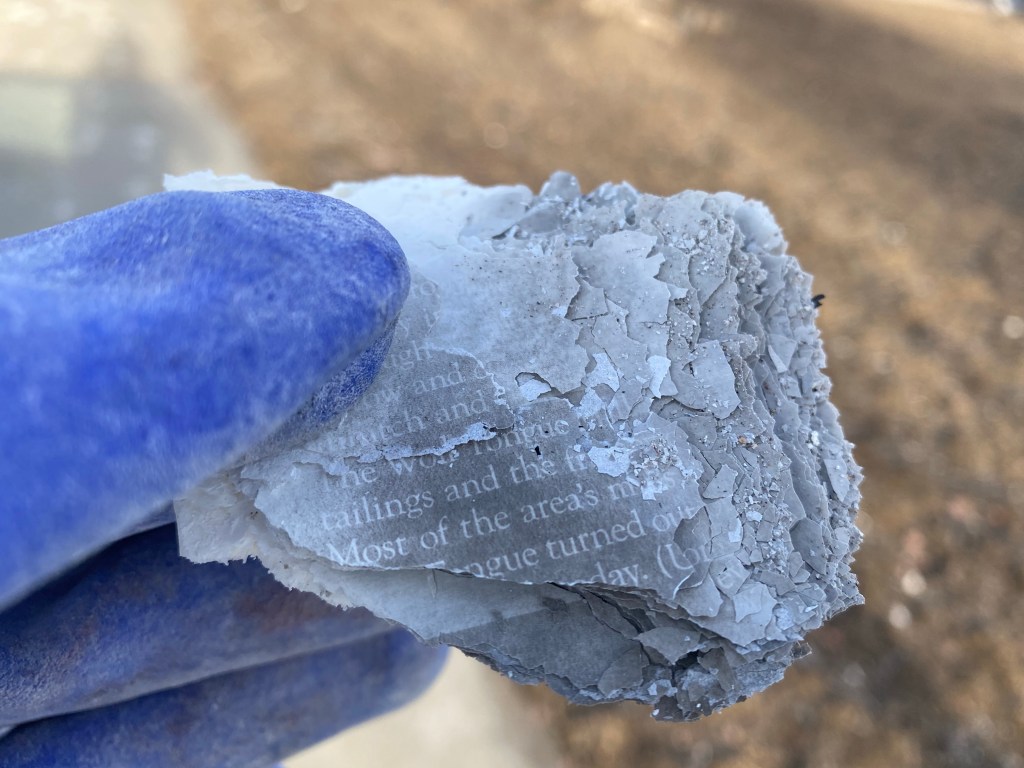
A book with legible writing – rare. Most lumps of formerly books are completely blank.
On the face of it, I feel very fortunate. I have my family, my dog, and means to survive. The future-thinking part of me just wants to see the next steps. I don’t need much to function, so my focus is just to get the essentials. I try not to let myself think too much about what’s gone, but being in the house, or rather, being on it, makes it hard to ignore.
While painful, I think that the process of digging through my burned home helped me accept it. It made it easier to let go of the things I couldn’t find, and even the ones I did find. I knew cognitively that nearly everything was gone, but it was a different matter to feel it.
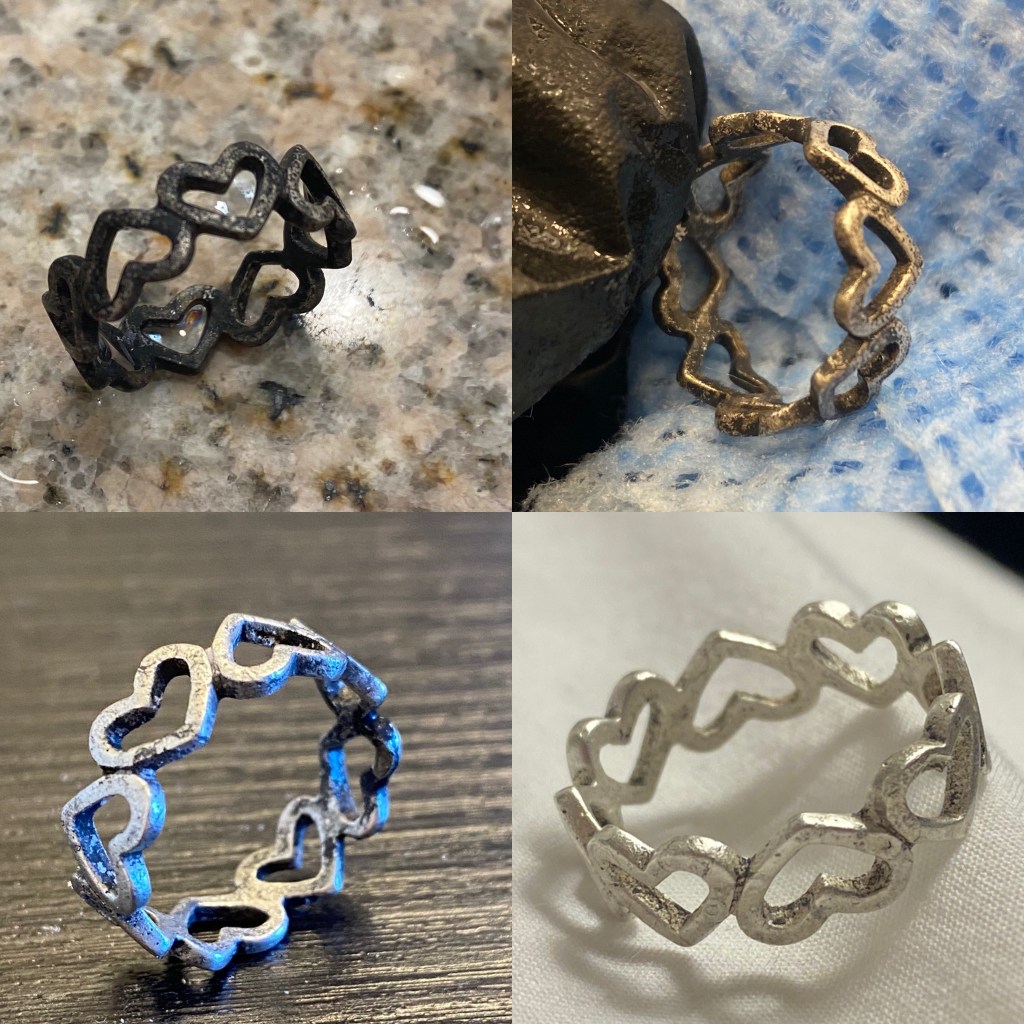
I’ll save a few things, like the jewelry I found, but the broken flower pots and the melted knick knacks can go with the rest of the house.
Scratched and pitted, but intact and all the more special for what it survived.
Documenting the aftermath
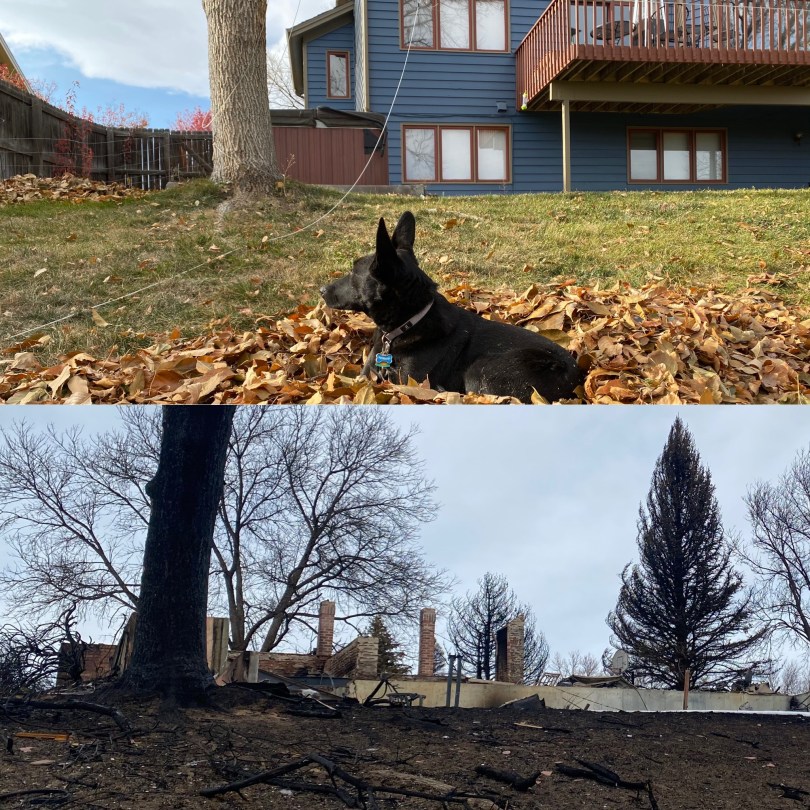
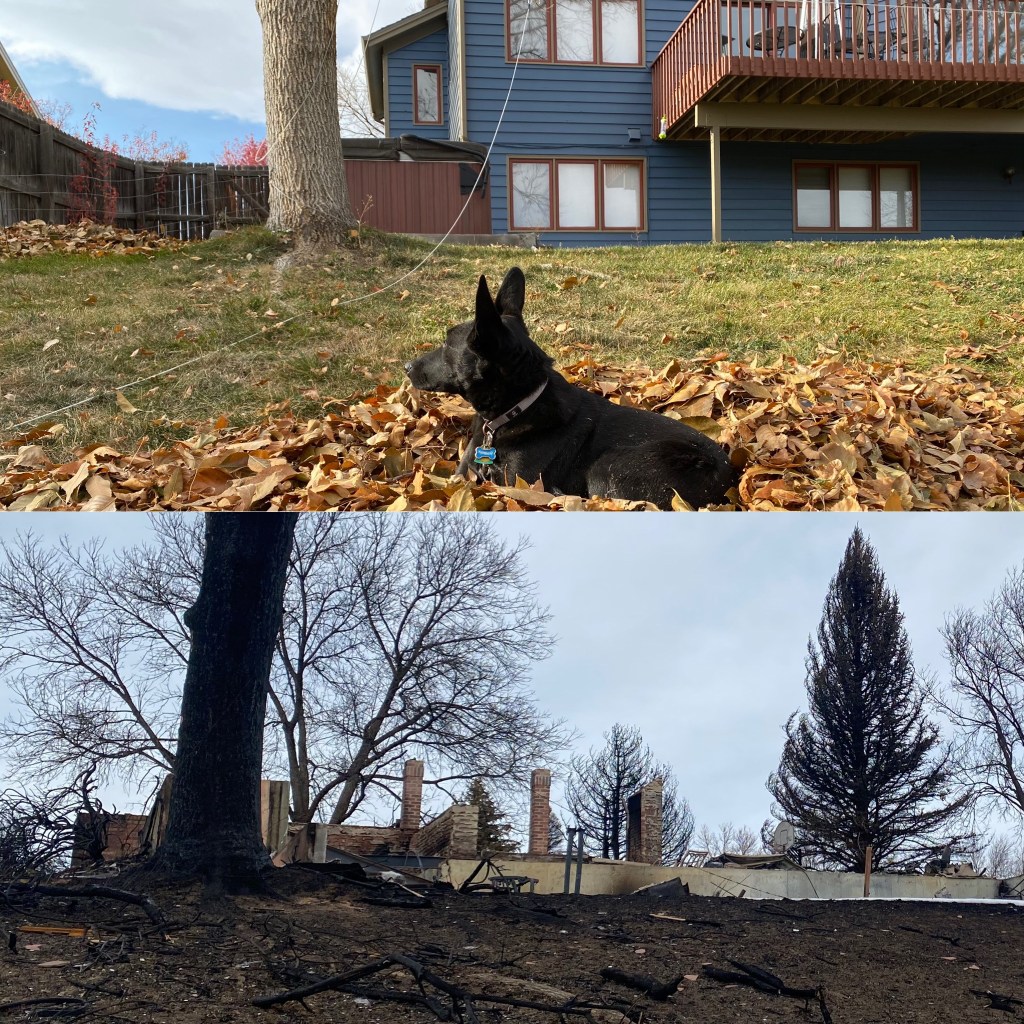
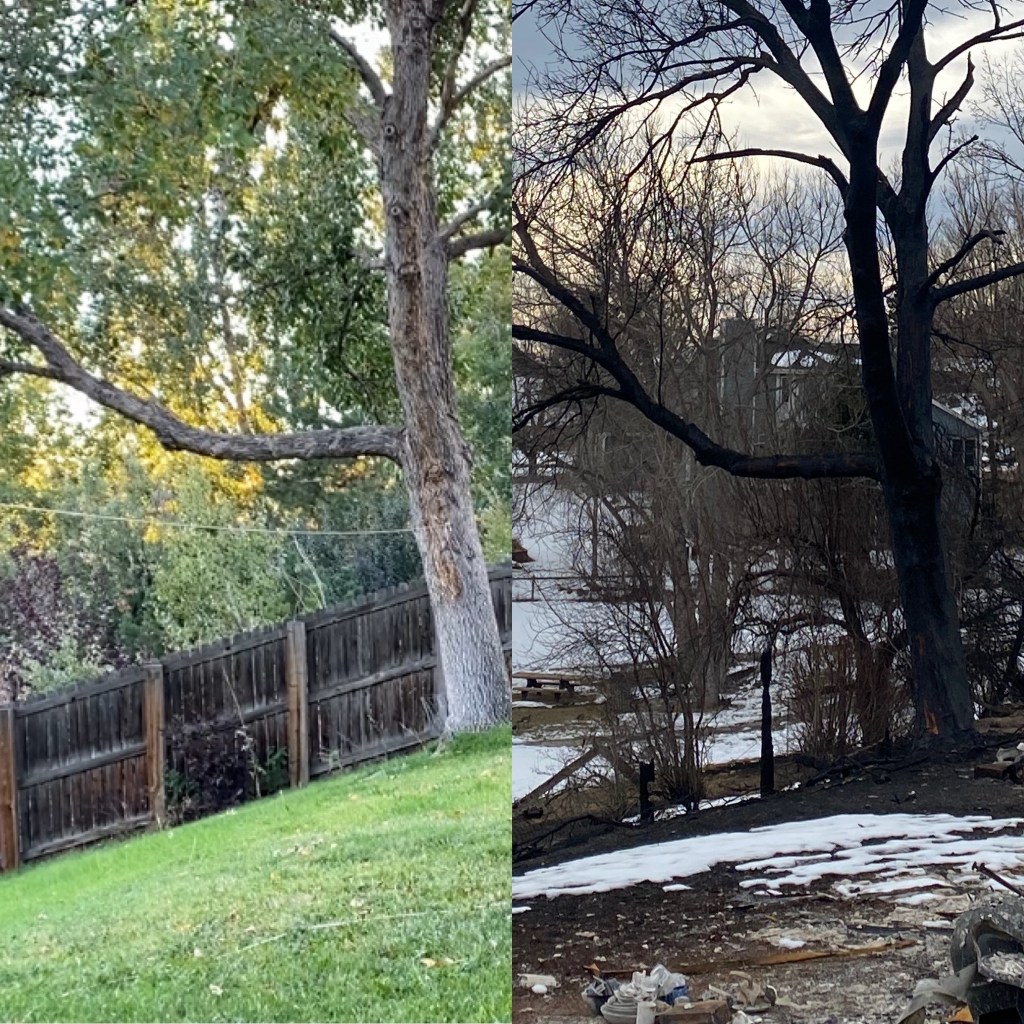
Every time I go back to the house, it’s harder to be there. I walk around, taking pictures from angles that I know will line up with photos I have from before the fire.
It’s dark, but I find myself wanting to honor my home that way. To me, there seems to be an extra injustice in the fire’s removal of what makes my home recognizable. The photos I take of it now only show the destruction, not the warm, familiar place I knew. Comparing the before and after feels like one way to document the home’s identity.
I think it’s natural to become numb to the sight of burned-out houses when you see them on the news and drive by them in your town, or – when it’s not your community – to not be able to grasp the devastation that each household is facing. But none of the homes that burned down were generic, faceless piles of charred rubble. The Marshall Fire stripped my house of almost all of the things that made it ours, but it’s still the place we called home, and I think it deserves to be seen as it is and as it was.
Acceptance after the Marshall fire
For the sake of my physical and mental health, I think I’m done digging through the ashes. I had wanted to get into it and see for myself whether anything survived. All the waiting – for the fire to be contained, for the snow to come and tamp it out, for the neighborhood to be deemed safe enough for entry – it gave me lots of time to wonder what could be lost under layers of debris, waiting to be discovered.
While depressing, it was something of a relief to be able to reassure myself that there was very little left to be found. And now that I have, I see no reason to continue exposing myself to the dangers of the property and the acute heartache of standing within it. I have a few things, and the rest is gone.
I feel ever so slightly more prepared to move forward, now. I want this experience to inform my perspective on material items, on being prepared for anything, and on the value of helping hands in times of darkness.
Not the disembodied doll hands, but the real ones that are attached to real people.
On the morning of December 30th, 2021, my mother and I walked through the neighborhoods across the boulevard, pausing to watch the geese on Harper Lake.
We marveled at the waves, agreeing that we’d never seen such wind in our community. In the shelter of the neighborhoods, we picked up empty milk jugs and cardboard boxes – recycling day in the wind. Entire, filled bins careened through the streets in the windier spots, strewing their contents across yards and mailboxes.
We thought that would be the worst of it.
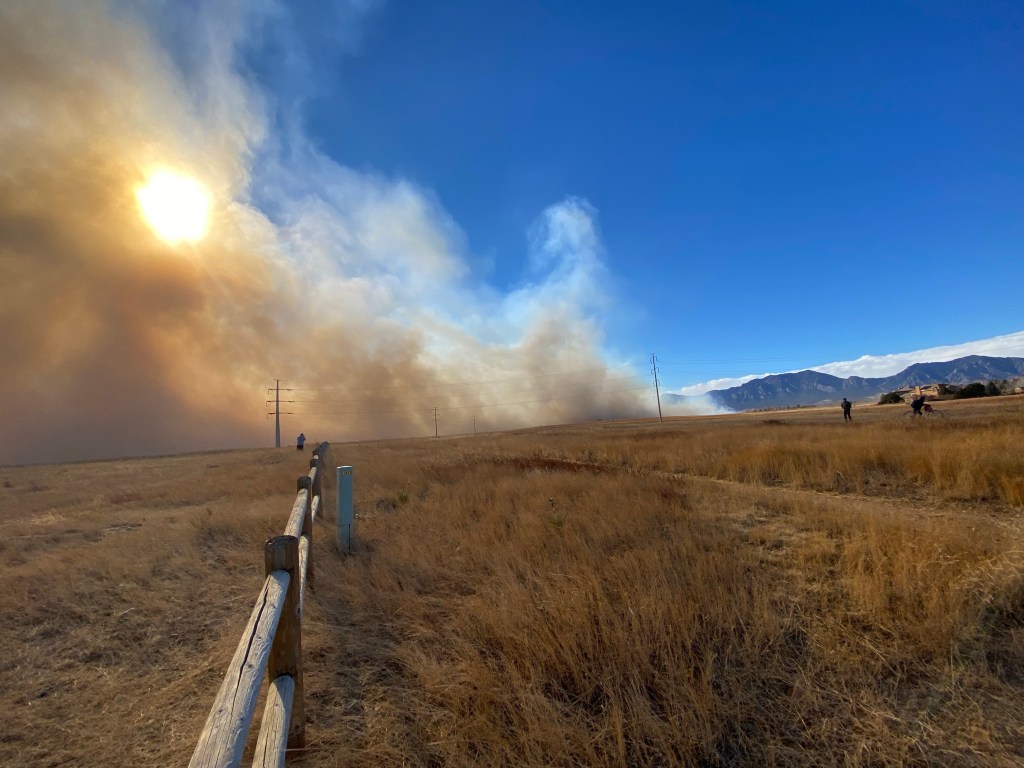
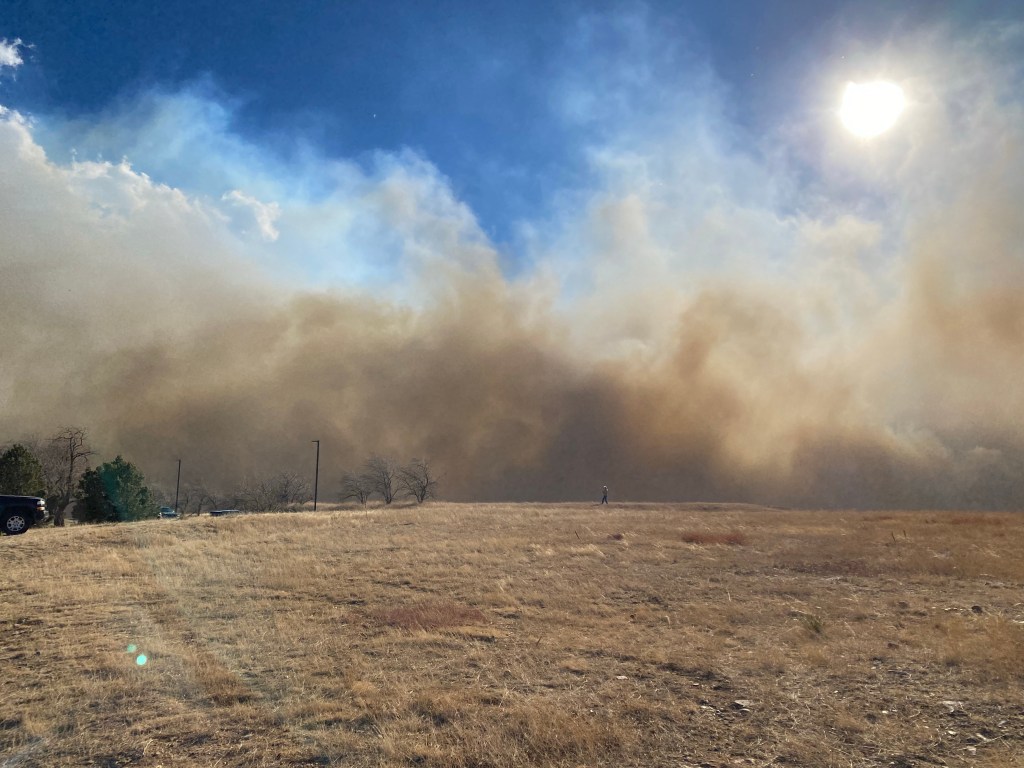
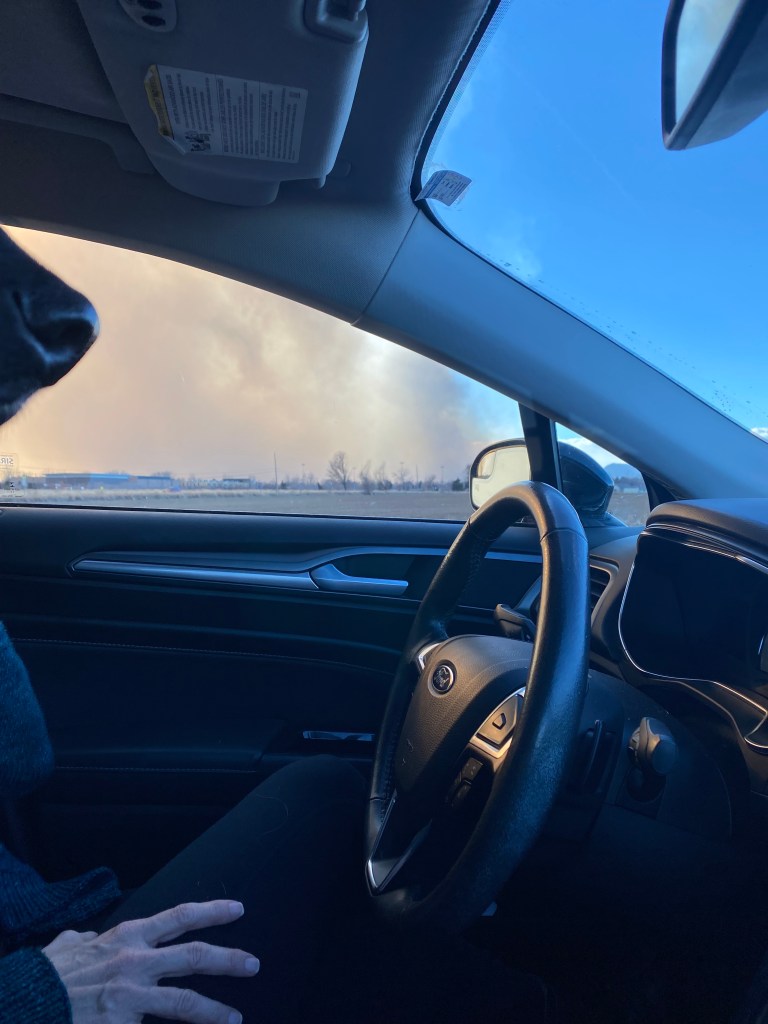
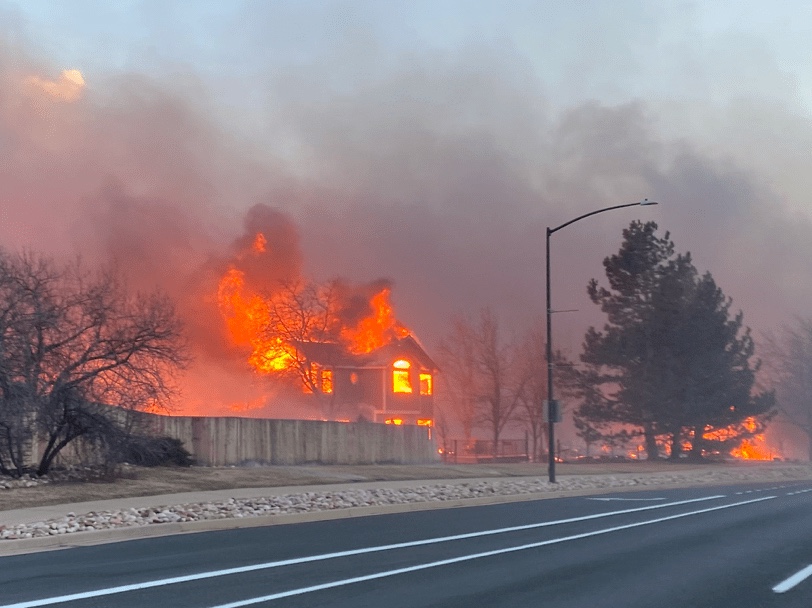
Around noon, a cloud of smoke came billowing over Louisville and Superior. Unsure of what to make of it, we drove the short distance to a better vantage point, just outside our neighborhood. From there, it was clear that it was far, far larger than we had thought.
Note the person in the distance.
We were barely able to stand in the wind. Fearing that it might change and send the smoke our way, we headed home and checked the news. An unofficial tweet about a life-threatening situation nearby was what prompted us to start packing. But still, we didn’t really believe that it would grow to be so destructive. Just a couple minutes later, I could see flames in the distance. Our neighborhood sits directly next to a big, beautiful mesa with miles of tall, dry grasses just waiting to ignite.
I have sometimes wondered what I would do if a grass fire erupted while I walked on those trails. A lit cigarette, a lightning strike, a downed power line. On a windy day, a fire would rip through the landscape in seconds, sending burning tumbleweeds straight down the cul-de-sac and into the center of our little circular neighborhood.
That must be exactly what happened that day. We ran through the house, grabbing our wallets, laptops, and not much else. I unplugged the Christmas tree as I hurried by it, not thinking even then that the disaster would progress so far. We were in a bizarre state of disbelief – it was both urgent and somehow so precautionary that I was concerned about having something to do wherever we ended up waiting for it all to calm down. Despite the adrenaline, despite the flames in the distance, somewhere in my mind, I still expected to be home later.
We threw a few things in the trunk, I put the dog in the car, and we pulled out of the garage. The power was still on at that point, but it wouldn’t be for long, leaving panicked people unable to remember how to open their garages manually.
The roads were already packed with evacuees from the neighboring city and ours. It took us an hour and a half to drive across town, but only 20 minutes after we left our home, those parched grasses on the mesa were already spent fuel for the fire raging on the edge of our neighborhood.
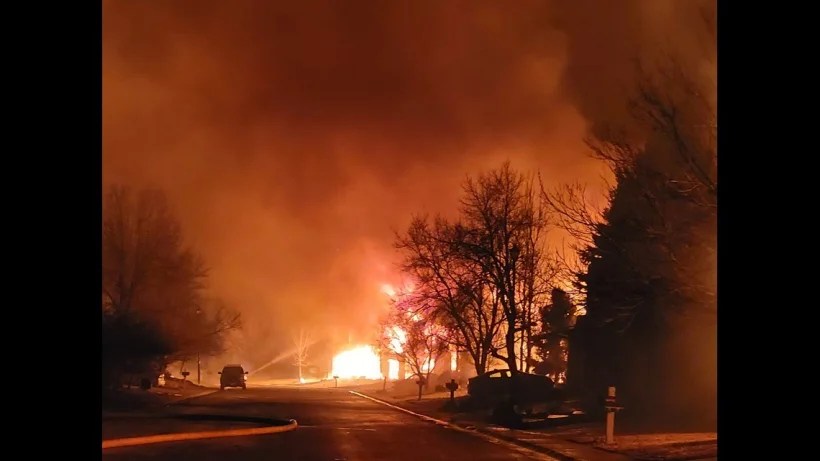
(Somewhere else in Louisville or Superior) Credit and thanks to: Patrick Kramer, firefighter who fought and documented the Marshall Fire
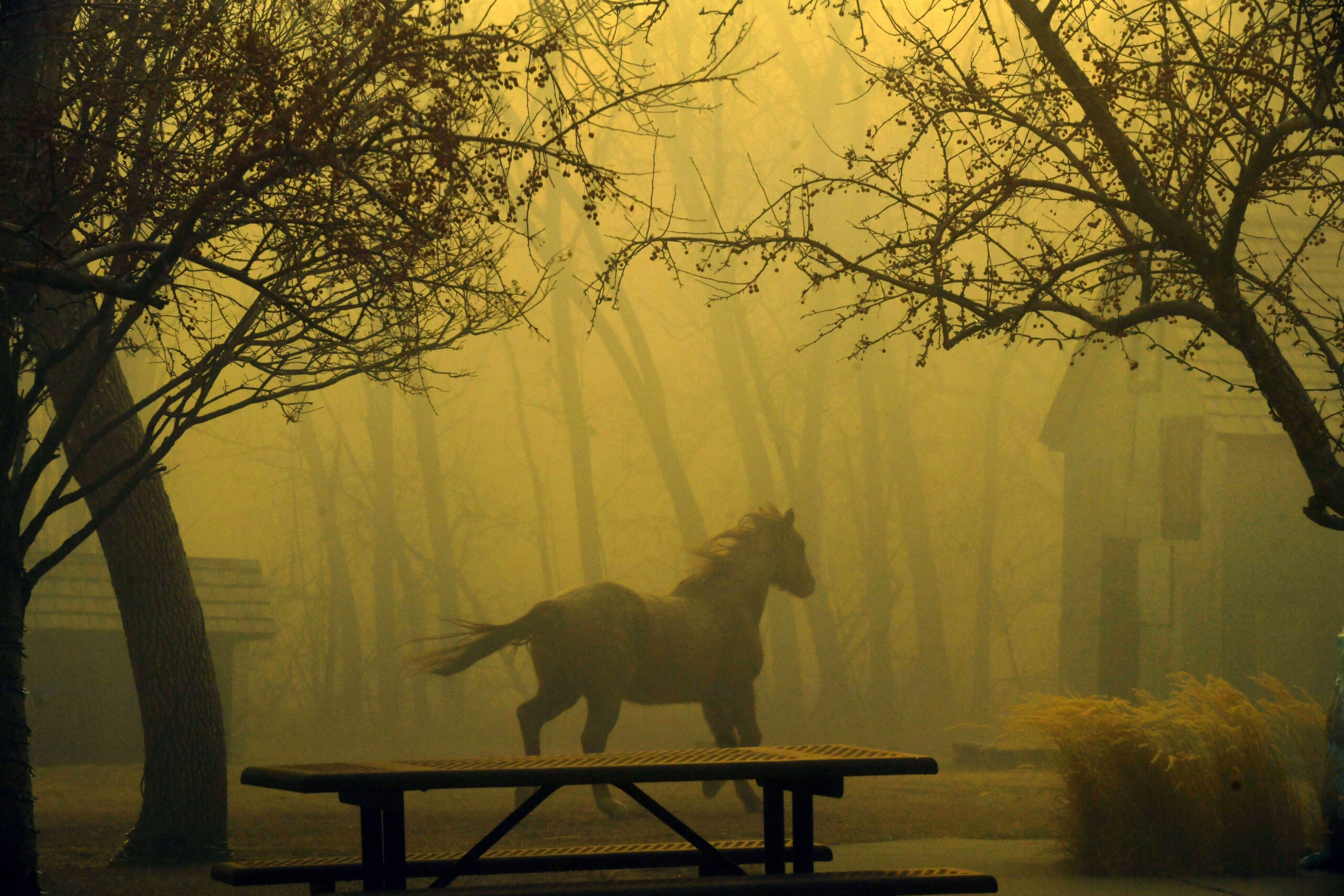
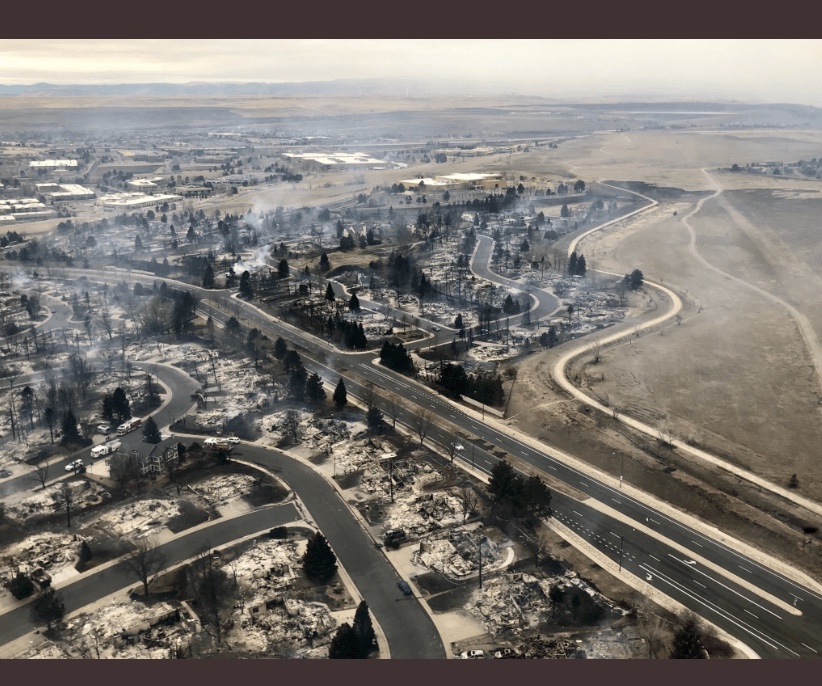
Over 1,000 homes were destroyed in parts of Boulder County on December 30th, 2021. There wasn’t much the fire crews could do for the structures, the jets of water from their hoses turning back on them in the 100-mile-an-hour wind. No planes or helicopters could drop fire suppressants. Costco was surrounded by fire, families fled from the Chuck E Cheese in a dystopian haze, and a horse ran through town, its image captured in a smoky, surreal photo.
A horse runs through Grasso Park, Superior (Helen H. Richardson/The Denver Post via AP)
By the time the lumber yard of Home Depot caught fire, the fire hydrants were losing pressure as the city’s water began leaking out of hundreds of burned homes.
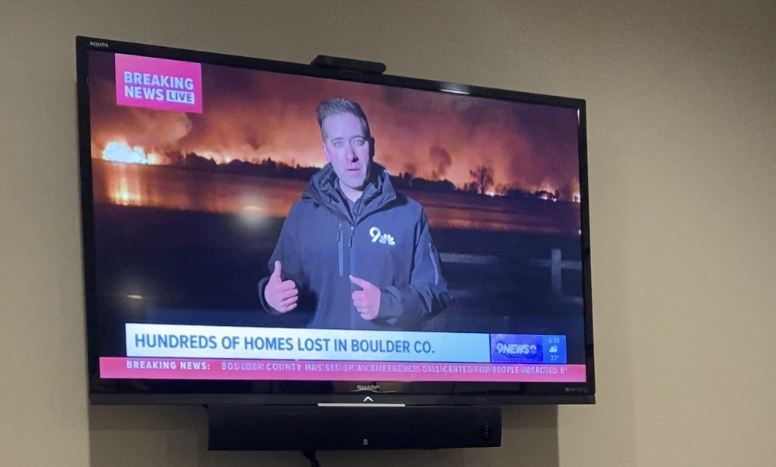
At a family member’s house in Denver, we watched the news. Still in the dark about the fate of our house, we scanned the footage to see if our neighborhood was on fire. We watched the reporter point to the homes surrounding Harper Lake as they fell apart in the inferno, the geese long gone on the wind. All the trash we picked up that morning now seems a tragic lesson in futility.
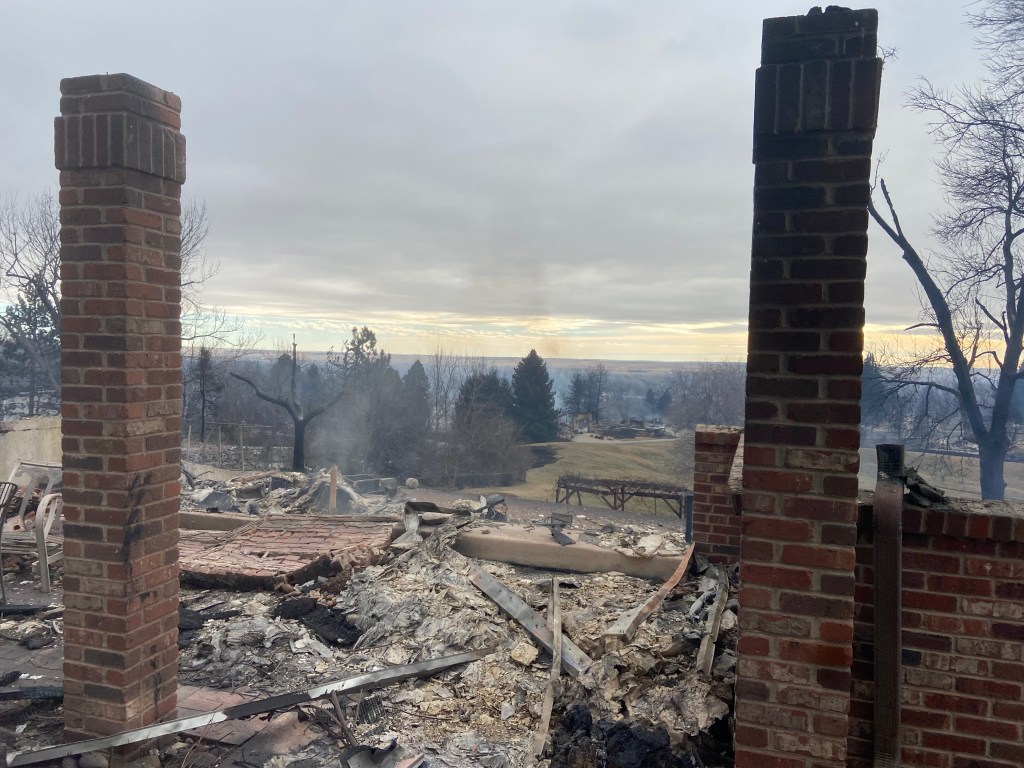
There’s nothing left of our house across the boulevard from Harper Lake. Just two brick pillars where the front door used to be.
I am overcome with grief at the thought of our home burning, everything exactly where we left it.
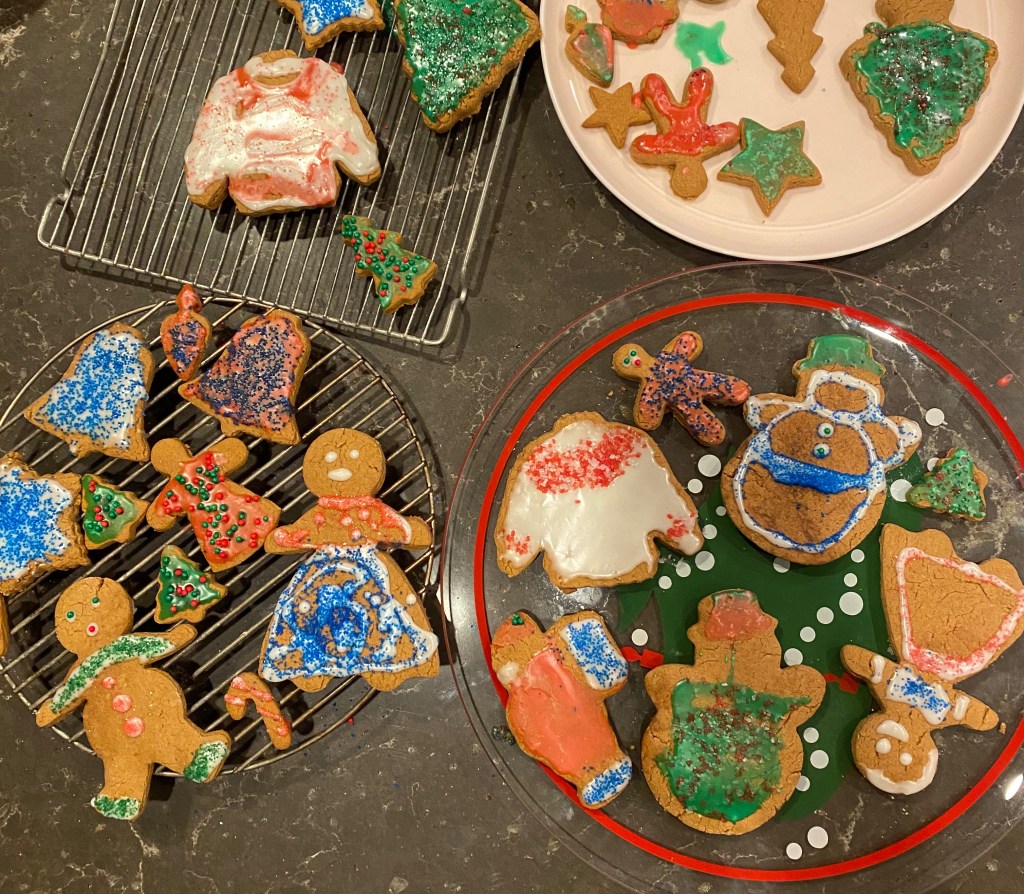
My coat, which I forgot, by the door. The dog bed in the alcove, the Christmas tree, the pictures on the walls. The fabric I’d laid out on the table to begin a sewing project, and our gingerbread cookies on the glass plate in the kitchen.
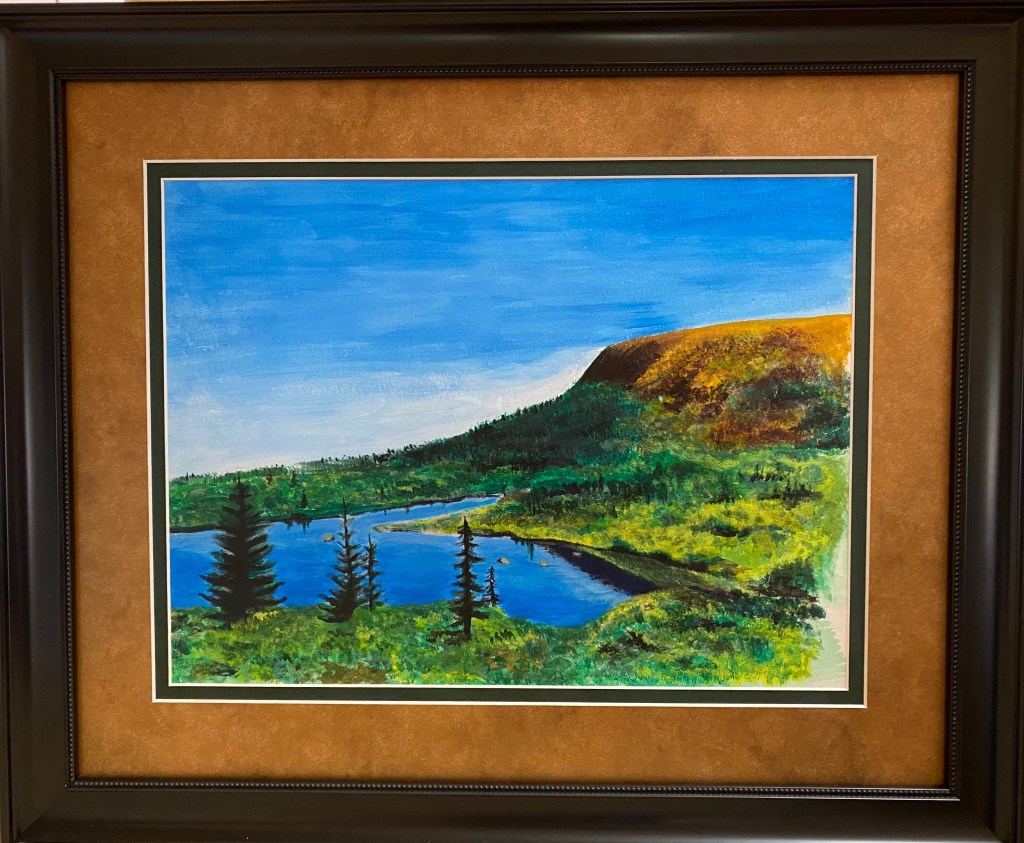
I can see our house in my mind as a snapshot in time – and then I see it all burning. As if I were standing in my house while in a bubble, watching it consume each and every flammable particle, I watch my sketchbooks and paintings disintegrate into fine ash.
I see the sweater my mother knit for me for my 16th birthday blow away as smoke, and the boxes of family photos in the basement go up in flames. The dishes shatter, the books burn, and in the deafening roar of the entire flaming city, the support beam in the basement twists in the heat and falls. Not even the frame is standing, having been reduced to ash in the rubble of what used to be our home.
I think of all the homes this way, their own family heirlooms and well-loved belongings going up in smoke all over Louisville and Superior. Every house held irreplaceable treasures.
Credit: The Denver Post
My heart hurts for the loss my family has suffered and for the entire community. All the things we’ll never get back. All the work that lies ahead.
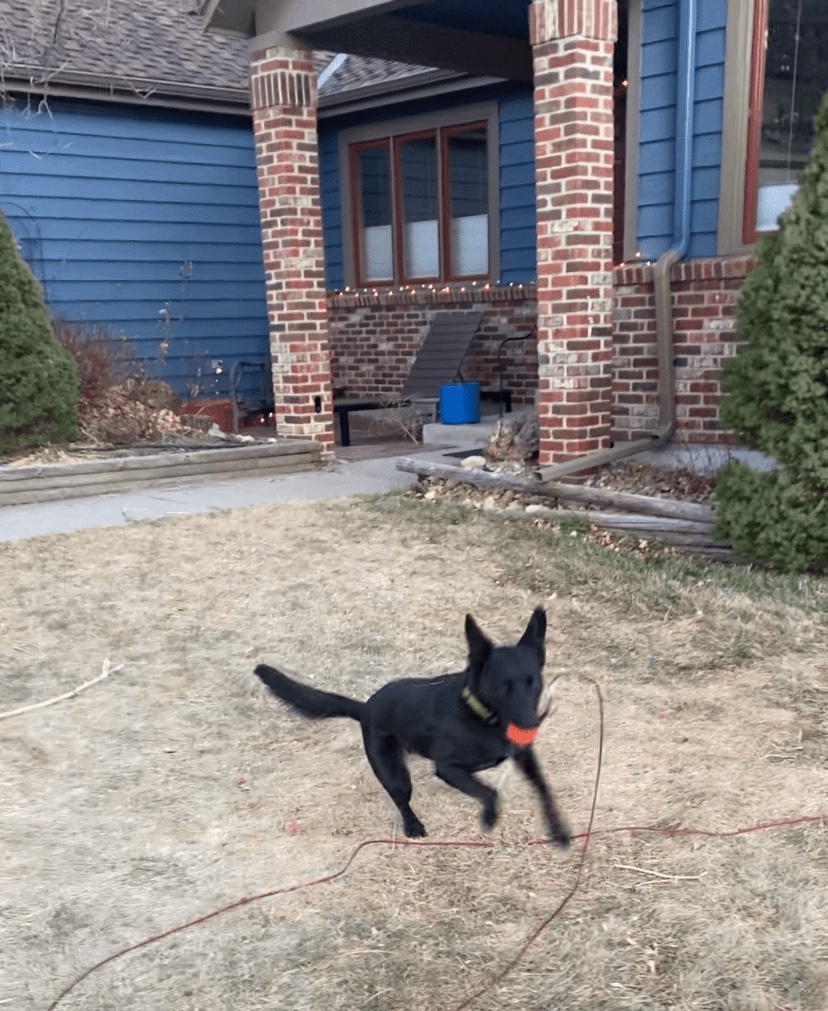
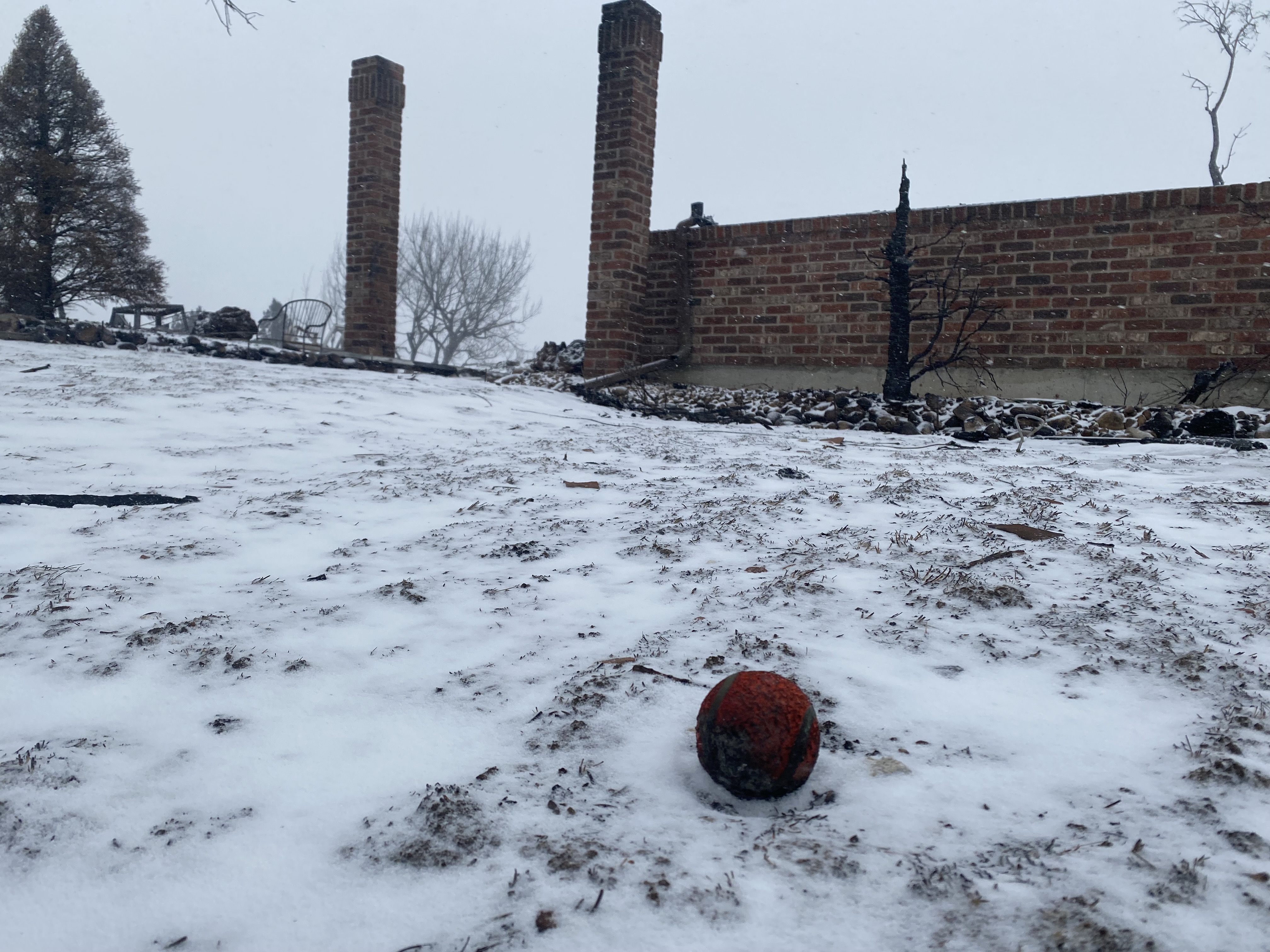
I marvel at the timing of our own personal disaster. We saw flames and decided to leave at 1:10 PM. By approximately 1:30, the flames had reached our neighborhood. I absolutely shudder in my skin to imagine what could have happened if we had been at the store or out to lunch, or anywhere not home. Like many pets in the area, Stella would have been trapped. Her orange ball still sits in the yard – charred – but recognizable.
The way the fire blew through open areas at high speed was terrifying. Authorities estimate that in some places, it was moving the length of a football field in a matter of a few seconds.
If we had been out, there’s no way we could have made it through the traffic in time, and it makes me sick to think about. What if one person had the car and the other was stranded at home? What if we had been asleep?
It was some consolation for a day or so to believe that no one had lost their life in the fire, but that was soon updated. Two people remain missing and are presumed dead, and the unidentified remains of a third person have been found inside a burned structure. The loss of human life is the worst outcome possible during a disaster, and I know that all of us, especially those impacted by the fire, feel that loss keenly. We escaped with our lives. At least one person didn’t. The family and friends of that individual have a horror to live through unlike anything I experienced. I hope they have support and that eventually, the pain of the way in which they lost their loved one subsides, and they can remember them with peace.
The Meaning of Things
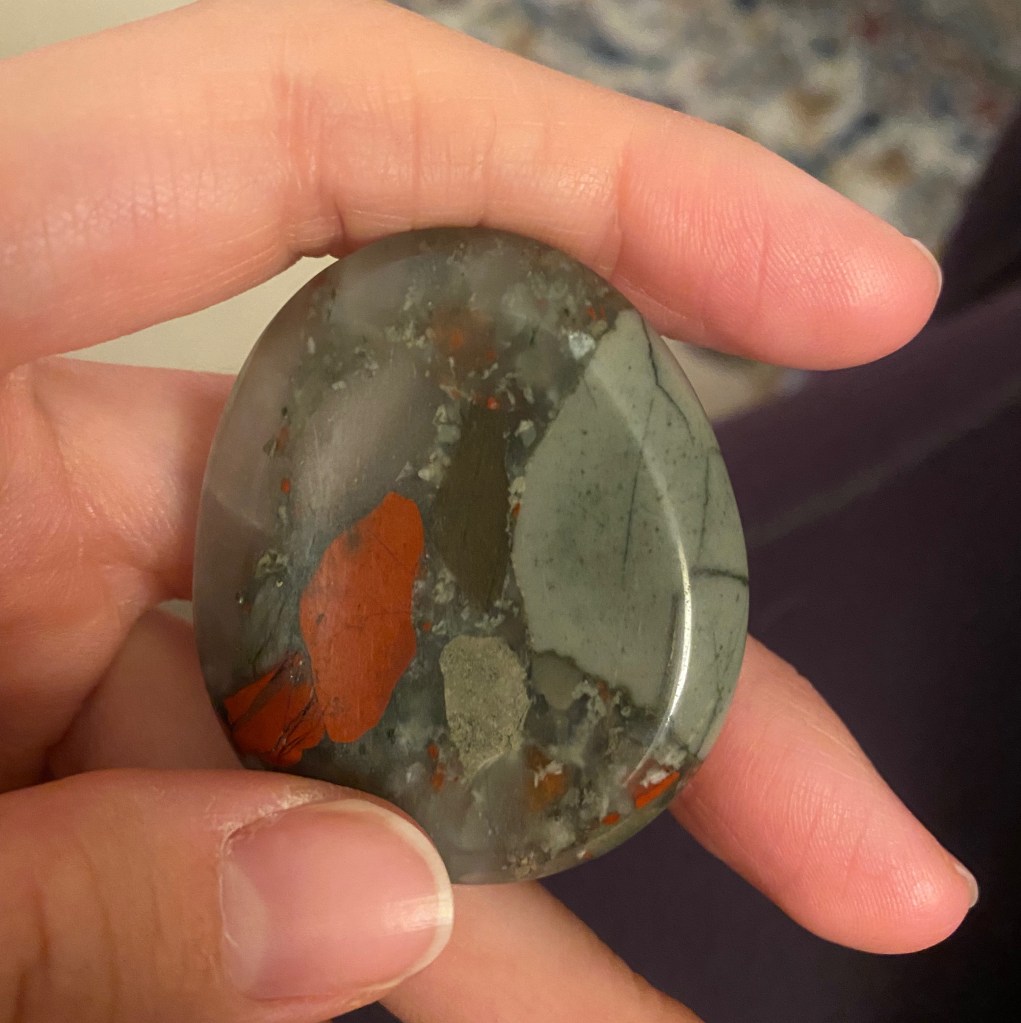
I find myself checking on my few belongings to make sure they’re where they should be. Nearly everything I own from before the fire is in my backpack, including the thumb drive with photos that I grabbed from my shelves and a worry stone that happened to be in my purse. I get a stab of anxiety when I think I might have misplaced something.
There are some things that have survived by being gifted or lent to others. A signed book my mother lent to a friend is now the only book she owns from before the fire. Pieces of artwork I’ve given as gifts are tucked away safely in others’ houses.
Other things were saved because we were wearing them, we grabbed them in our rush to leave, or we discovered them in our purses or the car once the house was already gone.
The thought of starting over with nothing familiar is difficult to swallow. All the little choices you make throughout the years to accumulate what you have are suddenly void. The belongings you get immediately following the disaster are welcomed, but different – different forks, different pillows, different gloves, different everything. There is so much change, it can’t possibly hit you all at the same time. Knowing that our house is gone, and as an entity, that place will never exist again, is gut wrenching. It’s a blow to my mental health that I’m not quite sure how to handle.
A book that became tightly compressed and somehow retained its ink.
This house is not the only place I’ve lived, but it is the only place I’ve lost in this way. My family bought the house almost 2 decades ago, and I’ve been living there ever since, except for two years in high school and the fall/winter semesters of college between 2014 and 2018.
Setting aside the items inside the house, the sense of loss when a home is destroyed is different from the sadness of moving away. In both cases, you no longer live there, but in one, the house is obliterated. Wasted. There will be no more triumphs and tragedies within its walls- yours or anyone else’s. Almost as if a house were a living thing, it’s difficult to accept that it no longer exists.
We attach meaning to things because we’re human. We make symbols out of them, let them represent feelings, events, people, and memories. We collect little trinkets, ticket stubs, and tangible evidence of our successes.
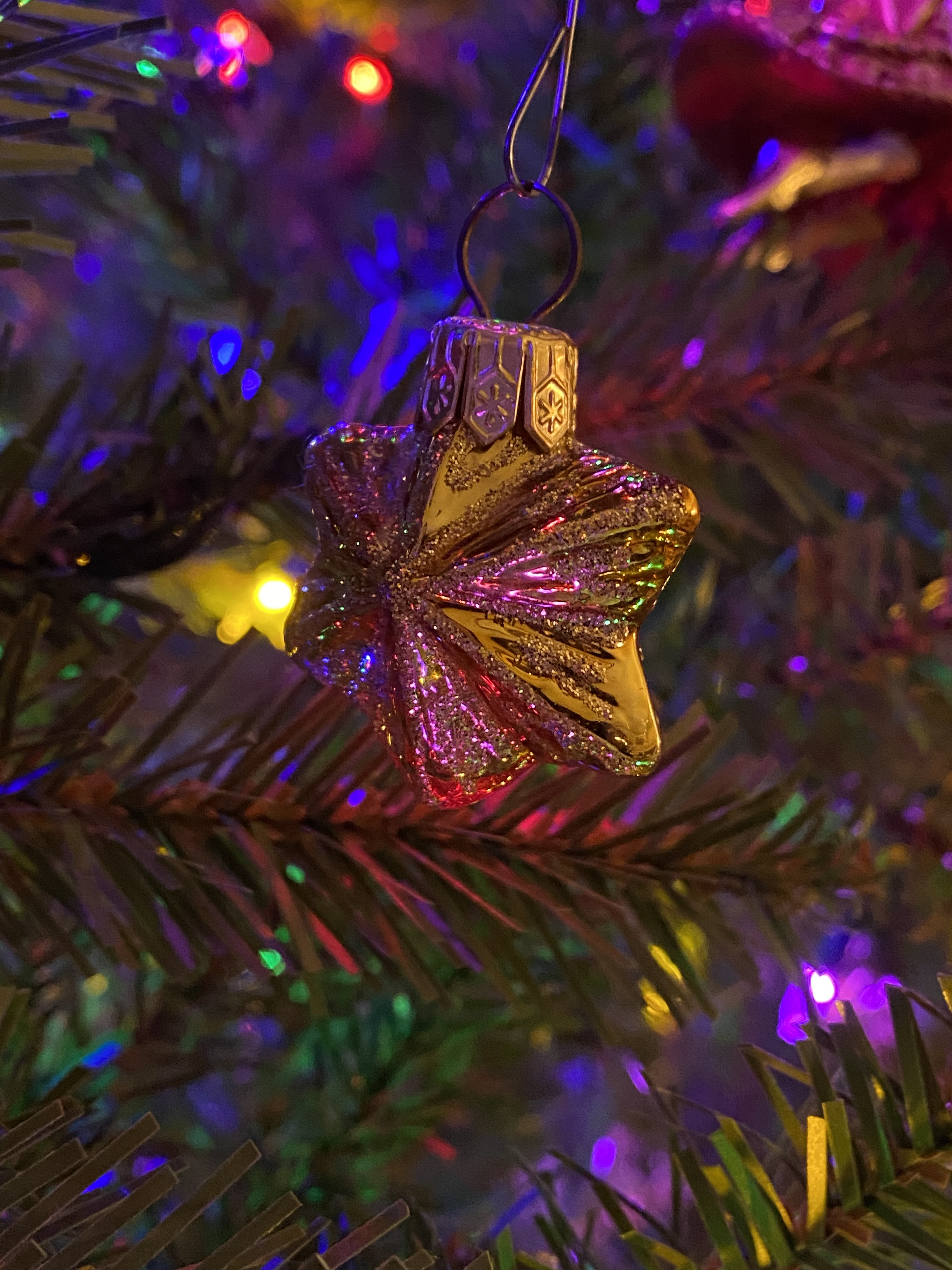
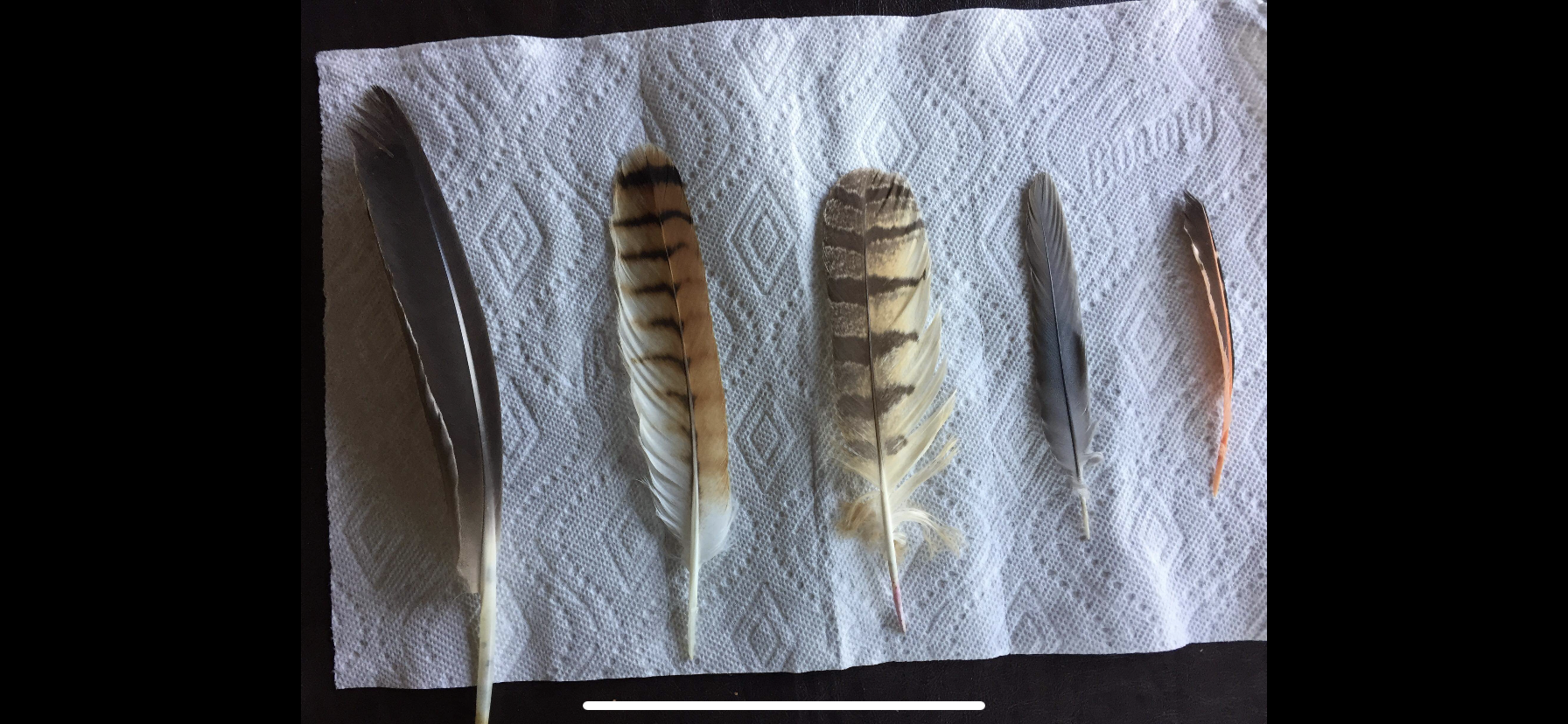
A barrette my mom gave me, my favorite ornament, and some feathers I saved
Everything inside a house is stuff. It’s also more than stuff because we make it more. We see a history unfolding in our lives that should be documented, and the physical pieces of that often feel the most real. A baby’s dress, a letter you saved, a single earring you can’t let go of- they’re all little slices of your past.
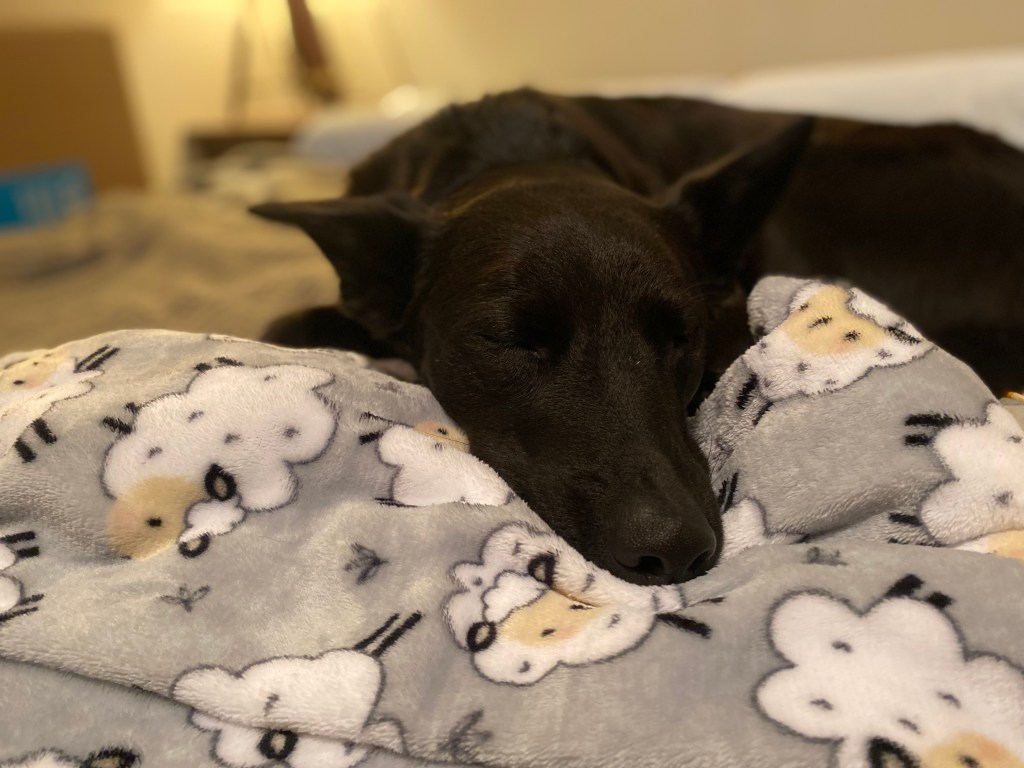
Losing all of that at once is overwhelming, sometimes beyond my own capacity to feel it. You do, however, immediately begin accumulating new stuff with which to make symbols. A fleece blanket the Pet Pantry gave me for Stella at the Disaster Assistance Center, the clothing so generously donated by friends, family, and strangers alike, and the thoughtful gifts of art supplies I’ve received are all things that I appreciate much more than I would have before the Marshall Fire.
Stella’s new blanket
At the same time, I’m grieving for my neighbors’ homes, the businesses in Louisville and Superior, and the city itself, which has been forever altered by the Marshall Fire. I don’t own the homes that I walk my dog by every day, but I feel like I’ve lost them, too. The homes I used to play in with kids my age, the gardens I admire in the summers – the pure familiarity that comes with a hometown is gone.
Homes across the road from my neighborhood, near Harper Lake (credit unknown)
I’ve spoken to some neighbors about the Marshall Fire briefly, and each time was comforting. We are all dealing with the same sadness and uncertainty, and while I wish my neighbors weren’t experiencing this with me, having that sense of community can be a push to rally for a shared purpose.
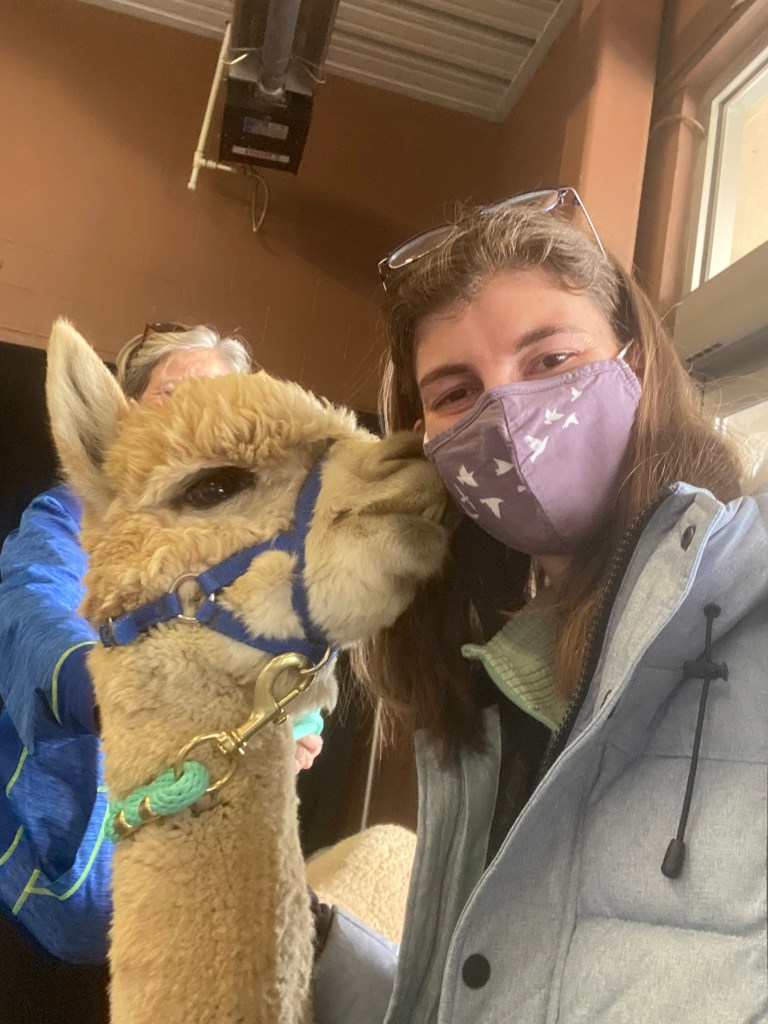
Some will rebuild, and some will move away. We’ll always share this history, though, and I hope we’ll stay connected. We’ve seen so much compassion and generosity in the last few days that I feel as though my understanding of human nature has been brightened. We humans are complicated, resilient, emotional stuff-collectors. The community will adapt to this disaster and come out the other side eventually. We might even be helped along by the sweetest therapy alpaca ever.
To leave a comment, jump to the top and check under the post title.