A man wearing a red jacket walking away doing a rural road on a foggy day

Depression in Men: Why is it Different?

Social, Psychological, and Diagnostic Aspects of Depression in Men

Four times more men die by suicide than women, and yet half as many men are diagnosed with depression as are women (1). In researching this topic, I was encouraged by the shift our society is making towards understanding depression in men and the factors that push them to such lengths. However, there is clearly still a long way to go. A book I skimmed early on in my search, aptly titled Men and Depression, by Sam Cochrin and Frederic Rabinowitz, mentions in the introduction that “A book that examines distress and depression in men may be seen by some as politically provocative.” In 2000, when that book was published, many researchers and clinicians were working to move public perception of mental disorders in men inch by inch. They recognized that the disparity between the number of men diagnosed with depression and the number of men who kill themselves indicates a hidden population of men who battle their depression in secret. 21 years later, the number of articles under a “depression in men” search in Google Scholar numbers over 3.5 million.

As a woman who suffers from depression, I feel relatively safe in disclosing my diagnosis. People are generally sympathetic and understanding when I discuss my symptoms. But how do men feel about the way their depression is received? A man I know has been dealing with depression for a long time, so I asked him exactly that question. Thankfully, he told me that his social circles have been largely supportive, which I think is an encouraging sign for our culture’s direction. But what factors make the rates of suicide between men and women so different? If we’ve come from “politically provocative” to millions of research articles in two decades, why are many men still suffering in silence? I want to dig into this issue to understand the historical trends, what sometimes makes depression in men different, and what we can do to keep the conversation going.

Historical Epidemiology of Suicide

In a really deep dive, we could go way back to Hippocrates and Galen to explore the perceived gender divide on mental disorders, which would be interesting. But in this context, we’ll stick to the 20th and 21st centuries. Let’s take a look at this set of data from the CDC’s Data Finder (12). It’s compiled mostly by decade between 1950 and 2015. This graph of the data, which I made with my rusty skills in Excel, illustrates the suicide trends by rate among men in various age groups.
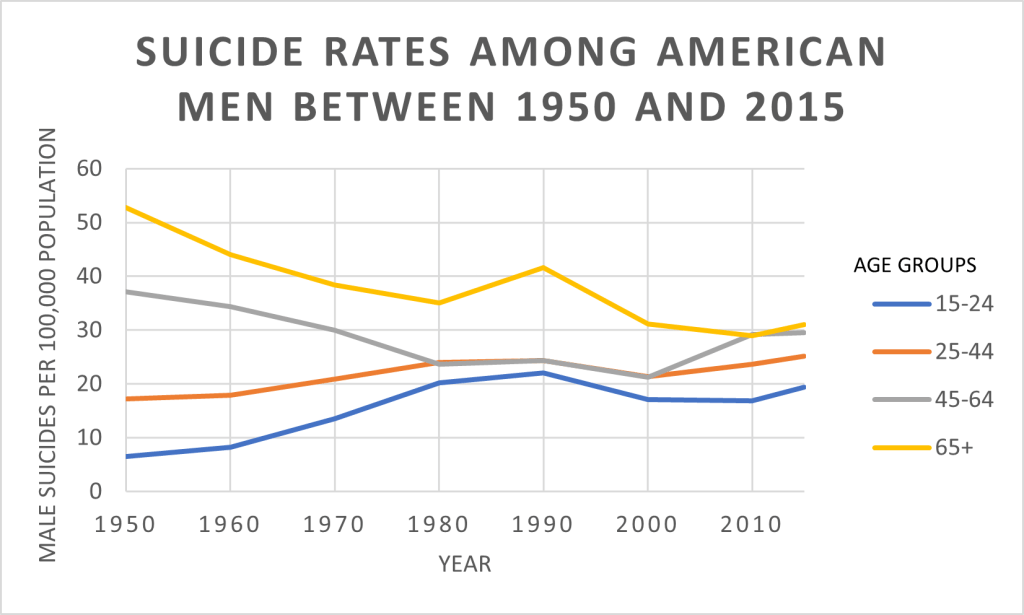
A graph showing the suicide rates of men of different age groups by decade

Although the rate of suicide among all ages has remained relatively stable, trends within age groups are concerning. Suicides among 15-24 year-olds have increased dramatically, as have those among 25-44 year-olds. Despite a somewhat steady decline in the suicide rate of men aged 65 and older, they remain the group with the highest rate. By 2019, the rate of suicide in men had increased from 21.1 deaths per 100,000 to 23 deaths per 100,000 (13). For every 100,000 men, 23 deaths doesn’t immediately sound shocking. But to illustrate the numbers in a different way, consider that in 2019, a horrifying total of 37,256 men killed themselves in the U.S.

It introduces another layer of complexity to compare the data on men to the data on women. The suicide rate among women of all ages has increased since the 50’s more than it has among men, but it still sits markedly lower. In 2019, the overall suicide rate among women was 6.2 deaths per 100,000 people (13). Compared to 37,256 male suicides, the country saw 10,255 female suicides. Both of those numbers are unimaginable to me, but it’s worth investigating; why is the rate for men so much higher than it is for women?

older-man-with-white-hair-sitting-on-park-bench-with-back-toward-camera-and-yellow-garment-folded-on-bench-beside-him-and-blue-car-parked-ahead
Photo by Mykyta Martynenko on Unsplash

Diagnostic Factors

The wildly higher rate of suicides among men than in women, combined with the average 2:1 ratio of depression diagnoses in women versus men, convincingly suggests that depression in men is going undiagnosed. An increasingly accepted hypothesis regarding this conclusion is that depression in men and women can be experienced in different ways (10). The current diagnostic tools don’t capture all of the symptoms of depression that men commonly face. The gender differences in symptomatology have led some to argue for the recognition of separate depression diagnoses for men and women. Magovcevic and Addis conceptualized the differences as constituting typical depression plus a subtype, masculine depression (6). Subsequent research shows that some men who don’t fully fit the diagnostic criteria on traditional depression questionnaires may be diagnosed when masculine depression symptoms are considered.

Masculine Depression Symptoms

“Masculine depression” (also called male depression and a variety of other terms), is characterized by more symptoms of anger, aggression, risk taking, and substance abuse than tend to occur in women. These symptoms are examples of “externalizing features.” They serve to express a person’s emotions in an outward, active way. “Internalizing features” of depression are identified by retreating into one’s self, such as by ruminating, engaging in negative self-talk, and isolating from others.

New Self-Report Scales

To investigate the efficacy of adjusted self-report scales at identifying depression in men, researchers created the Gender Inclusive Depression Scale (GIDS) using two other male depression scales validated with small cohorts. When symptoms of masculine depression – the externalizing features – are included in a traditional diagnostic survey, the rates of depression diagnoses among men and women are not significantly different (7). In other words, the gender differences disappear. Another scale, the Male Depression Risk Scale (8), measures emotion suppression, drug use, alcohol use, anger and aggression, somatic symptoms, and risk-taking. The sensitivity of the MDRS is similar to that of the PHQ-9 in recent suicide attempt identification (9).

Why is Depression in Men Sometimes Different?

To be clear, it’s a continuum; many men are diagnosed with depression using traditional questionnaires. But for the ones who aren’t, the answer is probably based in gender norms. Men who have depression and who identify with traditional ideals of masculinity are more likely to experience masculine depression symptoms (4). In a society that has traditionally viewed men who express sadness as “weak” or “feminine,” it makes sense that sometimes, depression in men is displayed as anger or in attempts to cope with it through substances. Sadly, it’s more socially acceptable for men to express anger than sadness, self-doubt, or anxiety.

A young man wearing a black shirt standing in profile outside against an unfocused, bright background
Photo by Andre Hunter on Unsplash

Why is the Suicide Rate Among Men so Much Higher?

If newer diagnostic scales indicate that the rates of depression in men and women are actually more alike than previously thought, what is going on with the suicide rates? Why would men die by suicide four times more often than women? It’s hard to know how many suicides could have been prevented by mental health intervention, but it’s logical to think that men who aren’t seeking counseling or who are dismissed without a diagnosis would be more likely to turn to suicide as the answer. Additionally, we know that although men complete suicide more often than women, women attempt it more often (11). Men tend to use more lethal methods, and for some men, the act of suicide represents an affirmation of strength and independence (2). It is crucial that we improve identification and treatment of depression in men (5).

A Note on “Masculine” and “Feminine”

With all of this discussion about a “masculine” depression facet, I have a small fear that readers of this post will leave feeling as though their diagnosis of depression must have been of the feminine kind. It’s not. It’s just depression – men, women, nonbinary people – it doesn’t impose judgment on your identity, it simply is. Just as men may experience more anger and impulsivity as part of their depression, women may be more likely to suffer body image issues and self-harm behaviors. But it’s a bell curve; just because men are more likely than women to exhibit anger as a sign of depression doesn’t mean that women can’t as well. Statistically, neither gender is more closely associated than the other is with the typical symptoms (8). The only gendered difference exists in the subset of “masculine” symptoms. The core set of symptoms that are covered in typical scales like the PHQ-9 remain the main diagnostic components of what we know depression to be. Expanding the criteria by creating a subset of symptoms more associated with men is just a way of widening the net in order to keep people from falling through the cracks.

For more reading on how men can view depression, suicide, and masculinity, check out this article. The author provides evidence for a variety of views that men hold about how mental health and suicide relate to masculinity.

Identifying Depression in Men Going Forward

For a long time, our definition of depression was too narrow. The research on gender differences in depression, which I have only barely scratched the surface of, is vast and still growing. Although the standard depression questionnaires remain focused on internalizing features to the exclusion of the externalizing ones, authorities on the matter have acknowledged the issue in other ways. The American Psychiatric Association has a webpage from 2005 that describes the early research and what to watch out for in men who may have depression. They now have a number of web pages, magazine articles, fact sheets, and books about men and depression. Someday, I hope that standard depression questionnaires will include measures for symptoms that men exhibit, but until then, we can continue to reduce stigma and spread the word about how depression in men can manifest.

two-drawing-mannequins-embracing-in-black-and-white-as-depression-in-men-concept
Photo by Marco Bianchetti on Unsplash

You can pass online resources on to the men you know. You can talk about it with your doctor. You can listen to your friends, fathers, brothers, and sons. Assure them that having feelings doesn’t make them less of a man, it just makes them human.

Resources

  • National Suicide Prevention Lifeline: 1-800-273-TALK (1-800-273-8255)
  • Advice on looking out for friends: beyondblue.org
  • Potential symptoms and tips for self-care: texashealth.org
  • Information, resources, and community: headsupguys.org

Citations

  1. “By the Numbers: Men and Depression,” December 2015. https://www.apa.org/monitor/2015/12/numbers.
  2. Canetto, Sylvia Sara, and Anne Cleary. “Men, Masculinities and Suicidal Behaviour.” Social Science & Medicine 74, no. 4 (February 2012): 461–65.
  3. Cochran, Sam, V, and Frederic Rabinowitz E. Men and Depression: Clinical and Empirical Perspectives. Academic Press, 2000.
  4. Genuchi, Matthew. “Anger and Hostility as Primary Externalizing Features of Depression in College Men.” Psychological Sciences Faculty Publications and Presentations, August 1, 2015. https://scholarworks.boisestate.edu/cgi/viewcontent.cgi?article=1223&context=psych_facpubs.
  5. Keohane, Aisling, and Noel Richardson. “Negotiating Gender Norms to Support Men in Psychological Distress.” American Journal of Men’s Health, October 11, 2017. https://pubmed.ncbi.nlm.nih.gov/29019282/.
  6. Magovcevic, Mariola, and Michael Addis. “The Masculine Depression Scale: Development and Psychometric Evaluation.” APA PsycNet, 2008. https://psycnet.apa.org/record/2008-09203-001.
  7. Martin, Lisa, A, Harold Neighbors W, and Derek Griffith M. “The Experience of Symptoms of Depression in Men vs Women: Analysis of the National Comorbidity Survey Replication.” JAMA Psychiatry, October 2013. https://jamanetwork.com/journals/jamapsychiatry/fullarticle/1733742.
  8. Rice, Simon, M, and Anne-Maria Moller-Leimkuhler. “Development and Preliminary Validation of the Male Depression Risk Scale: Furthering the Assessment of Depression in Men” 151, no. 3 (December 2013): 950–58.
  9. Rice, Simon, M, John Ogrodniczuk S, David Kealy, and Zac Seidler E. “Validity of the Male Depression Risk Scale in a Representative Canadian Sample: Sensitivity and Specificity in Identifying Men with Recent Suicide Attempt.” Journal of Mental Health, November 2017, 132–40.
  10. Rutz, Wolfgang, Jan Walinder, and Lars Von Knorring. “Prevention of Depression and Suicide by Education and Medication: Impact on Male Suicidality.” International Journal of Psychiatry in Clinical Practice, January 8, 1997. https://www.tandfonline.com/doi/abs/10.3109/13651509709069204.
  11. Schumacher, Helene. “Why More Men than Women Die by Suicide.” BBC Future (blog), March 17, 2019. https://www.bbc.com/future/article/20190313-why-more-men-kill-themselves-than-women.
  12. “Table 30. Death Rates for Suicide, by Sex, Race, Hispanic Origin, and Age: United States, Selected Years 1950-2015.” CDC, 2017. https://www.cdc.gov/nchs/data/hus/2017/030.pdf.
  13. “Underlying Cause of Death, 1999-2019 Request.” Data Table. CDC WONDER. Accessed January 17, 2021. https://wonder.cdc.gov/controller/datarequest/D76.
close-up-of-purple-bell-shaped-flowers-with-dew

Having Good Days with Treatment-Resistant Depression

Every time I have a sudden improvement in my treatment-resistant depression, I’m blown away by how much easier life is. When you live with something every day, you get used to it. It no longer catches your attention when your symptoms don’t stand out from the daily noise.

Yesterday, I had a good day. I called a friend, went for a run, attended a virtual writing group, and only napped for one hour! This is a dramatic improvement from recent weeks. I can’t believe that such a mundane day could feel so novel and exciting. Today, I woke up and thought, “What am I going to do today?” Not in my usual, “I’m tired, every day is the same, and I’d rather stay in bed but I have to do something,” way. More of an, “I could accomplish something today,” way. I actually feel slightly enthusiastic about it. I’m looking forward to the near future but nothing in particular, which is a foreign feeling to me. It’s a kind of vague “the day is full of possibilities” feeling that is a dramatic change for me. I attribute this shift to a second ketamine infusion I had just a few days after my regularly scheduled infusion. The goal was to sort of trampoline-double-bounce me, and hooray – it worked!

I had a conversation somewhat recently about how easy it is to doubt yourself when you have a chronic, “invisible” condition. You might start to forget what “normal” feels like, which makes it hard to tell if you’re there or not. For instance, I often find myself questioning whether I’m being sluggish because of depression or because I’m not putting in enough effort. When you check in with yourself often (“Am I feeling better yet? Is _____ working yet?”) it’s easy to get bogged down in minute details and lost. But a sudden shift in my mood shows me that I can easily tell when I feel better. It’s a change that I notice right away. It’s somewhat validating, actually.

I also try not to dwell on the anxiety that this improvement could be short-lived. I’m accustomed to the very slow seesaw of my moods, which makes a worsening of my treatment-resistant depression at some point in the future seem likely. It’s an exercise in mindfulness to focus on the day as it happens. Right now is pleasant and noticeably easier than just a few days ago. The future will unfold as it will, so I may as well appreciate the present.

Here are some things I appreciate: As I’m writing this, my dog is asleep with her head on my legs. I can feel her twitching as she dreams of canine life. I’m astonished at how much she helps me – how important she is to my mental health. I’m grateful beyond words for her. It’s almost noon and I am still awake, having made it several hours past my usual nap. I’m getting tired, but that’s ok. I’m going to enjoy the improvements and be kind about the symptoms that remain. I appreciate comfortable clothing, raspberry tea, and the flexibility my job provides. I recently learned that clams have internal organs but mussels do not, and I’m thankful for Wikipedia. I appreciate my curiosity, both for random facts and for how far I can go with this newly lightened mood.

Mental Health is More Important Than Academic Success

Growing up, I was always motivated by grades. I liked having that definitive mark to indicate whether I did well or not. Clearly, the beginnings of my perfectionistic tendencies go way back. Even in middle school, I remember carrying around a lot of anxiety about tests and grades. When I got to college, I was excited to be focusing more time on my interests – biology and anthropology – but the pressures of academia and my budding mental health issues wore me down.

Still, I was determined to do well. I had learned that I could earn good grades if I just put in enough work, even in subjects that didn’t come naturally to me. School was what I knew, and I felt tantalizingly close to the finish line. So, when I was diagnosed with major depressive disorder in the middle of my college career, I didn’t slow my progress down. Like many students, I simply forced myself to put my mental and physical health behind academic success.

At its worst, I went back and forth from my bed, desk, and class, taking naps when necessary but skipping meals and forgoing social interaction to conserve emotional energy. I thought about suicide a lot. I had several plans in mind, and I kept the worst of it from my therapist, fearing that she would force me to go to the hospital. The worst part of that potential event, in my mind, was missing class and falling behind. When I look at photos of myself from this time, I remember how forced it often felt to smile. Even on graduation day, I didn’t look happy; I just looked exhausted.

I hoped that if I could just make it to graduation and go home, I could rest and recover, and my mental health would improve. Instead, the sudden lack of structure combined with my admittedly fragile emotional state made things much worse. I tried – for months, I went diligently to therapy and attempted to pull myself out of my depression, but ultimately slipped back into suicidality. I was hospitalized for over a week, then released on condition that I do a partial hospitalization program for two more weeks.

I don’t know that all of that was caused by the stress of college. I am in my early twenties, when many mental illnesses make their presence known, so it’s possible that my symptoms would have been just as severe had I not gone to college at all. But I suspect that my perfectionism surrounding academics and the pressure I put on myself to succeed made an already risky situation worse.

When I can find compassion for myself these days, it makes me sad that I treated myself so poorly. Yes, I got a good GPA, but at what cost? To imagine anyone else doing what I did – valuing their academic success over their own life – is unbelievably sad. There is no grade that matters more than your wellbeing. I’m not exactly sure how my perspective was so narrow for so long. I knew that I could have taken a semester off – my mom suggested it, once – but I was vehemently opposed. I didn’t want to fall behind my peers. The thought of returning to campus without my friends made me anxious, and it left a vaguely shameful feeling in my chest. To take a semester off felt like a failure to me. That was my perfectionism speaking. There is absolutely nothing wrong or bad about taking a semester off. Or two. Or however many you need.

If I could go back, I would do things differently. I did love my majors – I would keep those. In fact, finding subjects that sparked my curiosity was a positive force on my mental health. Knowing that I had something to use in a career gave me a sliver of hope that was enough to let me imagine a future in which I wasn’t depressed. But two majors in four years is hard. I took a lot of credits each semester, and there was no way to avoid pairing difficult classes together. If I could go back, I would do it all more slowly. I’d take fewer credits per semester and accept that it would take me longer than four years. I’d also apply for accommodations. Beyond the assistance of longer exam times, it would have been nice to have my professors in the loop about my depression.

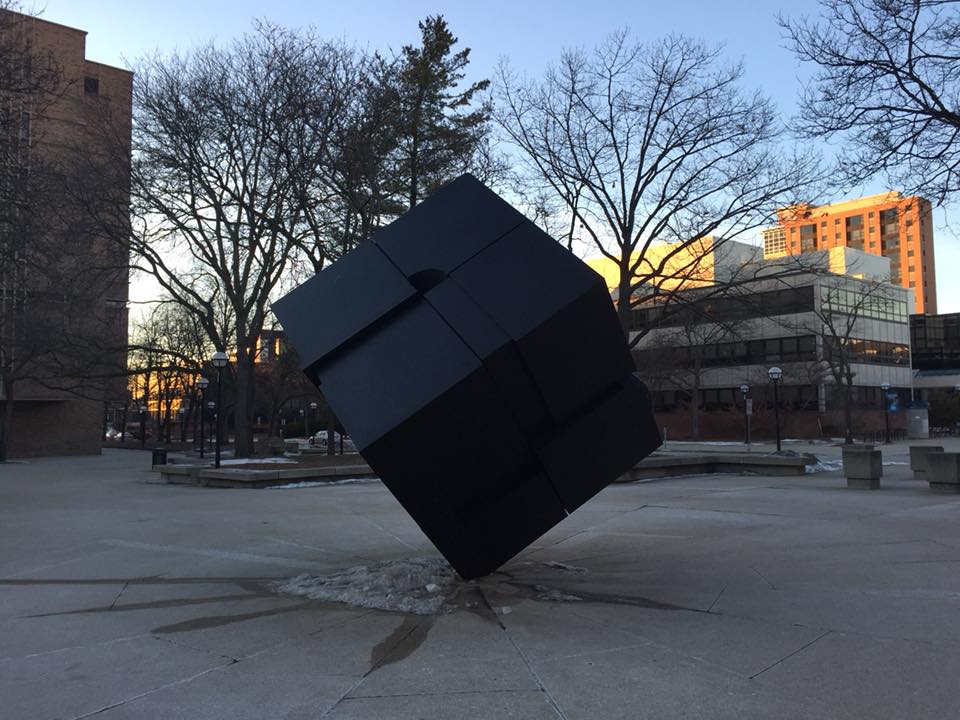
A lot of my perfectionism surrounding academics existed long before college, but there is something to be said for the culture that permeates my alma mater. There’s a sort of competitiveness among perfectionistic students for who can push themselves the hardest. If you say you’re stressed, people ask you how many credits you’re taking, as if your stress doesn’t count unless your course load is full. It’s not stated outright, but the general atmosphere is one of suffering-related humblebragging. If you’re stressed, it means you’re pushing yourself. If you’re not stressed, you might be slacking. Again – I love my university, and I’m proud to have gotten my degree there. People are motivated to achieve at Michigan, which is wonderful. That said, the limitless pressure to succeed can be dangerous.

Suicide is the second-leading cause of death for college-age people in the US, and its rate is increasing. Around 1,000 college students die by suicide each year. When young people are off at college, often away from home for the first time, they’re vulnerable to the prevailing ideas. Submerged in a competitive culture, it’s easy for students to believe that their future will be ruined by a bad grade. And I get it – students have plans beyond college that require top-notch GPAs. For a while, I thought that veterinary school would be my next step. Instead, my plans seemed to come to a screeching halt after college. Depression has altered my life enormously. If I could talk to sophomore me, I’d say, “I haven’t gone to grad school, but my life is not ruined.” Through the waves of depression, I catch glimpses of what really matters, and none of it is a letter grade or a GPA. I think I have a healthier perspective on life and academics now.

I sincerely believe that most of my depression is biochemical. That said, I’m pretty sure my college experience sped up the decline in my mental health significantly. Again – I don’t regret going to college, but I do think that if I had taken time to consider my innate traits, really thought about the stresses of being a highly introverted person at a university with more than 40,000 students, things might be different for me today. I did my best at the time, but I wish that I had honored those parts of myself; the quiet parts, the parts that need calm and routine, which were frazzled and burnt out after four years of high pressure. My sensory differences made the pace of life I’d chosen at university unsustainable, and by the time I graduated, I had an almost constant low level of vertigo, loud noises made me cry, and lots of movement in my visual field (like in a busy dining hall or a crowded hallway) made me disoriented.

I would encourage anyone who is pursuing a degree now or considering doing so to remember that it’s your education and your life. Everyone goes at their own pace, and what anyone else thinks about your pace doesn’t matter. Furthermore, what you think other people are thinking is likely more harsh than the reality. Taking care of yourself and your mental health is not always easy, and going against the grain takes courage. Think about the resources and environments that would support you and seek them out. Make friends who understand you, and above all, put your health first.

(There were parts of college that I really loved. The friends I made and the things I learned were priceless. Football games, waffles, fancy events at my dorm, exploring campus – there are tons of great things about college! I didn’t intend for this post to turn out so dark. It’s all about moderation.)

Watching rotund squirrels eat nonspecific trash was always fun, too.

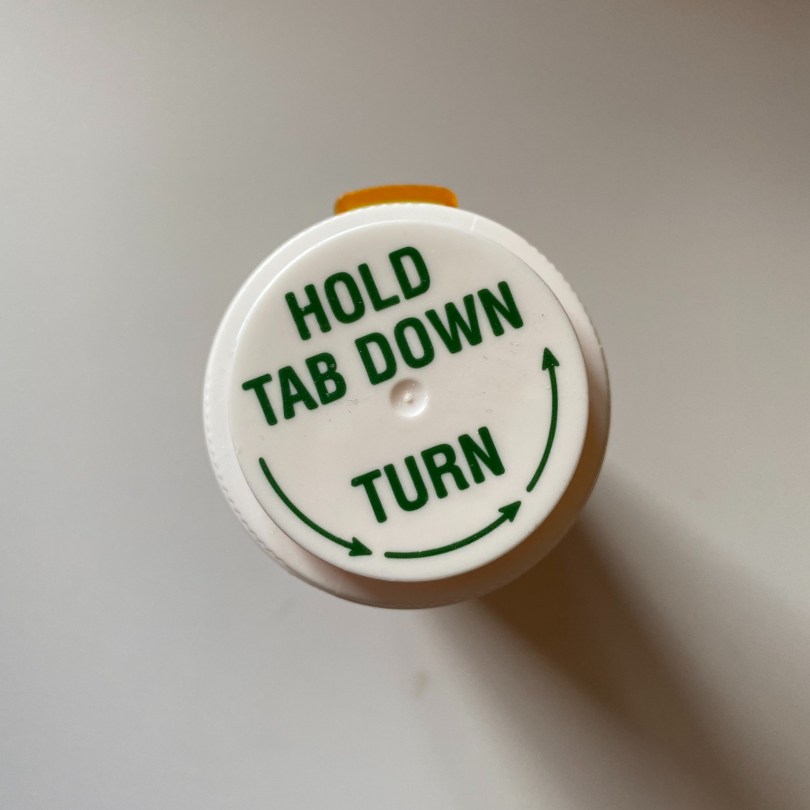
top-down-view-of-pill-bottle-with-tex-hold-tab-down-turn-with-arrows

Changing My Depression Medication

It’s come to my attention that my depression medication doesn’t seem to be doing much. IV ketamine infusions are also doing less than they used to, unless it’s the case they they’re doing just as much but my brain is kicking its level of stubbornness up a few notches. Who’s to say what the cause is? Maybe it’s just the curse of 2020.

I got sidetracked. The point of this post is this: I’m about to start taking Wellbutrin, a medication that I tried a few years ago and really liked. I was only on it for about a week, though, because I promptly broke out in a blotchy rash that spread from my chest, up my neck, and all over my face.

close-up-of-woman's-collarbone-area-with-blotchy-red-rash
(the rash of 2018)

It seemed like a cruel joke played on me by the universe. The only oral antidepressant I’d ever tried that made a sudden, discernable difference in my depression is one that I’m allergic to.

Cut to now – I’m once again finding myself floundering in the soupy mashed potatoes of my depressed brain, looking for some way to change things. I’ve always carried a little bit of disappointment about my failed Wellbutrin trial, especially because I was taking the generic at the time. What if I wouldn’t have a reaction to the brand name version? Would it be stupid to try?

You know those prescription medication commercials that include a disclaimer like “Don’t take [name of drug] if you’re allergic to [name of drug],” and you’re like “Well, DUH?” I am now the person that those disclaimers target. To me, the risk of an allergic reaction is worth the potential benefit of taking Wellbutrin. I think it’s telling that when faced with the possibility of a rash, swelling, even anaphylaxis (unlikely), my reaction is “sign me up.”

I remember being so amazed at how motivated Wellbutrin made me feel. It was the only oral depression medication that’s ever given me that “I didn’t fully realize how depressed I was until I wasn’t” feeling. I was in my last semester of college when I took it. By that point, I had tried several medications and was struggling to get through the last few months before graduation. I was over the moon when I realized that Wellbutrin was working for me. It was SO much easier to get my work done and interact with people, even just for the few days that I was on it. When I got the rash, I stopped taking it abruptly, and the sudden changes did not do good things to my mental health. I had already been utterly overwhelmed by classwork and worn down by the near-constant suicidal thoughts that had plagued me for over a year. I canceled my trip home for spring break because I wanted to be alone, and I reluctantly started yet another combo of meds. I just remember the whole thing being bitterly disappointing. It was like Wellbutrin had swooped in, showed me how much easier everything could be, and then ditched me with the gift of an itchy, burning rash after just a few days.

So, I’ll take the chance of a rash if it means I might feel better. That said, if I let myself get too hopeful and the result is a letdown, I know I would feel incredibly defeated. I’m trying to temper my expectations. If I get a rash or if it doesn’t work, at least I’ll finally know for sure if it’s an option for me. I’ll write an update soon.

Categories

light-and-dark-blue-in-close-up-of-glacial-ice

The Subtleties of Water: The Ketamine Chronicles (Part 27)

I’m always looking up at the sky when the water closes over me. This time, it was cold, and an eggshell-thin layer of ice formed above me while I watched. Gentle waves followed one another, freezing over the previous layer and leaving a frosty texture on the surface. Darkness spread from the periphery of my vision until I strained to see through the last window of light, the only notable image being the shadow of a person standing above me on the ice.

I didn’t put a lot of effort into remembering this IV ketamine infusion. I know there were graceful, disembodied hands dancing amid blue and red lines, swirls, and dots. There was more water – ripples and waves, mostly. There was a pyramid with a circle above it, which turned into a blinding white light. I’m certain that there was a lot more, but it’s faded away from me by now.

Treatment-Resistant Depression

My mental health is declining. I’m not sure why. IV ketamine treatment doesn’t seem to be working as well for me, now. Every day, I have to rate my mood on a ten-point scale. It’s hard to capture how I feel in numbers. Potatoes are easier, but still not quite enough. Honestly, sometimes words themselves seem too limited. How can I describe how I feel?

This morning, I woke up at 4. I got dressed in the cold – same clothes as yesterday – and went to the kitchen for some food. I walked the dog when the sun came up, but we came home quickly because of the sharp, cold air. My eyes feel heavy. Not the lids – the actual eyeballs; they sit heavy in their sockets, like wet marbles or enormous caviar. I wonder, if I tip my head forward, will they fall out? When my depression is worsening, I often notice this feeling in my face. Everything is heavy and hard to move, and I’m sure my expression is grim. I think the clinical term is RDF – resting depression face. At least my pandemic mask covers most of it.

Maybe the person above me on the ice in my ketamine dream is me. I’m on thin ice. Skating across a just-frozen lake in my wool socks at 4am. Someone else is waiting beneath the surface, straining to see through the darkness. Is she also me?

__________

Why Do I See Water in My Ketamine Treatments?

My recent IV ketamine infusions have all featured water, and I’m often drowning in it. It’s not scary – it’s peaceful. It’s soothing. I’ve never stayed up by the surface before; always finding myself sinking into the dark, quiet depths. But this time, I was floating – pressed against the underside of the ice, trying to see through it to the person on the other side. I was curious about this person, but the darkness closed in before I could begin to unravel what was happening, and then I found myself in a different scene, which I do not remember.

I’m fascinated by this recurring theme of water, especially because in my regular life, I’m not a big fan of it.

An Early Trauma

I have sensory processing disorder, and as a young child, I flat-out refused to swim. I was overwhelmed to the point of tears by the splashing, the echoes in the pool, the temperature change from air to water, and most of all, the fear of people touching me. I eventually came around to the idea, but never enough to take lessons. So, having never properly learned how to swim, I nearly drowned at a friend’s birthday party when I was 8.

I remember being uncomfortable going into the deep end, but my friend was insistent. I lost my grip on the side of the pool and began to sink. When people say that drowning is not a dramatic event – there’s no splashing or screaming – they’re right. My head tilted back instinctively as I went under, and I could see my hand, extended above me, slip under as well while the rest of my limbs flailed uselessly underwater. A panicked hopelessness overtook me as I choked on chlorinated pool water. Then, my friend’s hand broke the surface, reached down, and grabbed my wrist.

I have never felt relaxed on or in water, and it’s not just the near-drowning that explains it. The same sensitivities that kept me from participating in swimming lessons have persisted into my adulthood. I dislike the unsteadiness of water, the unpredictability of how it will splash, the feeling of water on my face.

And yet, when I’m reclined in my doctor’s office, ketamine moving into my bloodstream, visions of water are soothing. I can feel the cool, constant pressure of being underwater without the anxiety or the sensory overload. I can feel myself standing on the deck of a boat, watching the foamy water beneath me leap forward and recede, and I feel peaceful. I’ve seen whirlpools, rivers, melting glaciers, and the unbelievable enormity of oceans. It’s a strange experience to suddenly realize what water might be like for other people, as those feelings are foreign to me in my waking life.

Open ocean near the surface with light filtering down from above.
Photo by Cristian Palmer on Unsplash

I feel as though, unhampered by the symptoms of my sensory processing disorder, I can connect to a larger, evolutionary interest in water that I am unable to find under normal circumstances. Humans have been fascinated with water for millennia. In fact, some evolutionary anthropologists believe that nearness to water supported the development of large brains – that we are, in part, the heritage of small, coastal communities of early humans whose lives revolved around the movement of water and the food within it. To this day, many island and coastal cultures retain great reverence for the ocean. When we gaze out upon a watery horizon, it is difficult to not be awed by the vastness before us. In my eye, to find our place in relation to bodies of water is akin to our struggle to find our place in the vastness of space. Questions of identity and survival are found in the depths, and I believe we carry the answers within ourselves.

Lessons from IV Ketamine Treatment for Depression

My depression is a constant in my life. It is all-encompassing, lonely, and feels like drowning. I’m not one to find meaning in every dream, but the images of water that I experience during IV ketamine treatments have begun to feel profound. What does it mean? Certainly not that I should give in, wave a white flag and let the water crush me. Nor should I wait breathlessly under the ice, squinting as if to look through a frosted pane of glass, uncertain if I’m even above or below. Rather, I believe my visions of water are windows into the nature of the human experience. Perhaps they’re snapshots of how I feel – how depression feels to me. My mind is an ocean, and at times, it’s oppressive. I sink within myself, finding it easier to let the water cradle me as I descend than to keep swimming. At other times, I find comfort in accepting the changing nature of my illness. Like a river flowing downhill, impermanence is unstoppable, and the emotions of being a human move inexorably back and forth. When we crest the top of a wave and begin to fall down the other side, we wait for the next one, just as we take each arriving day. And when you are drowning, reach up. A helping hand may be just about to break the surface.

If you’d like to read more about my experience with ketamine for depression, start from the beginning of The Ketamine Chronicles or visit the archives. Click here for mobile-optimized archives of The Ketamine Chronicles.

hand-touching-pink-flowers-outside

Self-Compassion When Living With Depression

I had a conversation the other day about the balance between recognizing that treatment-resistant depression is chronic and pushing oneself to do difficult-but-healthy things.

It started with a question: What advice would you give someone about dealing with depression?

Personally, I find it helpful to remind myself that depression gets in the way of my ability to think clearly. Depression brain is a liar. It makes me think that I’m a stupid, horrible burden and that everyone would be better off without me, even if they say otherwise. It makes me think that feelings are forever and that I must be too weak to effectively change myself.

It’s really hard to change the way you think, especially when depression is sitting on you, yelling into your ear about how terrible you are. Sometimes it helps to remember that I have a disorder that skews my thinking. But that doesn’t mean that I shouldn’t push myself. It’s a difficult balance; to recognize that my symptoms explain my behavior, but they aren’t the be-all-end-all of what I do.

You know how frustrating it is when a well-intentioned but misinformed person tells you that if you’d just try barefoot ultra-marathon running or hot goat yoga at 5 am, you wouldn’t be depressed? That person is inside my brain all the time, and because I know that it’s unreasonable to expect myself to just *poof* try harder and not be depressed, I’ve always struggled to write something on this subject. I don’t want it to come across in the same way that my brain talks to me, because I would never, ever talk to anyone about their depression in same the way I think about my own. My brain says stuff like this:

“Yeah, you feel pretty crappy today, and you know why? Because you only ran one mile. Maybe if you’d run THREE, you’d feel better. You only have yourself to blame.”

The example that I’d like to set as a person who writes about mental illness is something more like this:

“I still feel crappy, even though I went for a run. I’m glad I did it, though, because I know that it’s helpful – even if it doesn’t feel like it.”

That kind of thinking is really hard to implement, and I won’t lie – I’m pretty far from doing it naturally. It’s hard in part because we know that things like exercise, being outside, and social connection are helpful for depression. How much pressure should I put on myself? How much am I capable of when I’m depressed? Should I be expecting these things to “fix” me? Whenever I ask myself these questions and get bogged down in the details of how much I’m doing, my plans for doing more, why I should be doing x, y, z, I miss the obvious point.

I’m mean to myself.

I’m trying to convince myself that it doesn’t really matter how much I decide to do in miles, minutes, or step-by-step sequences. It only matters that I did a little bit more than I wanted to. It only matters that I did something because it’s good for me, not because I bullied myself into it. It’s good to set goals (or clams, if you’re being fancy) for yourself, and it’s fine to go at a pace that works for you under your current circumstances. I know that for me, I often fall into the trap of expecting myself to function at the same level that pre-depression me did. Sometimes I worry that if I don’t berate myself enough, I’ll get complacent and stop striving to improve. In reality, I know from experience that the motivation to grow returns naturally when I’m feeling better. It’s tough to believe it, but my first priority should be to treat my depression, and everything else will fall into place.

If you’re hard on yourself for not meeting your own expectations while depressed, I relate. A lot of people relate. After all, feeling bad about yourself is itself a symptom of depression. And to be clear: trying to be nicer to oneself is not advice intended to invalidate that symptom. It’s not to say “you’re doing it wrong, just be nicer to yourself,” it’s that combatting negative self-talk with positivity (or at least positive-tinged neutrality) is a strategy intended to treat that symptom.

I’m not very good at it yet, but I’ll keep working on it. Gently.

small-songbird-sitting-on-white-surface-with-white-background

Working on Depression

Sometimes I feel like a bird that can’t figure out how to fly. I periodically get launched out of a cannon (in this metaphor, that’s due to IV ketamine treatment for depression), then flap and flap to no effect. I’m trying to make progress, but gravity is always there. Eventually, I sink lower and lower, just exhausting myself with all that flapping.

That’s how it feels, but I don’t think that’s entirely accurate. Yeah, ketamine wears off eventually, and yeah, my brain has a biochemical problem that means I can’t fix depression just by flapping. But the flapping is doing something. All that work I put into therapy and maintaining a routine and getting exercise must be functioning in tandem with the IV ketamine to push my little bird wings just a smidge farther.

I know this because my mood still dips pretty low sometimes, but on the whole, I’m in a better place than I was a few months ago. Perhaps it’s that I bounce back faster, now. Or maybe it’s just knowing that it won’t last forever.

And now, being able to look back and see that I’m flippity flapping on my own a little makes it just a little bit easier to continue. Chipping away at something day by day is tedious and frustrating, but all of that work adds up. If you can look back at where you were a little while ago, it helps to notice that in working on depression, you have made progress, even if it’s just in the personal growth or a skill you’ve learned or the support you’ve gotten.

Keep flapping, everybody.